m4/3 to Nikon G adapter with built in ND's

I've been waiting for such a solution to become available since I first started using m4/3 camera's. I'm done waiting for someone else to do it. I used to be a welder and machinist before I took a career change and went to film school. I still have a lot of friends in the industry that could either let me use there machining equipment or might be willing to help me depending on interest.


Before I go down this road, I'd like to ask you all for some help and input.


1. How much would you be willing to spend? This will determine if there is a market and if it's feasible.
2. Should I go for a slide in and out type filter system (cheaper, and can be available quicker), or a filter wheel type of system (more expensive, and will take longer to become available)?


If there seems to be a lot of interest, I might try to start a Kickstarter campaign.
 
I for one would be interested, Would your adapter allow for aperture control also? this would be a deal breaker for me.

you may be better off posting this on the GH2 thread. as the af has built in nds.

Cheers
 
Interesting idea - a slide in system could be clever as one could use cheap Cokin NDs on it, but how would you control light leaks? An expensive (but maybe clever) thought would be to somehow house a fader ND. Would you then be able to market that as a decent solution for EF lenses as well? And wouldn't all that stuff behind the back of the lens interrupt focus?
 
I think the new Black magic MFT camera will create another market for this because they left off the NDs.. My advice (from someone who has modified many cameras over the years, and still co-holds a patent for a stainless lens mount for the Bolex Rex) would be - KEEP IT SIMPLE...

Do not listen to people with requests who have absolutely no idea of the technical complications.. Personally I would go for a sliding filter holder that accepts gels (similar to the behind the lens holder on that old Bolex) - although admittedly I don't know how available ND gels are these days - haven't bought one in over 30 years. If gels aren't generally available consider the smallest possible glass (2x2) filter that is available - DO NOT design for plastic filters - they are horrible behind a lens (the optical properties are more critical than in front of a lens). Don't try for 4x4s because it would create a massive frame that would be a nightmare to engineer for something like the GH-2. Good luck - Oh, and try to price it under $300 - some will balk at anything over $100, but keep it in the range for pros who will make it back in a day or two. I think it's an excellent idea.

Forgot to add - design the front mount so that it can be interchanged with Nikon and Canon FD, etc. That would open up your market and actually make it easier to mill the filter mechanism because the mount would be added as a second piece - plus you may be able to find a source for off-the-shelf lens mounts (Red Rock for example) which would greatly simplify your work.
 
Last edited:
Before I go down this road, I'd like to ask you all for some help and input.

...I would make sure that which ever way you choose to make this adapter, that you ensure that it is easy and perhaps low cost to repair.

i.e. A filter wheel would be nice, but if a filter was damaged, how difficult would it be to fix?

Going the slide-in route would probably eliminate this cost, as you would simply replace it with another slide in filter.

I would also make sure you add a tripod mount or a means of attaching your adapter to 15mm rails so that larger lenses could be accommodated.

...As for cost, I would prefer paying more for something that was well built, than getting something that was cheap and less reliable.
 
Does 'conventional knowledge' not say that a filter behind the lens is baad.

Worth testing.

As for the deisign..

Check lenses like the 400 2.8

Id go with a roud filter say 44mm diameter or whatever is widely available.

And yep it would be great on a BMC

S
 
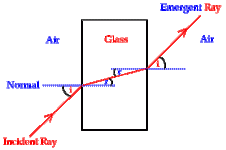
So hit glass with a beam of light at an angle. it gets side stepped.

Light-Refraction-Glass.gif

This certainly means the the flange focal distance on the device would differ from the published FFD of the lens mount
It also means that the device would not work, or at least the witness marks would be way off if used with no glass in place.
a 0ND would have to be used as a default filter and probably a specific filter set specified.

It just means the engineering is not trivial


S
 
Last edited:
I would also make sure you add a tripod mount or a means of attaching your adapter to 15mm rails so that larger lenses could be accommodated.
I'd buy an adapter with a rotating collar mount for 15mm rails, even if it didn't have the ND filters. Another feature that would be invaluable would be a means of positively clamping the lens to make the lens fit absolutely tight.
 
For nearly 30 years Century (I think it was) produced a slip on gel filter collar that attached to the rear of wide lenses and big zooms like the 25-250 Angenieux - If it worked for 35 I don't know why it shouldn't for MFT. Obviously some testing is in order - but also, going back to the old Bolex 16 & S16, they had gel slots and it was not necessary to use a clear when a filter wasn't in place (remember, with film, 85 filters, sometimes with ND, were always used when shooting outdoors, so there is a long history here). Glass behind the lens could be a problem though.. Point is, gels are obviously the best and cheapest way to go if they're still readily available.
 
Ok, I'll try to answer a few question everyone left. Yes, this concept wouldn't be as valuable for AF100 owners as GH2 or BMCC owner since the AF100 has built in ND's. My rotating idea is to have a spinning round plate with four 30.5mm filter threaded holes around it. This way you could add your own filters, cheap filters, expensive top quality filters, or anything in between. This also means you can put other filter in there besides ND's which means AF100 owners can still find a creative use for it. As for the flange distance changing, I was going to take that into consideration. You'd have to add a clear filter in one of the spots in order for it to work instead of leaving it blank.
 
If you are across FFD, and the other issues it sounds fantastic to me.

If you can make it fit sony e-mount that would be even better

S
 
Uh, just to be clear, the old Panavision film cameras had a spot to toss in an ND behind the lens (and shutter) so the op could see clearly without looking through a dark filter. If it was good enough for a 35mm Panasomething, it should be fine for the AF.
 
Back
Top