Looking for opinions for “new” camera gear

I think you should be looking at the VariCam LT. It's surprisingly lightweight and very well-balanced. It's really designed to be a proper on-the-shoulder camera. And it's designed to natively support lenses like that Canon 17x or the Fuji Cabrios.
 
I think you should be looking at the VariCam LT. It's surprisingly lightweight and very well-balanced. It's really designed to be a proper on-the-shoulder camera. And it's designed to natively support lenses like that Canon 17x or the Fuji Cabrios.


I pitched it because I own it. Unfortunately the audio was their main issue with it. They want physical wheels (also why they shot down the F55). I won’t lie though, the LT with the 17-120 isn’t far behind weight-wise. While it’s shorter, it’s wider than the Amira. But yeah, when they were asking what we wanted I pitched the LT early on.
 
Update:

So we put together a proposal to go with Amira’s and the Canon 17-120. Not only did they approve it, but they even offered to rent us one so that we could test it out with our workflow and make sure everything played well together. In a hilarious (and sad for me) twist of events, the older cam ops absolutely hated the weight. They held them side by side with the 800s and the 500s and the Amira was significantly heavier. I personally knew it was a heavy combo, but I’m about 20 years younger than these guys. So I can’t fight them over it because when I’m that age I wouldn’t people forcing heavy gear on me.

So because all of this is happening so close to all of these new announcements, they decided that they want the FX-9. Since they know the FS7 they figure that the FX-9 with 17-120 combo will be lighter than the Amira. I explained that while yes it will be (slightly) lighter, it isn’t the same solid build or form factor as a camera 4x it’s price. Image-wise, we will lose the ability to crop into S16 mode on the FX9 which sucks, but when combining it with some full frame glass it should be a nice little cam to work with. The winner in all of this was the company cause now they’re going to save some serious dime.

If the decision isn't set in stone yet, I think there's a very strong case to look at the C500 MkII over the FX9.

- Super compact, and even lighter than FX9 (though not by much)
- Auto-iris control with the Canon 17-120mm
- Built-in (electronic) image stabilisation (the FX9 only records metadata and has to be stabilised in post)
- Dedicated EVF solutions (either rear-mounted V50, or conventionally mounted V70 with a single cable for power/video)
- S16mm crop mode with 2k/HD up to 120fps
- Slightly higher bitrates in 10-bit recording modes (Approximately 25%) for fewer compression artifacts
- Up to 10-stops of internal ND (FX-9 only goes to 7-stops) so you can shoot wide-open outdoors with no additional ND in front of the lens
- Significantly tidier expansion module than FX9 (for v-mount batteries and 2x additional XLR audio inputs, if needed)
 
I pitched it because I own it. Unfortunately the audio was their main issue with it. They want physical wheels (also why they shot down the F55). I won’t lie though, the LT with the 17-120 isn’t far behind weight-wise. While it’s shorter, it’s wider than the Amira. But yeah, when they were asking what we wanted I pitched the LT early on.

That's one of the things that drives me crazy about so many "cine cameras". I don't want to go into a Mother F'ing menu to set audio. Or TC. As much as I hate the C300 body/design, at least they give you actual physical dials and switches for setting the input audio.
 
That's one of the things that drives me crazy about so many "cine cameras". I don't want to go into a Mother F'ing menu to set audio. Or TC. As much as I hate the C300 body/design, at least they give you actual physical dials and switches for setting the input audio.

Do any cameras have massive protruding pots like sound devices mixers that aren't flush with the camera? Maybe this has happened, but thought I'd ask the resident broadcast cam historian. Even though you can carefully adjust a pretty small physical wheel without moving the camera, I think it'd be awesome if they actually stuck out!
 
The lack of physical audio dials was probably the only gripe I had when we bought our Varicam LT. The reality is though that I have to alter the audio in menu maybe a few times a year for those very specific audio recordings. Our Varicam LT goes out to all sorts of scenarios you can think of. For each mic that goes in, we have one channel dialed in for optimum range in the 80% shooting scenarios (boom mic voice recording). The other channel for the same mic is set to automatic. This one functions as a backup for the occasional moment where things unexpectedly go out of range. If a recording does need some tuning it literally is 2 dials in the menu and we're good. Our audio has been good on every production we used it on. Audio engineers have also been happy about it. Do note though that the 'automatic' setting already does some processing to the audio, so it's preferred to use it as a backup rather than rely on it - if you want to further process the audio in post.
 
The lack of physical audio dials was probably the only gripe I had when we bought our Varicam LT. The reality is though that I have to alter the audio in menu maybe a few times a year for those very specific audio recordings. Our Varicam LT goes out to all sorts of scenarios you can think of. For each mic that goes in, we have one channel dialed in for optimum range in the 80% shooting scenarios (boom mic voice recording). The other channel for the same mic is set to automatic. This one functions as a backup for the occasional moment where things unexpectedly go out of range. If a recording does need some tuning it literally is 2 dials in the menu and we're good. Our audio has been good on every production we used it on. Audio engineers have also been happy about it. Do note though that the 'automatic' setting already does some processing to the audio, so it's preferred to use it as a backup rather than rely on it - if you want to further process the audio in post.

Yes, I personally don’t mind the audio. After mapping ch 1 to the scroll wheel I can tune it while it’s on my shoulder which is ideal. I agree with Mitch that as a shoulder mounted camera the LT is far better than the FS7, and it also feels far more robust. The body feels like a tank whereas the FS7 feels relatively fragile.
 
Do any cameras have massive protruding pots like sound devices mixers that aren't flush with the camera? Maybe this has happened, but thought I'd ask the resident broadcast cam historian. Even though you can carefully adjust a pretty small physical wheel without moving the camera, I think it'd be awesome if they actually stuck out!

Not like you’re thinking, but in a way. Obviously you don’t want to be adjusting audio with the dials on the camera while shooting, but... Some Panasonic’s, like the P2 Vari’s and HDX-900’s have a dial on the side near the operators face for one of the channels and on some of the old Sony Betacams, some of the VF’s actually did have a large protruding pot sticking out the front, just like your VF picture adjustment knobs, to adjust Ch. 1 audio. It also had a flip-down protector, too, to help prevent inadvertent operation/adjustment.
 
Do note though that the 'automatic' setting already does some processing to the audio, so it's preferred to use it as a backup rather than rely on it - if you want to further process the audio in post.

This brings up something I’ve noticed on most “Cine” cams. The AUTO setting on the audio SUCKS compared to on our ENG cameras, like our old Betacams and VariCam’s. When I didn’t have an audio guy or was running around solo, I always used AUTO, as did most of us, and it was largely bullet-proof. But with most Cine cams, when you use auto, it’s either cranked to the roof or the meter is barely moving off of the first tick or two.

So, did the manufacturers just put way more into the auto/agc circuits in our ENG style cameras knowing how important it really was, especially in the network/broadcast world where ops were/are solo a lot of times and we had to have good audio, regardless?
 
Personally, I’m happy for anything camera-makers do that discourages producers from having the camera dept. handle sound!

Removing physical dials and switches just makes it harder for everyone. What used to take literally a few seconds to set levels and select proper inputs when connecting to your audio guy/mixer, is now a chore. Especially with some cameras, like the F55 that use rotary encoders that suck(not all rotary encoders are horrible, but Sony’s always seem to be. And not a fan of LP’s on the Gemini’s, either). You either fly way by the level you need or it takes what feels like five minutes to walk it in to what you need.
 
Every sound mixer I work with likes the audio controls on the C300 KII and C200 and hates dealing with the the audio on the RED, Arri and Varicam LT.
 
This is sort of a different scenario than the usual “what’s the hot new camera.” I’m a staffer at a national network and we are budgeting for new gear for early 2020. I put new in parenthesis because the best broadcast equipment available really isn’t new. We are upgrading from our 2/3” Sony cameras to Super 35 cameras, but the plan is to finally replace the 2/3” cams for good. I’ve personally been shooting with S35 for years and I know that there are many differences between the formats, the most glaring being the lack of true S35 broadcast style lenses in the market.

If price were not an issue (it probably will be but we would like to shoot high to test the budget) what S35 ENG/Doco style camera would you get? We’re strictly solo shooters in various run and gun situations. The lens we are going for is the Canon 17-120 no matter what camera we get. Here are some of the cameras I know personally and am considering:

Arri Amira: Best ergonomics, basically looks and feels like a 2/3” camera on the shoulder. Fantastic slow motion with no compromises. Built like a tank which is a big plus for the work we do. Heavy with the lens combo.

F55: Probably the most common camera I see in the field. I love the image and the fact that it’s true 4k, but even with the ENG rig on it it’s not the best ergonomically and still requires some extras to make it a one man band camera. Also bombproof

Vaticam LT: Rarely see this one in the field. Beautiful images and lots of dynamic range. Also requires some extras to make it feel good ergonomically. Also very rugged. Lack of physical audio dials is rough for one man band work. Deceptively heavy with this lens combo.

I know there are cheaper options but this is sort of a “start high” list. Note that in all 3 the toughness and ergonomics are mentioned. I understand that at this stage of the game each of these cameras is going to look fantastic, but in 5-6 years when we need to replace them, they still need to be in 1 piece after the beatings they will take.

All suggestions are welcomed. Also, we can’t wait for x trade show or x camera coming down the line. It’s a late 2019 or early 2020 thing that’s all about when budget is available and all that corporate jazz.

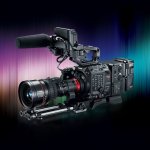
I think this would be just what you are looking for

Canon C500 MKII.jpg
 
This brings up something I’ve noticed on most “Cine” cams. The AUTO setting on the audio SUCKS compared to on our ENG cameras, like our old Betacams and VariCam’s. When I didn’t have an audio guy or was running around solo, I always used AUTO, as did most of us, and it was largely bullet-proof. But with most Cine cams, when you use auto, it’s either cranked to the roof or the meter is barely moving off of the first tick or two.

So, did the manufacturers just put way more into the auto/agc circuits in our ENG style cameras knowing how important it really was, especially in the network/broadcast world where ops were/are solo a lot of times and we had to have good audio, regardless?

We use the same circuit in our Cine cameras as we do our high end broadcast machines.
 
We use the same circuit in our Cine cameras as we do our high end broadcast machines.

Good to know. When I had my LT demo, I never really did an actual audio test(I obviously checked out the controls, settings, etc.).

I guess I should have been more specific and said the Canon C’s and Sony F’s. The last time I shot solo with an Amira, it was a clients and I just handed off the cards, so I don’t know how it sounded(just nats). The F55 is particularly perplexing(especially considering Sony’s history). With a “nat mic” and the audio levels set to auto, the levels are high. Not overmodulated, but way higher than an ENG camera would have them, bumping up to almost peak meter levels. And with a wireless on(stick mic or lav), the levels are barely there and moving. Fortunately, running a wireless mic directly in on auto while shooting solo is a very, very rare thing with either of these cameras for me, but it’s very frustrating that I don’t feel that I can’t do it reliably like I can with my VariCams.

And yes, output levels on the wireless are set properly and inputs on the camera are set properly for the nat mic and the wireless.
 
Back
Top