Looking for a new shotgun microphone for interviews.

Rayden

Well-known member
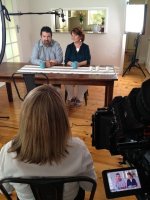
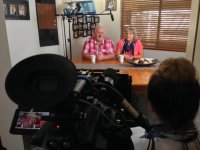
I often do sit down interviews which consist of 2 people. The locations vary but are mostly inside, and in a lot of situations I cannot totally control the background noise.

I currently have 2 sets of Sennheiser EW-100's and a Rode NTG-2. I usually wire each interviewer with a wireless mic, and boom the NTG-2 as a backup or alt audio track.
I love the cleaner sound that I get from the Rode, as the omni mics from the sennheiser's pick up more background noise than I would prefer. I am always faced with the same problem of having to place it in between the 2 speakers, and one person usually picks up better than the other.
Initially I thought about buying another NTG-2 but then I have read in several places where audio professionals advise against using shotguns like the NTG-2 inside. Most of my work consist of vocal recordings. (Dialogue)

What are your suggestions for a mic that would be ideal for my work? Most likely I will purchase 2 to accommodate multiple people. I will probably hold on to the NTG-2 since I have also read that it performs well outdoors.
 
Last edited:
The go-to mic for those circumstances (interiors in which dialogue is more important than action) would be a less-directional hyper or a traditional cardiod... Hypers are too directional for interiors, generally; the NTG-2 (which I admit I have not used) is more of an exterior mic, though my guess is it's a little less directional than the 416 since the NTG3 is.

Good mics for interior dialog include the CMC6 MK41 (which is like $1800); MKH50 is not bad. For the money the modified Oktava MK-12 is considered the best bet, but it suffers from handling noise. Never used one. Hear it's very good.

I don't do sound (I held a boom pole for a half-day corporate shoot once; that's it) but the kit I am planning to assemble (if I have to) is a 416, G3s, and an Okatava.
 
I have to wonder how you are using your lavlaieres and wireless systems. While the lavs may be omnidirecitonal, their proximity to the source is generally closer than any other mic can get without being in frame, and thus the ratio of direct sound to background sounds should be much higher. Plus, the placement of the lav on the torso of the speaker can often shield or absorb some background interference, depending on from where it comes.

Also, are you mixing between the two mics or just leaving them both at the same level throughout the interviews? If they are both always up throughout the mix, then you're effectively doubling the background sounds.

If you want to go with boomed or stand-mounted mics, you might be okay getting a second NTG-2. Again, proximity to the source is very important.

Hypers are too directional for interiors, generally; the NTG-2 (which I admit I have not used) is more of an exterior mic, though my guess is it's a little less directional than the 416 since the NTG3 is.

This isn't exactly accurate. I'm assuming Policar meant to say that shotguns are generally "too directional" for interiors, rather than hypercardioids. This isn't a question of directionality, but rather the principles that make a shotgun mic a shotgun mic. (The NTG-3 does, however, have a slightly wider angle of response than the 416.)

You'll see advice often given that shotguns are better for exteriors and hypercardioids are better for interiors. This is both correct and incorrect. In the hands of a beginner, the hypercardioid is much more forgiving with interiors and is a recommended go-to. There are seasoned pros out there who will grab a hypercardioid as well, but it's all a matter of the right tool in the right hands for the right job.

Shotgun mics achieve their narrow response patterns by using an interference tube (which is what gives the shotgun mic is characteristic length and tubular shape). This tube uses the principle of phase cancellation to reject sounds coming from the sides of the mic. I won't give the detailed "how'zat work" here because there are other posts that detail it, but suffice it to say that this principle has an achilles heel that can, but won't necessarily, render it useless indoors. For a highly-reflective interior (think hard walls, hardwood floor, hard ceiling, not much in the room to absorb reflections - bathrooms, some kitchens and dining rooms, etc.), the reflections are already out of phase with the direct sound when they reach the interference tube, so the tube is not only ineffective in creating the necessary cancellation but it can make the situation worse by muddying the sound and enhancing the reflections. The sound in these situations will end up sounding even more cavernous.

So can a shotgun work indoors? Absolutely, and some are better than others. In a room that doesn't have lots of reflections (soft, cushy furniture, throw rugs, lots of things on the walls to braek up reflections) it won't be an issue. In a moderately, but not overly, reflective room, once you know the mic and how to use it, it may still be no problem. In a room that rings like a shower stall? Probably not.

So what's the solution? Ideally, a selection of tools to make sure you always have what you need. That means a shotgun, a hypercardioid, and a lav at the very least. If you are wanting to boom/stand-mount the hardwired mics in pairs, then two shotguns and two hypers (matching pairs... wouldn't make sense to have an NTG-2 and an AT875).

And again, with any mic, distance is key: the closer, the better.
 
Last edited:
Have a look at the Samson CO2 microphone.....http://www.samsontech.com/samson/products/microphones/condenser-microphones/c02/
I've been using them for indoors for the past couple of years and love them..... Yes I know it a very low cost mic but the results are quite astounding, my ONLY complaint is they need a VERY good windshield if used outdoors (the one supplied is not good enough for outdoors)

Here are some clips done with the Samson CO2 mic..........http://www.mybudget.com.au/testimonials

A couple of years ago someone gave me one to compare with a 416 I did some interviews with a 416 and CO2 tied together with a rubber band and recorded onto a different tracks and then let the editor and producer decide which one they wanted to use.... and EVERY indoor shoot they used the CO2.
 
Last edited:
If you go for a pair of hyper-cardioids, then you may want to consider an Audix SCX1/HC. I have been using it for an indoor dialog boom mic for narratives and on a stand for interviews and it has been great. It goes for $499 at B&H and has proven a good value to me. I don't have a ton of hands on with really great hypers but I do love the sound of this mic for dialog.

I wonder if I were to pick up another one, which would not be matched, whether that would work for a two boom mic situation? Would it be impossible? Would they be so different in post or are there other aspects to having a matched pair like phase that come into play?
 
There will only perhaps be the very slightest difference between the 'non matched' mics but used in a 2 person booming situation there would be no problem...... Everyone is different (even identical twins) :laugh::laugh:
Phase errors are an acoustic / placement problem and can occur with any 2 mics of any make or models same or different.
 
Last edited:
So what's the solution? Ideally, a selection of tools to make sure you always have what you need. That means a shotgun, a hypercardioid, and a lav at the very least. If you are wanting to boom/stand-mount the hardwired mics in pairs, then two shotguns and two hypers (matching pairs... wouldn't make sense to have an NTG-2 and an AT875).

Good Info
 
mybudget 1.jpgmybudget 2.jpgmybudget 3.JPGmybudget 4.jpgmybudget 5.JPGmybudget 6.jpg

Here is how I have done it, often using a conventional mic stand with boom arm, the pickup pattern is much wider than a 416 or NTG 2/3 so you are able to get the mic in closer and still pick up both people talking.
The mic is positioned at about 45 deg. forward and up and JUST out of frame. In other words frame the shot then get the mic in as close as you can get it, you may have also noticed a lot of those interviews done in highly reflective rooms ie; kitchens / tables / floors etc.
Also a 'Softie' windshield and shockmount you use on a short shotgun mic fits perfectly on the CO2.
 
Last edited:
Try using a Tram TR-50 with the EW100. As Alex said, the lavs have close proximity and good signal to noise ratio. I find the Tram to have very good isolation capability. I use them in a live broadcast studio environment that has a lot of conversations going on the same time and I am able to get a very clean signal of the talent. It works so well that the off-camera talent can talk to the floor director without it going on the air. I've tried this with other lavs and they don't work nearly as well.
 
Back
Top