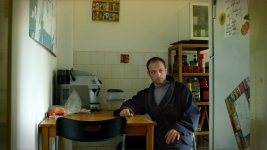
light noob starting a no-budget feature- a few questions.

Regarding underexposure:

It is really a big mistake to try and stay away from 'underexposing' anything. Underexposure equals shadow areas. And shadows are the things that make an image beautiful. Therefore underexposed areas are beautiful. That's why you often hear DPs say that they are 'placing shadows' rather than 'pointing lights'.

Let's imagine a scale from 0 to 100. 0 is pure black. 100 is pure white. 50 is middle gray.
Shadows are most commonly exposed around 10-40. A lot of times in modern cinema some people make their shadows pure black at 0.
Your camera probably has some type of brightness indicator. Play with it. Study it. Study the brightness indicator versus the f-stop of your lens. Try stopping down and stopping up on the lens to see how the brightness level changes. Borrow a good light meter. Study it. See how the world of shadows and the world of lightness is so simple. It's a religious experience actually seeing within your eyes how the world can be contained within the numbers 0 to 100. Also, when you understand how the zone system works and how the image can be broken down into 'stops' - that is a beautiful thing too.

But it's a good idea to study a light meter. See how intensely bright the sunlight is and how intensely dark it is inside your house. This will make you realize the beautiful complex way that your eyes (and the camera) contain the world of light.
 
the truth is i am less concerned about actual natural noise. in fact i like it.
it's the codec mud in the dark, less detailed areas i'm worried about.

I'm sorry if this sounds harsh. But you just need to deal with the mud.

It might be because your iso is too high. Find the recommended iso for your camera when shooting video. It might be 320, 200, 500... I am not sure because I don't shoot with your camera. Find the recommended iso and stick with it if you can. Otherwise, once you find that recommended iso, I'd say DONT BE AFRAID OF THE SHADOW AREAS! Shadow areas a good. Don't fill them in with unnecessary light. Please.

I'd like to add: Black shadows, really dark shadow, dark shadows, medium shadows, light shadows - they are all good! Embrace them!
 
Last edited:
*sorry missed your last reply.

thanks.
i like dark shadowed areas, and finding natural nice shots 'from reality' is something i'm pretty good at.
but if you'll see the codec mud in those black, less detailed areas you'll understand..
this is one of the GH2 main limitations, and i have to work with it.
 
Yes work on it but please don't go crazy over it. I remember when I was shooting HVX with a 35mm adapter I would tear out my hair because I hated how the shadow areas looked! And you probably have it much better than I did because HVX with 35mm adapter was like shooting 50 iso hahaha.

EDIT: do what you gotta do. But don't make your lighting look bad just because you were trying to fix the mud problem....
 
No one is going to give a damn about your mud when they see how pretty your frame looks and how great your story is, and especially if it's played on the web!

And also, I recently saw a super 35mm shot using only natural light in a movie theater (it was an artistic choice by director and cinematographer) and the image had no contrast and it was noisy and grainy as hell. But you know what, nobody left the room or had a migraine afterwards. Nobody cursed at the screen. It was actually kind of effective.

Also, in Black Swan, there is a reason why Aronofsky and Libatique chose super 16 and I'm sure the grain pattern had something to do with it.

So even if you've got a little bit of mud but your shot is nicely naturally lit. I respect that more that you did it with a dslr camera that is not super 35mm or alexa or red mx for that matter.
 
Leave the mud play to the computer people. You sir, are an artist.

I like this podcast interview with Lance Acord, who is one of my favorite DPs. (Personal note: I have met Deakins, Savides, Zsigmond, but have never met Acord - I am looking forward to having a discussion with him one day.)

http://www.theasc.com/podcasts/asc_podcasts/05_ASC_Podcast_Wild-Things_2.mp3

I am just paraphrasing but in this podcast, Acord is asked what is the most important thing he has learned in his career - and he answers... not to get bogged down with the technical side of things but to become more aware of the creative side of things (again I am paraphrasing from memory, but that is the gist of it). I might type up the exact quote later.

EDIT: I want to say that I believe that cinematography has a lot of technical elements and technicality is a large part of the movie making process. However, when the technical side of things get in the way of creativity, then I am against that. That being said, I love exploring the technical side of things as well. It's good to exercise both sides of the brain :)
 
No one is going to give a damn about your mud when they see how pretty your frame looks and how great your story is, and especially if it's played on the web!

The problem for me and other is the aesthetic difference between film film grain and digital film grain. The inherent randomness of film grain glumps seems to be perceived as more artful than the "raw" digital noisy pixels. I did briefly experiment with up rezing footage then adding some film grain filters then back down rezing for output. But that was a while ago.
 
The problem for me and other is the aesthetic difference between film film grain and digital film grain. The inherent randomness of film grain glumps seems to be perceived as more artful than the "raw" digital noisy pixels. I did briefly experiment with up rezing footage then adding some film grain filters then back down rezing for output. But that was a while ago.

That's very true. You can fight it but you can only push the camera so far. I'm sure there are many tips to reducing noise in the dslr image. However, if these 'tips' force you to fill in your shadows way too much, then they those 'tips' cease to become helpful and they stifle creativity and the overall look of the image. An image needs to have shadow areas, mid tones, high mids, and highlights. You can't just stick with middle tones--that would be boring.

Believe me, I have been fighting noise for years. I had the DVX and hated the noise so I bought an HVX. Then I found that the HVX had just as bad of noise or perhaps even more noise than the DVX. After the HVX I started using the Red one (non MX sensor) and I was horrified by how noisy it was, especially in blue channels. Only with the new MX sensor and the new Alexa can I now put my fight to rest. There is a tiny bit of noise but the noise is not blocky but small and organic looking like film grain. Those of you who saw The Social Network in theaters could attest to the grainlessness of the image. The image of Social Network (shot on MX) looks almost too clean.

However, not everyone can shoot on the MX or the Alexa. If you are using a $2000 camera, then use it for all it's worth. Don't scrunitize the image too much with the camera that you have. I've seen stuff shot with GH1, GH2, 7d, 5d that surpasses MX, Alexa, or Panavision cameras with the best filmstock. If you image is noisy and you can't do anything about it - don't fight it but embrace it. Be adventurous and don't fill in the shadows unless you want it to look filled in. Don't fill in shadows just to get a cleaner less noisy image.
 
thanks for dragging me back to real filmmaking :)
i guess i got a bit pushed to the dark side of DVXuser..
it can turn you into a bad ass pixel peeper.
:)
http://www.youtube.com/watch?v=IzlZd47sVm0&feature=channel_video_title

I saw this and thought that it was effective - I was in suspense because I thought something was gonna jump out of the photo!

However the wide angle closeups I thought were a little distracting. I tend to avoid wide angle lenses unless the scene absolute calls for it - if the scene requires some kind of distortional element to a set or something then I will use a wide lens. Usually in narrative the wide angles can get a little distracting. Most articles I read on movies, they most of the time use the range from 25-50mm, and if Deakins could pick one lens it would be the 32mm. This reason is because the 25-50mm is the least distortional focal length and they reflect similarly to what you see with your naked eyes.
 
about the newer 'too clean' digital sensors, i understand that a lot of digital shot features are finalized with true film grain footage, to feel more organic.
 
Yeah the MX and Alexa can definitely feel too clean and it helps adding some grain to it. And also when they are transferred to film for theater projection they automatically get some of the characteristics of film.

I'd say it's best to work with the medium that you have, whether is DV, DSLR cameras, Super 16, 16mm, BnW, Color, etc. and make it work for you.

EDIT: But I'd say that it's smart to find the optimum settings for your camera (sensitivity rating) and shoot at those settings. However, if you don't have enough equipment like lights and so forth to be able to shoot at a desired iso, then it's not bad to sacrifice some image quality for the sake of naturalism.
 
i'll try to use the 800w as spot on the ceiling corner above the lamp. bit i'll probably have to dim it cause this lamp is about 40w..

View attachment 31670

View attachment 31675View attachment 31676

did some more tests.
there is one problem with this set up. how can i reduce the 'wrong' shadows that can show up on various occasions (and if you look carefully they're there all the time)
tried placing and pointing the spot to other alternatives but not so easy.
where exactly do i need to place the 800w tripod spot for minimum shadow interference?

thanks.
 
I can't really tell you the exact spot that you need to place the light because I am not physically in the room itself. But it will help keep light off the lampshade if instead of bouncing directly into the corner (which has 3 surfaces) - you can put up some kind of thin white posterboard and tape it on that part. You can spot your light into that. That'll keep things cleaner because it's bouncing off one clean surface directed to where you want it other than 3 surfaces bouncing everywhere. I like how you don't settle for anything less! Sweet.
 
Less is more. Look at the layout, figure out the blocking, discuss with the director and keep the lighting simple but consistent. You might find that using just a couple of lights is all you need.

room_hug_master.jpg


Try to use what's there and don't worry if what you can do in a regular living room is a bit flatter.

mother_daughter.jpg
 
I can't really tell you the exact spot that you need to place the light because I am not physically in the room itself. But it will help keep light off the lampshade if instead of bouncing directly into the corner (which has 3 surfaces) - you can put up some kind of thin white posterboard and tape it on that part. You can spot your light into that. That'll keep things cleaner because it's bouncing off one clean surface directed to where you want it other than 3 surfaces bouncing everywhere. I like how you don't settle for anything less! Sweet.

i tried bouncing off one surface.
while it looks cleaner, it has tiny wrong shadows in other places, and the actor can ONLY sit at his place otherwise the 'trick' is revealed once he moves or sits down..
if you have a moment, can you please try to make a rough sketch of a 'sweet spot' placment for the tripod and target surface ? (and the HEIGHT of the tripod- i also couldn't figure that out)..
thanks :)
 
Hi Roei, I've been following this thread and thought I would jump in on it too and comment.

This is a great thread so far to help understand some of the problems you are encountering lighting your scenes, but I'd like to point out the real problem is the fact you are limiting yourself to only using a single 800W tungsten light and/or set practicals to light your film. I will explain,

Daylight scenes: If the available light is not enough for you to get a proper exposure (use your histogram) you will need to "help" the available light as you had put it in your first post. You can use the 800W light with blue gel to "boost" your natural light as most here have already suggested by bouncing onto a large window-sized foam core or muslin. This will simulate having another "window" in the room but I would probably flag the light so it does not spill and create unwanted shadows that will look "unnatural" in your scene.

In your case the natural light test images look quite decent so what I recommend you do with that 800W light as use it to create a very soft light that is daylight balanced to fill in your actors face and make him pop-out and add some punch to your image. 800W might be too much but you can either replace the bulb or use several layers of the blue gel to cut down the intensity of the light. Then use the spun you purchased layered to create a soft light source. Again make use of barn doors or flags to stop your "fill" from spilling into other parts of the scene.

Here's what your "daylight" kitchen scene might look like with a bit of fill on the actors face not affecting any other part of the scene, notice the improvements on his right side of his face:

kitchen_2.jpg

For me any part of an image can lack detail such as the actors clothes or the table, but the face, ah the face is where your audience will be paying the most attention when watching your film! Be sure to light your room... and then your actor! :)

Evening scenes: Since you are are shooting on digital and not film underexposing is not an option to get a great looking image. You will have to accept the noise/grain at higher ISO's, or again, boost the light in the room by raising it to a level that is acceptable to get good exposure, then adjust/dim your practicals to appear as if they are lighting the scene (but they are not), and then light your actor with fill, and optional hair light.

Underexposure: As for lighting "only" using practicals and underexposing your image (as per Deakins article or other references made in other lighting threads) - sorry, not in the world of shooting digital. What many people may not realize is that with film you can shoot 2-3 stops under exposed (effectively turning 500 ASA film stock into 2000 or even 4000) and there is minimal impact to the final image. Step into the world of digital and that luxury does not exist. You're using your zebra stripes or knee functions to prevent clipping, and histograms to gauge exposure since there will be much less lattitude to "re-expose" in post.

Using a 150W china ball to simulate a dim, and candle lit scene may work in the world of advanced film stocks and pushing in post - but not so much in our digital world.
 
oh what a great reply, thanks..
yea i think i managed to understand how to deal with the daylights.
i'de also like to hear your advice on the evening living-room test problem please..
the help of the 800w can solve most of the underexposure, but how to correctly place it to minimize fake shadows?
i will try Ronald's tip on the subject (spotting to one surface and not corner ceiling above lampshade), but it's far from perfect, and still limits me from any actor movements.
you could see the room sketch and jpegs in previous replies.
only if you have time, of course :)
 
Back
Top