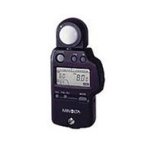
Light meter for af100

starmanric

Active member
After reading barry greens book I kind of think that using a light meter will be more accurate and faster.

What is available to use with these types of cameras and which are recomended?

starmanric
 
After reading barry greens book I kind of think that using a light meter will be more accurate and faster.

What is available to use with these types of cameras and which are recomended?

starmanric

If you really know how to use a light meter...you probably wouldnt be asking this question.

I suggest that you dont need one.

Learn about the Waveform monitor and the zebras ....and you will be fine.
 
I haven't used a light meter since college (about 30 years ago) but i remeber some what. I want to measure both incident and reflected light based on the iso. Now I know they where accurate in film cameras and I used them in 3 point lighting in a tv studio for the old rca tk44 but I am not sure if they work well with these new electronic film type cameras.
 
Try it and experiment.

They work fine ( especially when setting up lighting) but a waveform will give you far more valuable information and better exposure. ie. wfms keep you legal and let you know where all the tone values sit within the image as exposed.
 
Sekonic L-308DC if you want incident light only, L-758C if you need the spot meter (but it's almost 3X as expensive). Even the analog, selenium cell L-398A is good as long as you're working with plenty of light.

- Greg
 
I'm on board with Shooter - since learning how to light with a Waveform monitor and Zebras I get really great exposures no matter what my monitors look like. Throw in some acurate white balance and you're good to go.
 
I haven't used a light meter since college (about 30 years ago) but i remeber some what. I want to measure both incident and reflected light based on the iso. Now I know they where accurate in film cameras and I used them in 3 point lighting in a tv studio for the old rca tk44 but I am not sure if they work well with these new electronic film type cameras.

On a set is about the only time I use the meter. I like to walk around the subject with multiple lighting sources and see the incident lighting ratio's.
 
Sekonic L-758C is made for digital cinema cameras, and from all reports works very well.

I just bought this model last week. I like the spot meter for checking exposures from a distance. I like the idea of knowing what the different levels are in the shot, also great for green screen to make sure lighting is even.

The built in tools on the AF-100 are very solid, and adding a light meter just makes it better. Do you need to have one? Probably not, but I like having a little more control.
 
I still use my 2 Gossen Luna Pros 40 years old, they work great. You can get these very reasonably used. I use them to measure how many stops difference there is key to fill and a quick way to check for even lighting on chroma screen BG. If you are working alone this works very fast.

But the waveform is the best tool really. Remember you can zoom in move around on your image and use it as a spot meter as well. Just remember many zoom lenses vary slightly when zooming even if they are constant f-stop zooms.
 
I'm on board with Shooter - since learning how to light with a Waveform monitor and Zebras I get really great exposures no matter what my monitors look like. Throw in some acurate white balance and you're good to go.

It's not about exposure -- the WFM and zebras are best for that. For me, a light meter is primarily a tool for measuring (and replicating, when necessary) lighting ratios, and for location scouting to determine ambient light levels and how much supplemental lighting will be necessary.

- Greg
 
Apart from all the great practical stuff said in this thread..something I think is the value in a light meter is that it helps give an understanding of light and how it applies to photography.

Incident light and particularly reflected light... are very important concepts in light control and consequently exposure and subsequently DOF etc...

The wfm shows a heap of useful information but it does not tell the whole story.
Use all the tools to your advantage.
 
Exposing for film cameras you can do lots of things like expose or under expose certain areas. Can this be done with the af100?

ric
 
Well ...yes...but how did you do that with your film camera?

I would use lighting and it wouldnt matter what sort of camera.

BTW - I never "under expose" anything. I perfectly expose everything.
 
Apart from all the great practical stuff said in this thread..something I think is the value in a light meter is that it helps give an understanding of light and how it applies to photography.

Incident light and particularly reflected light... are very important concepts in light control and consequently exposure and subsequently DOF etc...

The wfm shows a heap of useful information but it does not tell the whole story.
Use all the tools to your advantage.

Shooter hit the nail on the head. Light Meters are just another tool, and honestly I find the Zebras and WFM much more convenient in terms of determining exposure these days. However it'd definitely be worth it to get one and learn as you'll be a much better DP with knowledge you acquire from using it. That said, I mainly use mine (a Sekonic Studio Deluxe II) to determine contrast ratios. It's invaluable when trying to match footage from a previous day and I never leave home without it on my belt. It's a great idea to get one if you can afford it, but I wouldn't call it a necessity.

Happy shooting!

- Jon
 
Back
Top