
Navigation
Install the app
How to install the app on iOS
Follow along with the video below to see how to install our site as a web app on your home screen.
Note: This feature may not be available in some browsers.
More options
You are using an out of date browser. It may not display this or other websites correctly.
You should upgrade or use an alternative browser.
You should upgrade or use an alternative browser.
Let's talk glass: Lenses for the AF100!
- Thread starter Jason Allen
- Start date

bgundu
Veteran
For those of you who plan on using the Tokina 11-16mm, I've been browsing for a good half hour now and haven't found the answer to if anyone's found a way to control the aperture manually if attached to a camera through an lens mount adapter (without an electronic connector)
Some adapters will allow you to control aperture manually.
Barry_Green
Moderator
Not sure of the exact one. I think it was one of the Optimo zooms.What lens was that?
Won't work. That's a Super16 zoom, and so all you'd get would be an illuminated circle in the middle of a big black frame. The AF100's sensor is too big for something like that.It wold be very interesting to see test frames from af100 eg. with this:
http://www.abelcine.com/store/Canon-11.5-138mm-Super-16-Zoom-10194/
I put a 16mm zoom on the Af100, and this is the result:
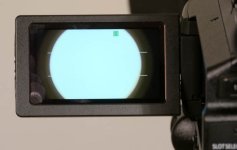
Barry_Green
Moderator
Yep, that's what the lens looked like, had the red stripes on it. I didn't think to pay much attention because I didn't know they had an issue with their rear element extending back that far. Had I known that I would have paid more attention to the model, but yes, I think you're exactly right, that's probably the series they were testing.Despite Angenieux having many different lenses, I'd imagine they were testing one of the two Optimo DP lenses. The DP lenses have a longer rear element, which makes it incompatible with film cameras because of the mirror shutter. The regular optimo lenses, such as the giant 24-290, regardless of it's size, would be fine as it's rear element would be no different than any Zeiss Prime, Cooke, etc.

Rick Burnett
Section Moderator
Not sure of the exact one. I think it was one of the Optimo zooms.
Won't work. That's a Super16 zoom, and so all you'd get would be an illuminated circle in the middle of a big black frame. The AF100's sensor is too big for something like that.
I put a 16mm zoom on the Af100, and this is the result:
View attachment 25177
But that's perfect for this scene I am doing where the main character is looking out of a tunnel!
 Hehe.
Given the following specifications:Yep, that's what the lens looked like, had the red stripes on it. I didn't think to pay much attention because I didn't know they had an issue with their rear element extending back that far. Had I known that I would have paid more attention to the model, but yes, I think you're exactly right, that's probably the series they were testing.
PL flange focal length: 56 mm
Length of rear element of Optimo zooms in question: 31 mm
Distance to sensor, with PL mount: 25 mm
mFT flange focal distance: 20 mm
Clearance from mFT sensor: 5 mm
It is safe to assume that 5 mm clearance should be sufficient when these lenses are mounted on a GH1/2. AF100 has OLPF and ND filters in front of the sensor, so a close call it seems.
Barry_Green
Moderator
Interesting -- I don't know if they tried swapping the ND filters while the lens was on.
So I'm thinking on going with the 14-140 as a standard. And on top of that I thought a couple of Zeiss Compact Primes would do the rest, Let's say a 21, 35 and a 50. You guys think this could be a good setup? ...and on top of that, I have Canon and Nikon lenses all the way from fisheye to 600. But I don't know how useful they would be, lacking auto-things.. I need some auto on some lenses because of how we handle and control the camera.
A little background first maybe. I have the Armed Forces as my employer and sometime works in somewhat hostile environments, both for me and the camera. I think you know what I mean.
Anyway, now I'm looking for the right gear to capture second to none videoclips. So I do not have the luxury of what some calls 'controlled environments'. Well at least not al the time. Sometimes we do have possibility to work in studio-like environments.
So, I don't know if this camera is up for the job. But we have had great experience with HVX and HPX (except for water.. they don't like water!) Even though they have been i.e in middle of a sandstorm and Panasonic support asked me later "what the **** have you been doing with the cameras" -- they have done a good job. But now we want something better to go as well.
So I'm in the hunt for a couple of **** ass good lenses, to fit what I believe/hope is a **** ass good camera.

Mark Williams
Veteran
Kimster,I don't think the AF100 would be a good fit in the environment you described which is more of a run and gun situation. IMO the AF100 is better suited to a more controlled environment what with changing lenses etc.. Not to say it couldn't be done but a camera like the HPX170 or smaller seems better what with a proper zoom. An yes I know they don't like water. I had to replace a lens on my HPX170 this past spring. Ouch...$1700.
Last edited:
Barry_Green
Moderator
Yeah, for the hostile environment scenario, you definitely do not want to be fiddling around with changing lenses. Sounds to me like the 170 or 150 would be the better choice.
gustavo_viral
Active member
Barry, the color peaking assist will work with manual focus only lens?
Thanks.
Thanks.
Barry_Green
Moderator
It will work with any lens, so yes if you're using a manual-only lens it will work.

Ryan Patrick O'Hara
Veteran
Given the following specifications:
PL flange focal length: 56 mm
PL mount flange depth is 52mm.
Given the following specifications:
PL flange focal length: 56 mm
Length of rear element of Optimo zooms in question: 31 mm
Distance to sensor, with PL mount: 25 mm
mFT flange focal distance: 20 mm
Clearance from mFT sensor: 5 mm
It is safe to assume that 5 mm clearance should be sufficient when these lenses are mounted on a GH1/2. AF100 has OLPF and ND filters in front of the sensor, so a close call it seems.
I'm not sure I follow the math. The PL mount adapter for the camera would expand that flange distance from the native 20mm to 52mm in order to accept and accurately use PL lenses and their back-focus projection. The 31mm rear element would (should) still have 21mm of room. But it needed to be checked and confirmed, because you never know when there is something that might obstruct the rear element, as does a mirror shutter can. Thus, the length mathematically works out on paper but you never know when there is an unforeseen issue such as with the diameter or an obstruction in the interior of the mount. A great example is the very variable you brought up. I did not think about the ND filtration. That would be something worth testing for!
Last edited:
Ok thank you for your concern, but I think I'm on a road where I have deiced to go for a try anyway.Yeah, for the hostile environment scenario, you definitely do not want to be fiddling around with changing lenses. Sounds to me like the 170 or 150 would be the better choice.
Because since we are already working with other systems that has interchangeable lenses, like the 1D and D3s DSLR (for still photos now) ..and yes they are built like tanks compared to any camera, but still they change lenses. I don't know if the shutter in those cameras would actually work as a protection to the sensor. And I don't know if Panasonic listened to me at IBC that I would like to see some protection in front of the sensor when you pull it of, like the blackbalance-doors (I think they were) that came down when you hold the ATW-button. I don't remember Barry if you heard that, but we had a little discussion with the engineers about the lack of rugged cameras. And how the sensor looked too exposed on the camera, and there should some thing more than IR-filters to protect it.
Anyway, now my idea is to use the 14-140 in the worst areas, or some other lens, but never change it until you are in a controlled environment. Thats how we work with the DSLRs.
And don't get me wrong, I mean there is degrees in hell to. So in worst cases or when you know you are going to do something violent then we would use some other cameras. Helmet cams or maybe the canon xf100 that I'm going to test in a near future.

toke lahti
Well-known member
Maybe that isn't s16 zoom?Won't work. That's a Super16 zoom, and so all you'd get would be an illuminated circle in the middle of a big black frame. The AF100's sensor is too big for something like that.
I put a 16mm zoom on the Af100, and this is the result:
View attachment 25177
Or flange isn't right?
Anyway, picture shouldn't look like that.
4/3" picture width is 17mm, s16 12.5mm & normal16 10mm.
A s16 lens that can produce picture fully without vignetting shouldn't have that much vignetting.
S16 lens should have at least about 15mm diameter visual image circle, which would leave only 1mm or 6% of black at the horizontal center line.
And because most of s16 zooms are converted from other formats, some of them can have bigger image circle than others.
I like to add some vignetting many times, so small amount doesn't bother me.
(...and if 4/3" camera would have raw recording, you could crop the picture before de-bayer and still achieve perfect 1080p resolution...)
Last edited:
Barry_Green
Moderator
Normal 16mm zoom, not S16. S16 would have made the circle a little bigger, but not much.Maybe that isn't s16 zoom?
Flange was exactly right. It holds focus throughout the zoom range.Or flange isn't right?
AF100 picture width is 18.9mm, S16 is 12.4mm. The AF100's imager is well over twice as large as an S16 sensor (203 square mm, vs. 93 square mm).4/3" picture width is 17mm, s16 12.5mm & normal16 10mm.
S16 would show a little less vignetting but not much.A s16 lens that can produce picture fully without vignetting shouldn't have that much vignetting.
The S16 frame is 14.4mm, so it would need a larger circle of illumination to evenly cover that. Even if the S16 lens had a 15mm circle, you're still trying to cover a sensor that has a 22mm image circle (and which would, therefore, need more like a 24mm circle of illumination for proper even coverage. S16 lenses are going to vignette heavily on an AF100, no two ways about it. AF100's sensor is 2.2x the surface area of the S16 frame, and 3x larger than the 16mm film frame.S16 lens should have at least about 15mm diameter visual image circle, which would leave only 1mm or 6% of black at the horizontal center line.

Steve Kahn
Well-known member
Barry,
I'm sure you got a chance to play with you Zeiss compact prime set when you had the AF100. Was wondering what (if any) focal lengths do you think will be your favorite go to lenses for most cases? Did you find yourself returning to a particular lens again and again?
I'm sure you got a chance to play with you Zeiss compact prime set when you had the AF100. Was wondering what (if any) focal lengths do you think will be your favorite go to lenses for most cases? Did you find yourself returning to a particular lens again and again?
Barry_Green
Moderator
The 85 is the sweetest, best glass in the set. I love the look of the 35, and while I'm not certain that the 18's the best lens in the world, I shot a lot of wide-angle 18mm. I think lots of people think the 28mm ZF is a great lens; I never had it in the ZF series but I've got it now in the CPs and so intend to experiment with it more, but ... no longer have the AF100, so that'll have to wait.
toke lahti
Well-known member
Isn't s16 frame 12.52mm x 7.41mm?The S16 frame is 14.4mm, so it would need a larger circle of illumination to evenly cover that. Even if the S16 lens had a 15mm circle, you're still trying to cover a sensor that has a 22mm image circle (and which would, therefore, need more like a 24mm circle of illumination for proper even coverage. S16 lenses are going to vignette heavily on an AF100, no two ways about it. AF100's sensor is 2.2x the surface area of the S16 frame, and 3x larger than the 16mm film frame.
Which makes diagonal of 14.55mm?
What is exact size of af100's sensor?
18.9mm x 10.6mm?