LED Fresnels that cast sharp shadows

LennyLevy

Veteran
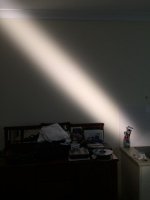
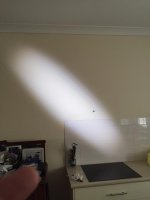
At NAB I saw a lot of very low cost high output LED Fresnels (150-300W), but as I recall none of the ones I saw cast a light that could throw hard shadows like a traditional tungsten or HMI Fresnel. I loved the price and the output of these lights but casting good patterns is a significant part of a fresnels use to me. Can any of these lights do that? I can't afford to buy something over $2000.

The other use for that type of unit for me is as a Key light through diffusion and in that case the Fresnel is irrelevant as it usually just decreases output, so I'm also wondering what the best buys are for hard light 150-300W LEDs with decent color .

I actually prefer Daylight to bicolor on LED's because I often want max output in daylight situations and don't find it difficult to gel for tungsten.

Thanks
 
The least expensive, high quality, powerful LED single source that I know of is the forthcoming Aputure 300D. 300watts. Fresnel optional.

BUT, if you saw it at NAB and didn't like the shadows, then that's that.

There is also the Rayzr light if you can deal with a bulkier/heavier fixture (albeit with less parts).
 
A higher powered/punchier LED fresnel will likely be my next lighting purchase, but missed Cine Gear so did not get a chance to check the options.

Briefly compared a 400W ARRI L10-C against one of their 1200W HMI Fresnels when we had them on set. The HMI's beam was better defined, & also brighter, then the LED's.
 
To split hairs does a fresnel do hard shadows? I thought that was a different lens (episoudal???).. like in Dedos.

--

Most fresnel LEDs have COB sources about the size of a golf ball.. which is way bigger than a tungsten/HMI element.. so the source will be many times softer - thats physics?

I have Lupo fresnels - they zoom and throw - you can punch someone in the back of the head from way off set without a lot of spill..

but they dont have that hard edge of my DLH4 dedos.

I do have a DLED 4.0 dedo and that does have a pretty similar pattern to the trad dedo.. so maybe investigate the LED offerings from Dedo?
 
The problem is that in LED, the emitter source is larger than an old style bulb filament. On a COB like the Aputure 300 it's probably close to 2" across. Hard to get sharp shadows from that because it's not a true point source.
 
Like SMM says, you need to move into leko (ETC source 4, profile, ellipsoidal etc.) territory to achieve the well defined, hard shadows. Although Sam I would say while our prized dedos produce the hard edge better than Fresnels, you're not quite getting there without Dedo's projection attachments.

I'm against the huge push for LED Fresnels. It's obviously a marketing term. Augustin-Jean Fresnel would be spinning in his grave if he saw the abysmal "slash" today's LEDs are creating. So what's the point in LED Fresnels if the control isn't there?

Also I don't like people subscribing to the mindset that each new LED light is a replacement for an older light. To me it's not either LEDs or tungsten, it's LED, tungsten, hmi, plasma, remote phosphor, quasar, fluoro (actually who wants fluoro in 2017?) - all tools that have their place, many times all at once.

For reference, check out the arri 650 Fresnel (left) against a chinese LED "Fresnel" (right):

650 slash.jpgLED slash.jpg

The LED barn doors were nearly touching each other!

Back to LEDs and hard shadows. Like Sam and Mitch mentioned, and with Bern's example of the Arri-L10C struggling, beam-wise, we're up against physical limitations.

While not Frensels, check out the Dedolight imager.

Also, there are ETC's LEDs, which aren't cheap:
- https://www.youtube.com/watch?v=KTJsGjgovTw
- https://www.youtube.com/watch?v=tQ2tgDjXZKY

Funnily enough you can add a Fresnel adapter to emulate the slightly softer barn doors: https://www.youtube.com/watch?v=zH10nQOxsjw

Regarding your $2k budget, if you can find some second hand, maybe the smaller dedo LEDs/imager are the way to go?
 
Isn't the LED emitter actually pretty similar in size to the reflector assembly in a similar sized tungsten fresnel?
 
Isn't the LED emitter actually pretty similar in size to the reflector assembly in a similar sized tungsten fresnel?

No, a reflector is actually larger. But the vast amount of light comes from the bulb itself. For an experiment, one can remove the reflector from a tungsten fresnel and compare the beam to a standard unit. It's a little bit sharper and a whole lot dimmer.
 
I have to say, it's not all that often that I need a cut quite as sharp as what an ellipsoidal can do.

But yeah, it's very misleading to have things like Came Tv's Boltzen "Fresnel". It is not a fresnel lens, and the shadows are a minestrone soup at the edges.
 
Actually a tungsten fresnel with the fresnel removed produces sharper shadows - standard gaffers trick when throwing patterns. When I was at NAB a lot of the LED fresnels had plastic lenses that were were more efficient than traditional glass,but the shadows were even softer. Some companies you could choose which you wanted, but even the glass LED's were not as good as traditional lights.
 
The hard light of a fresnel is certainly a bit softer than that of an open face. Back before everyone insisted on soft everything, I loved to light actor's with fresnels. They really had to hit their marks, but it was easy because they could feel the light hit them (and the heat). And that hardness with just a touch of soft could really be beautiful. But that's when you had to position the light just right for a closeup, as an inch or two higher or lower could make a huge difference on the sculpting on a cheekbone. Karsh famously used Mole-Richardson fresnels precisely placed for his amazing portraits, and sitting Presidents, Queens, great intellectuals, and famous actresses would patiently wait without moving as he tweaked each lamp by the millimeter.
 
Yes, We used to do that back when I started in the business usually preferring the old larger 2K incandescent Fresnels because they were softer even though it was still hard light. Sounds like a contradiction but it wasn't.
 
The hard light of a fresnel is certainly a bit softer than that of an open face. Back before everyone insisted on soft everything, I loved to light actor's with fresnels. They really had to hit their marks, but it was easy because they could feel the light hit them (and the heat). And that hardness with just a touch of soft could really be beautiful. But that's when you had to position the light just right for a closeup, as an inch or two higher or lower could make a huge difference on the sculpting on a cheekbone. Karsh famously used Mole-Richardson fresnels precisely placed for his amazing portraits, and sitting Presidents, Queens, great intellectuals, and famous actresses would patiently wait without moving as he tweaked each lamp by the millimeter.

A good friend of mine shoots a lot of movie junkets and he told me they light with fresnels/hardlight. No Chimeras, softboxes, silks, etc.
 
I started to write a pretty nasty response but then I thought, "I better take a look at that link just in case."

:-D

Sorry Mitch, I couldn't help myself :smile:

It's still a great demo after all these years. I bet you helped sell a lot of Dedos and Arris, probably even the Lowel's too.
 
Whether it sold those lights specifically, I hope that it educated people a bit that there are different types of lighting fixtures When I taught my lighting class, I would discuss emitter technology (halogen, LED, HMI, etc.) separately from fixture type (fresnel, open face, PAR, etc.). Then we got into the mixing and matching between the two.
 
Back
Top