Key & Peele - Behind the Scenes with DP Charles Papert

Charles-Pappert.png
 
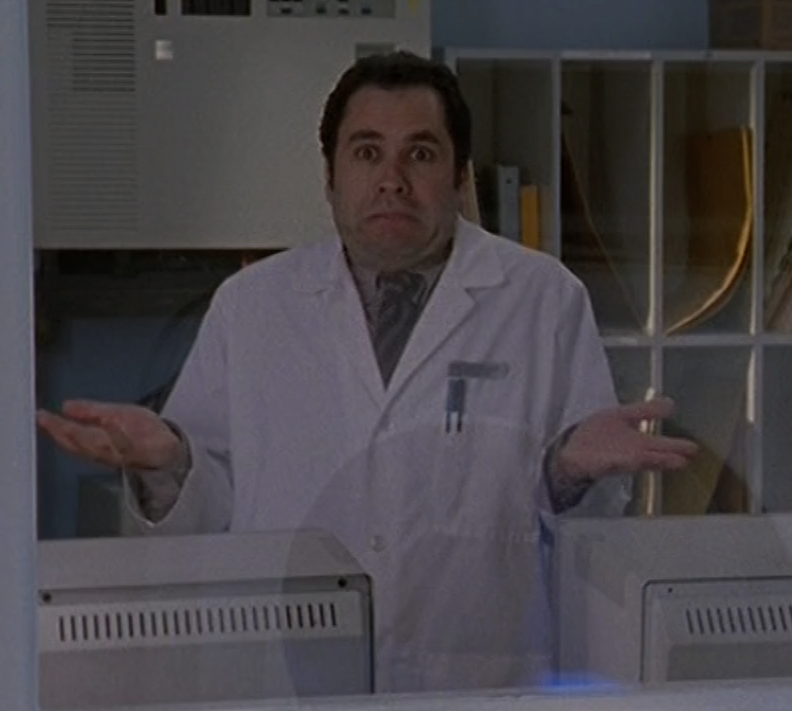
Simple question good sir. What was your key light on mr rob riggle on this skit? Around 20 seconds. Also was it shot with an arri? Thank you for your time.

 
Simple question good sir. What was your key light on mr rob riggle on this skit? Around 20 seconds. Also was it shot with an arri? Thank you for your time.


Hi!

5 yrs on, I can't remember the specifics too well. It looks to me to be a smaller unit relatively close, like a 2x4 Kino or equivalent from maybe 6 or 7 feet away (in that last season of the show we starting using LED tubes which were just emerging).

Seasons 2 through 5 were all shot on Arri Alexas.
 
Last edited:
Thank you for the reply. I really love the way his skin tones looked. Were the kinos tungsten balanced or mixed? Again, thank you for your time
 
Tungsten balanced, I would say.

Something is sort of nagging at my memory now that I augmented and expanded the practical on the wall by covering it with a unit to simulate its effect, but I can't remember what it would have been. From the highlights in the eyes I can see that was the primary source, with a lesser fill version probably flying in from above each person lighting the person opposite. It's a good chance we cross-shot this section of the sketch (i.e. one camera on Rob, one on Keegan) for improv reasons.
 
Sir not sure if this has been asked already but how was this episode lit? I absolutely love the fake moon blue backlight. Thank you again your work is such an inspiration.

 
Thank you!

I don't think we'd discussed this sketch in this thread and unfortunately I didn't keep notes on the particulars of other sketches, and this one goes back about six years. We were riffing on the even-then omnipresent "blockbuster look" which we would have used party gel to achieve those saturated tones, although I think it would have also have been possible with a double full CTB (or CTB on HMI, with camera at 3200) for backlight, and full CTO on the key, plus pushing the saturation in post.

Most of the lights seen in the "behind the scenes" parts of the sketch were placed there as set dressing, with the intention of flaring the lens, or to pick out some details of the crew or equipment to give some depth. We shot this on the backlot of Universal and unlike regular streets, there are no streetlights or light sources unless you place them there, so we probably had more instruments working on that part of the sketch than in the "movie within the movie" material!
 
Again. Thank you. For the keylight you said full cto so hmi + full cto? I absolutely love the look of the color contrast because I have probably been brainwashed when watching movies or shows.
 
Ahh no, tungsten unit with CTO. I'm looking at the practical in the background that was a standard bulb that is reading fairly clean so it looks to me like we added warmth to the foreground lights--probably half CTO from the looks of it now. Not remembering whether it was an HMI backlight or tungsten I can't say what the gelling was, because it is a very deep blue, but if I didn't have access to RGB units or party gels I'd go HMI with at least full CTB to attempt to get enough saturation (and maybe even double up the CTB, if you still have enough stop left after that)!
 
Last question i promise. What is your favorite way get some ambient light in? Do you bounce off floors, light from the top at a low intensity, do you bounce off ceilings? Thank you again for being such a great source of information for us.
 
Keep asking! That's what this thread is here for.

I can't say that I have a single favorite way to add ambience as it depends on the set, what time the scene takes place, what type of lighting I'm looking to emulate and so on. A ceiling bounce is always an easy way to add "tone" as most interiors tend to have ceiling fixtures to begin with, so this usually looks right (unless you are Bradford Young and you install solids on the ceiling to go the opposite direction with this!).

Floor skips can look great if there is a believable means for sun to be able to hit the floor, so it helps to show a hot window at some point, and also to introduce a lesser level of ambience at window height coming from the same direction.

On my current show we are all on stage and some of our windows are blue screen for exteriors to be added later, and one of my challenges is getting enough daylight ambience to push through these windows to feel right, because by definition the light needs to be coming through the "hole" that we are photographing! Usually we'll fly a softlight outside and just above the top of the window to deliver some ambience, but I may augment that with vertical units on one or either side, and an additional unit inside the set above the window as well, to continue the ambient push deeper.

A favorite instrument for creating bounce ambience is a Source 4 leko or equivalent (we are also using the Lustre LED lekos as well). Trimming the parameters of the bounce pool down to a fine degree is really helpful and minimizes the need for grip cutters. Sometimes I'll position the bounce so that it is, say, 2/3 on the ceiling and 1/3 coming down the wall to give a little return into the eyes.

A similar issue is installing ND on a window on location--the exterior may photograph properly, but you have also eliminated a lot of the ambient that should be coming through that window.
 
Thanks Charles for your gracious sharing of knowledge. Since you mentioned the Lustre LED's - I have been looking into these for this same purpose - along with using them for long throws in large interior rooms to supplement 800w joker. While I currently don't own any of the Source Fours LEDs - I'm very familiar with the traditional 750w tungsten versions and leaning toward purchasing the series 2 led. The stated photometrics for the LED versions look good - just wondering how you'd compare the Lustre daylight to the old tungsten version and if you've noticed any less desirable effects with the LED?
 
Thanks Charles for your gracious sharing of knowledge. Since you mentioned the Lustre LED's - I have been looking into these for this same purpose - along with using them for long throws in large interior rooms to supplement 800w joker. While I currently don't own any of the Source Fours LEDs - I'm very familiar with the traditional 750w tungsten versions and leaning toward purchasing the series 2 led. The stated photometrics for the LED versions look good - just wondering how you'd compare the Lustre daylight to the old tungsten version and if you've noticed any less desirable effects with the LED?

The Lustre still doesn't stack up to the 750w tungsten version in output, unfortunately. And obviously waaaaaay less than a Jo-Leko when in daylight mode. They are working out fine on this show because I'm shooting Varicam with ISO's from 2000 to 4000 to help stretch the lighting budget, which of course makes any given unit effectively 2-3 times as powerful. Overall it's great to have the flexibility of RGB with the convenience of the Leko optics.
 
Thanks Charles - that helps a ton.
As an aside - to any mfg's listening.... my next camera purchase should have dual ISO capabilities along with vari ND.
 
Charles, this may be a tricky question to answer, but how do you decide when to light "badly"? I ask because I often see shots of actors where the actor has a brow shadow or a nose shadow that I would never allow when shooting an interview. I assume the DP allowed it on purpose and it wasn't just that the DP doesn't know how to achieve more flattering lighting. I'm often surprised that the DP allowed the lighting to be as it was. Especially in films that are not dramatically lit and are "bright" in mood. I've seen it often on tv shows like NCIS and Blue Bloods. Here are a couple of examples of what I am talking about:

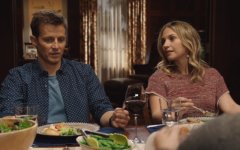
blue-bloods-jamie-and-eddie-dinner.jpg

In the scene from Blue Bloods above the male actor has "raccoon eyes". An unflattering brow shadow that make him look unhealthy. I'd never allow that when I light an interview. Maybe the DP rationalized that it is realistic because when people sit at a dinner table they are likely to have brow shadows, and so he let the brow shadow go even though it is unflattering on the actor?


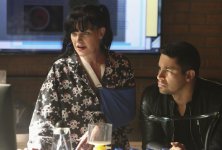
ncis-abby-leaves-for-charity.jpg

In the NCIS scene above the male actor has an ugly up-shadow on his face. Again, something I would not allow were I lighting an interview. It's ugly.

So you think the DP's allowed that "bad" lighting on purpose? Or do you speculate that it is more that it is difficult to avoid bad lighting when shooting a scene like those than when shooting an interview and the "bad" lighting is something they could not avoid? For virtually any feature film I see "bad" lighting throughout the film. Obviously a DP is going to do "bad" on purpose at times because it fits the scene or is somehow justified by the narrative. This may be arrogant on my part, but I suspect that it is partly explained by DP's not having as high a standard for lighting scenes as I do for interviews. That they aren't as exacting. Possibly because they are lighting many scenes each day of production and they are under a time crunch whereas when I shoot interviews I'm given more time to light and it's easier than lighting a scene on a set.


How often do you struggle between lighting the scene realistically / dramatically and lighting the actor in a flattering manner? Is it scary to light a major actor in an unflattering manner because the scene calls for it, knowing that the actor might hate the way they were lit? I imagine it takes some moxie to light an older female actor who is worried about her looks in a manner that isn't flattering. And say to yourself "I don't care if Jessica Lange hates the way I made her look. Screw her, its what the scene called for." So, I guess my second question is: How do you balance lighting actors in a flattering manner with lighting the actors in the manner that the scene calls for or the manner you desire for drama, despite it being unflattering on the actor?
 
As someone like you, JP, who shoots countless interviews, IMO it’s a different style and asthetic. Whereas what we are doing for interviews is more akin to portrait photography(and the subject is sitting mostly in just one place) and narrative, especially today, is more “natural” looking or “motivated”(where would light naturally be coming from). In the two examples above, for example: Sitting at a dinner table, most people are going to have overhead lighting, maybe a hanging light/chandelier of sorts, and that’s how they’re going to look in real life(or close to it). And in the second image, without seeing a wider shot, I’m imaging the “light source” is the sun coming in through a window out of frame and bouncing skipping across the table and maybe some of the objects on the table and hitting the actors.
 
As someone like you, JP, who shoots countless interviews, IMO it’s a different style and asthetic. Whereas what we are doing for interviews is more akin to portrait photography(and the subject is sitting mostly in just one place) and narrative, especially today, is more “natural” looking or “motivated”(where would light naturally be coming from). In the two examples above, for example: Sitting at a dinner table, most people are going to have overhead lighting, maybe a hanging light/chandelier of sorts, and that’s how they’re going to look in real life(or close to it). And in the second image, without seeing a wider shot, I’m imaging the “light source” is the sun coming in through a window out of frame and bouncing skipping across the table and maybe some of the objects on the table and hitting the actors.

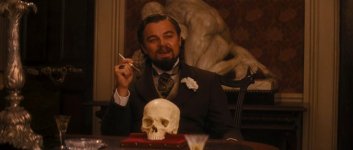
Regarding the hooding on the male actor from Blue Bloods, I get that it is "realistic" and what one might expect. But in the sample below from a dinner scene in Django, is the lighting less "realistic" because the actor is not hooded from an overhead source? Were audience members finding the scene less realistic because of the lack of hooding and walking out of the theaters because of it? Why did one DP choose to have his actor hooded but the other DP did not have his actor hooded? Personal choice, I get that. I guess I am asking as to how that choice is made. And maybe only those DP's can answer that. But I'm curious as to Charles' thought process for the times when he lets something "go" or not. The balance between the perfect and the imperfect. Fix that bad shine on the bald actors head? Or leave it be because it is realistic? Leave the soft filter off the aged female actress's closeup because her wrinkles are realistic and risk her not wanting you lensing her next film? Or help her out with a softening filter that takes the edge off the wrinkles, staying in her good graces?


decap.jpg
 
Mr. Charles!!Happy New Year. Another question for you sir. Do you remember what your ratios were in this video?I love how low key it is but still has slight details in the shadow. Im curious to see what your key to background ratio was if you remember.

 
Mr. Charles!!Happy New Year. Another question for you sir. Do you remember what your ratios were in this video?I love how low key it is but still has slight details in the shadow. Im curious to see what your key to background ratio was if you remember.


I really wish we had kept logs of this stuff! That one goes back about 7 years now so, hard to remember. I'd guess the fill was maybe 2.5 stops under, and the backgrounds ranged widely. I actually wish I'd done a little less on the background right behind them...since the light was flattest on them in the master, would have been nicer for contrast if we didn't have those hot objects directly behind them (but I think that might have been a director request).

One of the things that is tricky about doing the china ball style lighting for a table scene like this (I'd guess we used a Jem ball, or Chimera pancake) is when shoot a character on the opposite side of the table dead-on, i.e. the light source is directly in between you and the character, they end up quite a bit flatter than when you are off-axis and there is more modeling. Even though the key values stays the same, it always appears brighter because more of the face is lit.
 
Oh wow. The wides looked darker than 2.5. Thank you for your insights sir. No worries it still looked good eventhough it was top lit
 
Back
Top