Just got a new camera - Sony F35

If two cameras are using the same sensor, and your in-PC software is not any worse than your in-camera image processing, then recording RAW will always be best. But if the sensor is different, or if your software can't take as much from it as the in-camera image processing, then you could actually get better colors in camera than shooting RAW and doing all the color work in post. The sensor in the BMC seems great, though (if small). And the software to work with RAW video may not be any worse than the in-camera processing, and will definitely get better in the coming years.
 
Nice thread you have here, Miguel. My personal compliments :-)


Aside F35 or other camera comparisons, RAW will always be superior as far as color goes, it doesn't matter what.

And uncompressed can also help it, no matter the quality of codec we have.

This test recent shot by Frank says a lot. Yet, it is very likely useless to remind he has preached in these same boards for uncompressed use as much as possible, even when we have the media storage each day more affordable these days. He is fully right, (de)pending on budget and other circumstances, of course.


Dude, you´re comparing cheap prosumer cameras there.

There is this missconception out there about RAW being the holy grial, and the truth is that it is not. You're basically shifting processes from the camera to your PC. To me, the advantage of shooting RAW in a camera such as the RED is that you can change your WB setting easily. Other than that, there is no advantage really. Since you´re going to end up exporting as Redlog film anyway if you plan on doing heavy color correction.
There is no more DR in a RAW file than in a gamma encoded high bit file (specially if it was log encoded).

In cameras such as the F35 or Alexa, the linear image (that would be otherwise recorded as RAW) gets demosaiced and processed in the camera circuit boards. In the Red, you have to do it in your PC. Given the same quality output (10bit 444 for example), I´ll take the 1st option, thanks. It will save me a lot of time.
Well, it should be 'cause I still remember your Z1 days or it was a FX...? LOL ;-)

Nevermind... we were speaking about color isn't? Because the fact that's a lowlight test, this doesn't mean we can't use it for testing (our eyes) on other issues such as color, the previous quote of yours I quoted, after all.

In any case, I concur other conclusion you got from a previous quote of yours. DR in highlights is a way different than over shadows. I can't only subscribe what you say about RAW on post processing as far as color concerns, as for instance. You don't mention, you simply reduce it to WB setting. RAW is beyond that. You as good hispanic even from the motherland Iberian Peninsula : ) should know we can practice a sin not only for deeds but also for omissions :D

Because you see RED in my signature, it is not implicit you're speaking with a RED fanboy ...straight away :P

E. :-)
 
Last edited:
Miguel, so what lensmount adapter do you use? I thought Nikon lenses on a PL body doesn´t work because of the flange distance? And when you overexpose in your "LA" test, the Sun burns to nasty colors, why doesn´t it just clip to white? Is that the CCD behavior? Is there anything else to watch for when opting for a used F35? Any parts that have likely been damaged / worn out after years in rental...?
Also, it would be AMAZING if you could make some seconds of the ungraded test footage available for download, to play around with it ;)
 
Grab this high quality file:
https://dl.dropbox.com/u/13362047/LA.mp4

Some shots in this test have not been graded (if it looks really flat it's not graded). But I´ve added a layer of grain on top to make it more filmic, the F35 is actually pretty clean in terms of noise. I´ve also blown up a shot to double the resolution to see how re-framing workins in a 1080p timeline. I won't tell you what shot is that. XD

The F35 uses a global shutter CCD instead of a CMOS. The benefit is zero rolling shutter artifacts but the downside is that in the event of really really strong lights, such as the sun, you might get smear (a vertical ugly flare). However, in this clip, I did the worst thing you can do, which is pointing the camera to the sun, and over expose the shot by like 5 or 6 stops to see the effect (2:05). If you noticed at 2:08, the shot is properly exposed and the ugly artifacts are gone. So this issue is not something I'd worry too much.
Also the sensor native color temperature is around 3200ºK so you won't get noise in the blue channel when you get indoors and switch WB to tungsten like in many other cameras.

The camera was sold only with PL mount. I have some old PL mount lenses around (which I might sell BTW) and I'm having a custom built Nikon mount done this week. We'll see if it works. It didn't look too difficult to make.

The F35 is a very high end camera, and only rental houses could afford them. Therefore I'd suspect they were well maintained. There are no moving parts except for a shutter that covers the sensor and the body is built like a tank. All cameras I´ve seen have marks of being used but I'd say that´s normal. In the maintenance menu you can check the hours of operations. Those on ebay we talked about have between 1500 and 2100 hours.

Firmware upgrades are free of charge (or were free since I doubt there will be any more) and the latest one added 12bit output and 60p 444. All you need is a memory stick to load it.

About viewfinders: The ideal viewfinder for this camera is the C30WR http://www.abelcine.com/store/Sony-HDVF-C30WR-2.7-HD-Color-LCD-Viewfinder/
But since that viewfinder will cost you almost as much as the camera itself, I guess you´ll be looking for some alternatives.
The camera has 3 modes of operation, which in the end you can summarized in 2: video mode, where it works like a F900 and you have tons of adjustments, gamma curves, color matrixes etc, and cine mode, which just outputs slog, and can only choose framerate and shutter speed. No more options. I love it. That's the way I use it.
 
Last edited:
vlcsnap-2012-09-18-21h20m13s233.jpg


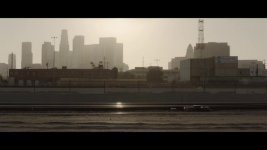
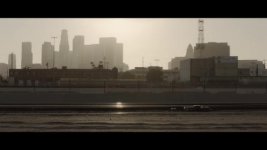
One more detail about this camera is the way it handles highlights. For the first time in video I don´t care that much if something is clipped in the background. The transition between detail and overexposure on this camera is very peculiar. Very natural. Look for example at the highlights in the rails and how they are bloomy, just like in film, when a very strong light hits the film, the light is slightly scattered producing the same effect.
 

Attachments

  • vlcsnap-2012-09-18-21h20m13s233.jpg
    vlcsnap-2012-09-18-21h20m13s233.jpg
    12.8 KB · Views: 2
The most interesting in this last picture is or are (because it is complexity we're speaking of) the different layers of exposure comprehending three (?... maybe four) distinct plans, being two of them completely or apparently secondary before of another one on front page. Trademark of this remarkable cinematographer since the good old times with the chicks ; ) Hope you don't lose yourself, Miguel. Sincerely :-)
 
Thanks again for sharing all this info Miguel, because the camera's only ever been owned by rental companies really - it's almost impossible to find much in the way of operational reports on the camera.

The super simple Cine Mode sounds perfect to me, does it give you Gain control as well as Shutter Angle and Frame Rate (or does it lock you into the default 500 ISO)?

Paired up with Gemini 4:4:4 recorder (once they've enabled DNxHD on it), I reckon it'd be just about perfect for my needs - with the exception of having to upgrade my jib etc. to cope with the extra weight (though without one of the behemoth Sony/Codex recorders on the back of it, it shouldn't be any heavier than an Alexa).

The only thing keeping an F3 in the equation for me, is the significantly greater low-light capabilities.
 
Last edited:
Hi Grug!
In Cine mode, and the latest firmware upgrade, the way the ISO is handled is similar to the Red/epic and the Alexa. The sensor has a certain dynamic range, and increasing the ISO just maps the mid grey into a different zone.
Now the camera officially performs its best at 450ISO, which we can round up to 500ISO. I believe you can go also choose 640, 800 and 1000. Now the recording information is going to be the same, but in your monitors you are going to see an image that is brighter. So the principle is exactly the same as with those other cameras except that the signal recorded is Slog, so it will be in color grading, where you have to map that mid gray to the ISO you shot. Which means basically just grading the footage as you would do normally.

With the Gemini this camera will definitely rock. There's also one good thing about recording in DNxHD and that is that the avid codec is a full range codec, and some other codecs like prores or uncompressed 422, only show you the limited range signal. And Slog is a full range gamma curve. So there might be hidden information if you ar recording in those codecs that is not easy to access, and therefore you'd be lossing dynamic range. This issue does not happen with DNxHD. ;D

In terms of weight, F35 and Alexa are pretty close. Maybe the sony is 1-2 pounds lighter (including the hyperdeck)

An F3 might be better in low light for sure, but man, no comparison, really.
 
Last edited:
So how far can the F35 be pushed? Wasn´t Collateral shot with it (or was it the F23)? In your test shots when you were inside that coridor/house, it looked good IMHO - how far was this pushed? I´m interested in the documentary capabilities of the F35, on a movie set you can always add light, and the difference to a F3 becomes irrelevant. But if the image is as clean as Miguel states and the codec holds up, I guess lower light might not be a problem at all. And hell the F3's picture is nice, but the F35 looks AMAZING. And it should, considering prices when compared both used... ;)
 
So how far can the F35 be pushed? Wasn´t Collateral shot with it (or was it the F23)? In your test shots when you were inside that coridor/house, it looked good IMHO - how far was this pushed? I´m interested in the documentary capabilities of the F35, on a movie set you can always add light, and the difference to a F3 becomes irrelevant. But if the image is as clean as Miguel states and the codec holds up, I guess lower light might not be a problem at all. And hell the F3's picture is nice, but the F35 looks AMAZING. And it should, considering prices when compared both used... ;)


Nonono, Collateral is F900/viper as far as I know. Really ugly in my opinion.

If you need low light, I wouldn´t go with the F35, I wouldn't even consider the F3, I'd go with the C300, it´s just crazy how clean footage is at super high ISOs.
 
Yeah, but so far the C300 hasn't convinced me to be very "cinematic". In the sense of "picture mojo" if you know what I mean. All personal taste of course. It can produce great looking videos though and I'd use it for everything I´d normally shoot on a 2/3" ENG camera, adding all of the DSLR-like advantages.
 
Yeah, but so far the C300 hasn't convinced me to be very "cinematic". In the sense of "picture mojo" if you know what I mean. All personal taste of course. (...)
It is all a matter of (among other stuff coming from shooting for sure) grading too:

http://cinemaeos.usa.canon.com/media-gallery.php

C500's Man and Beast, cinematographed by Jeff Cronenweth.

There, we can find both more videoish or film-like styles depending on what we choose, of course...

There's nothing less fair than to label RED outcome, as for instance, as videoish. Here's an example:

RED vs KODAK VISION.jpg
RED ONE MX footage -> KODAK VISION 3 look
 
Last edited:
Emanuel, the C500 looks really good in Man and Beast. I wasn´t off to start the old "videoish vs filmic" debate, because as I said, it often boils down to personal taste. Similar to film days, when people preferred one filmstock over another and only used certain lenses - in the end all TRUE filmlook ;o)
I still drool over the F35's image output...
Christian, I also like the F35 output... And concur on the quality of its DR over the highlights à la film stock.

C500's piece (Man and Beast) is an ultimate example where both can apply, even on the reverse range. Actually, Canon's main intention of their propaganda department. Same for RED.

I only try to illustrate that any label is only reducing the purpose of filmmaking, other than good work can afford. More centered on the skills of a craft than the device itself. The same magic or logic Miguel was used to offer us from consumer cams.

[PS:] Here's another good C series (C300) example -- please, scroll down the page if you never shot/graded properly (with) one :-)

http://www.cinemaeosuser.net/index.php?/topic/58-c300-for-documentary-work/
 
Last edited:
Back
Top