Jib, crane any advices or tricks ? reveling, curve, paning shots...

raatid

Active member
Hi DVX users,

I just bought a 12 feet jib and I spent the whole day working with it.
I can tell it's a "must have" tool, that gives you "MONEY shots" !!! even if you don't master the crane yet
it makes your shots impressive.

For my part I realize that:
-I must use a wide angle lens or it no makes no sense
-Its nice when you are close to the walls it gives you a scale
-You must know before your shot the move you wants to make

Any of you guys have during your cineaste journey discovered or learn any combos or magic moves?
any advices will be appreciated
good day
 
You may already know this, try to always (or when you can) have something in the foreground at the beginning or at the end of your move.
 
The importance of a crane or jib move is to give the cinematographer an additional tool for expression. . . . fluidity, motion in 360 degrees. It is also important to not let the tool upstage the story. Use it to compliment, not to distract. Be aware of moves is films and study how and why they are used, then practice . . . . ups, downs, swings, pushes. You will discover insights into your own use of the tool.
Good luck.
 
i generally try to stay away from hard direction changes (unless there is an obvious reason to do so). always move in a straight line, curves or series of curves. and practice your clean stops.
if youre using a camera with a servo zoom, a remote zoom control opens up a whole new realm of options.
(frequent jib use is one of the main reasons i refuse to let go of my hpx170! - easy options for remote focus, iris, zoom)

like doug mentioned, starting or ending with something in the immediate foreground can be interesting.

and dont get drunk on jib moves. remember they are best suited for product reveals ("beauty shots") and transitions from one scene to another
 
Last edited:
The difference between fore and back perspective make these shots sing, as mentioned above...

Thing is, they're handy tools for all kinds of stuff. I had the crane with the camera on the floor and "panned" it across a model laying on her stomach... really really cool, kind of like a dolly but the arc of the move added something - think of it as this crazy tripod sometimes. If you can get a short head (I have a kessler than can be 8' or 5') it's really a cool "tripod" sort of thing for controlling camera height smoothly - where it doesn't look like a crane shot at all (someone walks to camera and sits at a desk - and the camera drops vs tilts - that's the bomb). And play with the camera turned 90 degrees, where it's more about up & down - it's subtle but very different move-wise, and is often the way to go with those "drop" shots.

My #1 crane thing - they take time to setup and balance - so have your remote controls and monitor no-brainer. I like the monitor being on its own stand if possible - if not I mount it to the control handle, so I don't end up in a yoga pose to watch the shot. But get your cable, controls and monitor situation nailed down so it's plug, plug, screw, done. I keep finding the crane is a "this will be so cool" when packing, and "screw it, no time" when shooting. Get your setup time minimal and you'll use it more.

Another cool crane thing - I use a big SUV on set and just leave the crane assembled - we pop it off the tripod and stuff it in the truck and get a lot more shots with it vs. re-assembling every time we move. We've got it down to a few seconds to get the crane up. Me and one assistant have that sucker down to a choreographed dance and can pop it onto a tripod in moments.
 
First, I agree with the other posts, but I don't agree with being used only as a wide angle shot. I could do a close up of a building and raising it would be interesting. The options are almost unlimited.

Jibs/cranes when operated proficiently can replicate most every shot in the "book". The problem is the complexity can be very difficult on the operator and there may not be the patience for repetition by the crew/director. Just like any piece of machinery it takes many weeks of operation to be solid in duplicating smooth and complex moves. Like another poster said the zoom function adds another serious step in its capabilities. I have read and hear from others jib operation is not something a lot of operators can accomplish proficiently. The hardest moves are pans + tilts + jib rotation + zooms all at once, especially when fully zoomed out. Here's a test of an operator's proficiency. Start with camera next to an object on the floor in focus. In less than a minute, smoothly lift and boom left/right the jib while zooming yet keeping the object in centered, same size, and stable in frame. If you can rotate the jib 90+ degrees, lift the boom full height, yet the object looks like when you first started you are quite accomplished. Obviously this is harder the longer the jib is. I can somewhat with some shake accomplish this move on a 30' Cammate and I know its quite an accomplishment.

Finally, the comments I've read about jib ops is their ability to maneuver within very tight spaces. Every operator needs to know where the entire jib is at all times in their minds eye because you will hit people/things otherwise.
 
Don't forget the locked shot. Its great to have a wide and high up shot looking down.

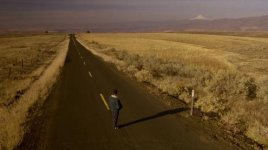
Screen Shot 2012-10-31 at 11.09.56 PM.jpg

love that road with the f@*ked up face!
 
The above post is dead-on - think of the crane as a crazy-ass tripod. Another cool move, in a shot like that, is to pan from the tripod. It makes a really cool "panoramic" pan, with the camera on an arc vs. the center point.

And the more "consumer"-ish rigs (I'll include Kessler) aren't as stable as the hollywood gear. It can be really really really hard to not have a little "bounce" or settling at the end of a move.

One fix for this is (for a down move) use apple boxes or cases with a pad of foam or rolled sound blankets, and push/hold the camera end down into it - the resistance of compressing fabric slows the move to a halt and continued light pressure keeps you from bobbing back up a notch. For up moves you can use a bungee cord tied to a bunch of sandbags, etc - the idea is to have some resistance at the end of the move that grows to "infinite" resistance at the end of the move - with light pressure holding the move.

You can use the apple boxes & padding on the weight-end of the crane for up-moves as well.

I have a Cambo V-5 jib that lets you set it up to be a really high tripod and do very smooth pans.... I love it for light cameras. I had a Scarlet on it this week and I thought it would snap in 2 :)

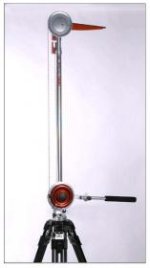
Screen Shot 2012-11-01 at 12.39.37 PM.jpg
 
Hoping there's someone still watching this thread. I've been a Jib shot lover for years and I'm about to get my first jib.

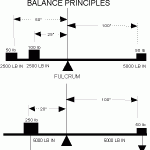
In prep for this I need to get weights. Thing is is there a way to calculate (even roughly) how much weight I'll need or is it a case of getting the camera onto the jib then trial and error till it's right?
 
First I'll show you the shot, then you guess the setup. (Hint: It'll make you want to vomit all over your good shoes - the setup that is.)

 
Ok so now the setup...

jib4.png
 
Back
Top