Interview (dnyamic) mic for under $100?

DanielRutter

Active member
Hey guys;

Your a-typical question here. Can't seem to get a definitive answer on any of these.

I'm in the market for a cheap, yet reasonable quality dynamic mic to record interviews at a noisy gaming convention (and a few other places).

The mics I'm currently looking at:
Shure PG58
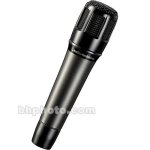
Audio Technica M4000S
Behringer XM8500

But I'm not necessarily locked into any of these. Budget should be kept under $100. The reason I'm buying so cheap is because I know I most likely will not be using this all that often, I just like the option of having it in the bag if I need a stick mic in a pinch.

Any insight from those more audio-minded than I?
 
I did read the post, but my recommendation is over your stated budget. If you're going to be in a noisy environment, I recommend the Sennheiser MD-46 cardioid stick mic. I have five or so of them. I started using these probably seven years ago(switched from RE-50's), I shoot a lot in one of the noisiest environments around, racetracks, and they will cut through almost anything there.

Unfortunately, they've jumped up in price recently. They used to be $150, but now they've jumped to $199.99(at least @ B&H).
 
There are several threads about this same topic in the AUDIO 101 sticky. A couple of the suggested mics that keep coming up are under $100.
 
Thanks guys, but the suggested mic that comes up (The RE50) is a bit more expensive in my neck of the woods (Australia) and I also really do not like the sound coming from that mic.

The MD46 is also wicked pricey, not really affordable for me. I realize I'm most likely shooting myself in the foot here, but I want to keep on budget here. Any suggestions, comparisons etc for those cheaper mics would be great.
 
Even if the environment is noisy I would still choose an omni directional mic as a cardioid suffers from proximity effect and will not work as effective if the subject is a short distance from the mic, it will also give a better sound if being held close with less chance of poping.

Have a listen to this clip to see how a dynamic cardioid can be virtually useless:https://www.youtube.com/watch?v=DoE3GJAgJh8

As you can hear anything further than 6 inches from the speaker and the mic goes off altogether!

As for a low cost omni the AT8004L fits the bill and it's longer case will allow you to place it closer to the interviewee: http://www.bhphotovideo.com/c/produ...AT8004L_Handheld_Omnidirectional_Dynamic.html

Personally I have EV RE50D/NB, Beyer M58 and even some small Takstar omni pencil condensor mics in my kit bag.
 
Hey Daniel
You do need an omni and I think if you shop around you might be able to get a Shure VP64 within your budget. Or almost. But I think I'd save up and get a Rode Reporter (Videoguys Aus has them for $175, which is around the same as getting one sent from OS, go figure )
Rainer
 
Hey Daniel
You do need an omni and I think if you shop around you might be able to get a Shure VP64 within your budget. Or almost. But I think I'd save up and get a Rode Reporter (Videoguys Aus has them for $175, which is around the same as getting one sent from OS, go figure )
Rainer
Hey Rainer! Yeah, that Shure VP64 looks great. I can't find a whole lotta videos about it except for one which tested it through the iRig Pre (although it sounded pretty good). I find it actually sounds better than the RE50 from the videos I've checked out.

Based upon the suggestions to dodge the Dynamic mics for this purpose... I might go with the Shure VP64. That being said, if I decided to spring for one of those cheaper Dynamic mics (I tend to record musicians a fair bit, so having one in the bag would be absolutely awesome) which would you suggest out of all of them? I keep looking at the Sennheiser 815/835 (It's about $30 outside my budget, but I'd probably spring for it), the Behringer XM 8500 and Shure PG58.

Just to confirm, I will go for the Shure VP64. But I'd like a good Dynamic suggestion for other jobs (can't hurt to have it in my audio bag, right?).
 
Absolutely an omni. You see unskilled or harassed interviewers mess it up so many times with a cardioid. Omni's come up quite often on ebay, and European choices for these rarely feature Shure (not certain why?) my owb favourite is the Beyer M58 with the extra length handle - but there's a modest priced Audio Technica that we used in college and it was pretty tough and decent sounding.
 
Absolutely an omni. You see unskilled or harassed interviewers mess it up so many times with a cardioid. Omni's come up quite often on ebay, and European choices for these rarely feature Shure (not certain why?) my owb favourite is the Beyer M58 with the extra length handle - but there's a modest priced Audio Technica that we used in college and it was pretty tough and decent sounding.

Yes, the industry standards are the Beyer M58, Sennheiser MD42 and EV RE635. :thumbsup:
 
I agree that you want an omni. Someone posted a physics defying reason about sound falling off faster with a cardioid. That is wrong on a number of levels. First the mic is not the sound source the speaker is so the mic has no control of the sound. Sound drops off with distance. The combo of those two is that the mic has no effect over how much sound drops off over distance. Just as much sound is hitting the cardioid as the omni. The big difference and why you want an omni is pickup pattern. The cardioid is directional and needs to be pointed at what you want to record. The sensitivity of a cardioid to sounds hitting it from things it's not pointed at drop off considerably and when your doing interviews in the field it's very hard to keep the mic pointed correctly and it's distracting to watch if it's in the shot.


BTW the clip does demonstrate the drop off with distance. Sound level drops with the square of the distance. So twice as far away is 1/4 the level, three times as far is 1/9th the level etc.

The other comments about cardioids are also a bit off. "prone to popping" would have more to do with the design of the mic and how much internal popper stopper is built in. There are cardioids that are very pop resistant and ones that are very touchy, same with omni's. I would suspect that the majority of handheld dynamic omnis are designed for interview mics and probably have better internal pop filtering so on a practical level it may be right that grabbing your average omni will be less pop prone but it's not a pickup pattern issue.
And proximity effect is used intentionally all the time. It's not something you will want to deal with in interviews, though your not likely to get close enough for it to be noticeable. Singers and others use the proximity effect often to help get a warm in your ear intimacy. Think FM radio DJ ;~)
 
Last edited:
Yes, the industry standards are the Beyer M58, Sennheiser MD42 and EV RE635. :thumbsup:

Hmmm I would disagree with that John for the UK as I have never seen an MD42 or 635A used, it tends to be RE50 as the standard with the BBC using the M58 and having to gaffer tape the wind gags on as the mic head is too small for std size.
 
Someone posted a physics defying reason about sound falling off faster with a cardioid. That is wrong on a number of levels. First the mic is not the sound source the speaker is so the mic has no control of the sound. Sound drops off with distance. The combo of those two is that the mic has no effect over how much sound drops off over distance. Just as much sound is hitting the cardioid as the omni. The big difference and why you want an omni is pickup pattern. The cardioid is directional and needs to be pointed at what you want to record. The sensitivity of a cardioid to sounds hitting it from things it's not pointed at drop off considerably and when your doing interviews in the field it's very hard to keep the mic pointed correctly and it's distracting to watch if it's in the shot.

I didn't read it quite like that. With a cardioid v an omni, the sound does drop off faster as the source moves off-axis. I think it was meant that good sound with a cardioid needs accurate aiming, and presenters/interviewers often need to talk over the interviewee, and bring the mic towards themselves drops the person off quite quickly - and many cardioids become quite thin sounding once you are not in front of them. The physics is distance plus directional gain, so it's easy to move away and go off-axis with a cardioid - making the performance doubly poor.
 
hTe physics of the sound has nothing to do with the mic. The sound doesn't drop off any faster off axis the mic is just less sensitive off axis.

I agree with his recommendations it's the reasons I have a problem with. In this particular situation it doesn't matter but later on down the line one could make some big mistakes by apply those reasons to a different situation. Such as avoiding cardioids because they sound "inferior", or thinking you can be farther away from something with an omni because it has some magical property. It also completely left out the actual reason for the sound drop. You can't fix something if you have it stuck in your head that the cause is one thing when it's another.

For experienced users it's not a problem we know what he is really talking about and can apply that filter but for very inexperienced users they are going to note that down and think it's a "truth". I'll have to look back maybe it came out caty, I wasn't trying to embarrass anyone just correct some bad info. I have certainly had my share of posts I had to correct because what I "knew" turned out to be wrong.
 
Hmmm I would disagree with that John for the UK as I have never seen an MD42 or 635A used, it tends to be RE50 as the standard with the BBC using the M58 and having to gaffer tape the wind gags on as the mic head is too small for std size.

I have seen MD 42 (or 46) used many times by the BBC, often with an SKP plug-on transmitter on the end (or falling off into floodwater in the famou clip), and this is just by watching the television. I have also often seen the EV.
 
Looks like an M58 to me inc the wind gag and is too long for an MD42/46: https://www.youtube.com/watch?v=sarT1jBtb_0

Haven't ever seen a 635a in the UK for many years and all the BBC and other broadcasters I have seen over the past 35 years use M58 and EVRE50.

The AT8004L is a good budget mic and is std kit for all the bookable presenter positions on the Olympics!
 
Last edited:
Take a look at the AudioTechnica AT8004 or the long handle version, AT8004L. I have one of its predecessors, the AT804, and it's a quite decent mic. Under your budget at about $90 US street price.
 
Yes Paul and like most of the AT range they are actually quite good and acceptable for broadcast as we use them for all the Olympic stand up positions.

In fact a lot of the mic's used on the main games are provided by AT.
 
I'm in the market for a cheap, yet reasonable quality dynamic mic to record interviews at a noisy gaming convention (and a few other places).

It's right at 100$ budget, but with the description you just wrote, it would work very well:
460233.jpg
I have one and used it for VoiceOver in my previous work. Without a preamp, to capture the voice only in a noisy crowd, this would work very well.
 
Back
Top