How would you soundproof this?

chris f

Veteran
I work out of an office suite that has a shooting space that is primarily for photo shoots (sound is not important), but I am trying to talk the owner into soundproofing it a bit to make it more usable for video. Sound inside of the studio is pretty good because they recently installed insulation in the ceiling, but the big metal roll up doors are the biggest culprit in letting in distant, but steady freeway noise in. I think most of it would EQ out pretty easily in post, but that's of course not ideal, especially if we start renting it out to other productions that expect a quiet space.

The owner wants to keep both roll up doors functional so I'm trying to research possible non-permanent solutions for sound proofing. I think 70% of the freeway noise is coming from the rollup door that goes behind the wall because that cavern seems to be a bit of an echo chamber, so I think if I could cover up that rolling door it'd be plenty good for recording sound in the space.

Here's a video so you can see what I'm talking about:

And here's a picture of the problematic roll-up door:
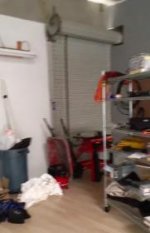
Screen Shot 2019-06-07 at 2.43.32 PM.jpg

I'm wondering if ordering a big custom size one of these would do the trick:
https://residential-acoustics.com/shop/soundproofing/acousticurtain/

What do you think?
 
Chris:

The solution you posted is nothing more than a bandaid, the sound is entering in many other places besides just the roll up door. I have some experience in designing soundproof booths and rooms, I used to own a small audio post house and we designed our own sound mixing bay from the ground up with some consulting and design from Audix Acoustic Tiles. The problem is, sound is very messy, it gets everywhere. You'll discover that any solution short of a true soundproof "room within a room" will not be soundproof and you will get that freeway noise in varying amounts no matter what you do, short of making an airtight soundproof room. You can buy or create your own room wihin the room that will be truly soundproof. The challenge is, it's expensive. The power and cable porting has to all be done in a very specific way. You'll lose about 20-30% of the overal room capacity from making a room within a room. You can still have standing wave bass issues, reflection issues and slapback echo from reflective surfaces in the room wihin a room, as we learned from working with Audix on our design.

You'll lose floor and ceiling height, which you have a tall ceiling so that looks like it won't be a problem. Anything you do short of an airtight room within a room will be a frustrating compromise, trust me, I've been down that road of applying band aids to problems like this one. Think of sound as light, it behaves in a similar way, you block it in one area and it's still creeping into numerous other places. Also, not sure if you also have issues from air traffic or other ambient noise generators besides the freeway near you, a room within a room can eliminate all of them but it has to be designed and engineered properly. Don't forget, besides power, you need to plumb HVAC in and out of the room, which is a huge, expensive PITA but completely required or it will turn into an oven.
 
Last edited:
If it has to be movable, it's compromised, but heavy bolton twill - in black normally is surprisingly useful for deadening and taming, and if on a track that can slide past the door can also do useful service as a background. won't cure the noise ingress but does go in the path between the door and the mic area.
 
Pretty much what PureDrifting said. I also have built studios and Foley stages and that building is not really "fixable". Now you may be able to dampen it a bit by building a false wall inside the roll up? Maybe but cost benefit really depends on how low you need to go and how much is coming in in other ways.

The biggest catch for you is you are not trying to build a recording room you want a video room with decent sound. That is much harder because things like room within a room are probably not going to work because the space is too small to start with. Also AC is going to be $$$ because of the lighting. We opted to not have AC in a very small Foley stage. The logic was solid on cost benefit for the amount of usage we had planned BUT, you could only go 20 min or so in there before you had to open it up and switch on the fans, and that is with no lights or other heat sources in the room (other than the Foley artist).

Post can maybe clean it up a bit but traffic is a constantly changing "noise" so probably not a lot.

Botom line is if you are just shooting infomercials or something with talent all laved up and your going to slather music on it afterward then maybe you can get by with hanging some sound blankets (assuming most of your "noise" is from the rollup doors). For something like narrative films not likely usable unless they plan to ADR the whole thing.
 
It’s one thing to have to go into somewhere and shoot an interview(i.e: we’re shooting an interview with this photographer in their photography studio) and deal with “ambient”/location audio issues, but it’s on a completely different level if you are marketing and renting out space as a “studio”. That come with certain expectations that must be met.

I don’t really have any technical suggestions for your sound proofing problem, just suggesting that you seriously think about what you are doing and if you really want to market it as a studio for video production work if sound(and lighting) can’t be completely controlled.
 
I wouldn't waste my time with that item.

What Drift said. I watched a post house build a scoring stage. A room within a room with two or three foot thick walls (gap in the middle) and a floating floor that was isolated from the floor. It had dead silent heating and cooling. Incredibly expensive.

There's plenty of tutorials online about sound proofing.
 
Soundproofing isn't something you can add on after a building has already been built. Sound proofing has to be designed in by good engineers before the building is built. This isn't an opinion; it's the laws of physics. And those won't bend for anyone, not me, not you, not anyone at all.

Just thinking about this a bit, you might be able to box in the door. That is, build a double stud wall (or a staggered stud wall, see "construction diagrams" here) that would fit around the rollup door, and offer a way to hang "studio doors" of the same size (or bigger) as the rollup door. So that to get in, you have to open the rollup door, then the studio doors, then you can bring in the fork truck, grand piano, whatever it is you want to bring inside. And when you close both doors you get a reasonable amount of sound attenuation. Won't do much at all for the low frequencies of traffic rumble, but it might make a reasonable dent in low midrange and up. Basically, if done right you'll have built an air-tight seal around the rollup door.

Probably best thing you can do is find and talk to an actual acoustical engineering consultant. Pay the fee, it'll save you endless time with books and trying things that don't work so you have to tear them out and start over. If you won't do that, at least get some books (there are hundreds apparently) on how to build a "home recording studio" and read them. Join a forum on studio acoustics (GearSlutz has one on home studio building for example).

Just places to start. But they'll all tell you the same thing -- sound proofing has to be designed in from the start, but there are things you can do to improve existing structures.
 
It would cost ~20-30k in CA (engineers/materials/permits) to develop that space into something I would feel comfortable renting as a quiet (noisefloor below 20 dbA) space for work. There are solutions for all of this stuff, but it's not the kind of thing you can fix with a weekend run to a hardware store and some DIY.

And whatever you do, don't spend something like 5k on "Noise Board" or similar products -- will not make any kind of measurable difference. All or nothing when it comes to soundproofing.
 
And one other thing... Dude, you're on a board largely dedicated to video production. Turn the camera 90, please. ; )
 
Sound proofing seems a serious project for this space, surely you just need some reduction or control, unless you do have serous budget, but the requirement to keep the shutter means sound is way down the priority list. We work mainly within t theatre industry and recording spaces are always compromised. Usually through people. We all have special places we can use. One theatre has a sound trap between the noisy foyer and the auditorium. A space about 8 ft X 8ft, double fire doors in and double fire doors into the auditorium. It has fabric covered rock wool in the walls and ceiling. Sound always record their voice overs and stuff in there. You can make big difference fairly cheaply but then smaller reductions cost more and more. If it's a large warehouse sound, you can make worthwhile differences for not too huge sums, but if you need silence, then it's a major budget item and perhaps detrimental to its other uses.
 
I rent a studio on a busy yard. (gym with music, people tuning thier cars, revving the hell out of them etc)

I kill the audio recording enquiry in the first paragraph of any conversation about recording sound at my location.

It doesnt hurt us to pass work on to partners.. stuff comes back.. I can pull in favours from people we have helped get some business in.

It also doesnt hurt my rep.. as Ill never be on the back end of a sound issue.

And this approach cost nothing.
 
Updated this post via the video below so you can hear what I'm dealing with (filmed in 16x9 for Run 'n Gun's viewing pleasure).

 
Last edited:
It looks like there is actual light coming through one of the doors. Plugging up any air gaps in the door by packing a sound blanket into it would help. Covering the walls and floors with heavy sound blankets would also get down some of the noise getting to your boom mic a bit. Beyond that, you are looking at building a room around your recording space.

Based on listening to your recording, a decent noise reduction software like izotope denoiser would actually get you decently clean audio within your interview set-up. If you added a music bed on the video, nobody would be able to tell the difference from an actual isolated space.

Maybe unrelated to your problem, but whatever recording equipment you are using is causing preamp hiss that is almost as noticeable as the highway noise.
 
Sound proofing can certainly be done to an existing building. But recording studio VS video studio is an issue and money will be an issue. I would never plunk down the cash for a major upgrade with out owning the building. Practacaly in your case it's probably not possible, but George Martin certainly repurposed many buildings into great sound recording spaces so it is possible, just expensive.
 
Last edited:
The easiest way to knock down all that outside noise is to physically block it. The best way to deaden all those audio reflections is to use padding. I suggest you build some flats (use 2x4s for structure and 4x8 sheets of plywood or OSB for skins) and connect them together in pairs with hinges. Cover them with carpeting. The thicker/plusher the better. Stand them up to block that window and roll up doorways when shooting, fold them up when you need them out of the way. And then any wall/surface that isn’t a shooting surface should be carpeted as well.

This won’t soundproof the room but it will certainly improve the audio considerably. And you could easily build it yourself with supplies from Home Depot.
 
If you go Mitches route use 1X4 instead of 2X4, you don't need the strength and the added weight will actually make them tippier. I would also use a cross brace about 1/2 way down (it will considerably cut down on the drum head affect). If you hinge them put the hinges on after you add the padding or they won't close. Personally I would probably not hinge them and use clamps but hinging will make each pair free standing if you don't open them flat so...

For covering you can go with packing blankets, and if you cover that with egg carton foam it will suck up a lot of sound.

A more traditional studio baffle can be made by using the 1X4 on edge so you have some depth. Skin one side with thin plywood or pegboard then fill the inside with fiberglass insulation and cover it with a course cloth like burlap. These it is good to hinge so the soft sides close together. These panels will suck thoughts out of your brain... ie they will absorb a LOT of sound.

All of this will help but it is not going to "sound proof" the room. Depending on your needs it might be enough? At worst you will have some panels that you can use elsewhere.
 
Maybe unrelated to your problem, but whatever recording equipment you are using is causing preamp hiss that is almost as noticeable as the highway noise.

Hmmm.... I wish I knew more about audio. This was recorded with a Senheiser shotgun mic pugged directly into my Canon C200 running off phantom power and then i turned the volume up in post but kept it low enough so it wasn't peaking.
 
The easiest way to knock down all that outside noise is to physically block it. The best way to deaden all those audio reflections is to use padding. I suggest you build some flats (use 2x4s for structure and 4x8 sheets of plywood or OSB for skins) and connect them together in pairs with hinges. Cover them with carpeting. The thicker/plusher the better. Stand them up to block that window and roll up doorways when shooting, fold them up when you need them out of the way. And then any wall/surface that isn’t a shooting surface should be carpeted as well.

This won’t soundproof the room but it will certainly improve the audio considerably. And you could easily build it yourself with supplies from Home Depot.

Love this idea and this is probably something that is a lot more feasible for me $$ wise. It's also got me wondering if I could install some hooks on the exterior of the building to hang a big heavy drape or sound blankets sewn together and cover up the rolling doors from the outside too since they're flush with the walls.
 
Back
Top