FS7: How should you expose this?

Publimix

Veteran
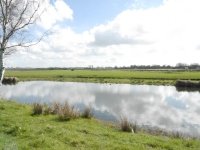
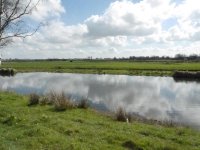
Typical scene, nature, (often) no whites, sun, clouds and reflections.
How would you expose this?
Use of white card is sometimes difficult (long lens, nature).

I use CineIE, slog3, and before that I used Custom slog3. Zebra 60%

I find it hard to get stable results.

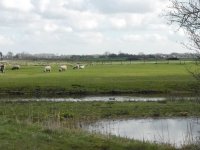
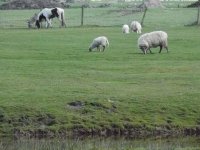
So how would you expose these scenes? (photo's from lumix gh6)
P1240842.jpgP1240837.jpgP1240839.jpg
 

Attachments

  • P1240841.jpg
    P1240841.jpg
    92.1 KB · Views: 0
Last edited:
I see lots of white in those pictures.

Does your Freelancer Rates book take into consideration inability of said freelancer to expose a camera?

Is there a frig factor for the calculations i.e. 2 stops over exposed -$100/day, 1 stop over -$50/day?
 
Thanks for your friendly reply, but try not always to be the first poster to prevent people thinking you are stalking me.
If the question is too stupid or silly for you don't answer it. Or let a lesser God do that.
Remember writing this? 'This forum appears to be full of testosterone. There's a contingent that wants to appear more "Pro" than anyone else.' Or was that one of your jokes too?


Last edited:
The sky is "relevant" - sometimes highlight are not relevant to a pleasing image - here stop down until the sky is protected
 
Thanks for your friendly reply, but try not always to be the first poster to prevent people thinking you are stalking me.
If the question is to stupid or silly for you don't answer it. Or let a lesser God do that.
Remember writing this? 'This forum appears to be full of testosterone. There's a contingent that wants to appear more "Pro" than anyone else.' Or was that one of your jokes too?


The biggest joke seems to be selling a book advising people how much they should charge their clients and not be able to expose a simple seen like you have posted. It's, frankly, hilarious.

Do you not see clouds in you pictures? Do you not think they would be at the very least the brightest thing in your scene and a reasonable datum?

Dont worry Peter, there's a contingent of highly professional 'cinematographers' who never seem to be in work to help you expose your camera. Peter did you think you would embarrass me by posting that?

Stick to cheese.
 
30u4uab.jpg
 
It's like a photography question, do you want to expose for the clouds or the landscape and balance the other in post? If your camera has enough dynamic range to capture both well then you are in luck.

I would try some bracketed exposures offset by 1 stop increments and take the images in post and see what I got. Remember that 60% IRE in slog is a white piece of paper or card, so basically white objects that do not emit light or reflect too much so I would start by setting the clouds at 60% IRE and maybe bring them up to 70% max (around 1 stop over).

Bring the shots in post. The shot with 60% clouds may have too dark a landscape that you would have to bring up in post slightly (make sure to have NR friend available). The 70% shot will probably have better landscape exposure but clouds look like they are emitting light. You can make a power window around the sky line and bring down exposure, or you can try using curves tool to try and balance the image.
 
Thank You Morgan, Dennis,

Am I correct as you say Dennis, expose on the clouds as if it they were white?
That is what I would do (set zebra on clouds, think they will be very white so I leave them 'zebra'd'

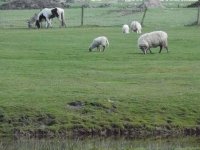
And should I do the same here (picture below), expose on the white/crème horse as if it is white?
And last question:
Suppose alle animals in picture below are brown/black etc. Is it possible to expose on the clouds again and then aim on subject?


P1240842.jpg
 
Last edited:
In any scene that extends beyond a cameras DR you need to prioritize the important elements and expose those properly. Sometimes its the sky. sometimes you let those blow to see further into the shadows. Landscapes you can't really add light so you pick your battle.
 
Hi framefarm,

I realize I asked the wrong question, it is not about DR, but setting exposure when there is no white in the scene and use of white card is difficult.
Animals in picture below are far from bright white, and suppose alle animals in picture below are brown/black, how to set exposure then.

attachment.php
 
You need to look closer at the image. There are white highlights where I'd expect to see zebra if set to 90% reflectance. Even if there weren't, you should be able to set exposure in a second using the WFM. The onboard WFM is a bit small, and not terribly accurate, but it is a great tool to help you spot clipping and give you a general overview of where the exposure is sitting.
 
Thank You Morgan, Dennis,

Am I correct as you say Dennis, expose on the clouds as if it they were white?
That is what I would do (set zebra on clouds, think they will be very white so I leave them 'zebra'd'

And should I do the same here (picture below), expose on the white/crème horse as if it is white?
And last question:
Suppose alle animals in picture below are brown/black etc. Is it possible to expose on the clouds again and then aim on subject?


View attachment 112394

Just remember 60% is something white, tablecloth, white horse, white porcelain toilet, white clouds (if they are actually white not grey or have sun light beaming through obviously) but when you start approaching 70 and higher you are getting into objects that are reflective, or emit light such as light sources, etc.. so another way to expose a scene with just zebras is setting them to 70-75 and letting reflective objects stripe a bit. In your sheep scene, it is overcast and likely there are no reflective objects (maybe the edge of the back on that horse as Liam points out). So as I say, go for 60-70% (70% is over exposed slightly) then you will have to adjust the image in post if you don't like the contrast.

It is 100% normal to have to work on this image in post. I don't see any other way, other than using ND grad if that works for your horizon, etc..

cheers.
 
Last edited:
For whatever it's worth, I've been taught that green grass is very similar to a grey card (in terms of establishing exposure).
 
Last edited:
Thank You Morgan, Dennis,

Am I correct as you say Dennis, expose on the clouds as if it they were white?
That is what I would do (set zebra on clouds, think they will be very white so I leave them 'zebra'd'

And should I do the same here (picture below), expose on the white/crème horse as if it is white?
And last question:
Suppose alle animals in picture below are brown/black etc. Is it possible to expose on the clouds again and then aim on subject?


View attachment 112394

I have to agree with Epicdream. The contrast between open sky or as I like to say "high scrim" is one of the most difficult challenges in exposure land. You can have way more exposure variances than a camera can handle, even film. So you do indeed need to consider the most important element of the frame and lean towards that and sacrifice another portion of the frame.
In the good old days of non-digital cameras, that often meant letting the brightest part of the frame just "blow out". Sacrifice a portion for the survival of the majority. But that often meant the blown out portion of the frame literally bleed into other portions of the frame, making the entire frame undesirable.
Back to Epicdream, he suggests using a grad ND and I think that is the most sensible and realistic solution. If I were you, I'd buy a set of ND grads ranging from .03 to .09. And of course you need a matt box to both properly drop the ND into the frame and to position the yaw or angle of the ND. This will be a panacea.
 
I would expose to not clip the sky as it is the most dominant in the scene. Whenever there are skin tones in the shot I would expose to get those right
 
I have to say that I'm a bit surprised that this has made it to two pages, but thenere I am posting! ;-) It strikes me as a pretty common and simple situation. That is not to denigrate your question; that is very fair and looking around the web it is very easy to come to the conclusion that things need to be as precise as in Ansel Adam's day.

First, I'd say buy a Pola. If you are shooting much outdoors I'd consider it a basic essential. That will give you lots of control of reflections and depending on where the sun is dial up some contrast between the clouds. If you have something shiny like backlit skin it will also give you scope for dialling that down.

Next up, buy some grads. I have soft edge and hard edge, but shooting Super-35 such as FS7/F5/F55 I generally find myself sticking to the hard edges - on 2/3" B4 video cameras I tended to be much more of a soft-edged fan. Used carefully both H/E and S/E can be subtle. I use them on the top, upside down, diagonally or to the sides as needed. A .3 or .6 will generally be subtle enough to hide their presence and with the frames you posted would, as has already been mentioned, make your exposure difficulties no difficulty at all.

A decent mattebox and filter can be a pretty alarming outlay considering it is not generally something you can charge extra for within a kit, but for shooting to the best of my abilities I find them invaluable. If it means I get hired again (and that I enjoy the act of filming), personally, I am happy to accept the expense.

Finally, if you are shooting log, avoid clipping in the sky. The frames you posted don't look particularly high contrast and provided you don't clip you have lots of range to pull detail from the sheep, ie if midranges sit a little low, fix it in post. I'm with you if 'fix it in post' is not your preferred answer, but there are times where it's the only practical solution (though this isn't one of them).

If you combine that with one, other or both of my filter suggestions, you should be able to pull your foreground subjects to a comfortable level and I can't imagine you would need to give the shot a moment's thought,

Ben
 
Last edited:
Oh yes, and as Dennis mentioned, 90% reflectance is a matte white target (it's only 90% not 100% because perfect matte reflectance isn't practical). However, horse (highlights) yes, tablecloth yes, white paper yes, even wooly sheep (the brightest bits again) yes, but watch out on clouds as they are generally far away separated from your subject area and often providing the light (certainly here in the UK ;-) ) so a poor choice of 90% target for your likely midtones, and unless you find a particularly filthy example a porcelein khazi will generally be shiny, so not a great choice to carry round as a white target. ;-)
 
Last edited:
I have to say that I'm a bit surprised that this has made it to two pages, but then here I am posting! ;-) It strikes me as a pretty common and simple situation. That is not to denigrate your question; that is very fair and looking around the web it is very easy to come to the conclusion that things need to be as precise as in Ansel Adam's day.

Ben

Thanks Ben,
You are right. Sometimes things are less difficult than they seemed. Your Ansel Adams example is right. Most of the footage I shoot is OK or can be fixed in post. But the part that confused me after buying and seeing all these pdf's, books, vimeo and youtube series from respectable profs was the difference between the exact numbers of the zebra setting, 59, 60, 62%, the exact 90% white card etc. and the choices (what is white) made in the field.
The way I see it now is that exposing right can be an exact science but the camera has enough room for a less precise and more intuitive approach.

The same happened to me during my (five year side job) brie-making, there are 2 ways of measuring PH, with an electronic PH meter and titrate with fenolftalein. Both ways give different results at different moments, both are important. But when I did all these tests the cheese didn't get better and my confusion grew. After I learned how to feel and test the curd with my hands the process was easier. Call it information overflow. (Or my disability to process all the information correctly).

I'll follow your polarize filter advice, but I am afraid I will lose or break ND grads :-)
 
Last edited:
Back
Top