
Navigation
Install the app
How to install the app on iOS
Follow along with the video below to see how to install our site as a web app on your home screen.
Note: This feature may not be available in some browsers.
More options
You are using an out of date browser. It may not display this or other websites correctly.
You should upgrade or use an alternative browser.
You should upgrade or use an alternative browser.
How does the shallow depth of field on the DVX200 compare with FF cameras?
- Thread starter rc444
- Start date
Brad Forman
Active member
Dennis is half correct. The DVX200 does not have a full frame sensor, so when you ask how it compares to SDOF of cameras with a full frame sensor, it obviously won't achieve the same effect. It does however have a 4/3 inch sensor which is 4x larger than a 1/3 mentioned above, and you can achieve a fairly decent shallow DOF.
Brad Forman
Active member
I guess he deleted his post, so I apologize if my last comment seems out of context.
Jonny Gross
Active member
It's a matter of taste isn't it? Personal opinion - a full frame or S35, depending on your focal length etc, can be difficult to keep in focus on the go. This cam has it's issues in the focus department but it's a bridge between the two. It's slightly more difficult to focus than a 1/3" chip cam, but not as difficult as a s35 or ff. With my old Sony, I had trouble creating any sort of shallow depth in an interview situation, and even when I was quite a distance away from the subject with a distant background and at the most telephoto my lens could go, it was still not creating a particularly pretty or filmic bokeh. With this cam I don't have to work so hard. And the results are very nice. I did a set of talking heads a couple of weeks ago and every one, without effort, has some level of bokeh and even the three shot I did had a certain amount. So I'd say it's a halfway point. It'll never be as smooth or as shallow as a FF, but personally that's not what I was looking for because, well, I want to be in focus in a run n gun situation.
And the Macro mode - I love it. It's been very useful.
And the Macro mode - I love it. It's been very useful.
And the Macro mode - I love it. It's been very useful.
In what instances would you want macro off? I tend to just leave it on regardless of what I'm shooting and I'm wondering if this is a mistake.
It does however have a 4/3 inch sensor which is 4x larger than a 1/3 mentioned above, and you can achieve a fairly decent shallow DOF.
Actually, a 4/3 inch sensor would be closer to 16 times the size of a 1/3 inch sensor.
Barry_Green
Moderator
Actually, a 4/3 inch sensor would be closer to 16 times the size of a 1/3 inch sensor.
Yep. It's about 4x the size of a 2/3" sensor.
As for comparative DOF, the crop factor is about 2.0, so you can get about the same DOF as a full-frame camera if you can open up the iris about 2.0 stops. So a full-frame at f/5.6 would deliver the same DOF as a DVX200 @ f/2.8. On the long end of the lens (full telephoto @ f/4.5) that would be comparable to a full-frame camera with a 330mm lens at f/9.0.
Jonny Gross
Active member
In what instances would you want macro off? I tend to just leave it on regardless of what I'm shooting and I'm wondering if this is a mistake.
I'm not sure if I'm making this up or not, so don't quote me, but occasionally, if I'm at the wide end and trying to keep focus, I feel it's easier with macro off. But I could be talking nonsense. Most of the time I have macro on, but those situations, sometimes I turn it off to see if It'll make it easier to focus.

TDCat
Member
In what instances would you want macro off? I tend to just leave it on regardless of what I'm shooting and I'm wondering if this is a mistake.
I tend to look at it as being a focus limiter with it off and putting it on is normal mode. If I'm shooting a person handheld, it would be unlikely that I would want to get closer than 0.95m. Turning off macro mode makes this focus simpler as you can't drift into stupidly close distances. As long as you hard stop your distance at about a meter, you can hard stop your focus.
I'm not sure if this is the best way to work but it works for me

Brad Forman
Active member
Actually, a 4/3 inch sensor would be closer to 16 times the size of a 1/3 inch sensor.
True. Thanks
TDCat
Member
So far, I'm loving the 4/3 sensor size. I always find full frame a little too shallow for anything other than planned, fixed shots. The 4/3 gives you three main plus points in my opinion.
1. You can use the camera at the wide focus end, roughly set the focus and achieve great results. This allows for work on the move as it is still forgiving with people not quite being bang on. Basically, that 'camcorder' benefit still exists.
2. You can drop the background out of focus (just a little) to make your subject really stand out at usable distances (see the picture below).
3. At full zoom or close up work, you can get some completely blurred backgrounds which look totally comparable to a full frame.
Below are a few frame grabs from Premiere from a recent shoot. The colors may be a bit off as Premiere does no color management on its exports...didn't realise that.

Torsten
Web: http://tdcat.com
1. You can use the camera at the wide focus end, roughly set the focus and achieve great results. This allows for work on the move as it is still forgiving with people not quite being bang on. Basically, that 'camcorder' benefit still exists.
2. You can drop the background out of focus (just a little) to make your subject really stand out at usable distances (see the picture below).
3. At full zoom or close up work, you can get some completely blurred backgrounds which look totally comparable to a full frame.
Below are a few frame grabs from Premiere from a recent shoot. The colors may be a bit off as Premiere does no color management on its exports...didn't realise that.
Torsten
Web: http://tdcat.com
cookinghusband
Well-known member
Same as any M4/3 camera.
Here are a few screen shots from a camera test I was doing that may help. 


 I was quite blown away with what I was able to get with this camera pretty much out of the box. Mainly this was an attempt to get used to the controls, focus, zoom, iris etc., but it was surprising easy to achieve nice results quickly and easily. This is like carrying an entire lens kit in the palm of your hand.
I was quite blown away with what I was able to get with this camera pretty much out of the box. Mainly this was an attempt to get used to the controls, focus, zoom, iris etc., but it was surprising easy to achieve nice results quickly and easily. This is like carrying an entire lens kit in the palm of your hand.
Le Chat Errant
Active member
Lovely Gerrinae sir KJKoncert (in your last screengrab) !
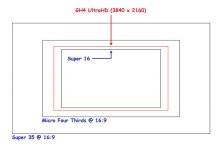
Just one thing about MFT shallow DOF, especially in UHD/4K.
A smaller area is used in this mode, it sounds more like BMCC 2,5K sensor than AF100.. With ramping aperture.
Just one thing about MFT shallow DOF, especially in UHD/4K.
A smaller area is used in this mode, it sounds more like BMCC 2,5K sensor than AF100.. With ramping aperture.