
Navigation
Install the app
How to install the app on iOS
Follow along with the video below to see how to install our site as a web app on your home screen.
Note: This feature may not be available in some browsers.
More options
You are using an out of date browser. It may not display this or other websites correctly.
You should upgrade or use an alternative browser.
You should upgrade or use an alternative browser.
How can I get a film look?
- Thread starter HeyAndy
- Start date
Sigh. Literally thousands of posts on this subject. Search is your friend. Here's a start: Pull some stills from scenes you like the look of in other movies, and play with the 3-way color corrector in Final cut to try and get the same look. Light it right and shoot it right, then good color correction will give you the "film look"

David G. Smith
Steak Knife Member
Sigh. Literally thousands of posts on this subject. Search is your friend. Here's a start: Pull some stills from scenes you like the look of in other movies, and play with the 3-way color corrector in Final cut to try and get the same look. Light it right and shoot it right, then good color correction will give you the "film look"
Yeah, there are a lot of posts on this. As a generality, when working with the 3 way color in FCP, with footage shot with a FS100, I like to decrease saturation a bit and warm up the mids. To me, this adds a little bit of look that I think helps to make my footage look more cinematic. I suggest that you go in there an play around as suggested.

But develop when you mastered proper techniques, dont make up your own if you dont know basics* stuff cause it often would look bad, you dont need to reinvent the wheel and make all the mistakes, just stick to the book.Imitate the masters and try to make your footage similar to movies that you like."Steal" some shots and framing from favourite movies.

drapeama
Well-known member
Everything has been said, but this could help you.Aside from camera settings, lenses, and actors, how can I apply a film look to my videos and make them look cinematic in post-production? For example I'm a final cut person so what specific video filters do I need to use to achieve a film look?
And also, before all that: a good lighting for the scene. Without it, even with a lot of color correction it won't save the situation.
Also, this seems to be the new trend in color correction, if that's what you're after.

Adam J McKay
Veteran
Step one: Shoot on film
Done. :cheesy:
Really though, I have come to learn that digital is never really going to look like film, there is no easy button to make it look even similar, good acting, production design, cinematography, sound, yes even sound, go into making the elusive "film look". Having just finished shooting my first feature, I would suggest worrying more about telling an amazing story in an original and creative way and then you just might find, you get what you need. Que Guitar SOLO.

PopcornFlix
Well-known member
What makes a "film look?" There are several ingredients:
CAMERA - do some things with your digital camera that are just like a film camera:
LIGHTING - do some things with your lighting plan that are just like shooting a movie:

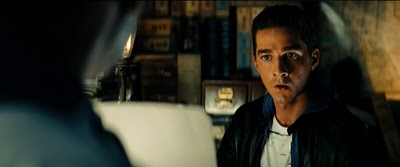
STAGING - organize the composition of your frame in an interesting way, like a movie
It's not everything, but it's a start. Good luck.
CAMERA - do some things with your digital camera that are just like a film camera:
- Pick a digital video camera with a sensor close to the size of 35mm movie film (m4/3 & APS-C are good.)*
- Shoot 24p;
- set your shutter to 1/48 seconds (180º);
- Use ND filters to reduce light so you can open the aperture wider, and decrease you depth of field;
- Pick lenses that will give you some variety: wide, normal and long
- Shoot "flat," that is, low contrast, with as much detail held in both darkest and brightest parts of the image. Color correct in post for maximum film look.
LIGHTING - do some things with your lighting plan that are just like shooting a movie:
- Copy the lighting style of a particular movie. Hollywood movies have individual "looks." The Godfather doesn't look like Transformers.
- Separate your foreground from the background.
- Avoid flat, shadowless light; shadows make things look dimensional
- Use hairlights, catchlights and eyelights to make your shots look slicker;
- Use cookies and gels to make blank walls look interesting
STAGING - organize the composition of your frame in an interesting way, like a movie
- Use the fundamentals of composition;
- Move the actors from one pleasing arrangement to another;
- Move the camera from one pleasing composition to another;
It's not everything, but it's a start. Good luck.
drapeama
Well-known member
1) Several aspects makes a "film-look". Every of these aspects alone won't make it the desired effect, but all combined they'll work.What makes a "film look?" There are several ingredients:
4) Use ND filters to reduce light so you can open the aperture wider, and decrease you depth of field;6)Shoot "flat," that is, low contrast, with as much detail held in both darkest and brightest parts of the image. Color correct in post for maximum film look.
LIGHTING - do some things with your lighting plan that are just like shooting a movie
It's not everything, but it's a start. Good luck.
2) ND filters are great for outdoor, especially if you'll be using a DSLR: the only other way to avoid blown out image is to increase the f/stops to something like f/22 outside. By doing that, you end up having a picture that's all in focus (no blurry backgrounds).
3) I would like to point something about shooting flat: because of the more limited use of the 8-bit space, there's less info to work with in post, which may result in banding. There's always a way to "remove/hide" that effect, which is being discussed here.
4) Lighting, of course, is important. Without lighting, it would look rather videoish or budgetless. That being said, it can be used that way to create a certain mood or a certain "tone" to the movie. More info about lighting here. Interesting before&after comparison.
5) Of course, you must respect and know some basics, otherwise it simply won't make it.

David W. Jones
Veteran
Film look? What do you mean, the look of Gilligan's Island or The Brady Bunch?
PopcornFlix
Well-known member
1) I would like to point something about shooting flat: because of the more limited use of the 8-bit space, there's less info to work with in post, which may result in banding. There's always a way to "remove/hide" that effect, which is being discussed here.
For a newbie like to OP, I think this is a bit advanced.
I recommend shooting "flat" (low contrast) to capture as much detail in brights and darks as possible. That way, they can shape the look in post, and be able to make maximum changes because they have as much data as possible.

starcentral
Veteran
Andy,
For a film look you won't go far in post without good images to begin with, and that starts with good art direction (location location location) and lighting them and your subjects.
As you had mentioned the lenses, their focal length and the actors and how the film is directed in general all come together overall to make a real awesome looking film. I suggest you get a book called the visual story which goes deep into the subconcious aspects of creating visual images on film. Everything from tonal separation, color palettes and all that fun stuff that is boring to read but you must understand if you are truly after creating a film with a film look.
Hope this helps inspire you to look for more answers....... .
OK, I have read all threads about the film look and I still confused about one thing. There goes my question: Look at TV series! Those are done by professionals, they know how to light, how to stage actors, how to decorate scene, where to put camera and so on. But it still looks like TV, not like film. So, where is the problem?
For example: Sarah Connor Chronicles vs. Terminator movies, Sex and the City series vs. Sex and the City movies.
For example: Sarah Connor Chronicles vs. Terminator movies, Sex and the City series vs. Sex and the City movies.
David W. Jones
Veteran
Well generally a TV series has a much tighter budget than a feature movie, so many have gone from shooting film, to shooting video. The first season of sex in the city was shot on super 16mm in order to save money over shooting on 35mm film. Now with TV series budgets shrinking even further the majority are now shot on video. As far as them not looking like film, who cares? Most people watch a TV show or a movie to be entertained, not to scrutinize the grain structure or try and determine which camera was used. And there lies the problem with many productions. They are more worried about trying to emulate what they think is a film look, rather than concentrating on entertaining their viewers. Bottom line, the only people worried about a film look or lack there of, are people on a forum like this. For the majority of the people out there, either they were entertained by your product, or they were not.
All the Best!
Dave
All the Best!
Dave
I liked it! But as filmmaker I still try to make it look as best as possible. And less like homevideo, no matter how entertaining it looks when grandma blows the pie candles.the only people worried about a film look or lack there of, are people on a forum like this. For the majority of the people out there, either they were entertained by your product, or they were not
Last edited:

gonzo_entertainment
Veteran
1. Lighting
2. Lighting.
3. Lighting
4. 24 FPS
5. 1/50 or 1/48 shutter
2. Lighting.
3. Lighting
4. 24 FPS
5. 1/50 or 1/48 shutter
starcentral
Veteran
OK, I have read all threads about the film look and I still confused about one thing. There goes my question: Look at TV series! Those are done by professionals, they know how to light, how to stage actors, how to decorate scene, where to put camera and so on. But it still looks like TV, not like film. So, where is the problem?
For example: Sarah Connor Chronicles vs. Terminator movies, Sex and the City series vs. Sex and the City movies.
The answer has to do with how TV shows are shot versus films, or more so the lighting differences. Most TV shows are sets fully lit so actors can move freely and several cameras shooting at once. With TV series you don't have time to take 3-9 months to produce a 1/2 or 1 hour episode. Shows are shot FAST. On films however scenes are shot from different angles EACH with different light setups which can take hours to setup, adjust, and move each time a scene is blocked/staged and shot. Anyone care to guess how many script pages are shot per day on a film vs a TV show?
Also some shows are still shot at 30p so it looks a little more fluid than that juddery 24p look when played on 60Hz TV systems due to telecine process. 60p on the other hand or even 60i is way too fluid, so 30p for TV is a happy middle ground. Yes more shows these days are shooting in 24p for more cinematic look but I wanted to mention 30p can yield a more "TV" look.
In the end aside from the obvious 24p and 1/48th (or 180 degree) shutter, its the lighting, location/art direction, shooting multiple angles, camera movement (cinematography) and again I'll mention the post-production process that contributes to an overall "film-look". Just to elaborate on that last point a little more, have a look at the SAME image from one of my favourite movies "28 Weeks Later":


So to you, which looks more "cinematic"? Which look will you find in the final version of the film? Why are there even two looks here to begin with?

starcentral, so... at first it seems that bigger budget gives you better and more locations, props, postproduction, acurate lighting for every setup. The result is more money = more film look? 
Then, looking at the screenshots I think, that TV shows don't have film look because they are to lazy to grade colors? LOL
Lighting is the key. But many studio photos or fashion magazine covers don't look like frames from the films. My childhood is on the 8mm tape. You wont find composition or nice lighting there, because it is 100% "home video" on the old 8mm tape, but guest what, it has the "old-film look", flat colors and specific fluidity of movement.
If ideal composition, moody lighting, arranged wardrobe with backround, camera lens, shutter speed, emotion in the face of an actor could be done the same in video, film or photo. Will the result be the same or not?
Last edited:
starcentral
Veteran
Its not lazy, its time and money. Shows can't undergo the amount time invested in a major hollywood blockbuster.. Having said that I've been blown away by the look and feel of some shows such as "Lost" for example. I mean it really looked great and was cinematic to me. The sets were awesome, long lenses, natural setting (hawaii helps), and really good lighting. Can't say how much post it went through for a final look.
Fashion magazines might not look like a frame of film, but they still undergo a similar and detailed process: location, lighting, makeup, wardrobe, camera lens/angle, and post production (way more post particularly on skin).
As for your 8mm footage you should post some, and it could be good for the discussion and YES its still film-like but it certainly doesn't emulate a hollywood film or TV show as the poster of the thread was alluding to.
If composition, moody lighting, wardrobe, lens, shutter speed, emotion in face, etc was done in video, film or photo it would be very close to the same. I shoot video on Sony F3 and still photography on Canon 7D and will post some frames from each to see how they can look without really knowing what it might have been shot with.
Last edited: