
Navigation
Install the app
How to install the app on iOS
Follow along with the video below to see how to install our site as a web app on your home screen.
Note: This feature may not be available in some browsers.
More options
You are using an out of date browser. It may not display this or other websites correctly.
You should upgrade or use an alternative browser.
You should upgrade or use an alternative browser.
How are you supposed to write tilt angles in degrees?
- Thread starter SJX
- Start date

NorBro
Major Contributor
Depends on who you're speaking with, but I would pretty much never say that to anyone because I'm confident most wouldn't understand unless the terminology was discussed beforehand.
I think the standard here is math, but I actually had to triple-check myself because I wasn't sure how it applies to tripod tilting.
Tripod manufactories write something like +90 and -70 to differentiate the difference between the maximum tilting up or down, but as far as instructing people, I don't know what others do.
Personally I would just describe how much to tilt up or down because asking someone to tilt -5° down is like blowing on it for barely any change.
Maybe someone here who's worked with a director in a truck during a precise tilting/panning live event can chime in on that communication process if that's what you're after.

Doug Jensen
Carbonite Member
I have no idea in what context these directions will be given, but keep in mind that the visual effect of changing the tilt 5 degrees, 10 degrees, or whatever will be quite different for a wide angle lens vs. a telephoto.
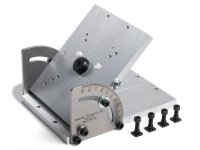
I also wonder how the operator will measure the tilt, anyway, unless they have a device with markings like NorBro's above. For example, if you told me to tilt up 20 degress, I'd really have no idea what 20 degrees would be. How would I tell the difference between 15, 20, 25. and 30?
I also wonder how the operator will measure the tilt, anyway, unless they have a device with markings like NorBro's above. For example, if you told me to tilt up 20 degress, I'd really have no idea what 20 degrees would be. How would I tell the difference between 15, 20, 25. and 30?
Last edited:

Run&Gun
Veteran
I'll be honest, in almost 25 years of doing this professionally, I've never had anyone, director or otherwise, seriously tell me to tilt in degrees. I also don't recall ever shooting with a head designed for motion(Vinten, Sachtler, O'connor, Cartoni, Miller, etc.) that had witness marks for the tilt in degrees.
But what I HAVE had way too much of, is people that have been in this business for decades and SHOULD know better, telling me to PAN UP or PAN DOWN.
But what I HAVE had way too much of, is people that have been in this business for decades and SHOULD know better, telling me to PAN UP or PAN DOWN.
NorBro
Major Contributor
I'll be honest, in almost 25 years of doing this professionally, I've never had anyone, director or otherwise, seriously tell me to tilt in degrees. I also don't recall ever shooting with a head designed for motion(Vinten, Sachtler, O'connor, Cartoni, Miller, etc.) that had witness marks for the tilt in degrees.
But what I HAVE had way too much of, is people that have been in this business for decades and SHOULD know better, telling me to PAN UP or PAN DOWN.
lol...I feel like that should have been the standard from the beginning.
Keep it straightforward for people; PAN LEFT, RIGHT, UP or DOWN.
rob norton
Veteran
I'll be honest, in almost 25 years of doing this professionally, I've never had anyone, director or otherwise, seriously tell me to tilt in degrees. I also don't recall ever shooting with a head designed for motion(Vinten, Sachtler, O'connor, Cartoni, Miller, etc.) that had witness marks for the tilt in degrees.
But what I HAVE had way too much of, is people that have been in this business for decades and SHOULD know better, telling me to PAN UP or PAN DOWN.
I think it's more for VFX work, I've seen DPs on huge green screen shoots make notes of their angles. I assume this would be more common than being told to tilt a certain angle in advance, unless matching other material.
IDK how the highest level productions do it (would be cool if that was just Arri metatdata) but a simple phone app, flush with the camera, gave accurate enough readings and was the extent of the tech from what I've seen.
I'm not saying SJX is doing VFX work, just mentioning a situation where it could be important.
How are you supposed to write tilt angles in degrees? For example, if the camera points down, do you write 85 degrees or -5 degrees? Thanks.
Also, what are you shooting!?
Last edited:

paulears
Veteran
Same as aircraft do it. Specify the degrees from a known plane. For cameras, horizontal is the usual datum, so a ten degree up tilt is perfectly sensible. absolute values I don't think are common Field guns use horizontal to0. I can't say I've ever seen anyone measure angles from straight down. Up or down from horizontal, as in the bubble on the head makes sense, and an up or down.
Run&Gun
Veteran
I think it's more for VFX work, I've seen DPs on huge green screen shoots make notes of their angles. I assume this would be more common than being told to tilt a certain angle in advance, unless matching other material.
IDK how the highest level productions do it (would be cool if that was just Arri metatdata) but a simple phone app, flush with the camera, gave accurate enough readings and was the extent of the tech from what I've seen.
I'm not saying SJX is doing VFX work, just mentioning a situation where it could be important.
Also, what are you shooting!?
Oh yeah, from a VFX type standpoint, precision can be key. I’ve shot BTS of commercials where an actual physical location was used, but not all of the talent could be there at the same time, so they had to line the shots up precisely and everything was measured and placed exactly(lens height, lens/camera distance, focal length, aperture, furniture/props, etc.). I was speaking on a ‘general shooting/operating’ level.

CharlesPapert
Director of Photography
I will echo the above. Positive numbers above horizontal, negative below. And referring to tilt in degrees is generally for repeatability, as also noted. Did that on Friday with an effects bit that we shot the backplate for two weeks ago. The AC's logged height, focal length, distance and tilt measurement and we were thus able to recreate the foreground.
For regular shooting I am more likely to refer to pan in degrees when describing a shot as that comes up more often, i.e. if describing a shot that is going to be set up before I get there I may see "give yourself 25 degrees off center either direction" to indicate how much of the world we are going to see so gear doesn't get placed there, Tilt descriptions would probably be limited to 90 degrees, i.e. straight down requiring camera offset to not see the dolly, or possibly 45 degrees to indicate that such a setup is NOT needed. I wouldn't give an operator directions in degrees in terms of operating a shot on a regular basis.
For regular shooting I am more likely to refer to pan in degrees when describing a shot as that comes up more often, i.e. if describing a shot that is going to be set up before I get there I may see "give yourself 25 degrees off center either direction" to indicate how much of the world we are going to see so gear doesn't get placed there, Tilt descriptions would probably be limited to 90 degrees, i.e. straight down requiring camera offset to not see the dolly, or possibly 45 degrees to indicate that such a setup is NOT needed. I wouldn't give an operator directions in degrees in terms of operating a shot on a regular basis.
Doug Jensen
Carbonite Member
Charles, what method or device did they use to measure the tilt?

SJX
Veteran
I will echo the above. Positive numbers above horizontal, negative below. And referring to tilt in degrees is generally for repeatability, as also noted. Did that on Friday with an effects bit that we shot the backplate for two weeks ago. The AC's logged height, focal length, distance and tilt measurement and we were thus able to recreate the foreground.
For regular shooting I am more likely to refer to pan in degrees when describing a shot as that comes up more often, i.e. if describing a shot that is going to be set up before I get there I may see "give yourself 25 degrees off center either direction" to indicate how much of the world we are going to see so gear doesn't get placed there, Tilt descriptions would probably be limited to 90 degrees, i.e. straight down requiring camera offset to not see the dolly, or possibly 45 degrees to indicate that such a setup is NOT needed. I wouldn't give an operator directions in degrees in terms of operating a shot on a regular basis.
Yes exactly. We need to measure camera height, camera distance to subject, tilt and and note the focal length and format.
Makes sense. If horizontal is 0 then makes sense that a 5 degrees tilt up would be +5°. But what about a 5 degrees tilt down? I would think -5°. But in 3D software for example you need to use 85° for some reason. Looking at some 360° rulers I can understand where that could come from.
SJX
Veteran
Charles, what method or device did they use to measure the tilt?
I don't know what they are using in TV or film these days. But there is a very simple and useful tool called an inclinometer or protractor. It's a carpenter's tool. Although there are also apps for your phone.
Doug Jensen
Carbonite Member
Thanks for the information, but I already know all that. I was asking Charles what specific method his crew used on the production he spoke of.
CharlesPapert
Director of Photography
Charles, what method or device did they use to measure the tilt?
These days I pretty much only see iPhones used for tilt measurement. Used to be a Suunto clinometer, but haven't seen one on set in years Not even sure I know where my Suunto is anymore! I used to use it primarily for Sunpath--boy does that process seem antiquated compared to sun tracking apps.
But what about a 5 degrees tilt down? I would think -5°. But in 3D software for example you need to use 85° for some reason.
I leave that up to the VFX folks to translate--they have never sent notes requiring a different measurement so I believe they are fine with 0 as horizontal.
I tend to be a little old school in my approach to VFX, I'd rather err on the side of giving them more data than not. It used to be a lot more fastidious, with effects supervisors on set diagramming and measuring everything endlessly, having us shoot references with a parade of balls with different reflectivity etc. Often they don't send anyone out any more and just ask for basic measurements as previously listed. I'm laughing thinking about one effects super on a feature mid-2000's, who was a nice guy but I think was more suited to be buried in a workstation than interacting with a camera dept. He'd take reference pictures from behind camera, and his point and shoot would flash a series of LED bursts for auto focus right before exposure, it looked like a red spot in the scene. We'd ask him to turn that off because it was disconcerting (and happened once when we were rolling) but his camera kept defaulting to that setting. "ERNIE!!! turn off that LED!" Just as he was getting the hang of it, if I noticed him about to take a reference pic I'd sneak a red laser pointer out and just as he was taking the pic I'd flash it into the shot a few times. Then we'd yell at him "ERNIE!" "I swear I turned it off!" My AC would be dying laughing. We were terrible. But to the point of this post, he'd come in and measure the camera endlessly. One time after he measured height I asked him what he wrote down. 5' he says. I then pointed out that we were on a second floor balcony looking down at the action on the first floor, had he factored that in? He buried his face in his hands. Poor guy.
Last edited:
Doug Jensen
Carbonite Member
These days I pretty much only see iPhones used for tilt measurement.
Very interesting. I thought for sure they'd be using something specially made for film production. Thanks for the info.
CharlesPapert
Director of Photography
Very interesting. I thought for sure they'd be using something specially made for film production. Thanks for the info.
I think once it gets simpler than full-on positional tracking devices on camera, the inclinometer on the phone is accurate enough, so it's one less thing to tote around. We use iPhones for so many things on set already. I'm not sure I'll ever order a director's finder again, since I use Artemis on the phone and it's so much easier to share frames.