Help on lighting a dinner scene in a dark restaurant?

Asen

New member
The restaurant is a very contemporary and modern Miami-style interior decorated sushi restaurant. As you could probably guess, the lights are significantly dim at night, adding to the overall atmosphere.

It's my family's restaurant btw, so I could have it to myself after hours, but my question is how do I go about lighting a dialogue sequence between two people on a date?

The scene consists of two college students on a date, where the boy has opted to take his crush out to dinner. Since it's his restaurant, and since she's doing a project on Japanese cuisine, the boy explains how the chefs made each dish (cue footage of actual dish prep) through narration.
Regardless of the energetic activity happening around the two (which will probably be out of focus anyway), I want to portray an innocent and semi-romantic tone and mood to this scene. I want the audience to feel a little giddy, warm, and soft for the two.

I know nothing about lighting btw, absolutely nothing. I just know broadly what I want in this scene.

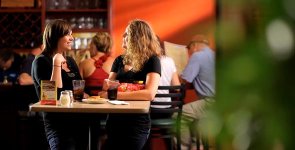
I found this on vimeo. Somebody was just playing around with a canon eos 60d and got some test footage but I noticed how cool the lighting looked here. I believe this type of light would go really well with the scene, but I'm open to any suggestions.
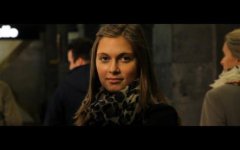
Picture 1.jpg
I will be using a Canon EOS 60D with a 50mm f/1.4 lens.

Thank you guys soooo much!

1/29/11 UPDATE WITH PICS
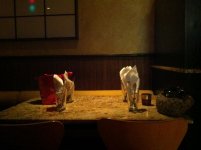
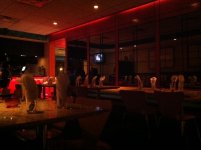
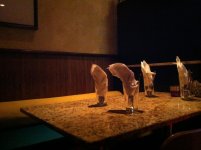
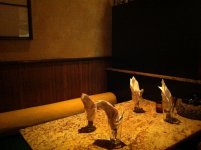
IMG_0222.jpgSo here is the table that I'm thinking of shooting the scene at.
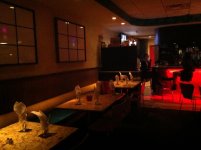
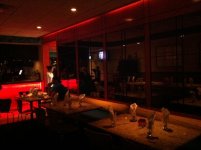
IMG_0225.jpgThere up top is the lighting that is already there.IMG_0224.jpgHere's another angle of the table
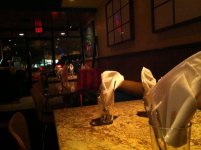
IMG_0227.jpgThis is the view of that side of the table from a further part of the restaurant. You can see how there's a big complication with the HUGE WALL OF MIRRORS. Hopefully the cameras and equipment will be out of focus and/or out of shot.

I didn't know however, if the mirrors would be extremely detrimental in the lighting.

These pics were taken on my iPhone so I apologize for lower resolutions.

I hope this helps you guys more! You all are helping me so much thanks
 

Attachments
  • IMG_0228.jpg
    IMG_0228.jpg
    88.4 KB · Views: 0
  • IMG_0226.jpg
    IMG_0226.jpg
    71.7 KB · Views: 0
  • IMG_0223.jpg
    IMG_0223.jpg
    77.6 KB · Views: 0
Last edited:
I suggest you get access to the restaurant beforehand and play with the lighting before you bring you talent for the actual shoot.

You can get the basic look above with a couple of China Balls. Buy them at a lighting store and get a few photoflood bulbs.
The background can stay relatively dark to keep the Miami-style mood going.

Miami-style?
 
Good find, WTD. Is that what you are looking for Asen? I'd have put the light over the table slightly off center, gone for more pools of light, more black and more contrast and kept the light off the side wall more, but it's all a matter of taste.

Reminds me that I should shoot video with my 7D not just stills too . . . :)
 
slide_1.jpgslide_3.jpg

Here are a few shots I did for a commercial shoot last year. The key is lots of soft rim light to separate the subjects from the background and then soft reflected light bounced up at their faces for the closeups.
 
I want the audience to feel a little giddy, warm, and soft for the two.

Soft light will be youre friend and whilst lighting the guy is important - the female character will take on a little more importance here. I might be inclined to even add a little eye light for her after Ive got her key sorted.
 
Soft light will be youre friend and whilst lighting the guy is important - the female character will take on a little more importance here. I might be inclined to even add a little eye light for her after Ive got her key sorted.

Oh, good idea. Right and right.
 
Oh my gosh this is all such good advice thank you!

I will post pictures of the interior of the restaurant soon, but wow these responses are exactly what I was looking for :]

Noel Evans: What do you mean by adding "eye light" for her after you have her "key" sorted?
 
Oh my gosh this is all such good advice thank you!

I will post pictures of the interior of the restaurant soon, but wow these responses are exactly what I was looking for :]

Noel Evans: What do you mean by adding "eye light" for her after you have her "key" sorted?

Once you get the female 'well' lit for your intended mood, place a small light, such that there is a glint in her eyes as seen by the camera. Depending on the situation, that 'glint' can come from the 'light source' in the scene or implied by the scene, or 'from the camera' direction. This avoids having the eyes look like blank black sockets.

Watch movies closely, especially close ups, to see the glint, and analyze how that was done.

In your example it may be that the 'glint' was lost in the reduction of resolution, but there should be something in the original shot to 'catch' the subject's eyes.

A small light mounted on the camera, or a white bounce card will often be sufficient. The light is not powerful enough to change any lighting setup.

In the second example someone posted, look closely at the girl in pink's eyes. There is just a hint of a glint from the ambient light coming from over the right shoulder of
the girl on the right. This becomes more important in closeups and extreme closeups. In that example the 'glint' matches a light in the environment. In your example, because the softbox/defused light is coming from somewhat high above, you need to get something more directly into the eye. While it won't exactly match an existing light source, it relieves the black sockets issue...
 
Last edited:
Asen, well after Ive given her a nice soft key, I might accent her eyes with a little more twinkle for that truly classic romantic feel.

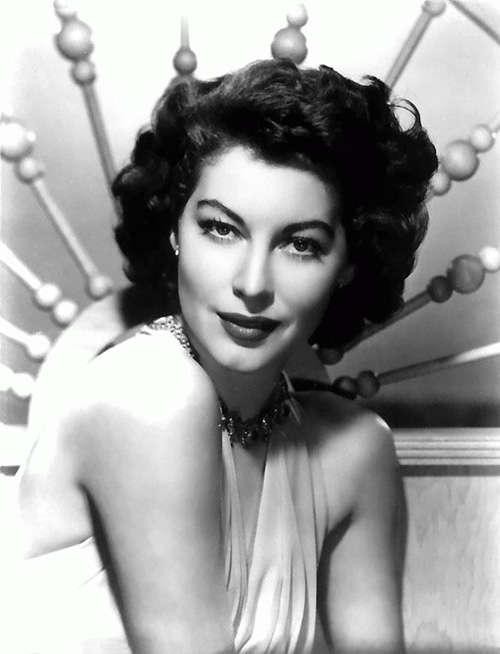
ava-gardner-proponent-of-doing-nothing.jpg
 
These eyelights are called "obies". They first came into play (or popularity) after being used to diminish some facial scars on an actor named Merle Oberon. Many productions still use them and they are used to very poor effect in news. In that regard, they shouldn't be treated as your key source, but as a small filling fixture as Noel said. Ring lights and the crop of LED shoe-mounted fixtures are the new obies.

attachment.php
 
Lighting types study catchlights in eyes and shadows on faces and in a scenes to understand what lighting instruments were used and where they were placed. I do it constantly.

I abhor ring light catchlights. Others love them. To each his own :)
 
Restaurants often are well lit themselves for mood as far as wall washes, table lights, specialty fixtures etc. While these are usually dimmed too low for good exposure with a video camera, often just raising them to full output will get you adequate exposure while keeping the mood of the decor intact. I think a lot of video is over lit and over filled for maintaining the natural mood of a setting. Upping the wattage of lamps in the practicals already lighting the booth or table along with carefully placed bounce cards for fill can go a long way to maintain a natural look and stay within a workable contrast ratio. This is especially true with newer cameras that need less light for good exposure anyway.

Here is an example portrait I shot of my wife Suzy for her web site. After playing around with various fill lighting setups we ended up just using the natural north light from her studio bay window and a single white bounce card to left of camera. She was after kind of a Rembrandt mood. http://www.suzyhartfineart.com/
 
I got some pictures up, what do you guys think of the interior of the restaurant? The wall of mirrors for example, or the lighting on the ceiling already?

But wow I never noticed that glint until I really looked for it, it IS so much better than blank black sockets!

Razz, Erik, Noel thanks for the examples, and everyone else- I have such a better understanding of lighting compared to where I was last week
 
Last edited:
I got some pictures up, what do you guys think of the interior of the restaurant? The wall of mirrors for example, or the lighting on the ceiling already?


Having shot a number of weddings in various venues... I'd say I'd like to see a bit more light in some of the distant reaches. This depending on the mood you want to produce of course, but for some of the shots the background was basically black, with a few 'point source' lights, that didn't read too well to me. Perhaps 'pools of light' on the tables in the background, not quite as bright as your table-of-focus, but enough to relieve some of the darkness..

As for mirrors... strategic placement of light, camera, crew, etc. to avoid unfortunate stray light, or reflections of crew and equipment.

Obviously to get the lights right, it is going to require some amount of time.

Back to the wedding biz... in situations like this the Wife would ask the bride to have the house lights brought up 'a little' so there was enough light in the background. I would usually hand hold the flash off axis to minimize reflections in mirrors and still get light on the subjects while she took the shot... like the bride and groom... and then live with what happened... Occasionally the mirrors would actually 'light' things as well, so there would be a bit of bounce in to shadows that would soften the contrast.
 
Seeing those can lights, I don't think bringing up the practicals levels is going to help with your overall ambient illumination.

Seeing that drop ceiling and the very sourcey light levels, I'd put together 8 - 10 China balls with 300w bulbs on Ikea dimmers. You can tape them up or use very inexpesive scissor clips to mount directly to the drop ceiling. Get some duvetyne to create skirts to block reflections and unwanted spill. Use studio type fixtures on your talent or where the China balls aren't controllable enough to get you the look you need.
 
The China balls would work but if you want to bring up the ambient level with the greatest of ease just hit the ceiling with a 575 HMI. Or shoot it away from the talent at the camera-side wall and ceiling. You can waste it around or drop in a wire and get just the level you want.
 
Back
Top