Green screen lighting with flourescent

I have a big studio to light and the green screen is 16' x 40' with 17' ceilings... Money is tight due to a complete re-wire of the building, so...

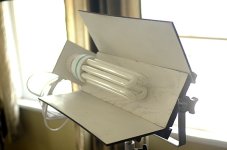
I found a great commercial 6 lamp hanging flourescent fixture to hang and angle inward with a wire and a bottom barn door.

My question is can I just go buy kino flo bulbs and install them or do a need to get a better ballast, and can I use an internal ballast?

I have seen all your do it your self stuff and what I am doing is much more advanced since this will be a working studio with a full green screen from floor to ceiling
 
I helped a friend outfit a studio with hardware store flourescent ficxtures using kino bulbs. I didn't make the lights or buy the fixtures though. Initially when we put in the Kino bulbs but they only lit up at half strength. Went to a lighting wholesaler and he told us we needed different ballasts. We bought the higher rated ballasts and they were easy to switch out & worked fine. I did none of the electronics work & didn't buy the materials though so that's all i know.
 
It would occur to me that cheapo flourecent has a green cast... what more perfect to light a greenscreen ?

And keep the expensive fixtures for lighting near the talent

Obvioulsy you need good seperation but I guess you have that with the size of the screen?

S
 
It's okay but you can't do off speed stuff, since you'll start to see the flicker.

Also where are you located in SF? Always good to know about another studio in the area.
 
just about every discussion ive ever heard about problems with DIY or cheaper flo fixtures for video comes down to ballasts. so i would definitely do my research there first
 
We worked in a green screen studio that had alot of DIY fluorescent lighting, it pissed off the DP. We ended up pulling more firepower from the truck because of the horrible color temperature.

Your best bet is lighting with tungsten, even a DIY tungsten softbox out of construction lights would work better
 
Hmmm.. First, yes I am in SF. Good size green screen with a 40' white wall as well. Green Room and temp. Office space as well. Setting up to accommodate a full crew with a seperate sound and video booth in a separate room overlooking the studio.

I some have money, am willing to invest in expensive ballasts but hate to buy the total fixture since these are fixed mount up in the lid. I may wire in more breakers and lines tomarrow to accommodate DYI lights. Was hoping to use low watt lighting for the green screen but maybe I better rethink it since I can not seem to find the correct ballasts.....

Still open to suggestion..
 
Hmmm.. First, yes I am in SF. Good size green screen with a 40' white wall as well. Green Room and temp. Office space as well. Setting up to accommodate a full crew with a seperate sound and video booth in a separate room overlooking the studio.

I some have money, am willing to invest in expensive ballasts but hate to buy the total fixture since these are fixed mount up in the lid. I may wire in more breakers and lines tomarrow to accommodate 800 watts fresnal Lights. Was hoping to use low watt lighting for the green screen but maybe I better rethink it since I can not seem to find the correct ballasts.....

Still open to suggestion..
 
I use off-brand Kinos (5600K bulbs) for green screen all the time and have never had any issues with color cast or flicker. Any issues people are reporting are much more likely due to ballast and non color balanced bulbs.
 
Have you considered the kino knock-off lights... they are not as cheap as DYI but they are much less expensive then actual Kinos. Personally have sets of Kino Divas (200's & 400's) & the knock off 400's by CoolLights, their studio series is actually a pretty good deal if you are just mounting and leaving in place, worth the cost avoiding the DYI hassles. (Just a user not a company rep in any shape or form, actually not super thrilled with their LED's but thats another lighting thread I suppose).

Green screen lighting in a fixed studio space does scream for fluorescent as the LED options currently are way cost prohibitive. Using tungsten will literally crank the heat factor up exponentially therefore leading to cooling issues in the space. No one wants a hot sweaty studio. Used to work in a midtown NYC studio that had tungsten for the green screen... when they switched to Kino's it was a remarkable difference in light quality and human comfort.

-Mark
 
You could also consider putting in the green flo bulbs in the ones lighting the screen. If your talent is far enough from the background I would say it almost doesn't matter what you light him or her with as long as you control the light.
 
What type/brand? My current camera is only an fs100 by Sony so doubt if I would have a problem after some asjustments but a Red mx in slo.mo may pick up the pulses unless the shutter speen is synced at a variation of 60 which is a pain to explain to someone who iis renting the studio for a day. Hard to explain a possible flicker issue from cheap lights while standing next to a 40' camera crane that cost like 350k....

I ended up pulling 6 more 20 amp leads into the panel from a make up box in the lid so I would have extra if need be. For the green screen I ran two 20 amp switches and two lines with 3 plugs each line so at the moment I can handle 6 1k tungsten/halogen lights or 12 fluorescent fixtures according to my math.

Lot of wall space... May have to add another row of lights to light up the corners and floor... Hard to tell at this point... May hit home depot for some junk halogen work lights to get a reading.... Guess it.z time to call my DP and main Camera man for a preview.

I am sure their is an app. and math for all this.... We have a big lighting place for film and still work, but.... Not very friendly and the prices are high. Hard to justify giving them my $
 
The kino knock offs are both at www.coollights.biz & www.flolight.com
Both use Kino bulbs. As I said a fraction of the cost, fraction of the hassle of DYI.
Will look much more professional then tungsten work lights.
As a DP were I to scout a studio with a tungsten lit green or white BG, raises lots of red flags (if those are home depot work lights unless the studio is dirt cheap with great cooling system... bookings not likely). 10-20 years ago tungsten was king... cooler options have now ascended to that role. Tungsten still has a place of course... just not there.
Also what you spend now on kino-like fixtures you will eventually make back on energy savings... long term that is.
 
Cheap flicker free fluorescent is possible. Try saying flicker free fluorescent five times in a row.

In doing some research for my own DIY kinos, the fixtures need an electric ballast in order to prevent flicker. I went to home depot and bought a 2-bulb 48" T8 fixture that comes pre-wired with an electric ballast. If the fixture doesn't have one you can add one - but they range in cost from about $12 to several hundred and I don't know enough about this stuff to know the difference. When I assembled the light and did a few test shots with my FS100 at 24/30/60p with shutter speeds of 48/60/125 - I saw no flicker. I'm using the nicer T8 bulbs home depot sells, Philips 850's, that puts the CRI in the 80's and its a 5000k bulb. I'm getting ready to assemble them into 4-bulb lights mounted on 12" wide boards that will be clamped to light stands. I'm going to assemble everything this weekend and do more test shots as this will be my primary indoor talking head lighting for a number of PSA's I'm getting ready to shoot.

Lighting stores sell the higher end Philips bulbs that have a CRI in the 90's, the 950's, but they're $170 for a case of 10 and the 850's are $42, so for now I'm going with the 850's unless I see something really ugly color-wise. Some say you have to have the higher CRI to avoid weird color casts and such, but most of the proponents of uber-expensive bulbs seem to be the people selling them. There are plenty of others getting great results with lesser bulbs than what I bought. I'm trying to avoid blowing $20 a bulb + shipping on Kinos. I went with T8's over the larger and more powerful T12's because of weight, the cheap steel fixtures are a lot lighter when you compare T8 to T12. I'm mounting two of them to each board and I'll probably wind up with 5 lights (20 bulbs) total once all is said and done, so I'll have a quasi-portable 48" florescent lighting kit at a cost of about $500.

What I'm doing is obviously not on the scale of the OP, but I'm sure it can be upsized. An electrician would easily be more knowledgeable than me as well. I left the one fixture I did put together on for three hours - nothing caught fire and the bulbs settled into a nice, full white light. Keeping my fingers crossed that the whole thing works as planned. I'm going to open a thread with photos and a video once construction is finished and my wife lets me light her for a test.
 
Sweet.... I am using an fs 100 for now as well but am concerned about renting the studio for 1 k a day and have lighting issues... I talked to flo light yesterday and for 999.00 I am told they can deliver 2400 watts with there big package.... May buy 2 and see what light I get. I got the circuit done yesterday and the 2 lightbulbs (300 watt) I hung as temp lights lit up a lot so if they can deliver that much light (2400 watt) that may be the ticket since my ceilings are 17' high. I am hoping to have this green screen scary bright and clean...
 
I've shot a ton of green screen using knockoff biax lights. I think they're perfect. If you're shooting tungsten balance, get the 3200k tubes. Flolights are OK (avoid the goosenecks). Cowboy Studio sells really quite nice 2 and 4 bank units for a killer price. They're almost disposable. I can't imagine using tungsten for a green screen when flos are this cheap.

I've used biax from the sides and a couple 85-watt "big-ass" tubes in DIY ceiling fixtures for a 20' wide green screen. Perfect. (below...)

diy-flo.jpg

2 dual biax fixtures and 2 85 watt tube flos overhead (yes, that stray sandbag killed me, but models and makeup were already on overtime - never hustled through final shots so quickly...):

2.jpg

And the latest finished shoot, using green and magenta screens:

 
John,

As much as total amount of light is important also remember that the even distribution & balance of that light is also a priority. We always check the lighting of our green on a monitor with waveform feature (Panasonic BT-LH900 or BT-LH17). Having that flat line across the span of the waveform will in the end delight who ever is posting the green and make their life a touch easier. If you ever have a client come in to do a live key webcast type program with a tricaster or similar system that even lighting on the green gets even more important in a live key siituation. Much easier with proper focusing/positioning of floro fixtures then on Tungsten. Glad to see you checked out that alternative.
Another little green screen trick, consider pre-hanging tungsten back lights on a dimmer (barn-doored or flagged to help alleviate lens flare) use a 1/4 minus green which further helps the effectiveness of key, keeping the dreaded green halo away (Lee 87, Rosco 3208). If they have green screen experience studio rental clients will appreciate this little extra effort.

When you get a chance post some pictures of the space, curious as to what this looks like.

Mark
www.digimarkmedianyc.com
 
Last edited:
Thanks... At this stage I am running wires from the panel and have had to rethink quite a bit... I added 6 more breakers and was thinking about getting some 1k tungsten for fill in.. Will add some dedicated boxes for these... I will need to get an expert in when I am done to set everything and make sure I do not have and dead spots... With two 2500 watt eqiv. flo lights Lighting up the wall I figure a few additional tungsten to light up the floor area should be close. Dimmers are a good idea, will have to do the math on watts for amp load... Can I just get some cheap eBay 1k redheads? They have barn doors... ????? Can u dim those? I really want to keep it inexpensive until the rents come in, the upgrade...
 
If you are talking about fill on the green for those additional fixtures, I would keep it all flouro. It's the easiest way to avoid color temperature ambiguity and ensure even coverage.
On back lights you would be fine with 4x 420's or 600's open face at max, 4x 300's on a lensed fixture. That would more then adequately cover up to 40' across when placed & focused strategically. Something like a Lowell Omni, Arri 600 open face, Arri 300 or cheaper ebay knock off equivalents. I really do avoid tungsten 1k's for a multitude of reasons, the extreme inefficiency, heat, & power draw being the top 3. Cameras today with the appropriate lens are sooo much more sensitive then yesteryear. The extreme wattage lighting isn't needed unless your trying to get up over f11 doing high speed stuff.
Green screen we temporarily created in a conference space for a shoot this past week was 20' across x 12' tall, used 2 kino 400's and 2 200's with 2 Arri 300's at either side w 1/4 minus green for backlights. Worked perfectly, as it was a knees up shot and didn't have to worry about the floor or feet where your additional fill might come in. We had the 200's towards the center on the floor instead of hanging because of that, made set-up & breakdown much quicker. Cameras were PMW-350's and lit the subject to about a F4, background kinos were all dimmed to around 60%.

Mark
www.digimarkmedianyc.com
 
Back
Top