Other: FX6: Absolutely bonkers high ISO performance

Grug

Veteran
I'm coming into the third week of a Bollywood feature at the moment, and we're shooting on the new Sony FX6. I had my first opportunity to use the 12,800 ISO (native) high-ISO mode last night, and it's damn-near mind boggling.

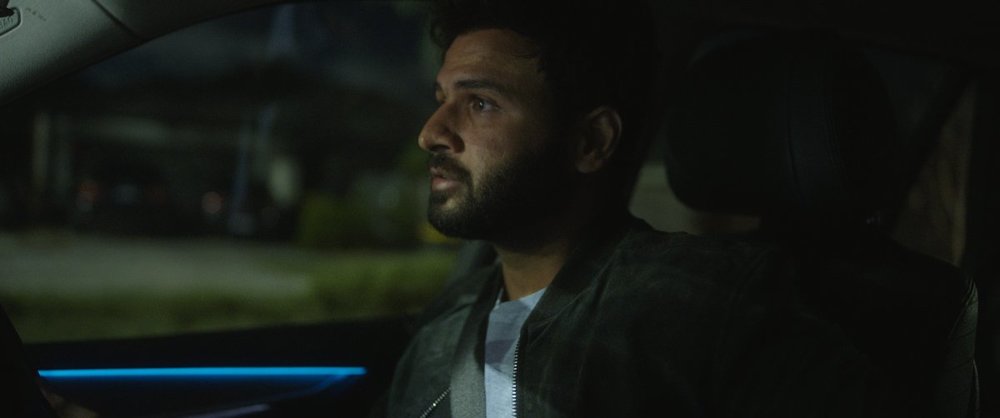
We had to get some driving material on some exceptionally dim suburban streets (as in, your eyes can barely discern any detail dark). Chuck the little Sony into its low-light beast mode though, and all of a sudden these impossibly dark streets are correctly exposed...

In order to get a bit of low-level fill on our actor (so that he never dropped off into total darkness. We taped a little Nanlite 6C Pavotube (a little 6w LED tube light) onto the windshield.

At 1% brightness, this 6w light was wildly overexposing our talent (without stopping down until the dark streets outside the windows returned to the natural blackness they had by eye). So we took a 2'x3' roll of 216 diffusion and folded it over and over on top of itself until it fit the front of the little tube light.

This diffusion must have been folded on top of itself at least 20x over (in terms of layering).

Put the light back in place... we're still over exposed.

I then had to take some gaffer tape and just physically cover half of the surface of the tube to get the output low enough that it looked natural at 12,800 ISO.

So we had a 6w light, cut down to a 3w light, diffused 20x over and run at 1%... and NOW we had some correctly exposed ambient fill.

Absolutely nuts.

That sky and those clouds you can faintly see above the house behind him (in the screengrab below) were totally invisible to the human eye. And what's even crazier, is that the footage is still so clean, that with a touch of noise-reduction it intercuts seamlessly with our normal 800 ISO footage.

It's a brave new world.
12800_1.3.1.thumb.jpg.575f919c66500626555327f4cd3acbfd.jpg
 
Not to rain on the parade because this is about the FX6, but if you're ever interested in another higher ISO camera check out Canon's 4 million ISO ME20F.

It's used on all kinds of wild life/earth shows.
 
BuT a ReAl Dp WoUlD nEvEr ShOoT aBoVe IsO 3200

jk it's awesome right? opens up possibilities, both for low-light shooting and for stopping the lens down
 
Not to rain on the parade because this is about the FX6, but if you're ever interested in another higher ISO camera check out Canon's 4 million ISO ME20F.

It's used on all kinds of wild life/earth shows.

Oh, I saw the Savannah At Night documentary, and it was mind-blowing. Difficult camera for conventional production though, it's set up oddly.

BuT a ReAl Dp WoUlD nEvEr ShOoT aBoVe IsO 3200

jk it's awesome right? opens up possibilities, both for low-light shooting and for stopping the lens down

800 ISO is still stupidly easily to light to most of the time. We've been using a bunch of these little Nanlite 60B (60w) LEDs and getting tonnes of versatility out of them lighting night-for-day stuff.

But this crazy-level stuff really does open up really interesting possibilities. I'm looking forward to lighting up a football field-sized space with a single 500w LED at either end (running on batteries)!
 
I'm coming into the third week of a Bollywood feature at the moment, and we're shooting on the new Sony FX6. I had my first opportunity to use the 12,800 ISO (native) high-ISO mode last night, and it's damn-near mind boggling.

We had to get some driving material on some exceptionally dim suburban streets (as in, your eyes can barely discern any detail dark). Chuck the little Sony into its low-light beast mode though, and all of a sudden these impossibly dark streets are correctly exposed...

In order to get a bit of low-level fill on our actor (so that he never dropped off into total darkness. We taped a little Nanlite 6C Pavotube (a little 6w LED tube light) onto the windshield.

At 1% brightness, this 6w light was wildly overexposing our talent (without stopping down until the dark streets outside the windows returned to the natural blackness they had by eye). So we took a 2'x3' roll of 216 diffusion and folded it over and over on top of itself until it fit the front of the little tube light.

This diffusion must have been folded on top of itself at least 20x over (in terms of layering).

Put the light back in place... we're still over exposed.

I then had to take some gaffer tape and just physically cover half of the surface of the tube to get the output low enough that it looked natural at 12,800 ISO.

So we had a 6w light, cut down to a 3w light, diffused 20x over and run at 1%... and NOW we had some correctly exposed ambient fill.

Absolutely nuts.

That sky and those clouds you can faintly see above the house behind him (in the screengrab below) were totally invisible to the human eye. And what's even crazier, is that the footage is still so clean, that with a touch of noise-reduction it intercuts seamlessly with our normal 800 ISO footage.

It's a brave new world.

12800_1.3.1.thumb.jpg.575f919c66500626555327f4cd3acbfd.jpg

I really like the Nanlite 6C Pavotube, they are really good, especially for the price! I purchased one of them and the only reason that I didn't grab more is because they do not have a good app or remote control system. So while you could increase or decrease the intensity of the light, you could not control the hue or saturation or change the effects from the Nanlite remote control. Which meant if you had it placed somewhere (maybe up high) you would have to constantly take it down to make adjustments.

I know that is a little thing, plus the light is pretty cheap anyway, but I think Nanlite should really push to create an app or better control like Aputure. Holding off on getting more just for now incase Aputure releases a cheap tube light, as I prefer a small tube light over Aputure's MC RGBWW light, which I own one of as well. Aputure's control app is one thing that they have over Nanlite which may or may not matter based on personal workflow.

They actually do have a new remote that lets you control just about everything now - cct, dimming, hue, green/magenta

That’s what I used to compensate for the colour shift cause by so many layers of diffusion.
 
Would those be the forza 500's? Are you a nanlite man across the board?

Yep, the Forza 500s. My gaffer brought a pair of Forza 300s and a pair of Forza 60Bs on a short I shot just before this feature started, and they were so versatile (and so affordable) that I picked up a pair of the 500s and a pair of 60Bs just before starting on the long form job (and then quickly went out and bought a second pair of the 60Bs because they're just so useful).

I also got a couple of the Nanlite 6C Pavotubes, and four of the little 5C credit card LEDs as well (for random nook-light work).

Having everything be remote controllable has been HUGE on a little film like this. And the COB lights are simply more versatile than any other style of fixture I've ever encountered - point-source hardlight? Check. Broad-beam bounce source? Check. Focusable fresnel? Check. Dimmable without colour shift? Check. Built-in lighting gag effects? Check.

I still have my HMIs, my Arri lights, my Dedolights, my Area48s and my little Aputure M9s. But the Forzas have been doing the lion's share of the work (simply because we can do so much by simply changing out the modifiers we're using on them). I really don't see the point of panel-style lights anymore. The COBs basically render them obsolete.

I am a total hypocrite though, because I was having a laugh with my lighting team at the start of the shoot, about how there are literally gaffers out there these days, with only a single manufacturer's lights in their vans (generally Aputure or Nanlite). Which seemed so utterly ridiculous and brand-focussed... and yet, I've quickly come round to the idea. :p

Without a larger lighting crew, and a DMX board operator, having a simple remote control in your pocket that can adjust the colour-temp and intensity of your lights (when they're outside the window, or over a neighbouring fence) has been a genuine game-changer for me.

These Nanlite LEDs are still no good for dimming down to 0% - we're still having to use tungsten units for that (if we need the light to fade out completely in-shot). But for just about everything else, they get the job done, and they do it admirably.
 
Agreed on the versatility of the Sidus link app for Aputure products. It's been a serious timesaver for a solo guy like me. I'm actually surprised they haven't jumped on the tube light train yet to compete with the Nanlites...
 
Yep, the Forza 500s. My gaffer brought a pair of Forza 300s and a pair of Forza 60Bs on a short I shot just before this feature started, and they were so versatile (and so affordable) that I picked up a pair of the 500s and a pair of 60Bs just before starting on the long form job (and then quickly went out and bought a second pair of the 60Bs because they're just so useful).

I also got a couple of the Nanlite 6C Pavotubes, and four of the little 5C credit card LEDs as well (for random nook-light work).

Having everything be remote controllable has been HUGE on a little film like this. And the COB lights are simply more versatile than any other style of fixture I've ever encountered - point-source hardlight? Check. Broad-beam bounce source? Check. Focusable fresnel? Check. Dimmable without colour shift? Check. Built-in lighting gag effects? Check.

I still have my HMIs, my Arri lights, my Dedolights, my Area48s and my little Aputure M9s. But the Forzas have been doing the lion's share of the work (simply because we can do so much by simply changing out the modifiers we're using on them). I really don't see the point of panel-style lights anymore. The COBs basically render them obsolete.

I am a total hypocrite though, because I was having a laugh with my lighting team at the start of the shoot, about how there are literally gaffers out there these days, with only a single manufacturer's lights in their vans (generally Aputure or Nanlite). Which seemed so utterly ridiculous and brand-focussed... and yet, I've quickly come round to the idea. :p

Without a larger lighting crew, and a DMX board operator, having a simple remote control in your pocket that can adjust the colour-temp and intensity of your lights (when they're outside the window, or over a neighbouring fence) has been a genuine game-changer for me.

These Nanlite LEDs are still no good for dimming down to 0% - we're still having to use tungsten units for that (if we need the light to fade out completely in-shot). But for just about everything else, they get the job done, and they do it admirably.

I definitely agree with you on the versatility of the COB lights. Hopefully the next phase of COB lights will be affordable (the ARRI Orbiter is $6,300) RGB variants. Godox do have an affordable RGB light ($559) that has been getting ok to good reviews:

https://www.bhphotovideo.com/c/product/1611956-REG/godox_sz150r_zoom_rgb_led_video.html

https://www.newsshooter.com/2021/01/09/godox-sz150r-rgb-spot-light/

https://www.youtube.com/watch?v=0uYgjJHXOTw
 
I'm coming into the third week of a Bollywood feature at the moment, and we're shooting on the new Sony FX6. I had my first opportunity to use the 12,800 ISO (native) high-ISO mode last night, and it's damn-near mind boggling.

We had to get some driving material on some exceptionally dim suburban streets (as in, your eyes can barely discern any detail dark). Chuck the little Sony into its low-light beast mode though, and all of a sudden these impossibly dark streets are correctly exposed...

In order to get a bit of low-level fill on our actor (so that he never dropped off into total darkness. We taped a little Nanlite 6C Pavotube (a little 6w LED tube light) onto the windshield.

At 1% brightness, this 6w light was wildly overexposing our talent (without stopping down until the dark streets outside the windows returned to the natural blackness they had by eye). So we took a 2'x3' roll of 216 diffusion and folded it over and over on top of itself until it fit the front of the little tube light.

This diffusion must have been folded on top of itself at least 20x over (in terms of layering).

Put the light back in place... we're still over exposed.

I then had to take some gaffer tape and just physically cover half of the surface of the tube to get the output low enough that it looked natural at 12,800 ISO.

So we had a 6w light, cut down to a 3w light, diffused 20x over and run at 1%... and NOW we had some correctly exposed ambient fill.

Absolutely nuts.

That sky and those clouds you can faintly see above the house behind him (in the screengrab below) were totally invisible to the human eye. And what's even crazier, is that the footage is still so clean, that with a touch of noise-reduction it intercuts seamlessly with our normal 800 ISO footage.

It's a brave new world.

12800_1.3.1.thumb.jpg.575f919c66500626555327f4cd3acbfd.jpg

Thanks for the write up Mark, looks like it's going to be another great project for you!

Yeah I think the next round of LED evolution would include finer dimming control in the very small ranges. Maybe in addition to the regular sized LEDs, it's a matter of cramming microscopic LEDs in between that can take over when in a certain range. Or some ND type technology to start covering the existing larger LEDS. And less of a stepped fade to off would be welcome. Anyway can't really complain too much with what's possible currently.

For the forzas are you using other bowens modifiers or staying within nanlite's ecosystem?

Are you in India at the moment?
 
I totally agree... the ISO 12,800 is insane.frame-000000.jpg

There is some noise, but it is subtle.

It was lit only buy my girlfriends macbook and some ambient light from the street.
 
Thanks for the write up Mark, looks like it's going to be another great project for you!

Yeah I think the next round of LED evolution would include finer dimming control in the very small ranges. Maybe in addition to the regular sized LEDs, it's a matter of cramming microscopic LEDs in between that can take over when in a certain range. Or some ND type technology to start covering the existing larger LEDS. And less of a stepped fade to off would be welcome. Anyway can't really complain too much with what's possible currently.

For the forzas are you using other bowens modifiers or staying within nanlite's ecosystem?

Are you in India at the moment?

I think I remember BB&S sorting out the dimming situation, by building 16-bit (or some other really high bitdepth) precision into the dimming on their Area48 Studio models. I wonder if that solves the fade-to-black issues? And if so, whether it's simply a matter of manufacturers putting those beefier processors into the lights to handle the dimming.

Modifier-wise I'm using a mix of things, the Nanlite fresnels, the Nanlite 60cm and 80cm Lanterns (which are great), some Jinbei stripboxes (because they setup faster than Nanlite's ones), occasionally I'm using the stock reflectors (though not often), and more often than not, I use the fixture bare-bulb (in order to bounce them, or get harder cut shadows through windows).

Today's latest discovery, was just how good Aputure's blackout barndoors are(!) I bought two, that arrived today, and had them on set this evening. And they're BRILLIANT for getting sharp cuts. There's a lot of situations where you wouldn't need to use a frame to cut the light with these guys on. I just got home and ordered two more of them straight away.

And this one's all shooting in Melbourne (post is happening back in India thought). Getting into and out of India is tough at the moment (getting back into Australia too), our lead actor went back home last year, and got stuck there for five months inadvertently.

Thanks. Which aputure barn doors do you mean? Are you using them on the forzas?

I might have to go down the nanlite path starting with the 60b and a handful of modifiers... the price is right.
 
Thanks. Which aputure barn doors do you mean? Are you using them on the forzas?

I might have to go down the nanlite path starting with the 60b and a handful of modifiers... the price is right.

Just Google “Aputure Barndoors” they’re the ones with the (internally) black reflector dish.

I have a couple of small gripes with the Forzas (double locking knobs on the yoke for the 500, the lack of TVMP adapters, the yoke on the Bowens adapter for the 60Bs being too weak, the clamp they supply for the ballast on the 500s, it being too easy to accidentally change modes using the lights’ controls and inadvertently slip into an effects mode) but they’re small grudges to hold at these prices.

The Forza 500 might be the most (daylight-balanced) lumens for the money ever.
 
Back
Top