Fuji X-T3 released

This is a loaded question since I am a tripod snob. Just got the X-T3 yesterday. Will use it on the Crane 2 quite a bit but for shooting interviews, which tripod head to get?

Keep in mind my A tripod is the Sachtler DV-6SB on the Carbon Miller Solo DV legs (LOVE but too heavy and expensive to fly with) and my B Travel tripod is the Miller AIR Head on the Miller Solo DV Aluminum legs. The Miller will work great with the X-T3 but is still a bit large and heavy for interviews for a 2lb mirrorless camera and it won't fit into overhead. Most b-roll will be shot off of gimbal I have a feeling and as we all know, for lockoffs for interviews, you don't need the best head in the world. Any pros discover a small, light but high quality tripod head combo that is small enough to strap to your camera backpack and stuff into overhead? Everyone keeps going on about the Manfrotto NITRO head but yuck, it's a Manfrotto.

I hate checking bags, the goal is on and off the plane with one backpack containing clothes, toiletries, Fuji X-T3 and a couple of lenses, Crane 2, camera batteries and tripod. I know Gitzo makes some sweet smaller and lighter carbon stuff as well as Induro but what about a decent head that is truely small and light and can handle about 4lbs max (X-T3, lens and Sound Devices Mix Pre 3) yet is Pro. No Sachtler ACE junk either, don't like them. Benro? Meh. So so build quality. Small, light and Miller/Sachtler quality but really small and light?

For simple locked-off interview stuff (if you don't need pan/tilt abilities). I'd just go with a good stills photography setup with a ball-head - you can't beat them for lightweight/travellability. If you do need an actual fluid head setup, I'm not sure how much better you can do than your Miller Air.
 
This is a loaded question since I am a tripod snob. Just got the X-T3 yesterday. Will use it on the Crane 2 quite a bit but for shooting interviews, which tripod head to get?

Keep in mind my A tripod is the Sachtler DV-6SB on the Carbon Miller Solo DV legs (LOVE but too heavy and expensive to fly with) and my B Travel tripod is the Miller AIR Head on the Miller Solo DV Aluminum legs. The Miller will work great with the X-T3 but is still a bit large and heavy for interviews for a 2lb mirrorless camera and it won't fit into overhead. Most b-roll will be shot off of gimbal I have a feeling and as we all know, for lockoffs for interviews, you don't need the best head in the world. Any pros discover a small, light but high quality tripod head combo that is small enough to strap to your camera backpack and stuff into overhead? Everyone keeps going on about the Manfrotto NITRO head but yuck, it's a Manfrotto.

I hate checking bags, the goal is on and off the plane with one backpack containing clothes, toiletries, Fuji X-T3 and a couple of lenses, Crane 2, camera batteries and tripod. I know Gitzo makes some sweet smaller and lighter carbon stuff as well as Induro but what about a decent head that is truely small and light and can handle about 4lbs max (X-T3, lens and Sound Devices Mix Pre 3) yet is Pro. No Sachtler ACE junk either, don't like them. Benro? Meh. So so build quality. Small, light and Miller/Sachtler quality but really small and light?

Really Right Stuff FH-350.
Amazing head for small cameras.
 
Really Right Stuff FH-350.
Amazing head for small cameras.

My Miller AIR head weighs 3.1lbs, the RRS FH-350 weighs 4.2lbs. Granted, it's a flat base whereas the Miller is 75mm bowl but I was hoping for something smaller and lighter. Thanks!
 
For simple locked-off interview stuff (if you don't need pan/tilt abilities). I'd just go with a good stills photography setup with a ball-head - you can't beat them for lightweight/travellability. If you do need an actual fluid head setup, I'm not sure how much better you can do than your Miller Air.

Something to think about, I have the cheap Manfrotto photo head I use for my Rhino EVO Motion with Arc.
It's well built, but would be useless for any kinds of pans or tilts. Fine for interviews but if we did need to occasionally shoot some longer lens stuff off of sticks...
I like the Miller AIR, I carefully researched it and used it for two weeks in Brazil on a documentary. Only catch is with the legs, it's far too large and heavy for
overhead on a plane or to attach to a backpack.
 
I wonder if the powers that be at DVXUser will move this thread over and start an X-T3 forum? A lot of us have bought into the X-T3, it would be good to have a dedicated place to swap tips and advice as this is a deep little camera with a lot of options and capabilities.

+1. Had a hard time re-finding this thread, didn't realize it was in "industry news" ...

---

Finally had a chance to do a couple tests and conservatively pegged the clipping points around ~11.2 in FLOG @ ISO 640 (-5.3EV, +5.9EV). Still info for a couple tenths in either direction. Not bad at all for the price/compared to the other hybrids.

Can someone explain the appeal of using the "Arri lut" on a non-Arri Log camera? Is that not just a recipe for strange color... or is that the point?
 
I've been working with the X-T3 for both stills and video for the last month or so, and it has to be one of my favorite and most capable cameras I've used (and I've used mostly all the cinema/hybrid cameras released since 2011). The combination of great specs (400mbps); ease of use; fantastic native lenses; color science/film simulations and retro styling is really unique and makes it not only a serious tool, but fun to use.

One thing that I don't know has been mentioned is how clean this camera is. I think ISO 6400 is not only usable, but beautiful.


PS - I'm even more impressed with the stills than the video.
 
I also saw its been popular on this forum and won cinema5D mirrorless of the year. Lot of compelling options in the next few months with BMD, Fuji, and the S1.

I'd like to try out the Fuji perhaps but one dissapointment is the lack of smart EF to X mount adaptors. My Milvus are the EF electronic apeture lenses so I can't adapt them.

And I assume there is no IBIS? What are the main drawbacks compared to Panasonic mirrorless (or other options)?

Cool to see another player.
 
Can someone explain the appeal of using the "Arri lut" on a non-Arri Log camera? Is that not just a recipe for strange color... or is that the point?

Some people - those whom usually have the knowledge and time - grade from scratch and may do everything 'by the books'. They follow the recommended procedures for transforming their LOG footage to the correct values & starting point(s), and then build on from there based on their goals. Most of them wouldn't use a Log C LUT on another company's LOG because it's not the "correct" practice.

However, in this new day and age, others realized that using and mixing all kinds of LUTs can actually look really good. The trick (and fun part) is stacking them (includes reordering) and adjusting their percentage (strength).

Let's face it: 99% of everyone's work is online so there really aren't any rules anymore, especially if your numbers are up (people are watching). So some may use an ARRI LUT on a non-ARRI camera because it simply looks good.

The colors pop. The contrast is nice. The colors may not be accurate according to the "experts", but who cares. The footage may come alive and look better than so much boring footage that is graded "by the books".

Now every LUT and combination is not always going to work every time, so naturally you'll have to adjust and/or correct.

That's just my opinion. Personally, I never listened to anyone and did what was best for me.

Made a lot of mistakes, but made more discoveries.
 
I also saw its been popular on this forum and won cinema5D mirrorless of the year. Lot of compelling options in the next few months with BMD, Fuji, and the S1.

I'd like to try out the Fuji perhaps but one dissapointment is the lack of smart EF to X mount adaptors. My Milvus are the EF electronic apeture lenses so I can't adapt them.

And I assume there is no IBIS? What are the main drawbacks compared to Panasonic mirrorless (or other options)?

Cool to see another player.

You must have missed the earlier discussion. Check out https://www.fringeradapter.com There are other smart adapters but not nearly as highly reviewed.
 
I also saw its been popular on this forum and won cinema5D mirrorless of the year. Lot of compelling options in the next few months with BMD, Fuji, and the S1.

I'd like to try out the Fuji perhaps but one dissapointment is the lack of smart EF to X mount adaptors. My Milvus are the EF electronic apeture lenses so I can't adapt them.

And I assume there is no IBIS? What are the main drawbacks compared to Panasonic mirrorless (or other options)?

Cool to see another player.

Your excuse for not trying out the Fuji is invalidated by the Fringer Fuji-X adapter, translates IS, all electronic data and has good AF performance with most Canon lenses. $349.00
https://www.amazon.com/Version-Elec...e=UTF8&qid=1544820562&sr=8-2&keywords=Fringer

No IBIS. I bought the X-T3 specifically to use on gimbal and tripod so no problem for me. There will be an X-H2 with IBIS but who knows when and it won't be $1,499.00 or as small or light.

I spent a few months evaluating the GH5S, which is a great little camera.
Drawbacks are there still holes in the Fuji lens lineup when compared to ALL M43 lenses on the market, taken as a whole, or the EF lineup but the Fuji lenses are by all accounts, excellent glass.
To me, the color science is better than Panasonic and the image definitely appears more filmic and less video-like than the GH5/S. That said, if I already owned the GH5/S, I wouldn't have
just bought the X-T3, the GH5/S are great cameras. Oh, and of course, the X-T3 is super cheap for what it offers.

Overall drawbacks for me are the usual, it's not a video camera, no XLRs, no Phantom power, no builit-in NDs, you have to turn it into a Franken-rig to shoot shoulder mounted, etc. But that's the same with all mirrorless cameras.
I'm not replacing my C200 with it, but I will be leaving the C200/80D at home when shooting stock footage and stills and I am planning on a 2-3 week roadtrip for one of our documentaries next year and I will be bringing two X-T3s,
gimbal, tripod, small lights and Sound Devices Mix Pre 3 instead of my much larger and heavier C200 rig. Also will be handy for shooting documentary subjects in touchy circumstances like in a restaurant, store, etc. you can look a lot
more like a tourist with an X-T3 than a C200.
 
Some people - those whom usually have the knowledge and time - grade from scratch and may do everything 'by the books'.

However, in this new day and age, others realized that using and mixing all kinds of LUTs can actually look really good. The trick (and fun part) is stacking them (includes reordering) and adjusting their percentage (strength).

Let's face it: 99% of everyone's work is online so there really aren't any rules anymore, especially if your numbers are up (people are watching). So some may use an ARRI LUT on a non-ARRI camera because it simply looks good.

The colors pop. The contrast is nice. The colors may not be accurate according to the "experts", but who cares. The footage may come alive and look better than so much boring footage that is graded "by the books".

Now every LUT and combination is not always going to work every time, so naturally you'll have to adjust and/or correct.

That's just my opinion. Personally, I never listened to anyone and did what was best for me.

Made a lot of mistakes, but made more discoveries.

Hm. The science of color doesn't change if you're grading a cooking show on PBS or "Mandy", so I don't think it's accurate to equate "grading by the books" (specifically as I was asking, using a log normalizing lut built for a different camera) to being "boring." The end result is whatever the colorist wants it to be.

I would also distinguish between a creative LUT and a technical LUT. A normalizing LUT should really only provide a starting point to get footage into a defined space. To the extent that LUTs are a way to save time, using a normalizing LUT from a different camera strikes me as super counterintuitive, but obviously YMMV!
 
You only asked about the ARRI LUT so I didn't elaborate.

In short and IMO, there isn't one specific way to do something. I wouldn't grade a cooking show the same way I would grade a feature.

---

To the extent that LUTs are a way to save time, using a normalizing LUT from a different camera strikes me as super counterintuitive, but obviously YMMV!

What's counterintuitive is actually that thought-process (no offense).

Because then you're basically trusting other individuals' brains to make a choice for you based on their own decision-making.

In other words, why is one normalization method for a certain camera technically correct?

If it's a determination of what colors should look like based on some worldwide system then why do we have 10+ different color sciences from all of these companies? Like literally, why can't anyone have the exact same red, green, blue, etc.

Finally, why do we sometimes have multiple generations of color sciences for one camera over the years? For example, the newest firmware update for camera A with 'generation 4' color science is now suddenly correct and 'generation 1' wasn't?

---

It's all relative. To me, experimenting with different LUTs is no different than what engineers are doing before, during and after a camera is complete.
 
To me, experimenting with different LUTs is just interesting and fun. These days, with so many stylized looks, you can kind of go sick with LUTs, grading and color correction and as long as you like it and your target audience does too, the sky's the limit.
Since the advent of the Digital Revolution, I 've become much less pedantic about what images are supposed to look like and what is "right". Unless you are trying to achieve PBS Red Book or something like that, make it look good and it will be good.
 
In other words, why is one normalization method for a certain camera technically correct?

Ultimately the answer to this question is rooted in the answers to your next two questions:

If it's a determination of what colors should look like based on some worldwide system then why do we have 10+ different color sciences from all of these companies? Like literally, why can't anyone have the exact same red, green, blue, etc.

Finally, why do we sometimes have multiple generations of color sciences for one camera over the years? For example, the newest firmware update for camera A with 'generation 4' color science is now suddenly correct and 'generation 1' wasn't?

Which require a thread of their own, but it fundamentally comes down to how photosites/camera sensors/log footage/gamma etc. actually work.

It seems like you have the time and desire to experiment and be a little reactionary in your grading and you value that experience, which is cool, and I definitely get that on the creative side. But technically, I personally fail to see how taking a scene lit to specific values in a specific colorspace and then processing them in another space is more helpful... more power to you if it works for you, though.
 
I've actually become quite disinterested with doing production/post myself these days...more drawn to any executive opportunities.

In general, I've always been a curious specimen and question everything (really like philosophy), so I'm probably an extreme example of how I do things.

The only other thing I can say is at least test it for yourself once in your free time. You have nothing to lose.
 
The only other thing I can say is at least test it for yourself once in your free time. You have nothing to lose.

I did, and the result was so poor I decided to ask what the advantage was in case I was completely missing something...

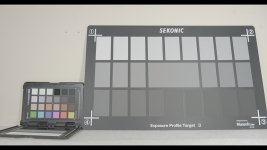
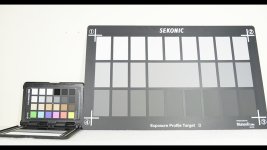
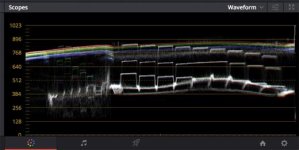
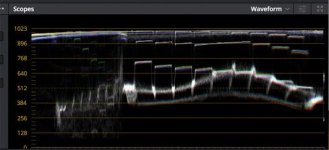
Just re-did it and screenshotted. This is what I see after applying the respective luts on a mildly overexposed (2 stops) image, no other corrections:

fujilut.jpg

arrilut.jpg

arriform.jpg

flogform.jpg

chart.jpg

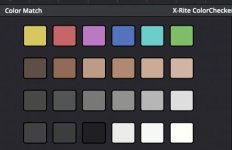
Clipped highlights and funky colors. Can't fathom why you'd want to start there, other than the contrast, which can easily be achieved without all the negative effects. (The color match swatch isn't exact because there's no way to select 2020 in Resolve, but you get a general sense and particularly comparing the skintones you can see which one is more faithful.)

Do you have an example of XT-3 footage you graded this way that you like?
 
The image needs to be exposed correctly or a bit underexposed for it to work best. (I also never use it at 100% as it's too harsh...always 65% or less depending on the DR of the camera.)

I think others mentioned they graded the X-T3 with LogC ('ARRI LUT'). I don't have the camera and just chimed in on that LUT being used for all kinds of systems.
 
Something to think about, I have the cheap Manfrotto photo head I use for my Rhino EVO Motion with Arc.
It's well built, but would be useless for any kinds of pans or tilts. Fine for interviews but if we did need to occasionally shoot some longer lens stuff off of sticks...
I like the Miller AIR, I carefully researched it and used it for two weeks in Brazil on a documentary. Only catch is with the legs, it's far too large and heavy for
overhead on a plane or to attach to a backpack.

Even for a lock-off interview, a ball head is a complete PITA to use for video. When I first started using my 5D for that 2nd or 3rd lock-off that producers wanted, I used the tripod I bought for it for still use, a set of CF Gitzo's with an RRS ball head and since ball head's move essentially on all axis, even just slight tweaks in the shot for headroom or framing become an ordeal instead of the 1/2 second operation it should be. I ended up mounting the RRS dovetail on a spare wedge plate for one of my real heads and would just mount the 5 on one of my big tripods(Vinten 100/Sachtler SpeedLocks). Overkill, but I could tweak a shot in the dark and not have to worry about if it was still level. And I wasn't flying with it, so size and weight didn't matter, either.
 
Back
Top