Fluorescent Softbox... Britek or PBL Studio Flo 7 ?

I'm usually pretty dipolomatic about such matters, but don't buy anything Britek makes. This is from my (and many, many others) personal experience. If you're looking for a low-cost fluorescent constant light fixture with softboxes, look at the Westcott systems. The Spiderlite TD5 (415.90 MSRP) system is their top-tier flo-capable light, with the ability to run up to five bulbs per soft box. At the other end of the spectrum is their pre-packaged 2-light fluorescent kits - some of which come with Westcott brand green screen fabric. These complete kits retail for $295 (uLite402) or $349 (Home Studio Lighting Kit 407). Let me know if you want pricing!

I haven't heard anything bad about the FloLights - if you go with those, please write up a review!
 
I've got three of the Flolight biax twin-tube units. About $600 with decent cases and really good tripod-style stands (been shooting tungsten fashion before we ever thought about "desktop video", got lots of pro lights, c-stands, piles of speedotron stuff, shot film at 35mm, 4x5, 6x7, etc - just so ya knows where I'm coming from)...

They're pretty sweet for the $$ and I use 'em for video, stills, and when I need some light to repair something. But... I'm not crazy about the gooseneck mounts - they work OK since these things are LIGHTweight. But check eBay and you'll see several twin-biax fixtures in the $200 a pop range with more traditional yokes. There's several importers on eBay - they're all chinese Kino knockoffs, but 2 daylight Biax tubes with high-power ballasts - well, the light itself is pretty nice.

By the way - unless your goal is to shoot only interviews - with only "interview-style" lighting - softboxes are overrated. I only use 'em for product tabletop shots (and I own two 3' x 4' with grids and a 6' octagon). I just find almost no use for them in video/film work. Your low-budget money is far better spent - these days - getting some biax flos in 2 and 4 tube setups, diffusion frame setups in a 4x4, 4x8, and 8x8 sizes (look for fabrics you can put on PVC or something, or have granny sew you 1/2 stop ripstops, reflectors, and black net and white mesh - sewing granny + a diffusion frame = cheap awesomeness). I was one of the first guys to buy the Westscott Scrim Jim gear and still use it weekly - softboxes, only for tabletop. Throw in some used eBay theatrical fresnels (6-7" that can be lamped from 500 - 1K, maybe a couple 3"). 500 - 1k fresnels gelled to blue is a decent match with biax flo's for hard light. Get some 1k open-faced stuff with barndoors. Get some decent stands & foamcore sheets, a couple c-stands, a couple sandbags.

None of that is "light a giant hollywood set", it's getting-started on a budget stuff - but I tell ya, these wimpy little 2x2 or 2x3 softboxes - they'll just piss you off. Shooting 16:9 or 2.35:1 - where are you gonna put the things so they're not in your shot and still cast actual SOFT light? You're usually better off draping some sheer white fabric over a c-stand arm, floor to ceiling, with a couple open faced lights and flagging with real flags or black foamcore.

OK, off the softbox soapbox... for now.
 
That's a solid answer Micheal ;) Regarding softboxes, while I never used them, I was thinking it could increase, in a natural looking way, the overall brightness of the scene I shoot (dark scene for exemple) without adding too much highlights or bright spots and hard shadows.. allowing me then to bring the ISO down.... But I was thinking of buying some nylon, sewing it into a shower cap looking diffuser and putting it on the flolights... Which should give me some good diffusion... or should I just put a diffusion frame in front of those lights? Im also thinking of getting some ND gels, (Rosco .6) to compensate for the lack of dimmer... Btw, black and white mesh.. what is that for?
 
Well, a tiny spot of diffused light such as a "showercap" idea... it's soft for about 1 - 3 feet, but over on the other side of the room, it's pretty hard.

Do this test: go to the fabric store and get 3 yards of a sheer white - even something gauzey/meshy - just not thick like a bedsheet, get something you'd make sheer curtains with.

So you'll have fabric that's 3 - 6 feet wide and 9 feet tall. Now, stick a boom or crossbar on a lighting stand and hang the fabric from it with clamps, and raise it right to the ceiling. Now you have a sheer white "curtain" that's maybe 4' x 8'. Stick an open-faced light in the corner, near ceiling level, pointing a bit downward - add another about eye level pointing down at the same angle - aim them out into your room or set.

Now, put the "curtain" in front of them - far enough out from the corner that the light fills the fabric (vs. a round hot spot - maybe 2 - 3 feet away). Use barn doors or cards so the light doesn't spill past that fabric rectangle.

Now go into the room and look back - you should have a 4' x 8' rectangle of pure white - if it has really defined hot spots (if your fabric's pretty sheer), add some thin diffusion to the lights - curl it out or hang it in full sheets so you "fill" as large a chunk of diffusion as possible. At this point you've emulated the front face and inner diffuser of a softbox - but it's huge.

What are we missing? The black "tent" - in a high-key scene you won't need this - in a moody scene, hang some black felt (cheaper than duvatyne, available everywhere and very light but totally opaque) to make the "sides" - or, if you're lighting from a corner, hang black on one side of the "box" (to block spill from the hard lights) and hang it against the side wall behind your big scrim (to block extra bounce). (Black felt is handy, especially because you won't hesitate to cut holes in it or chop it into strips. You can get 72" widths on eBay for cheap, or hit the fabric store).

Now, check out the quality of softness in the room. You may need to do the same thing from the other side of your camera position, maybe not. But basically, you've just made "huge soft light".

For this to really work, you need at least 500-750 watts behind that scrim (or tungsten eq. of that level). That's one way you can light a full-sized person or a small room softly.

From there, try adding black felt to your main scrim - 1-2' strips, floor to ceiling - you now have a giant "strip light", which is great for moody stuff. Try adding fresnels from the ceiling/behind for some focused harder light on your subject. Experiment with bounce and more scrims to get the amount of fill you want. But that big white rectangle you were looking into above - that's the key. It could just as easily be a big white wall, with diffused lights bounced off it, or a white bedsheet hanging on a wall.
 
Wow great info Micheal, do you have a blog or something? ;) I'll certainly try that and experiment a little... Thanks again! :)
 
That is a fantastic idea! I can attest to the smaller soft boxes being difficult because that is all I have had in the past. Whenever I would light with them all I found was that my subject had light thrown at them, that was about it. I knew that I did not like the look but never really understood why. Until I started doing some deeper research into lighting, light techniques, and gear. Now I understand. I used to shoot with a small open softbox with a 4' circumference diffuser in front of it to soften and spread the light. But now I am about to pull the trigger on a set of cool lights, 4x55, eggcrates, etc. I have an interview style shoot this week and although I won't have a lot of time to work with these before putting them into service I am confident I will have much more control and in the end have a better looking production.

And it's all thanks to members like Michael, they provide an effective way to understand all different aspects of production... even lighting!
 
That is a fantastic idea!

Thanks - it's more than an idea though, I've lit stills, video, fashion, film and digital with that basic technique for well over a decade, with strobes, tungsten, flo's, mixed, and on location with sunlight and artificial light.

When my studio was more still-based, I made sort of an arc of conduit on my ceiling and had enough fabric to sort of "tent" a 180-degree arc around the cyc, with just a slit for the lens. When clients wanted that sort of "endless white" look it was great, or I could just hang diffusion where I needed it.

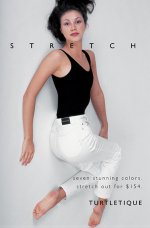
Here's a shot doing the big-white diffused wall down at floor level - look at the modeling on her face, lots of shape but no deep shadowing:

stretch.jpg

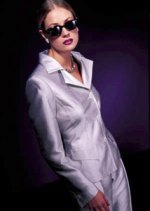
Here's using a big strip light, maybe 7' high but just a 1' strip of diffusion, and some sort of hard source behind her, swiping over her cheekbone and neck:

silver_big.jpg
 
Very nice work Michael, you have great talent. I really like the endless white look. Have any pictures of your studio with this type of "setup" set-up?
 
I've probably used them up to 1/250th for video, and I've used them for many still shoots and no issues. I'm finding I really like the twin-biax "look" an awful lot, whether straight-up or scrimmed/whatever.

But I've said this around here often - there are a lot of twin biax units out there (And quads) - I'm not a huge fan of the flolight goosenecks (they work well but I wonder about durability, and I'd definitely want a couple because they're easy to aim in a tight spot, like up on a ladder squeezed between a set wall and a ceiling) on the twins and it looks like there's a lot of twin/no dimmer models with "real" yokes in that $200 sweet spot - I've seen some on Alzo and Kaiser sites.

I'm trying to get a minute to do a color & exposure comparison of all the "around 500 watts" stuff I have - a 500w tungsten open face & a fresnel, the same with full CTB, a flolight and an Alzo 800. My sense is they're all close in raw light output, I'd like to really know equivalent watts vs. hype though, and CT differences.

Here's the first shot I did with the flolights - 2 in front and one for backlight - the window light was daylight but pretty straight overhead so I faked it with the flos, color balance was daylight preset, the front lights were scrimmed with hanging ripstop. I find for dimming them I can just wrap them with white or black mesh depending on the look - they don't get very warm. They also make a dynamite hair/sidelight when you want to light up a cheekbone/jawline from behind.

DSC_0164.jpg

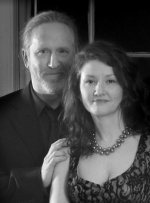
Regarding using them as rear/modeling light - this shot was really quickly thrown together with a bunch of friends over in dressed-up holiday mode (drinks involved!) This was either an Alzo 800 or a couple flolights behind a scrim jim to the subject's front/left, and a flolight in a doorway to the subject's right, 3/4 behind. Flolight was wrapped in black mesh a couple times, and it gave me that 3/d "from behind" modeling on cheeks (the nose is a little hot, but this was just "everyone looks good, take a pic!"). Keep in mind any twin tube biax is probably about this same look - the flolights are LIGHT though, and slim enough to get them in tighter places than a fresnel.

12.jpg
 
Back
Top