First TV Spot - Audio Level Help

tommygdawg

Well-known member
Hey all,

I've recently shot my first gig that will be airing on TV, and I was wondering if you all could help me out with how I should master my audio. The 30 second commercial simply has original orchestral music that I've composed, no talking or anything, and I've mastered it to around -0.6db. That is, it peaks at -0.6 (doesn't clip), and tends to average around -6db to -3db. Just as an aside, I tend to master all of my projects loud (not so loud that it sounds clipped/distorted, ie Metallica), but closer to what is considered radio levels. Is this appropriate for narrative film audio mixing? I've noticed DVD's tend to be quite a bit quieter than the average music track and I've never been sure what the standard is for this. Anyway, back to the main question. In the network requirements for the audio I see the following:

Instantaneous Peak Audio Max: -8dBFS
Average Peak Audio Max: -10dBFS
Average Level: -20dBFS (I should note that there's a strike through the BFS for this requirement, but I don't know if I can do that in the forum).

My main confusion is that I've never seen dBFS (I've only ever seen dB), what does this mean? Also, since my audio is tending to average between -6 to -3 in Premiere's monitor, does this mean I should try to get it to average around -10 and peak at -8? Or should it average at -20? That seems quite low to me.

Any help would be greatly appreciated!

Thank you!
- Tommy
 
The first thing you need to do is get the specs from your cable or broadcast station(s). What they want, you give them. The general standard is going to be brick wall peak at -10dB, but you need to talk to each outlet and see what their standards are.

You'll probably want to squash the dynamic range just a little, too... though most broadcast facilities have an Optimod or similar that will do a bit of the same.

As for dBFS, the "FS" stands for Full Scale. This is the digital scale, as it cannot go above 0dB.
 
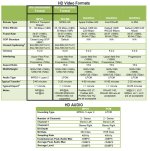
I can call them up if I have to. I was sent a PDF file with the required specs, I just want to make sure I'm understanding them all correctly. This is a screenshot of the specs in the PDF file. What do you think?

-- edit --
FWIW, I'm encoding using MPEG2.
 

Attachments

  • specs.jpg
    specs.jpg
    206.1 KB · Views: 0
I can call them up if I have to. I was sent a PDF file with the required specs, I just want to make sure I'm understanding them all correctly. This is a screenshot of the specs in the PDF file. What do you think?

-- edit --
FWIW, I'm encoding using MPEG2.

From the spec, the instantaneous peak max is -8 dBFS... if you are running at 0.6 dBFS you need to attenuate your audio by 7.5 db.

As to how to determine the 'peak'... I could write a program... but I don't know how to get that sort of information out of the typical DAW or the usual NLE like Premiere. Even the high water marks may not be 'peak', as required by the broadcaster.

Perhaps Protools has a nifty widget that will give a printout of such info...

What does instantaneous peak max mean? Is it simply the hard wall that the levels can't go beyond (ie currently my instantaneous peak max would be -0.6)? As for determining the peak, isn't it simply the point at which the audio peaks? Again, FWIW, I'm mastering my audio in Cubase 6 Pro.
 
Last edited:
RE what's dBFS, when you referred to your present practice of having your average levels at -0.6dB, you're really talking about dBFS (dB below Full Scale). 0dB is the right-hand end or top of the meter, the maximum level a digital signal can ever reach. With metering in the digital domain, readings are indicated in minus dB's referenced to Full Scale.

If you have been setting your average levels at -.6 you have been mastering at WAY too high a level. You shouldn't select your level in order to control the listener's volume experience - if they want your music louder they have a knob for that - and "loud" is not synonymous with "good." Instead you should be setting your levels to optimize your recording's dynamic range. Remember that contrast between loud and soft is part of a performance - having everything at the same ear-splitting volume is not a good thing.

Those audio standards you have been provided are not optional - there's a good chance your show won't get past QC if you violate the specs. You haven't included any info about where you're located but remember that many countries, including the USA, have set mandatory legal standards for broadcast audio levels to try to control commercials blaring out so much louder than the program. The "loudness wars" on radio are bad enough.

Average Level would be the reading on a meter with Average Reading ballistics such as those of a VU meter. Average Peak Level would be where a meter with Peak Reading ballistics such as on most NLEs would generally hover during the program. Instantaneous Peak Max would be a "never exceed" limit beyond which the level must never go for even a millisecond. Easiest way to determine your maximum peak is to turn on "peak hold" on the meters and tun the program through. The peak-hold indicator must never go any higher than -8dBFS according to your specs.
 
Thanks for the reply. I should note that I'm not mastering my average levels to -0.6. My average levels are hovering around -6 to -3, and I guess my current instantaneous peak max would be -0.6.

You shouldn't select your level in order to control the listener's volume experience - if they want your music louder they have a knob for that - and "loud" is not synonymous with "good."

I disagree with this to some extent. Commercial CDs are mixed much louder (generally speaking and to blanket sweep) than the average recording. There's nothing more frustrating as a listener than to have to continuously crank the volume knob to get your track up to the same level of audibility as a commercial CD. That being said, I realize that this loudness "standard" is not necessarily the same for films. I do this on my films because generally I feel the same thing applies, I absolutely hate clicking on a youtube video (whether it's a film or just a common video) and not being able to hear anything that's going on because it's just so darn quiet.

In regards to the network standards? I do not plan to exceed them. I didn't realize what their requirements were until after I mixed the audio, and now I'm just trying to figure out how to get them in check. If I understand the requirements and the information that you and others provided, I think I should have the follow levels in my project: The average level of the audio when not coming close to peaking and essentially just hearing normal volumes: -20db on Premiere or Cubase's meter. Correct?

I guess my point of confusion comes from the difference between "Average peak audio max" and "Average level". What is the average peak audio max? Why is it lower than the instantaneous max?

Also, I'm located in the Northern United States, Michigan.
 
Have a look at
http://www.vidcheck.com
There's also a good programme witten buy a guy in Holland that analyses the audio file and produces a list of where the peaks are and the average levels. I can't find it at the moment - but will search later.
 
The problem you're facing lies in the definition of "average." Meters fall into two broad categories, averaging (the old VU meters, for example) znd peak reading. The peak reading displays the instantaneous height of the waveform peaks while the averaging meter displays the level of the waveform averaged together over a certain time period. Some of the peaks within the time period will be higher than others so for a given signal the averaging meter will read lower then the peak reading meter, on speech typically about 10dB lower. I think your specs are saying that a peak reading meter should hover around -10dBFS for the most part and in no case should it ever go over -8dBFS. Meanwhile an averaging meter on the same signal would be indicating -20dBFS.

The problem with your practice of mixing to a maximum peak of -0.6dBFS, even for CD or YouTube, is that even peak reading meters aren't truly instantaneous and an occasional peak or two much larger than that can slip by without showing up on the meter. Such large one or two cycle excursions can hit the 0dBFS clipping point and generate audible harshness and noise even though there is no meter warning that you're clipping. Generally I would say say when metering for YouTube or other digital distribution such as DVD, -3.0dBFS should be your maximum, just to give you a bit of safety margin.

You have to be more mindful of the limits when mastering for theatrical and broadcast uses than you do when mastering for CD or YouTube because your program has to fit within the dynamic range and headroom limitations of all the other parts of the reproduction or broadcast audio chain. And as I mentioned before, the "CALM" legislation is intended to set standards to prevent wide excursions of volume level when switching from channel to channel or when the program goes to commercial. The Wikipedia article on Dialnorm is a good source of information on current practices and requirements.,
 
Last edited:
Two things. If you are peaking above -3dBfs you are distorting almost certainly. The signal coming out of the DAC overshoots the "digital" level by up to 3dB.

And yes I know a lot of pop CDs are mastered at close to -.1 dB. If that is your market it's bad practice but it's also probably a requirement. But you are now in the film and broadcast realm and they are not at all found of those kinds of levels.

So you need to reduce your mix a LOT or it will be rejected. There is another thread on levels that has links to a number of apps/ plugins that can give you the readings you are looking for.


Also to explain a bit about the dBfs. dB is a relative scale. -8dB doesn't mean anything if you don't know what 0dB is referenced to. So really all "dB's" should have some letters after telling you what they are. Many do so you will see dBfs, dBu, etc. Software programers tend to be lazy about such things so they don't "confuse people", actually probably the marketing guys more than the programers. If the top of your meter is 0 then the dB are dBfs.
 
In Australia I manage TVC's I do via a tool called dubsat and their app Media Pro. Do you have something like that in the US? Basically I do all the stuff my end, now Im trying to keep my clients audio as high as possible but, within the legal limits so Im often pushing it as far as I can go. Basically you upload and its analysed by the system so, often I need to tweak to get it under. But even that can be a real PITA at times. First time round Id get an hour of someones time so they can walk you through it.
 
Thanks for the feedback, everyone. It's been really helpful. I'll check out those apps. It's kind of complicated here because it's an automated online upload system, and it seems to be under the purview of the client to submit it, so it's hard for me to sort-of walk through the process.
 
Back
Top