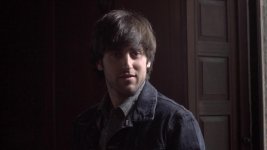
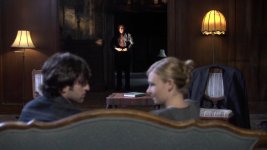
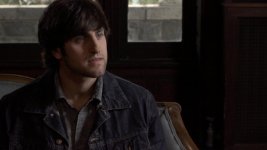
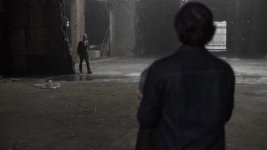
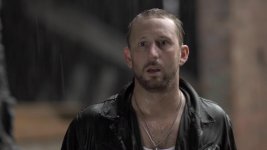
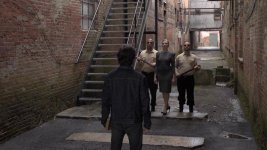
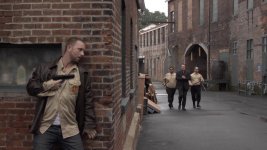
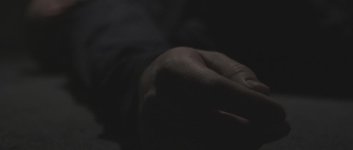
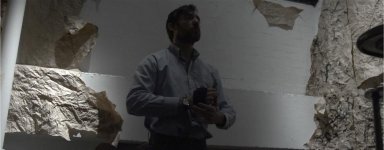
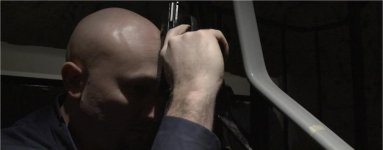
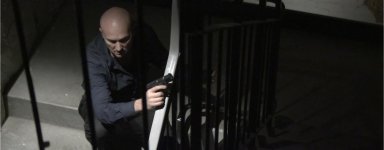
Favorite shots from this short

hscully

Veteran
These are ungraded from this short I'm working on. I really like the highlights in the first one. The mixed temp light in the third looks better after grading but I figured out of the camera would tell more. The final grade is much more desaturated which took some of the noise out of the red in the walls. Most of the noise looks pretty good, organic - y ;). Once I get the OK on the grade I will follow up with those.

This is all Cine-D. The location in 2 - 4 is the same location Gus Van Zant shot some of Lasts Days
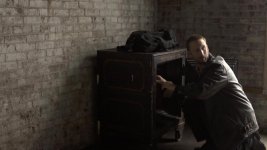
SimonSteals.jpgCarlDay2A.jpgLookoutC&K.jpgSocWhatIsIt.jpgWaitForIt.jpgSoakedSimon.jpgAlley.jpgFight.jpg
 
Last edited:
thanks.. these are frame exports from Premiere Pro. I just changed the Program monitor to full and grabbed another, the soaked guy. Is there a better way to get a full rez grab in PP?
 
Last edited:
Not sure, as I don't use Premiere. I guess best would be export a full frame out of it in full resolution TIFF. Short of that, if it has a full screen playback function, play it full frame and hit print screen on Windows and save as a PNG or TIFF in Paint?
Then instead of posting the full frame on here, just link to them as not to mess the forums layout. :)
 
ok, I'm on to other stuff at the moment but I'll give that a try later. Changing the rez to full didn't really change much at least from the file size.
 
I just feel that nothing compares to looking at full rez frames. Although I'm pretty sure those will look just as good full frame as they do now. My guess is that they will actually look much better. Reason I would like to see them. ;)
 
Thanks. I remember a chat we had on another thread about highllights where you shared some movie shots. I was inspired by that. You always hear of film cinematographers going way over in exposure for look, so I started to experiment a little like the first picture, which is my favorite. The highlights on his back and face are over but it still has pretty good color. It's a balance but... anyway, thanks. I'll see about those full rez. I'm curious myself now
 
Nice stuff, Scully! Especially like 1, 4, 5 and 6, and all (3?) locations are great!

Premiere should be giving you 1080 stills- is it not?
 
I'm not sure, I'm using the export frame in the Program Monitor. Maybe that's it!

We had great locations, thanks. The Castle is in Garrison NY and it's in a state of partial repair which was sweet. The other location is a Mill from the 1800s that is now an artist's co-op.

I put up another 2 from the factory location.. it's really beautiful. I have more but I should stop!
 
Last edited:
Yeah, I white card WB on every setup, unless I forget, which happens but not too often. There's some mixed light at the Castle location. I had ND 6 on the windows over which I hung daylight kinos and then I had 2 650 fresnels with 1/2 ctb spoofing those two lamps in the castle room. The hall light is a par can. It's too hot. It was only meant to throw shadow light through a staircase in that hallway and I didn't have time to relight when we did the actors walking into it which was not great.

The outdoor stuff CU is all bounce and the ambient light changes with location like the rose light off the brick.

The grade I am working on now has pulled down blacks and is desaturated, which is what the director likes and also is very kind to these setups, so that's really helping to even things out. These are right out of the camera ungraded.
 
Last edited:
Looks fantastic man! Great locations and a great image.

What is your approach to shot listing? If you don't mind me asking?
 
I was DP on this one but when I direct which I actually do more than DP is I shot list everything cut to cut. I shoot one camera. I do a list and a plot and some story boards on paper. BTW there's a really cool tool for $20 http://www.hollywoodcamerawork.us/sd_index.html No affiliation, I just like it.

I try as much as possible to create a shooting schedule from that shot list and stick to it. I try not to cover too much that I don't imagine but I will overlap coverage for edit. I don't cover everything and then figure it out in edit.
 
So when your in DP mode how do you go about shot suggestion and lens choice with the director? I've been lead to believe this is very much in our hands depending on who you're working with (how experienced the director is basically), we don't just turn up and ask where to point the camera. I've recently worked with a really great director that I've become good friends with and who I finally trust a portion of my film making education too. We studied film together last year and came up with a rough formula that its the relationship of the character to other characters and the relationship of the characters to the audience that essentially helps decide how the shots will look from the given light and lens taste/pallet of the director.

Theres more to it of course and I'm just talking film making here but I've always been impressed with how your work looks and would love to hear, as a DP, how you begin to plan a scene out from the script.

(Sorry, probably asking a little to much and probably should be paying for the answer ;0)
 
I have shot designer by the way, great tool that I really need to learn perfectly. Still using pen and paper!
 
So when your in DP mode how do you go about shot suggestion and lens choice with the director? I've been lead to believe this is very much in our hands depending on who you're working with (how experienced the director is basically), we don't just turn up and ask where to point the camera. I've recently worked with a really great director that I've become good friends with and who I finally trust a portion of my film making education too. We studied film together last year and came up with a rough formula that its the relationship of the character to other characters and the relationship of the characters to the audience that essentially helps decide how the shots will look from the given light and lens taste/pallet of the director.

Theres more to it of course and I'm just talking film making here but I've always been impressed with how your work looks and would love to hear, as a DP, how you begin to plan a scene out from the script.

(Sorry, probably asking a little to much and probably should be paying for the answer ;0)

Wow... you've really landed on something. I spent this year doing projects as DP with directors who are theater directors, not film directors, so I've had to take the lead on shot lists and making sure what we shoot will cut. It's been mixed but it has really helped me learn to light better which I'm really grateful for. It's been a great year.

This year, I'm directing my stuff.. I may operate but I'll have help. I was getting ready to shoot a feature but producing it is a HUGE effort. I still might. It depends. If not I will do 3 shorts of my own. One of my favorite directors is Neil Jordan. I was watching Ondine, for like the 6th time. There are so many great shots, so beautifully integrated with the scene, the place, and those characters that it just made me think that I really need to get TONS better to shoot a feature. I need to do THAT! What he's doing!

I really need to get better particularly framing and moving the camera. It always kills me that those dolly shots are the first to go. I want to get good enough at shot lists and schedules and pacing to get all those shots, given our miniscule budgets. You know... why not?

I'm happy for you that you've gotten to collaborate with your director colleague in the way you describe. I came to film making from acting. I still act. I'm in a play in March around here. I never wanted to direct theater, in all these years. The first time I got on a film set, I wanted to direct. Go figure.

I studied with the Atlantic Theater Company in New York teaches a style of acting based very much on what you describe. So for the characters, they have something they want, some intention that they have related to the other character(s) in the scene. As a director, I want them to stay on that simply and honestly... "get what it is you're here to get from that person." Not manipulate but succeed. So it could be a scene about a wife telling a husband that he has betrayed her. Her intention may be to "knock him off his high horse" or "get his head out of his as*" essentially what is she trying to do. The actor need not share it with me, I don't care I just want to be able to see it's something and she's trying to get it from that other person, not generate it internally first. If she actively wants him to do something and is going after it, that will fire the scene and be honest and true... real behavior will happen.

I'm kind of a Mamet guy. I didn't make this up. I can't take credit but I like that same approach for directing. I, as director, think essentially what this scene is about... actively and then I place or move the camera, frame the shot, choose the lens, to move that intention along, staying on it rigorously. That's why I need the shot list. There is no time to imagine these shots on set. It is NEVER as I imagine it but if I do, I have done my job, and so we will get at least that and make ample room for fortunate occurrences. Then the cut. From this shot to that shot, intentionally. That and regular stuff about coverage and establishing geography and staying on the right side of the line, all of which I have to get WAY better at.

I also am a big fan of this book that a grad student, who I acted for in a film, turned me on to "On Film Making" by Alexander Mackendrick which is based on his notes teaching at CalArts. He has a notion about the camera as a witness that is very inspiring to me. He calls it the winged witness (he's from the English Studio system so he can say stuff like that ;))

Anyway, that has inspired the conception of where the viewer is in the story. The camera as witness. So when we push in it's because the viewer needs the witness to go there to see that. The viewer counts on the witness to see.. so the witness is the camera. It's not the viewer who feels whatever they feel, it's the impartial witness. It kind of goes along with Mamet's notion of the uninflected image. The witness isnt' trying to do anything - no maniuplation, just witness. If I want to give the viewer a breather from being so inside the action I'll finish on a wide, almost static shot to give the viewer a chance to breathe, to say "wait, this isn't happening to me... or watch it in the larger context - step away" Stuff like that. So then the witness is outside, looking in. It makes for some wacky angles on wides like a ghost. I get crap about these shots but ... I like em.

Wow, that's a long enough post!
 
Last edited:
Export Frame is a s good as it gets. Its all the data available if you are working in a sequence that matches the source.
 
Wow, that's a long enough post!

It was and thank you! its great to hear from someone who "gets it", i find two types, one who explains film making very simply to me and quotes the hollywood machine but mostly focuses on how to operate the camera, 180 degree rule, DOF! etc etc etc, another is the opposite and is very philosophical and could possibly get it but is so far up there own ass that they cant respect the hollywood machine, schedules, the ones that say it "must" be shot on film and all of the particulars but will of course agree that its all about story and that a script is paramount (but get very hung up over digital capture?..)

Rant over...

For me its totally about what is going on in the scene and it can be very easy to talk it out with the director. There are a few examples i have noticed recently, in The Tree of Life by Terrance Malick, Brad Pitts character receives a phone call to say his son has died/killed himself (i could never figure out exactly what or which son to start with), the lines in the script are "i made him share all of my shame", not a lot to go, how should it be covered? mid shot, close up, wide, handheld.... what?

What they did is go for a handheld camera that has a fairly smooth movement to it, a 50mm (ish) lens to get the camera close for mid to close framing, they roam around his face, above and at the eye line but they never look him in the face. Why? how do you come up with that? I'm sure this is subjective but what the DP and Terrance decided on (i think) is let the camera get close, in the moment, not on a long lens and observing Brad but something that could mimic a prying eye trying to get a look at the fathers grief while in a crowd, he has flaws, he is a bad parent and at this current moment is sad and ashamed but in the end you will want to know or understand this character so they never invade his space, they never look him in the eye as he would be too ashamed to show is regret to a person, they keep the camera high at key moments and come down low when trying to identify with him but eventually retreat to a safe high stance that at any time could look away if Brad caught wind that he was being watched. On the flip side the mother, who shows her devotion and love for her family (in particular her children) throughout the film, she is observed, same lens to put the parents on the same level but the camera is below and level with her torso, never being any higher than a child, the camera stays away from her to give her space during her grief, like an aunt or parent who cant console there adult child, helpless but always in the room. We look the mother in the face, we see her pain.

For me this is genius, it can be achieved in many different shots and there are other ways to do it but the DP and director would have discussed the scene, the characters arcs and of course Terrance's style, the film relies on a lot of natural looking soft light so they have Brad heat this at work on the phone, cold steel and clinical surroundings while the mother sobs away in the her front room with the natural morning sun light. Compelling and powerful stuff that takes years to work out but i think worth doing.

We shot for a few days over December (80 odd shots) from a jib in a confined stair case for a large part of a short film, mostly to explore our extended knowledge and see what we could apply to the picture, i would definitely say my skill with the camera and lighting needs more work (and a cleaner scene file!) but i found i had picked so much up over the year that everything i got could be cut together, no eyes following X to the right of the screen only for the next shot to only be able to start on the other side. It was great seeing it all come together, i just need my shots to look as beautiful as yours Scully!, heres a couple of grabs with a little exposure tweak and grain but its far from graded 2:55:1 ratio

Brenden On Floor1.jpgLiability - The Mole - After Fight.jpgLiability - The Mole - After Fight2.jpgLiability - The Mole - After Fight3.jpg

Whens the short out? festivals or the web?
 
Back
Top