Fabric and Steel Scrims

iamlance

Well-known member
There isn't a difference between metal and cloth scrims, right? A circular scrim right on a fresnel is the same as a 2ft square fabric scrim, with no difference in light quality change.

I would assume the only difference is sometimes a metal scrim is more convenient (simple setup with fresnels), while other times a fabric scrim is more convenient (allows for more precise scrimming intensities, works for any size light).

Am I correct?
 
It varies. A single metal is about 0.5 stops and a double is about 1 stop. The cloth scrims can be more like 0.7 for single and 1.4 for double. Check the manufacturer you purchased from / are purchasing from for specific numbers.
 
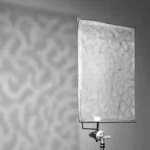
Put a fabric scrim in some light sources and you'll discover a crucial difference - some burn, some don't. Look at it sensibly - fabric scrims reduce the light in a different way - they absorb light and the smaller 'holes' let less light through unimpeded. A metal scrim absorbs nothing apart from heat - it passes some, and obstructs the rest. They're stiff, they get hot, they're strong. They last for years. Fabric softens, colours, it also deflects, not just diffuses - so beam spread changes. On a light source that has lenses and can project gobos, a metal scrim still works to a degree, a fabric scrim doesn't.

They are simply different beasts that do have some common features - but to say they are the same makes no sense.
 
I prefer steel scrims, but was looking into getting a butterfly (or roadrags) and was curious to see if a fabric scrim was worth my time. It seems it isn't.

Getting fabric scrims would probably be cheaper for future lights, but I think I'll stick with steel.
 
I prefer steel scrims, but was looking into getting a butterfly (or roadrags) and was curious to see if a fabric scrim was worth my time. It seems it isn't.

Getting fabric scrims would probably be cheaper for future lights, but I think I'll stick with steel.

Forgive me if you know this already...

Fabric scrims are used for purposes that metal scrims are not used. For instance, open sided "nets" that can be used to cut light close to the subject without creating a hard shadow, without creating a noticeable shadow. For instance, using a net to reduce the light on a chef's white coat without making a noticeable "cut line". If you did the same with a solid flag you would be more likely to see the cut you are creating.

Fabric scrims are also used to knock down the light level of a window or of the entire background. The ESPN pre-game shows outdoors often use a large net to knock down the entire background. The material in a fabric scrim is known as "bobinette".

I see DPs on feature films place bobinette over the front of kino-flo's in order to soften the light even further. It's also a great way to reduce the light output of a soft source without using a dimmer, moving the source further away, or adding more diffusion. I asked one Gaffer why he put bobinette on soft lights and he explained that it changes the nature of the reflection of the light in the subjects skin. He said it reduces the chance of the person having a hotspot / reflection of the soft light on their face.

I have never used fabric scrim on a fresnel and I have never seen anyone use fabric scrim on a fresnel. Fresnels are too hot for that. You risk the scrim material melting or catching fire. I have used ND gel on fresnels when I did not have a metal scrim or did not have sufficient metal scrim.

Fabric scrims are usually color coded same as metal scrims- green edge for a 1-stop scrim, red edge for a 2-stop scrim. Silks usually have a gold border.

You can use fabric scrims to reduce the level of sunlight hitting your subject ( typically top-light that creates brow shadow or "raccoon eyes". ) Sometime an overhead silk is not enough so you add a single scrim, double scrim, or both to it.

The only metal scrims that I know of in flag form are the metal cucolorises ( "cucolori"? ) like this-

cucoloris_02.jpg

It's a metal scrim coated with some sort of cello that creates the breakup pattern. Sometimes known simply as a "cello cucoloris". I rarely hear anyone use "fabric scrim". Most times it's instead either "net" or "bobinette". A Gaffer will call for a "4 x 4 single" and that is understood to be a 4' x 4' single net mounted on a frame with a spud for use with a grip head.

Fabric scrim or "bobinette" might be worth acquiring. The loose material without any frame, that is. It is very handy. You can use it to reduce the light level of fluorescent practicals that will be in your shot. You can use it to quickly reduce the output of a soft light- just clip the material across the front of the soft light. You can use it to reduce the output of a bounce without changing the size of the bounce relative to the subject. The material easily rolls up or folds up in between use and it doesn't take up much space in your kit at all. Another benefit is that I have placed bobinette on a soft light and field producers have commented that they have never seen that done before, commented that none of their other shooters have such tricks. Producer points for me. And all from a simple piece of material I keep rolled up in my Arri kit.
 
Last edited:
I prefer steel scrims, but was looking into getting a butterfly (or roadrags) and was curious to see if a fabric scrim was worth my time. It seems it isn't.

Getting fabric scrims would probably be cheaper for future lights, but I think I'll stick with steel.
I don't think you should have a preference for either one, they're both equally essential tools for different purposes. Basically, every light should have a scrim set for reducing the overall intensity. You should watch out when using these though, especially with newer ones that aren't rusted or oxidized from the heat, the light can actually reflect off the wire and cause subtle but widespread spill. Usually isn't a big deal. The use of the half scrims isn't too common since it's not very precise; the grips get involved with nets (nobody refers to them as fabric scrims) when cutting light in a certain area is required, it's just a much easier method.

Also, for the record, the material used in nets is actually called cinenet, it's a tighter weave than bobinette and has flame retardant.
 
I hadn't thought of using it in front of a window before. I guess there are now uses for it than I had thought. It isn't too much, so when I get a butterfly, I'll grab a selection for that and some loose spares. Thanks!

Another thing: is there ever a problem of seeing the wire (t net) lines on the subject? I've seen them with the metal scrims, although I was always able to make it work.
 
If you're pointing a light directly at a subject, it could be a problem. However, that scenario is so rare these days that it doesn't really come up.
 
You mean without some diffusion in front of it, either on the doors or from a silk?

I have in the past had to directly shine the light(s) (650w open-faced, yikes) on the actors, however usually added heavy diffusion onto the doors to help. It's not ideal, but worked when necessary. I plan on getting some bounce boards and a butterfly soon to go more the soft route. Kinos are out of my reach.
 
Where do you guys buy bobbinette or cinenet or nets or whatchamacallit by the yard? I've seen one place, but they're like $40 for a yard, which is a bit ouch... but maybe that's what it costs.
 
You mean without some diffusion in front of it, either on the doors or from a silk?

I have in the past had to directly shine the light(s) (650w open-faced, yikes) on the actors, however usually added heavy diffusion onto the doors to help. It's not ideal, but worked when necessary. I plan on getting some bounce boards and a butterfly soon to go more the soft route. Kinos are out of my reach.

Strictly speaking, yes and no. I say that because it's also almost equally uncommon to clip diffusion right to the barn doors (except on kinos) or to see silk being used as a diffusion material. Clipping onto barn doors doesn't do much for the quality of light since the effective size of the source hasn't been increased a whole lot. It gives a false appearance of being softer when in reality the intensity is what's changed the most. Again, grips come to save the day with diffusion frames typically not smaller than 4x4, although you will see a 2x3 occasionally.

As far as textiles go, grid cloth is the most common diffusion. Again, silk acts more to simply cut the light than to diffuse it. If you hold a silk up to a point source and look through it, you'll still clearly see a point source with a sort of "star" from the light reflecting off the individual threads. Try the same with grid cloth and all you'll get is a soft "wash" of light.

Where do you guys buy bobbinette or cinenet or nets or whatchamacallit by the yard? I've seen one place, but they're like $40 for a yard, which is a bit ouch... but maybe that's what it costs.

Yes, it's an incredibly expensive fabric. My understanding is that regular black bobinette can be cheaper. There's also a material called Roscoscrim that comes on a 25' roll, it cuts around 2 stops of light and has much less elasticity but it can get the job done sometimes.
 
The 4x4 frames is what I was referring to when I said silks. I realized firsthand the lack of change a diffusion clipped onto the barndoors does. And if it isn't strong enough (in the small change it makes, especially with a fresnel), sucks to be you as adding more diffusion does basically nothing.

Are you saying a grid cloth (is that a net?) is better for softening a light than a silk?
 
I don't think you should have a preference for either one, they're both equally essential tools for different purposes. Basically, every light should have a scrim set for reducing the overall intensity. You should watch out when using these though, especially with newer ones that aren't rusted or oxidized from the heat, the light can actually reflect off the wire and cause subtle but widespread spill. Usually isn't a big deal. The use of the half scrims isn't too common since it's not very precise; the grips get involved with nets (nobody refers to them as fabric scrims) when cutting light in a certain area is required, it's just a much easier method.

Also, for the record, the material used in nets is actually called cinenet, it's a tighter weave than bobinette and has flame retardant.

Never heard it called "cinenet". I work primarily with crews from L.A. and this site suggests it's called "cinenet" by East Coasters, "bobinette" by West Coasters-

http://www.rosebrand.com/product205/Single-Cinenet-FR.aspx


If you are using material on the front of a soft box there isn't much need for it to be flame retardant. Particularly if the source is a flo and not a "hot source". Sometimes we overthink things- you could use just about any gauzy material from a store that sells material to consumers. This would likely work-

http://hancockfabrics.com/mesh-nylon-scrubbie-black-fabric-3795697.html#start=37&q=netting&sz=36

Just use good sense about nylon near heat. Obviously the material that is heat resistant is safer. I wouldn't place the nylon material any closer to the bulbs than 1 ft. I use a large chimera so the front of the light bank is pretty far from the actual source.

I differ with the poster who said that a silk does not soften the light. ( or did they say it does not significantly soften the light? ) A silk panel in front of a fresnel is going to make it a much more flattering light. It is going to soften the light if for no other reason than it increases the size of the source. A 300w fresnel through a silk goes from a 6" wide source to a 4' wide source when using a 4' silk. The silk may not be evenly illuminated and it might be "center punched" but it's still a much larger source even if you can easily make out the fresnel source when looking through the silk.

You are going to have major spill that illuminates the entire room unless you are in a warehouse, but a bounce as a source might be the most economical way to achieve a big soft source similar to that of a light bank. Buy a large piece of white foam core and blast the most powerful fresnel you have into that piece of board. A 650w fresnel is best but a 300w fresnel can also work if you have a relatively fast lens.

One simple and clever setup is to place a white board on one side of a subject, a black piece of board on the other side of the subject. Both boards generally parallel to the looking direction of the subject but centered slightly ahead of the subject. Then use a fresnel positioned on the same side of the black piece of board to hit the white piece of board. Position the light so that the black piece of board cuts the light and prevents it from directly hitting the subject. For fill light you can tape pieces of 8'x11' white construction paper to the inside of the black board. These bounce light onto the subject to create fill. Add sections of white paper as needed. I read about this setup in an article from a shooter who travels frequently and wanted a very economical setup that doesn't take up much room. He purchases the two pieces of foam core or poster board in the city where he is shooting, prior to the shoot. An alternative to buying on location is to cut the boards in half and then reattach the two halves using gaff tape, only leaving a slight gap so the board folds in half. You could even do this twice in two different directions so that the entire 4'x4' board folds up into a 2'x2' square. Use a pony clip to hand the board from a light stand. It doesn't really matter all that much if the board does not hang perfectly flat after being unfolded. You can achieve interview lighting with this cheapo setup that is every bit as nice on your subject as an expensive soft box. The one catch is the spill. A soft box more contains the spill. Particularly when using a fabric grid on a soft box.

Aside from some homemade soft source like the one above, the Lowel rifa is one of the most economical soft lights you will find. For just under $400 you get the soft box, lamp bulb, and lamp unit-


http://www.bhphotovideo.com/c/product/32213-REG/Lowel_LC_55_EX_LC55EX_Rifa_Lite_eX_500.html

They offer a 300w version that is even less expensive but a 300w soft light is rarely enough output. The entire thing rolls up to about the size of a golf umbrella.

Back to your original question- given a choice between having only fabric scrim or metal scrims, I would go with metal scrims. No hesitation there. Just be sure to have a leatherman tool or a leather glove for removing hot scrims from fresnels. And don't make the mistake I have made of placing a hot scrim on a carpet! When in a rush and desperate for someplace to place a hot scrim that you just removed from the lamp you can carefully place it on the cross bars at the base of the light stand. These are down & dirty , real working world tips and not always the ideal methods, obviously. Sometimes you do what you gotta do.

Shooter's personal lighting packages / setups are like snowflakes. No two are identical and that's what makes it fun. Explore and over time modify your personal setup with different tools and tricks.
 
The 4x4 frames is what I was referring to when I said silks. I realized firsthand the lack of change a diffusion clipped onto the barndoors does. And if it isn't strong enough (in the small change it makes, especially with a fresnel), sucks to be you as adding more diffusion does basically nothing.

Are you saying a grid cloth (is that a net?) is better for softening a light than a silk?

Grid cloth is another form of diffusion. Not in the same category as a net, scrim, bobinette. It's somewhere between a piece of thick diffusion gel and diffusion cloth such as a silk. For all practical purposes it's a really thick silk.

I disagree with the statement about diffusion on barn doors failing to make a light significantly more soft. It does, particularly if you open the barn doors very wide. The source goes from the size of the fresnel lens and hard light to a much larger source with softer light. Using heavy diffusion on the barn doors you can triple the size of the source. The other factor here is the distance of the light from the subject. A 300w fresnel with heavy diffusion on the barn doors ( as described above ) 4' from the subject will be nearly twice the size in relation to the subject as the exact same light place 8 ft way. Getting a source close to a subject is the key to a soft look. A soft look can be achieved with the source 20' away from the subject but the source is going to have to be huge. Think of it this way- an 8" x 11" piece of paper held right in front of your face is the same size in relation to your face as a massive window 15' away from your face. In loose terms, that small piece of paper, if illuminated, creates the same soft light as the huge window further away.

One of the biggest "mistakes" I see other shooters make when trying to achieve nice soft lighting is to place their soft banks too far away and without any good reason for it. They place the soft banks 8 feet away from the subject when they could have placed them 3 ft away from the subject and thus achieved a much softer light, a light that more "wraps" the subject's face. If the light level is too much then scrim,dim, diffuse. But don't back the light off. That makes it smaller. That makes it less soft.
 
Thanks so much, JPNola, for that fabric link - you're the best! I was pretty depressed thinking I'll have to shell out like $400 for a few yards of bobinette. If that fabric you linked to works, that's like practically free - all I have to do measure the light loss from a single layer to figure out what I'm getting and then add layers as needed :)
 
It's been my experience at least that while the diffusion attached directly to the light can definitely soften it, it doesn't get it "soft". It becomes something in-between hard and soft light. I see what you mean though.

I read elsewhere on this forum just this week about the importance of using negative fill. The travel-friendly method you mentioned is smart. I'll have to try that out!

This is slightly off-topic, so forgive me, but I'm having trouble finding anything other than this (http://www.lowes.com/pd_15355-46086...L=?Ns=p_product_qty_sales_dollar|1&facetInfo=) boardwise. Is there any foamcore (rather than beadboard) at local stores?
 
This is slightly off-topic, so forgive me, but I'm having trouble finding anything other than this (http://www.lowes.com/pd_15355-46086-389697_4294858106__?productId=3365568&Ns=p_product_qty_sales_dollar|1&pl=1&currentURL=%3FNs%3Dp_product_qty_sales_dollar|1&facetInfo=) boardwise. Is there any foamcore (rather than beadboard) at local stores?


I have not seen bead-board in anything but specialty film supply houses. I have seen foam core in craft stores. They might not carry it in sections as large as 4'x 4' but you could tape two smaller pieces together. Hobby Lobby's website lists 20" x 30" sections. The bounce from bead-board vs foam core is not all THAT different. The bead board just has a rougher surface that disperses the light more. I doubt that even seasoned DP's could tell the difference between bounce from the two. The bead-board is just easier to work with because it's much more thick and doesn't bend easily.

Again- don't get caught up in the specific materials. You could hang a bed sheet from 2 light stands to create a big bounce source! Mostly joking there, but it WOULD work and that is my point. I fear that I have sent OldCorpse in the wrong direction by causing him to worry about obtaining net material. I lit hundreds of interviews, many of them for network tv, before I ever used any net or fabric scrim. If a soft light is too intense just add more heavy diffusion. You don't need netting. Hell, you could put strips of 1" black tape across the front of the soft bank to reduce the light. I often add my Chimera's fabric grid purely to reduce the light level and not to confine the light as is the purpose of the grid. And don't sweat color temp changes that can result from layers of diffusion. It's all good. Warmer in color is hardly ever bad.

Forgive me for droning on about lighting but I truly do eat, drink, and sleep it. I light roughly 10-20 interviews a month and my lighting package is always in my SUV. I hope something of use was shared in all my babbling.
 
It was! I was curious to find foamcore rather than beadboard as it is much stronger. I'd rather deal with a big board that is a little floppy than one that breaks easily. I don't want to run to Lowe's constantly for beadboard.
 
Back
Top