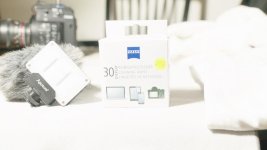
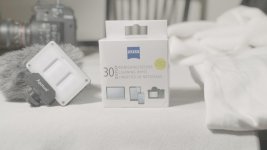
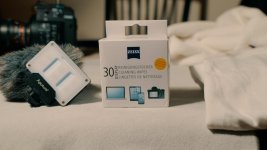
exosing right

unlikely as those early raw cameras are 'fake' iso (IMO)

if you can 'change iso in post then its just a post boost and on the camera its a lut

so Id be picking the mid iso

Obviously today cameras often have two 'real' iso values not one

shooting 800 in 2015 is just underexposing a bit ?
 
I remember seeing this video when I was a C200 owner and it convinced me not to ETTR with that camera. The bottom line is that you may avoid some noise but it's at the expense of color and contrast.

I personally could not deal with the noise present in the C200 CRL (I never shot in H264 on that camera). I could not hand off anything shot at ISO 400 or higher to a client without running it through Neat Video first, which did clean it up and make it look great. But it was time and processor intensive. The C70 has wholly fixed this issue and I will never settle for anything less again. ISO 800 is clean enough to hand off without a second thought. ISO 1600 too. Here is a comparison between the two cameras (download for most accurate viewing experience).
 

Attachments

  • photo131123.png
    photo131123.png
    44.9 KB · Views: 0
unlikely as those early raw cameras are 'fake' iso (IMO)

if you can 'change iso in post then its just a post boost and on the camera its a lut

so Id be picking the mid iso

Obviously today cameras often have two 'real' iso values not one

shooting 800 in 2015 is just underexposing a bit ?
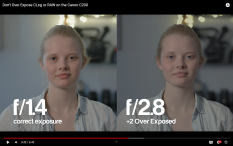
I don't really get involved in the engineering side (because I really don't know anything about how they make their cameras) and I just trust the white papers, general consensus. BM said the cameras produce the most dynamic range at their native ISO - 800 - shooting in CinemaDNG (at that time before it was removed).

Which is similar to recommendations others provide like Canon, Sony, RED, etc with their own formats.

Realistically I don't know how much of a drop off you'd see if you'd be using, say, 1600 instead - but you are most certainly clipping faster when using lower ISOs, at least with those cameras (the original 4K sensor was the absolute worst, major differences between 200 and 800).

Also, if you shot ProRes then you might have lost an additional half a stop or so.

Finally, that video is using the BMCC 2.5K and CinemaDNG so it's the ultimate DR combo right there. That camera supposedly had a bit more DR than the Pocket (same sensor as the Micro Cinema).

I'm saying all this to say that if you don't have the right conditions with a camera that has true dynamic range then you're not going to see that white screen without some of it clipped almost immediately.

The C200 would NEVER be able to pull that off, DR is too low.
 
I remember seeing this video when I was a C200 owner and it convinced me not to ETTR with that camera. The bottom line is that you may avoid some noise but it's at the expense of color and contrast.

I personally could not deal with the noise present in the C200 CRL (I never shot in H264 on that camera). I could not hand off anything shot at ISO 400 or higher to a client without running it through Neat Video first, which did clean it up and make it look great. But it was time and processor intensive. The C70 has wholly fixed this issue and I will never settle for anything less again. ISO 800 is clean enough to hand off without a second thought. ISO 1600 too. Here is a comparison between the two cameras (download for most accurate viewing experience).

This guy starts 'the control shot is properly exposed'

Wel properly is, well, anything, the only way to describe your exposure choice is..

1) i closed till there was no clip
2) I put this grey strip at this level on the wfm or false colour

'properly' is not maths it is speculation or arrogance

He then describes 'properly' which was checking there is not clipping in the image.

Assuming he was close to clipping then.. he did expose to the right (actually thos fairy lights are probably clipped but that is a seperate chat)

He then continues the video to talk about idiots who expose too far to the right.. putting important info in clip - which looks horrific. (my words.. but I completely agree with him)

He then talks about her skin colour.. which looks blue/grey to me

Again who is he to tell me this is good skin. To all be on the same line we need a standard.. and indeed we have one called the skin line on the vectorscope

So who the hell is he to talk about skin.. I want to see a vector scope not listen to him lecture me

That skin line is what one must hit on node one of a test/educational video.. sure in node five make the person look like a ghost or a brazzillian beach wonder.. but node one.. skin line please

then at 'three stops over' he starts to talk about colour

dont.. fookin talk about colour - the gretag chart is designed to be certain RGB values on certain chips

Done tell me the colour is 'off'.. tell me what the number is and what the number should be

--

overall it just demos that he knows little.

==

What it might (accidentally) demonstrate is that life is simpler if you use a standard LUT and expose for that. Its simple to board a lut and works well down a remote post chain.. which is very appealing but not the highest performance that can be extracted
 
Last edited:
Your 'lens cap video' shows (correctly that the C200) has a poor SN ratio compared to a more modern camera.. the C70

Im in complete agreement.

It also demonstrated that it is critical to avoid the noise floor on the C200.. of course I agree with that. Hence being a fan of ETTR.

Again in these vids its important to describe the goal because if the goal is to shoot under 1 candela of illumination the C200 may not be for you.

My test is about getting a best result on a 'normal' scene

Probably the C70 has a stronger image..I dont personally like that camera because the leads foul my Movi and it has no SDI.
 
Last edited:
A test with the ARRI...had to fire it up to make sure it still works for someone coming to check it out tomorrow, ha.

I should have filled up the screen with more white but it makes the case for ETTR. Also, it's worth mentioning that sometimes people will show a before and after with a viewing LUT applied like how you're looking at it in the field, which makes the result much whiter and harsher because the adjustments haven't been made (a little misleading but usually not on purpose).

The top screenshot is with Log C to Rec709, but the one below it is without it which makes it possible to see more (naturally).

The last one is graded, or whatever you'd like to call it. :engel017:

Click image for larger version  Name:	ARRI_1.jpg Views:	0 Size:	34.0 KB ID:	5699531

Click image for larger version  Name:	ARRI_2.jpg Views:	0 Size:	35.1 KB ID:	5699532

Click image for larger version  Name:	ARRI_3.jpg Views:	0 Size:	47.9 KB ID:	5699533
 
I dont know what im seeing here?

that white image looks terrible

is it the initial exposure with a lut applied?

if that is the case then

-id be looking for a new lut

—Id be preaching the value of exposing via a wfm that shows the values of the core (log) signal.

i rarely use lut in camera but they may be applied to my atonos “directors monitor”
 
Yup, that's the point...if you're trying to extremely ETTR with a viewing LUT applied (like a LOG to REC709) on a HDR camera then you can't see anything, just looks like blobs of white (of course if you choose not to expose normally).
 
I consider grading to be

“deviation from known and accurate rgb values for the reasons of art”

addition of textures, vignettes et al.

anything else is normalisation?

which is transforming the camera recorded data to display on agreed monitor at certain rgb values for known inputs - objects illuminated in known manners
( typically grey amd other cards illuminated by daylight)
 
Yup, that's the point...if you're trying to extremely ETTR with a viewing LUT applied (like a LOG to REC709) on a HDR camera then you can't see anything, just looks like blobs of white (of course if you choose not to expose normally).

So your bright picture is the un manipulated image with a lut applied?

yiu have not actually told me that!

its beyond me that anyone would choose that view in camera as it is clearly useless :)
 
So your bright picture is the un manipulated image with a lut applied?

yiu have not actually told me that!

its beyond me that anyone would choose that view in camera as it is clearly useless :)

Yeah, I've been trying to explain it, ha...the first one is with ARRI's regular Log C LUT applied how hundreds of thousands of people use the camera.

BUTTT...if you ETTR a lot, that's what it ends up looking like because the LUT does not have any exposure corrections before it so the image on the monitor just blows everything out but nothing is actually lost (same thing that's happening in the Blackmagic video).

The footage isn't useless, but the practice is not sensible for most, can't see anything.

The middle picture is without anything and it's still white but not as bad (all of the information is there).

Both, the 1st and 2nd photos, are unmanipulated besides the one LUT applied in the first one.

The third and final one has some "grading"...it doesn't look like that in the camera so I think any time you change a pixel, it's graded. It's open to debate though, it's art.
 
Thanks for the clarification. Im shocked that people would view that way.

—

to me grading used to be something that happened to major motion pictures at extreme thought and cost

tv show and corporate videos where “corrected”

log footage “normalized”
 
I doubt anyone shoots this way anymore, it was a fad back then when most people were figuring out what the hell LOG was in 2012, 2013.

I never heard of LOG until Blackmagic made their first camera.

Many people shoot more like your experiment, just a little ETTR, get rid of some of the noise, stretch the DR a little.
 
My last feature - the (hollywood) dp monitored with lut and shot dark and moody

i could see most info on the bottom 20% of ths histogram (red camera)

if course you cant see noise on a 7in monitor with a 1080 signal.

i have concerns that the entire project is gonna need to be reshot
 
“Just a little ettr” doesnt exist
to my head ettr is taking a known item to the right on the histo/top of wfm

its a binary thing you are there or not

going beyond that is over exposure or clipping the shot
 
The only way that logic is valid is if you assign an exact spot you want everything to be in.

Surely not everyone will see it the same way as you, so some people ETTR a little bit while others push it as much as possible, right to the edge, before they see any zebras or before their color channels completely clip like with 'traffic lights' on REDs.

There is a lot of room with where you can be with a 14-15 stop camera that you can't put one spot on ETTR, it varies. Just moving the histogram to the right is ETTR.

With that said, for a 12.5-ish, 13-stop C200 you have less wiggle room.
 
Open up iris un til you see clipping - a cut line on the wfm and then close the iris “a little”

the only flexibility on that statement is “a little”

”expose to THE right is definite”

not

“expose to A right”

:)
 
Last edited:
To me interesting chat as it shows the assumptions in communication I or others are making

Definitely, no doubt about it, all of us, with many things in life.

We communicate inadequately, or there's crossover, or words/concepts are used interchangeably.

With this, it's still about the eye test, the good ole eye test, just make something look decent.
 
to me grading used to be something that happened to major motion pictures at extreme thought and cost

tv show and corporate videos where “corrected”

log footage “normalized”

Sigh. One of a series of terms that got changed in usage via the influx of new people into the industry passing terms around on the internet. 10+ years ago, the term (in the US) was "color correction" at all levels of filmmaking--features, TV, corporate. I always understood that "grading" was a UK term, and somehow it got latched onto by the cool kids here because, I dunno, it sounds better. And now everyone says "grading".

"Glass" (for lenses) is another one. That was not a thing in the film industry, it came up through the indie/prosumer crowd, taken I believe from the photography world. Prior to that, on every set I was on, lenses were called...lenses. Glass, if anything, referred to filters.

Last rant: I started reading American Cinematography around 1983 and decided that I wanted to be a DP, a term that long predated my awareness of it. Within the last few years, I'm seeing more and more newer people to the industry call themselves "DoP" (which has long been in use in Europe and the UK). Why? Perfectly good abbreviation and no I do not buy that it is necessary to change because it shares the same initials as a porn term.
 
Back
Top