GH2 EXCLUSIVE ! NANOHA 5X ultra macro lens M43 -quick and first hands-on-

seb33

Well-known member
EXCLUSIVE ! NANOHA 5X ultra macro lens M43 -quick and first hands-on

I've just receveid the Nanoha Macro 5X lens, micro 4/3 mount !
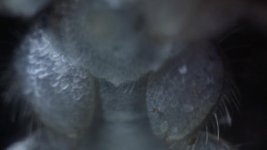
It's an amazing lens that is opening to me the very macro world. It has a lighting LED unit, you can plug it with USB cable, on your computer for example. You also have a target holder to maintain the object in front of the lens to avoid motion blur. I did not use it on this movie, except on the euro bill shot.
Not so easy to film nano objects, the D.O.P is very short, this is a first quick test, hope you will enjoy it.

From Nanoha website (yasuhara.co.jp/​nanoha/​index-e.html):
"NANOHA is a new macro lens for mirror-less cameras which offers up to 5x magnification capabilities. (It means 1 pixel on the picture is about 1 micrometer on the shooting target.) Microscope optics for your camera without needing microscope.
With NANOHA, you can find small wonders easily. We have used some patented technologies for your easy shooting.
NANOHA is naturally designed for mirror-less cameras. So the pictures are clear to the corners and it has small distortion. You can take artistic photos of small targets with this lens. The name NANOHA. NANO is from nanometer, which is 1/1000 micrometer. NANOHA is the gate to the nanometer world.
The current price of NANOHA is 479.50 USD (28.September.2011). The shipping charge is not included in it. This price may be revised.
The shipping charge by EMS is as follows.
40 USD: South America, Africa
30 USD: Europe
25 USD: North America, Oceania
20 USD: Asia"

GH2 720P
Nanoha 5X macro lens f/11 (f/11, f/16, f/22 and f/32)
310 g (with lighting unit) lens weight
diameter 61mm, lenght 84mm
additional shot with Voigtländer 25mm f/0.95
No CC
sorry for the credit in the movie, the name is "Nanoha", of course !:)

Music : Add N to X "Gentle Germans"
 
The lighting setup is rather nifty, since that's typically the biggest problem with macro... not only is there a significant light cut, but you have to stop down even more to get workable focus depth.

I've been messing about with a variety of macros, bellows setups, reversed lenses, and the like... probably time to actually edit something together from it.

My own kids have taken to running away from the cameras now. I envy your cooperative assistant.

Yes the lighting LED unit is very convenient, event if you have to plug it via USB. My daughter deserves an Oscar for her help ! :)
 
I had a look at the specs of this lens when it was first announced as macro is my thing. For my Canon system I have an MP-E 65mm, which does 1-5x. The Canon EF to m4/3 adapters were a bit slow coming so I thought this sounded interesting. However, when I saw the specs and price I thought it was too expensive, and 4-5x is too restrictive a range. Overall I wouldn't recommend the Nanoha simply because there are far cheaper ways to get good optical quality at these maginifications and they are probably more versatile in that they can cover a wider magnification range. I would recommend these two types of lenses to get into this type of magnification range for much less money. Either a reversed 24mm or 28mm manual focus wide-angle lens from a 35mm film SLR system. You can get them pretty cheap, and the reverse adapters are next to nothing off eBay. You really need an aperture ring to stop the lens down in the reversed position, which is why the old manual focus lenses are best. The magnification range can be increased with a set of cheap eBay manual extension tubes (you can get them in m4/3 fit). Longer focal length lenses like a 35mm or 50mm also work well, but the magnification is less. The other alternative is a reversed enlarger (darkroom) lens. You can get excellent optical quality with one of the 6 element 50mm f2.8 lenses such as the El-nikkors, Schneider Componon, Rodenstock etc. There are shorter focal length enlarger lenses, which are good for higher magnifications. Unfortunately they are a lot rarer and its harder to find used ones at a good price. There are lots of used 50mm enlarging lenses at good prices. Generally at greater that 1x (1:1) magnification lenses work better in the reversed position. For more magnification you use either a bellows, or extension tubes. You can get focusing helicoids in M42 thread if you want more fine control when using extension tubes. LED ring lights can be picked up cheaply off eBay. Overall I reckon you could probably build a set-up for about a third the price of the Nanhoah, which will have a more versatile magnification range, with top class image quality. I'm not being critical, just giving a few tips if anyone wants to try this type of magnification without the expense.
http://www.flickr.com/photos/9578475@N02/

btw. Another great looking video and you've sold the Noktor 12 f1.6 to me with your other videos - great fun - really enjoyable with a nice range of perspectives and distances.
 
Amazingly cool video and I too loved the Nocton 12mm one.. Completely sold me on buying that lens when it comes out.


SteB... Amazingly cool photos. The shots of the insects is just outrageous. Do you have video of that?
 
In the picture you're showing us, we are not in the same scale. The Nanoha lens is doing much more macro, that can be called "ultra macro" :)
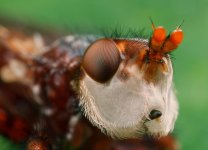
This is the head of a very small insect (3mm), not the whole body of a big insect ;)
Macro Nahoha_7.jpg
 
Amazingly cool video and I too loved the Nocton 12mm one.. Completely sold me on buying that lens when it comes out.


SteB... Amazingly cool photos. The shots of the insects is just outrageous. Do you have video of that?
You mean video of the video ? :2vrolijk_08:I put a very small insect in a small plastic box and try to shot it, not so easy !
 
In the picture you're showing us, we are not in the same scale. The Nanoha lens is doing much more macro, that can be called "ultra macro" :)
This is the head of a very small insect (3mm), not the whole body of a big insect ;)
View attachment 41706


I'm not sure which photos you are referring to, as I have some on my Flickr photostream that are at similar magnification. I also think you are possibly over estimating the size of some of the insects in many of my photographs. Many are only 7-8mm long or smaller, and you will notice a lot are not whole body shots.

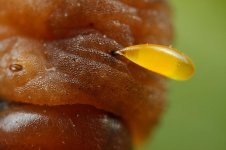
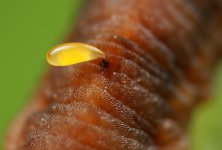
This Sawfly larvae shot below is over 2x magnification, with a frame width of less than 11mm. You will notice that there are 2 parasitoid eggs on the Sawfly larvae.
5551862757_2e9eb02748_b.jpg
The 2 shots below are full frame shots of these eggs at around 10x or more magnification, and one is a bit less - the frame width would be less than 2mm.
5551862767_1afc90db00_b.jpg
5551862761_1946faa2d0_b.jpg

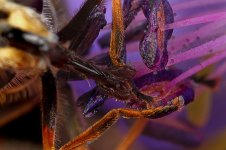
These are individual pollen grains, and the whole hoverfly is only about 8mm, and this is only a bit of it. (for the higher resolution image click the link below)
4421335992_bd1d7ec1b5_z.jpg
http://farm5.static.flickr.com/4023/4421335992_a565d5e6eb_o.jpg

So I do take images at this magnification level, but as I said most are under 3x magnification, a frame width of about 7mm on Canon APS-C. The shot below is about 4.5x and the whole fly is probably less than 10mm.
5652273786_809ae00941_b.jpg

The lens I used for these is as I say the Canon MP-E 65mm f2.8 1-5x. In other words it goes up to the same magnification, 5:1 as the Nanoha. Although on m4/3 it will have a bit more apparent magnication because the frame width multplier is 2x instead of 1.6x. But I can get past that with a 1.4x converter, which gives about 7:1 (7x) and a Raynox MSN-202 close-up lens which gives about 10:1 (10x). In practise in the field it gets difficult to handhold past about 4x, although the 10x shot above was handheld.

The point I was making was that often you can do with a bit less magnification than the Nanoha gives, as 4x on m4/3 is very high magnification. It's a big jump from the 1:1 of a normal macro lens. So the options I was suggesting can reach or exceed the magnification of the Nanoha, but they are also capable of lower magnification, which is sometimes more useful. As I said I wasn't been critical and I was only trying to highlight that the limited magnification range of the Nanoha is quite restricted and there are other cheaper options to get this magnification with equal image quality.

I'll be probably getting a GH2 in the next few weeks and that's why I've been looking the options for getting the same levels of magnification I get on my system on the GH2. The main restriction I see with the Nanoha is that it won't do less than 4x magnification.

btw. Great videos again.
 
Amazingly cool video and I too loved the Nocton 12mm one.. Completely sold me on buying that lens when it comes out.


SteB... Amazingly cool photos. The shots of the insects is just outrageous. Do you have video of that?

No decent videos yet but I'm just about to get a GH2 to do some. It will probably be next Spring before I can put some together.
 
I am also thinking of buying cheap macro lens for my GH2. Is the following setup possible?

Vivitar/Phoenix/Cosina Macro lens 100 mm - f/3.5 AF - Canon EF Mount
Fotodiox Lens Mount Adapter Canon Eos EF Lens to Micro Four Thirds

Phoenix has the aperture ring and a nice smooth manual focus ring. Review is here:
http://www.nikonians.org/html/resources/non-nikon_articles/phoenix/100f35-1.html

What do you think?


I think this is a very good route if the EOS fit lens has an aperture ring. However, I suspect that the aperture ring might just be on the Nikon version. This is because the EOS system has never used aperture rings like the Nikon system used to. So Nikon fit lenses were made with aperture rings because on some film Nikon SLRs, this was the only means of adjusting the aperture. Whilst I haven't used this lens it has got a reputation of having very good image quality from a budget lens. To get higher magnification you can just use a higher power close-up lens. A Raynox MSN-202 will produce very high magnification when mounted on a lens of around 100mm. This lens does come with a lower powered close up lens that allows it to reach 1:1.

As the depth of field becomes far shallower as you get closer, you do need to be able to stop the lens down. If the EOS version of this lens has no aperture ring, which I suspect it doesn't, I would look for another lens. You have a few options if your budget is limited. Firstly you can look for another manual focus macro lens. They're all very good and there are no bad ones. The other options are simply to reverse a standard or wide-angle manual focus lens from a 35mm film SLR system, using a reversing ring. Something in the 24-50mm range and with an aperture ring would be good. Even some of the cheaper lenses can perform surprisingly well. You can get reverse adapters off eBay. If you add either a set of extension tubes or a cheap bellows, you can get even more magnification, and cover a wider magnification range. To anyone that has already got some manual focus lens with aperture rings in the 24-50mm range I would definitely recommend starting off with a reversing ring. Shorter focal length lenses than 24mm can be used but you will start of with very high magnification, and won't be able to reduce it. A reversing ring only costs as much as cheap filter and it's all you need to have lots of fun with manual focus lenses you might already have.

Another option is to use a powerful close-up lens on a telephoto. You can do it with either a zoom or a prime. Basically the higher the diopter number, the higher the magnification, and the longer the focal length lens a given diopter close-up lens is mounted on, the higher the magnification. Raynox make a good range of high performance close-up lenses that aren't too expensive. A reversed standard 50mm on a short telephoto also acts as a close-up lens and can produce good results. You can get coupling rings specifically for this and they are simply like a filter ring but with male threads at each end. As I mentioned above, reversed enlarging lenses from film enlargers can produce top class image quality, but you really need a focusing helicoid or bellows as they have no in built focus extension.
 
You mean I can reverse Panasonic LUMIX G 20mm f/1.7 Aspherical Pancake on GH2. Is there an adapter to do it?
 
Thanks for your great reply. I'll check whether the EOS version has an aperture ring or not.

You suggest to reverse a wide-angle manual focus lens from a 35mm film SLR system. But I don't have any such lens. Where to buy a cheap ($100 or under) and good one? eBay? I am new to photography so don't know much about it.

I also have a Raynox 250. But I found that it is very difficult to focus becaus of the limited DOF. And I only got some success on 100mm with the 100-300mm lens. When in 100mm, the AF system on GH2 will work to certain extent to give me some pretty sharp pictures. When in higher zoom, it failed. I never get good pictures in the 300mm. Manual focus is also not quite working for me. Most of the time I hand hold the camera.

My primary interest is insect. Below are some pictures I taken. But I really would like to have a setup which is easy to focus. I am not pro and just want to have some fun with those cute creatures.

http://www.siung.net/bird/tmp2/2011/insect/P1080564.JPG

http://www.siung.net/bird/tmp2/2011/insect/P1080571.JPG

http://www.siung.net/bird/tmp2/2011/insect/P1080573.JPG

http://www.siung.net/bird/tmp2/2011/insect/P1080575.JPG

http://www.siung.net/bird/tmp2/2011/insect/P1080578.JPG

http://www.siung.net/bird/tmp2/2011/insect/P1080580.JPG

http://www.siung.net/bird/tmp2/2011/insect/P1080581.JPG

http://www.siung.net/bird/tmp2/2011/insect/P1080583.JPG

http://www.siung.net/bird/tmp2/2011/insect/P1080585.JPG

And this one is Green Darner: http://www.siung.net/bird/tmp2/dragonfly/615.GreenDarner.jpg


Insects are one of my main interests. Unfortunately shallow depth of field is what you have to deal with in close-up photography. What you experienced with the Raynox DCR-250 will be similar to any other lens at that magnification. As the magnification gets higher the depth of field becomes next to nothing. However, handling high magnification can be more difficult on longer lenses as they greatly magnify the movement. With stills photography I prefer a shorter focal length lens for high magnification as the shorter working distance allows me more control over the camera and lighting. For hand held shooting I balance the end of the lens on my left hand. My left hand is then braced against something, or I hold what the insect is perched on. If you hold on to a flower with an insect feeding on it, and rest the end of the lens on this hand the movement of the camera is locked into the same phase of the movement as the flower and insect. Of course you need a short working distance for this, but it can provide surprising stability.

EBay is a good place for used lenses but the bidders can get too carried away at times and push the price a bit too high. Photographic dealers that sell used gear are good as they can have a large selection of used lenses. You can probably pick the best deals up with private local classifieds, but you really need to know what you are looking for. Any of the camera manufacturers own lenses are good and so are many of the better independent brands, Tamron, Sigma, Tokina, Kiron, Vivitar etc. Something like a 28mm or 35mm f2.8 will be a good starting point for higher magnification and a 50mm f1.7 or f1.8 for less magnification. The one things to look out for on older lenses is fungus. Hold the lens up with the aperture wide open, and look through it against a light even tone background. Expect to see a bit of dust but reject any where you see fungal growth. Also check that the aperture blades open and close okay.

You could use a reversing ring to reverse the Panasonic 20mm f1.7 but you won't have control over the aperture. It may be possible to pre-set the aperture on camera and then reverse it. However someone who has tried it with this lens would have to confirm it works as I've never tried it. If you get a m4/3 reverse adaptor (eBay is probably the best starting point) it will have a particular male filter thread. It doesn't matter if it isn't the same one as on your lens as step-up or step-down rings will allow any lens with a filter thread to be connected to the reverse adapter via the right stepping rings.
 
Back
Top