DOF tutorial... How about filming cinematically tutorial

Zblock

Well-known member
So if we spend a few hours reading posts on this site, we can get a grasp on how to shoot with a shallow depth of field. That's kinda the cat's meow right now am I right?
So before I bought my SG Blade I watched a ton of content on youtube and vimeo shot with 35mm adapters. A good 90% of them (although shallow in DOF) still looked pretty amateur. Or to be politically incorrect, they looked like crap.

Then I started watching the user films on this site. Way better percentage wise but still a lot of stuff I would be afraid to put my name on. (no offense, a lot of it rocks the house)

I've shot 5 shorts in the last year. I don't think I'm above criticism and I'll post links below. I learned a lot about moving the camera and what DOESN'T look too cinematic and while I'm pretty happy with some of my work I can't really say what aspects of the filmmaking process make them look "like a movie." Can we start a thread tutorial (or a new one) on how to shoot cinematically?

Camera angles, cuts, movement, movement direction, speed, elevation, rule of thirds framing, crossing the invisible line, ect. ect. ect.

I for one would love some user input on this subject. Also, If anyone wants to use my below films as references please do. Let me know what looks good and what doesn't.


Bucovina Card Game - Short Film
http://www.youtube.com/watch?v=oGaICbsbzTE

Perfect Pacific - Music Video
http://www.youtube.com/watch?v=xOfbOzug89k

No Oasis - Short Film
http://www.youtube.com/watch?v=o0n9TNLJRkY

Enjoy Your Life - Music Video
http://www.youtube.com/watch?v=Co9I28iZkvc
 

Attachments
  • Buc Baronness1.jpg
    Buc Baronness1.jpg
    40.9 KB · Views: 0
  • Perf Pac5.jpg
    Perf Pac5.jpg
    82.8 KB · Views: 0
  • 3.jpg
    3.jpg
    31.9 KB · Views: 0
  • d3.jpg
    d3.jpg
    102.1 KB · Views: 0
Last edited:
What does NOT work specifically in your productions is:
-- editing - Each of your pieces is edited to put it lightly amateurishly. you don't have a good rhythm and make random cuts that really have very little to do with content - for instance on rock&roll music video (4th) that has fast beat you edit as if it was some slow romantic ballad. If you are doing a favor to your friends recording their band then still stipulate that you won't charge them anything for your skills but they still have to pay for the edit (that's what i do when i shoot for my friends as i have no editing skills - that is i know the editing package very well but have no skills on how to put clips together in a slick way).
-- content - in this age of limitless quality content available for free on youtube, hulu or netflix you really have to deliver. I mean you are competing against Oscar-nominated or Oscar-winning content so why should the audience pay attention to your work? I mean, really? Great directors deliver content: either drama, or cool shots, of flashy cut, or camera moves. So again going to your MV, you got a cool shot of drums being hit and putting the snow in the air but then you cut to totally run-of-the-mill shots of band performing - the kind of stuff that we've see thousands of times before. Now when i shoot i'm guilty of shooting mundane stuff too, but then i also realize that the artistic value of those shots is really close to zero.
-- you have good shooting skills, but your directing skills have still long way to go -- which is OK because there is really not that many good directors out there. In a way it looks like there is plenty of people who are fantastic in their specific discipline - DPs, actors, art department people, sound recordists etc but not that many directors -- maybe because it's much easier to polish the skills for those departments then for directors? That is a typical DP gets to shoot dozens of short films, muisc videos, commercials before he shoots his first feature with often a director who has directed 2-3 short films... and nothing more.
 
Thanks Patryk. You've got a pretty awesome collection of work on your site.

How about I'll start with one thing I learned on that #4 music video. Camera movement and speed should be constant.
Before filming, I was thinking "Hey it's a music video. I should be able to move the camera around a lot and the less static shots I have, the better." What I learned later that night which made editing hell, was that I can't cut from a shot panning right to a shot panning left. It confuses you.
Even worse, while I was shooting I kinda just moved my tripod around in circles. This greatly limited the amount of usable footage (or rather consistent footage) that I was able to put together.

#1. Panning or Camera movement should be consistent ie. Same direction, Same speed.

do we have any more?
 
So if we spend a few hours reading posts on this site, we can get a grasp on how to shoot with a shallow depth of field. That's kinda the cat's meow right now am I right?

Uh no...

Shallow DoF is a 'technique' which is used to give a specific effect... I think the two most important elments in visual presentation is ... Composition... and Lighting.
As a director getting your actors/actresses (or in the case of the music video the muscians) to have a film presence.

I only had time for Perfect Pacific music video... and I don't have 'sound' so I'm just looking at the visuals. I'd recommend that to you...

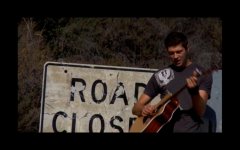
One shot was sort of memorable... and not in a good way... it was early on, the guitar is behind some folage/leaves in the forground... That shot just left me with a 'uh???' feeling... There was another shot of the guitarist sort of 'sitting' in the left side of the frame... another 'uh???' moment.

On exposure, that is lighting... some number of shots seemed to me to be underexposed.

I see music videos in two ways. One way is to tell a 'story' and the music reenforces that 'story'... the story could be based on the lyrics, or not, but if not, then the story has to have a 'mode' that complements the lyrics in someway...

The other way I see music videos, is the visuals 'set a mood', and so there may not be any 'story' per se, but the shots definitely enhance and reenforce the mood.

It may seem strange to suggest watching a 'music' video in silent mode... but I'd suggest you watch music videos with music similar to your performer's, and see their 'visual' rhythms.
 
Shallow depth of field most definitely is the cats meow in indie film shot with 35mm adapters. It's getting old and all the stuff looks like it was shot by the same DP. But it's different DPs overusing the same technique. Funny thing, when those same DPs jump to 2/3" or film they continue to overuse shallow DOF.

Besides the point about editing (hmm, cinematography forum) The one thing that sticks out to me was the hard lighting in Bucovina Card Game. I would have liked diffuse lighting but that's just my personal preference.

And a quick language nitpick, you're young start building those language skills.
Et cetera is abbreviated "etc."
 
Wow 3 posts, almost a page of replies and only one sentence of positive criticism. "you have good shooting skills but your directing skills have still long way to go" Tough crowd.

Clark - Um Yeah. The key to getting shallow depth of field probably brings a good 25% of new prosumer camera ops to this website. Want proof? Sticky: how about a DOF tutorial?? 30,860 views. The other sticky's have less than 1/3 of that. It's Lighting, DOF, and Camera's. Sorry it's an overused technique. Maybe everyone that bought a 35mm adapter wants to test it out... and then test it out again.
I like the tip about watching a music video without sound. I'll try that.

How about something along the lines of J.R. Hudson's visual language. You don't even have to use my films. But I was hoping this post would generate some comments like...


"I've found that a cut like__Muah___ such as example ____Muah___ really gives a feeling of suspence."
-or-
"End a scene with an actor turning away and begin the following scene with said actor finishing the turn. It puts you right into the action."

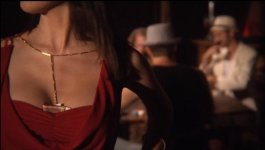
Or whatever. How about the opening shots of the lady in red walking towards the table in Bucovina? Did those break any obvious rules? With all the characters sitting around in a circle was there a better way to shoot them rather than straight on? Did I need another establishing shot midway through?
 
Wow 3 posts, almost a page of replies and only one sentence of positive criticism. "you have good shooting skills but your directing skills have still long way to go" Tough crowd.

Clark - Um Yeah. The key to getting shallow depth of field probably brings a good 25% of new prosumer camera ops to this website. Want proof? Sticky: how about a DOF tutorial?? 30,860 views. The other sticky's have less than 1/3 of that. It's Lighting, DOF, and Camera's. Sorry it's an overused technique. Maybe everyone that bought a 35mm adapter wants to test it out... and then test it out again.
I like the tip about watching a music video without sound. I'll try that.

How about something along the lines of J.R. Hudson's visual language. You don't even have to use my films. But I was hoping this post would generate some comments like...


"I've found that a cut like__Muah___ such as example ____Muah___ really gives a feeling of suspence."
-or-
"End a scene with an actor turning away and begin the following scene with said actor finishing the turn. It puts you right into the action."

Or whatever. How about the opening shots of the lady in red walking towards the table in Bucovina? Did those break any obvious rules? With all the characters sitting around in a circle was there a better way to shoot them rather than straight on? Did I need another establishing shot midway through?

The opening shot has a discrepancy in time. Man walks over. The shot is fine, than he sits down. The very next shot he sits down again.

Another thing that I found odd in the Bucovina Card Game was when the Lady in the Red passed the chair with Mr. White Hat twice back to back.
This is probably all editing but the first shot I mentioned is more of a shooting actor/actress syncing issue.

One thing that just seemed odd to me, and sort of on the nose was when she walked over into the camera's view and turned mid way. It sort of seemed like she knew there was a camera there and decided to get into view of it. If that makes any sense.
I only watched the first minute of the card game and will watch more tomorrow.

So with that, I will post more tomorrow, off to bed!
 
Wow 3 posts, almost a page of replies and only one sentence of positive criticism. "you have good shooting skills but your directing skills have still long way to go" Tough crowd.

My problem is that I have not been able to get the opportunities to shoot 'motion pictures' this last year. I just bought a GH1 to replace my DVX100 as my 'narrative fiction film camera'... so I don't have any examples to produce.

So, here's the positive... you got something shot...

I don't know if it is possible to go 'back in time' and reshoot the card game, but this is what I'd think about for any future similar films.

1) The initial 'chips' holder appear then disappear didn't work for me.

2) Girls in short skirts always get my attention... but I didn't like her butt jumping all over the screen. Would have prefered either one long tracking shot. Or if there were the fade up/downs, that her butt move in a more 'predictable' way towards the chair that she eventually takes.

3) Lighting. The card table is one of those 'classic' pools of light situations, so a top light would have been prefered to the light coming from the side, even though it may have been high on the side... it still gives 'weird' shadows on occation.

For example, in the cinematography forum there is this thread:

http://www.dvxuser.com/V6/showthread.php?t=195235

Check out the first example, where the cinematographer's are sitting at dinner, the light is 'soft', but coming exclusively from the top. There is 'bounce' from the white table cloth, so everyone seems to be 'well lit' even though they move a bit back and forth.

In your case, you do have the problem that the 'green' playing table cover doesn't give much bounce, so, the lighting will be a bit harsher. That may require some bounce cards on occasion for a close up. In one of the Behind The Scene clips for a movie... I think it was "Princess Bride"(1985), there's a scene where the action is in a small hut. The camera is on a steady cam rig, lighting coming from the top, but there's an assistant running around with a bounce card to keep a little light in the faces of the actors.

But back to the girl... Obviously you are giving her sexual allure full value... so, for example, when she shoves her chips to the middle of the table... I would have had the camera situated so that her bust is clearly visible, then perhaps some quick reaction shots from the guys who would have 'seen' the display. As a note, I think the previous sequence where she's 'presenting herself' is a bit 'over done'.

But back to lighting, DoF, and more dull conversations... by lighting from the top, creating a 'pool' of light, you could actually have a deeper DoF, and get rid of, or mitigate, the 'clutter in the back ground. A note here just on this one shot of the girl shoving her chips out. The table is not rectilinear with the camera frame, the door is askew as well... The problem here is I don't know if that is an intentional 'dutch' angle, or whether it was sort of 'oops'. If it was intentional, I think it ought to be more exagerated.... like everything is down hill from here on out.

The guy in the white suite reminds me of Harry Reems... for some reason...

One of the problems with the 'shallow DoF' technique... is your talent needs to be very aware that they can fall in and out of focus 'easily'(*) and so make their gestures, movement such that they are in the same focus plane. You the director need to work out how, especially in this 'cartoon' style, they need to move, to give the gestures, but not make the shot look like a drunken cinematographer was at the helm...

*That goes for 'lighting' as well. Some of the actors tend to move 'out of the light' so you need to be aware and do another take with less motion, if there is a hard shadow that crosses their motion.

As for 'rules', there are of course 'rules', but one of the 'basic' rules is to lead the viewer through the story. And the specific 'rules' are to lessen viewer confusion, because confusion takes them out of the story.

I think I'll leave off here... but remember doing something is always better than doing nothing...
 
Last edited:
There are so many factors involved to getting that film-like quality that it is difficult to really put into words because it is a visual medium. So from what I know, and I have only been a filmmaker since 2001, the film "look" isn't about the camera or the equipment but comprised from the "trinity" (Director, Director of Photography, and Production Designer). That is by far more important in my eyes than the camera itself. Of course most of us here on these forums know that progressive video shot at 24 frames per second is important to get that film look. What I have learned along the way is that lighting is much more important to get that film look than the settings on the camera.
So for instance the card players example given had a video quality to me when I watched it. I think in order for it to be more of a cinematic experience the production design would need to be different. The sets were blacked out. All you could see where the actors and not much of their surroundings. A splash of light in the background could have given depth. The lighting was flat on the actors as well. When I think of video I think of flat lighting or realistic lighting compared to cinematic being more dramatic or having depth. Another quality that stands out to me is the color. There wasn't a color pallet chosen during the production design from what I can tell but most of all the color itself was off. The skin tones were all yellow. Another quality that makes me think "cinematic" is the color and skin tones. Finally the actual video itself was a music video instead of a film so that gave it a video feel instead of a film feel.

The facial expressions were good and you could tell what was happening in the story just by their performance. I would have tried to bring out those performances with subtle camera movements and angles and let them tell the story and not let the camera tell it.
 
In another section, the scriptwriting section, someone posted this 'poker game' example. I think this says in an image sequence what I was thinking of...

The things to notice are top light, use of slo mo, DoF, all to keep the viewer's eyes 'in the game'. Now of course not everyone can have a studio setup, tracks
layed out, etc... but those are the 'goals' and so it is a matter of finding what is in one's capability with equipment and setting to get the image.


IMPORTANT NOTICE: No media files are hosted on these forums. By clicking the link below you agree to view content from an external website. We can not be held responsible for the suitability or legality of this material. If the video does not play, wait a minute or try again later.
I AGREE
 
Yeah that is a great example j1clark. I am not fond of the tones but it does have depth and texture. You can see every wrinkle of skin and their eyes in the shadow. I think that whole movie had that color scheme going if I remember correctly. Seems like when I think of that movie I think of bronze/yellow and slow motion mixed with fast angles and cuts.
 
Don't worry about the harsh criticism too much, Zblock. You'll find if you're looking for opinion and evaluation, that people are much more likely to say something negative rather than positive because the negatives stick out more in their minds. It's quite natural of how much people perceive things when you think about it.

You just got to take those things and learn from them.
 
Don't worry about the harsh criticism too much, Zblock. You'll find if you're looking for opinion and evaluation, that people are much more likely to say something negative rather than positive because the negatives stick out more in their minds. It's quite natural of how much people perceive things when you think about it.

You just got to take those things and learn from them.

Exactly
Constructive criticism is by far the best feedback any cinematographer could get. A surger coated opinion on a project will actually hurt the growth of a dp. If a DP does not see an issue with their footage and no one says anything about it to the DP, he or she will keep making the same errors, thinking everything is fine.

Zblock, you are lucky to get so much criticism. I only wish I could get so much great input on stuff I post.

I am surprised sometimes on how little constructive feedback there is on DVXuser. Probably bc no one wants to hurt anyone else s feelings. Worst excuse ever.
 
Yeah I know. Thanks a lot guys. I love this forum and have found sooo much information on it. I hope I can give as much back over the next few years. Also I'm glad people are watching the videos.
 
Lock Stock was one of the inspirations for the film. Actually the song was the original inspiration but obviously if you've seen the movie, you can't NOT think about the stylized card game when on a parallel thought.

I didn't watch the film prior to the shoot though so I could make sure I didn't rip off any of Guys shots but I know the card toss was embedded in my mind and thats what we tried to go for.


Anyways, I'd still like to have a few comments regarding (in general) camera movements, scene begginings and endings and further...

We just wrapped another film. I posted it in the User films section and I can't wait to show it off. I think we stepped up the game in this one. ONE MAN'S GOAL.
 
Back
Top