
One of the most desired features requested during the D16's development process was the ability to record very high quality audio on camera. Decent studio grade analog preamps and high quality AD. The camera records 24 bit PCM audio currently in AIFF format at 48 kHz and 96 Khz sample rates. The next firmware update is supposed to add broadcast WAV with timecode. Not needing external mixers or recorders is great for those of us that shoot solo docs most of the time and like to travel light. I have field test equipment I use for commissioning and tuning sound systems, so I did some formal tests of the D16. For comparison I also tested my Canon GL2 which has decent consumer grade unbalanced 3.5mm stereo audio input and for a reference point my Motu Ultralite digital preamp/mixer, which has very good class A mic preamps. My Canon is not too shabby, better quality than many consumer cameras, worse than some. Probably a good general comparison point. At some point I hope to test a couple of the more popular aftermarket sub $1k field recorders , like the Zoom's and Tascams, for comparison too.
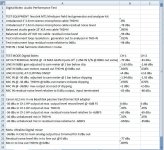
The test is analog in to analog out via the headphone outputs, so it is a test of the full signal chain through analog preamps to AD to DA analog out. Headphone gain is set to maximum in both cases. Total harmonic distortion +noise and signal to noise ratio are measured with a 400kHz sine wave test at OdBu output level from the headphone jack. Mic input signal is set at -36dBu in for 0 dBu out. This represents the average mic gain needed to bring most modern condenser mics up to line level output. The best mic in to line out S/N ratio I have measured from professional grade analog or digital live venue consoles is within 1 or 2 dBu of the Motu. When you subtract the mic preamp gain, you get an equivalent input noise ( EIN) of -113 dBu, within about 6 dB or so of the theoretical maximum possible. Internally the EIN of the Motu is around -120dB FS.
The -65dB mic signal to noise ratio on the cameras is probably pretty close to the best one could realistically expect from audio circuits crammed into compact camera bodies in a relatively hot and noisy EM environment. Based on my own measurements of NC curve background noise in all kinds of environments this would typically be at least 20 dB below room tone unless you are on a sound stage. A slight high end roll off in the mix would remove any very high frequency residual hiss without seriously compromising sound track quality.
For critical recordings like acoustic music performances, a high quality field mixer to line input on the D16 will give results at least as good as or better than most sub $1k recorders.
The results are self explanatory.
The test is analog in to analog out via the headphone outputs, so it is a test of the full signal chain through analog preamps to AD to DA analog out. Headphone gain is set to maximum in both cases. Total harmonic distortion +noise and signal to noise ratio are measured with a 400kHz sine wave test at OdBu output level from the headphone jack. Mic input signal is set at -36dBu in for 0 dBu out. This represents the average mic gain needed to bring most modern condenser mics up to line level output. The best mic in to line out S/N ratio I have measured from professional grade analog or digital live venue consoles is within 1 or 2 dBu of the Motu. When you subtract the mic preamp gain, you get an equivalent input noise ( EIN) of -113 dBu, within about 6 dB or so of the theoretical maximum possible. Internally the EIN of the Motu is around -120dB FS.
The -65dB mic signal to noise ratio on the cameras is probably pretty close to the best one could realistically expect from audio circuits crammed into compact camera bodies in a relatively hot and noisy EM environment. Based on my own measurements of NC curve background noise in all kinds of environments this would typically be at least 20 dB below room tone unless you are on a sound stage. A slight high end roll off in the mix would remove any very high frequency residual hiss without seriously compromising sound track quality.
For critical recordings like acoustic music performances, a high quality field mixer to line input on the D16 will give results at least as good as or better than most sub $1k recorders.
The results are self explanatory.
Last edited:


