GH4 Differences in AVCHD recording modes?

CustomerGH4

Well-known member
I have been using 17Mbps 50i. And noticed it says sensor output 50p for TV.
But there is also 24Mbps 50i that has sensor output 25p. (And this can also do variable frame rate.)

What are the main differences between them and are they both okay for TV? And do they both mix in the timeline? SAy I have shot already 70% in 17Mbps 50i, but I switch to 24Mbps 50i, do they go together well on the timeline?

I think I should use the 50i 25p instead of the 50i 50p , correct??

Man I feel so stupid all the time discovering new things. If somebody would clear that up to me would be great.
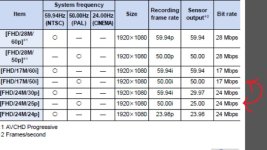
 
So, what I understand is that the 50i sensor output 50 is real interlaced footage, but 50i sensor output 25 is just 25p in a wrapper?
avchd.jpg

PS. Which one should I use for Broadcast? Both are fine?
 
Last edited:
Do you have camera or delivery specs from the client? Is 8-bit 4:2:0 going to be acceptable?

Typically you want to capture at the highest quality so shoot progressive instead of interlace. If the delivery specs call for interlace convert in post.

I'd also skip AVCHD & shoot IPB in MOV (or MP4) at 100 or 200 Mbps, or if required, 10-bit 4:2:2 to a recorder.
 
Yeah, its okay, as long as I dont use effects much.
And yes progressive is best, but since broadcast is interlaced Im stumped.
They said they need it to be 50i, but GH4 offers 2 flavours of it,, will the 50i with 25 frame sensor output work well on TV?
 
I've never dealt with PAL capture or delivery, however there are many forum members who do.

You'd likely be better served by providing more information upfront, such as if it's a commercial, movie, or show, & where is it airing.
 
Last edited:
Picture is 720x576. 50i , 20-30 mbps.
Now my problem is that there are two modes available.
I have been using 50i (sensor output 50) 17mbps AVCHD.
But I want to use 50i (sensor output 25) 24 mbps AVCHD.
 
Here's my experience in the US for commercials with our local broadcasters: Progressive or interlaced doesn't matter. I send all of my commercials at 1080p 29.97 and if their system is 1080i 60, it just plays each frame twice. No one has ever complained that the file was 1080p and they look fine on TV. Early on I did interlaced for them (even though their systems mostly haven't changed and they didn't really need an interlaced file, it's what they asked for back then) and I accidently set it to upper field first. THAT's a problem.

To answer your question, if you want the look of TV for the final output, and you want to use AVCHD to save space (The codec is really great. I use it in most except highest detail situations if I'm doing 1080p,) do 1080 50p (28Mbs). If you want more of a cinematic/nostalgic look, shoot 1080 25p (24Mbs).
 
Last edited:
Here's my experience in the US for commercials with our local broadcasters: Progressive or interlaced doesn't matter. I send all of my commercials at 1080p 29.97 and if their system is 1080i 60, it just plays each frame twice. No one has ever complained that the file was 1080p and they look fine on TV. Early on I did interlaced for them (even though their systems mostly haven't changed and they didn't really need an interlaced file, it's what they asked for back then) and I accidently set it to upper field first. THAT's a problem.

To answer your question, if you want the look of TV for the final output, and you want to use AVCHD to save space (The codec is really great. I use it in most except highest detail situations if I'm doing 1080p,) do 1080 50p (28Mbs). If you want more of a cinematic/nostalgic look, shoot 1080 25p (24Mbs).


Is the channel in HD or SD?
Weird about the upper field first because here it is always upper field first. I want to shoot progressive as well , but no one here does it. I went to the TV station and asked about 24p as well, they said they dont convert them but its done in Latvia, (neighbour country).
The first episode is gonna be interlaced, but after that I try progressive then.
 
20-39 Mbps is what codec? Are you sure they accept AVCHD?

Those specs sound are a bit vague so I'd ask for clarification. And if it were my project I'd still push to shoot at the highest quality & downsample in post.

Codecs here used are MPEG2, MPEG4, MPEG IMX.
 
Here are the standards:
Untitled.jpg

25i...
So this means instead of 50i (sensor output 50) I should use the 50i (sensor output 25)?
 
Is the channel in HD or SD?
Weird about the upper field first because here it is always upper field first. I want to shoot progressive as well , but no one here does it. I went to the TV station and asked about 24p as well, they said they dont convert them but its done in Latvia, (neighbour country).
The first episode is gonna be interlaced, but after that I try progressive then.
The station broadcasts commercials in HD 1080i.
I believe (could be wrong) that NTSC standard interlacing is lower field first, and PAL is upper field first.
As for conversion, I shoot some projects in 24p and export them out of Adobe Premiere at 1080p 29.97 and Premiere does a fine job of performing telecine (making 24 fps into 30fps) on my footage.

So this means instead of 50i (sensor output 50) I should use the 50i (sensor output 25)?
I don't know what NLE you're using, but my advice is shoot in FHD/28M/50p or FHD/24M/25p, depending on the look you want, and then just export your final product in the format that they want. Shooting in either of those modes will give you footage that will be easy to render out to your final format that you posted above and give you the best quality video. 17MB/s modes might be ok for some scenes, but your footage will have a bit less detail/more macro blocking yuckiness in average scenes, and will (probably, I honestly can't say I've actually used 17Mbs mode since GH1) break apart in high detailed scenes. 24Mbs modes are much better, and in my experience, 28Mbs is rock solid in all but the most detailed (foliage and water) scenes.
 
Last edited:
Back
Top
