Follow along with the video below to see how to install our site as a web app on your home screen.
Note: This feature may not be available in some browsers.
Two things, this is not exactly an example of an all natural light shot, and secondly I see multiple light sources/modifiers in her eye and don't believe this was "only" candle-lit if that's what you were implying by showing this frame.
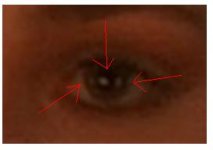
View attachment 44303
I think you're right. The death of the format is the end of the production of new cameras. Film camera technology will never evolve anymore. Its over.
Yep. It's not about the look, it's about the practicality of it. It's expensive, and contains lots of non-reusable media. I'm not saying film is good or bad, it's just cost. And, one thing to consider, is all the young film producers/students coming up now, many of them are already on digital, already shooting Alexa/Red. They might like film as well, but when they see the difference in shooting freedom, it's like recording digital then going back and recording audio on a 4-track. No thanks!![]()
Two things, this is not exactly an example of an all natural light shot, and secondly I see multiple light sources/modifiers in her eye and don't believe this was "only" candle-lit if that's what you were implying by showing this frame.
View attachment 44303
Unless Kubrick and Co. are lying, the shots with 'candle' lighting was done with 'candles'... perhaps lots of them... He also used a special high speed lens for the era, to get the ability to shoot with
low lighting.
While it is true that in order to really control light, one needs... well... lights... but the amount of light that is needed, with current higher ISO ratings, and lessening of noise... will yield more shots
done with either 'natural' lights, or 'ordinary' lights... perhaps baffled, diffused, shaped... but of much lower wattage, with better results.
Kubrick had a special mod of a Zeiss F/0.7 lens made, so as to be able to work with 'candle light' given the then speeds of movie film... typically ISO 64 or 100.
Here are a couple of articles about the making of the film.
http://www.visual-memory.co.uk/sk/2001a/bl/page1.htm
http://www.visual-memory.co.uk/sk/ac/len/page1.htm
From elsewhere the film stock was Kodak 5254 of the late 60's and early 70's, which had a ASA rating of 100, which was pushed to 200 in this case.
This would have been like falling off a log, for the current high ISO rated digital cameras... and given the push processing and the 'graininess' of "Barry Lyndon"(1975), probably would yet equivalent results, if people had an aesthetic appreciation for 'digital noise', vs. 'visible film grain'...