Deakins says digital has surpassed film

Two things, this is not exactly an example of an all natural light shot, and secondly I see multiple light sources/modifiers in her eye and don't believe this was "only" candle-lit if that's what you were implying by showing this frame.
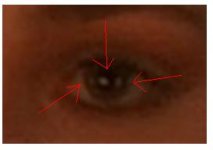
eyeball.JPG
 
Two things, this is not exactly an example of an all natural light shot, and secondly I see multiple light sources/modifiers in her eye and don't believe this was "only" candle-lit if that's what you were implying by showing this frame.

View attachment 44303

Okay, you've taken my pixel peeping award away! :)

If it's from this scene:

http://1.bp.blogspot.com/-o8QN-bTCNxA/TeW5ZguHRcI/AAAAAAAA4uw/JmhROzyvvDo/s1600/barry_lyndon.jpg

Then it could be more candles. Didn't Kubrick use a F0.95 lens in filming this. I do believe it is actually a lot of natural light if I recall correctly from my reading on it.
 
Kubrick wouldn't cheat, if he said it was all natural light, its all natural light. He'd find using additional sources uncouth to his story.
 
Film is dead, its not debatable anymore. It died this year when the major manufacturers stopped producing new film cameras and stock, but it has been on its deathbed for awhile. Contrast the advent of affordable digital cameras that also produce a quality image, with the exponential cost of an increasingly irrelevant format and its easy to see why.
 
I think you're right. The death of the format is the end of the production of new cameras. Film camera technology will never evolve anymore. Its over.
 
I think you're right. The death of the format is the end of the production of new cameras. Film camera technology will never evolve anymore. Its over.

Yep. It's not about the look, it's about the practicality of it. It's expensive, and contains lots of non-reusable media. I'm not saying film is good or bad, it's just cost. And, one thing to consider, is all the young film producers/students coming up now, many of them are already on digital, already shooting Alexa/Red. They might like film as well, but when they see the difference in shooting freedom, it's like recording digital then going back and recording audio on a 4-track. No thanks! :)
 
Yep. It's not about the look, it's about the practicality of it. It's expensive, and contains lots of non-reusable media. I'm not saying film is good or bad, it's just cost. And, one thing to consider, is all the young film producers/students coming up now, many of them are already on digital, already shooting Alexa/Red. They might like film as well, but when they see the difference in shooting freedom, it's like recording digital then going back and recording audio on a 4-track. No thanks! :)

I have 4x5, a 2 1/4 x 3 1/4 view cameras, a Hasselblad (well technically the Wife's...) and an assortment of film 35mm cameras... all have been in the closet for at least 5-6 years... All of the 'local' processing companies we use to deal with are gone, there may be one company that I could take actual still film to, and have them process it. And there isn't a replacement for the B&W printer we use to use at all.

For the last while we have uploaded our digital images to a service that is in Minnesota... I think the have expanded the service facilities to be in different parts of the country... but definitely not a
service I could talk to the printer directly... of course in the olden days we would print our own B&W... and even had a darkroom in the house for a long period of time...

I gave away to Goodwill the 5 or 6 enlargers we had... I'm keeping the Bessler for old times sake... but otherwise we have no ability to really do any printing at all...

I realize that most filmmakers did not get into the 'process' to that level... but digital has pretty much cleared that out completely...

The one element of 'digital' that does become a burden, is the fact that now what was done 'at the lab' is done in house... color grading, (even if eventually a real color person does the final pass...), 'fix ups', etc. along with 'it's digital, so why not get another take...', leading to a room full of disks for projects... and the attendant time sifting through the hours of material.
 
Yep. It's not about the look, it's about the practicality of it. It's expensive, and contains lots of non-reusable media. I'm not saying film is good or bad, it's just cost. And, one thing to consider, is all the young film producers/students coming up now, many of them are already on digital, already shooting Alexa/Red. They might like film as well, but when they see the difference in shooting freedom, it's like recording digital then going back and recording audio on a 4-track. No thanks! :)

Thankfully, we are beginning to see more and more cameras successfully emulate the filmic image. Combine that with the advantages that digital cameras present over film (such as improved low-light sensitivity), and we are actually in very exciting times. Only egos, nostalgia, and stubbornness is preventing some from appreciating it.
 
It's true, we do quite a few takes of every shot we do because it's just drive space, then I get home and backup to my RAID and say, wow, why did I shoot the same thing so many times! :) What I really hate is I have two clips of the same thing, two angles, love them both, and can't pick one over the other! :)

I have a lot of older music equipment, synths really, and sadly, they hardly come on. These are synths that were like $1500 to $3000 brand new. I have about 11 of them. What do I use? Soft synths because they are easier to work with (and the older synths are digital as well). I use them here and there because they are fun, but when it comes to freedom in using them, they are a PAIN in the neck. The software allows me to do things I never dreamed of with synths, but then, gives me a billion more options and I am stuck sometimes in 'tweaking the sound hell' because there are so many parameters.

I'm actually surprised film has lasted this long, well, half surprised. I say that because when I started researching audio mixing for movies, I was SHOCKED at how some movies are still mixed. Some things just move VERY SLOWLY.

If mp3.com taught me anything, it was that cheap production causes one thing, A LOT OF CRAP TO WADE THROUGH. When the bar to get in is lower, the quality that gets in is lower as well. It takes real dedication to wade through crappy music to find the gems, and with cinema production continuing to get cheaper, this will happen as well. Same as photography. I accept it, and look forward to how we deal with the massive amounts of creative material in the film world as well, because basically, I have no choice! :)

It's interesting to think about, that's for sure.
 
Two things, this is not exactly an example of an all natural light shot, and secondly I see multiple light sources/modifiers in her eye and don't believe this was "only" candle-lit if that's what you were implying by showing this frame.

View attachment 44303

Unless Kubrick and Co. are lying, the shots with 'candle' lighting was done with 'candles'... perhaps lots of them... He also used a special high speed lens for the era, to get the ability to shoot with
low lighting.

While it is true that in order to really control light, one needs... well... lights... but the amount of light that is needed, with current higher ISO ratings, and lessening of noise... will yield more shots
done with either 'natural' lights, or 'ordinary' lights... perhaps baffled, diffused, shaped... but of much lower wattage, with better results.

Kubrick had a special mod of a Zeiss F/0.7 lens made, so as to be able to work with 'candle light' given the then speeds of movie film... typically ISO 64 or 100.

Here are a couple of articles about the making of the film.

http://www.visual-memory.co.uk/sk/2001a/bl/page1.htm

http://www.visual-memory.co.uk/sk/ac/len/page1.htm

From elsewhere the film stock was Kodak 5254 of the late 60's and early 70's, which had a ASA rating of 100, which was pushed to 200 in this case.

This would have been like falling off a log, for the current high ISO rated digital cameras... and given the push processing and the 'graininess' of "Barry Lyndon"(1975), probably would yet equivalent results, if people had an aesthetic appreciation for 'digital noise', vs. 'visible film grain'...

Can you imagine shooting those scenes with a F0.7 on today's ISO800 cameras with no ND? :) They'd have changed the movie name to Barry White :)
 
Back
Top