Daytime Exteriors - Keeping Them From Not Looking Budgetless

A lot of the places we're shooting at are going to be down in valleys. During location scouting, I had noticed how, in so many parts of the area, there were beams of light coming into the valley through trees and different open spots, shining onto specific areas of rocks and rivers, etc. Some as small as a foot of light, and some as large as a field. I could try and make good use of this, especially with reflectors and diffusers.

Don't forget that you can use the sun as a backlight. The backlighting will act as a rim light / kicker depending on how you position the talent. Bounce that same sunlight back into the faces as fill. Use negative fill as needed for shaping.

This method gets you out of trying to fly silks. But as is said: "there are many paths to the waterfall."
 
I like to use locations overhead roofs to block sun above heads and get rid of ugly flat look
c436035bb938c20147b3fcf0e88ca6dc.jpg
 
Don't forget that you can use the sun as a backlight. The backlighting will act as a rim light / kicker depending on how you position the talent.

That and choose the time of day that will have the sun a little lower in the sky. Before 10 am after 3pm etc depending on where you're from.
 
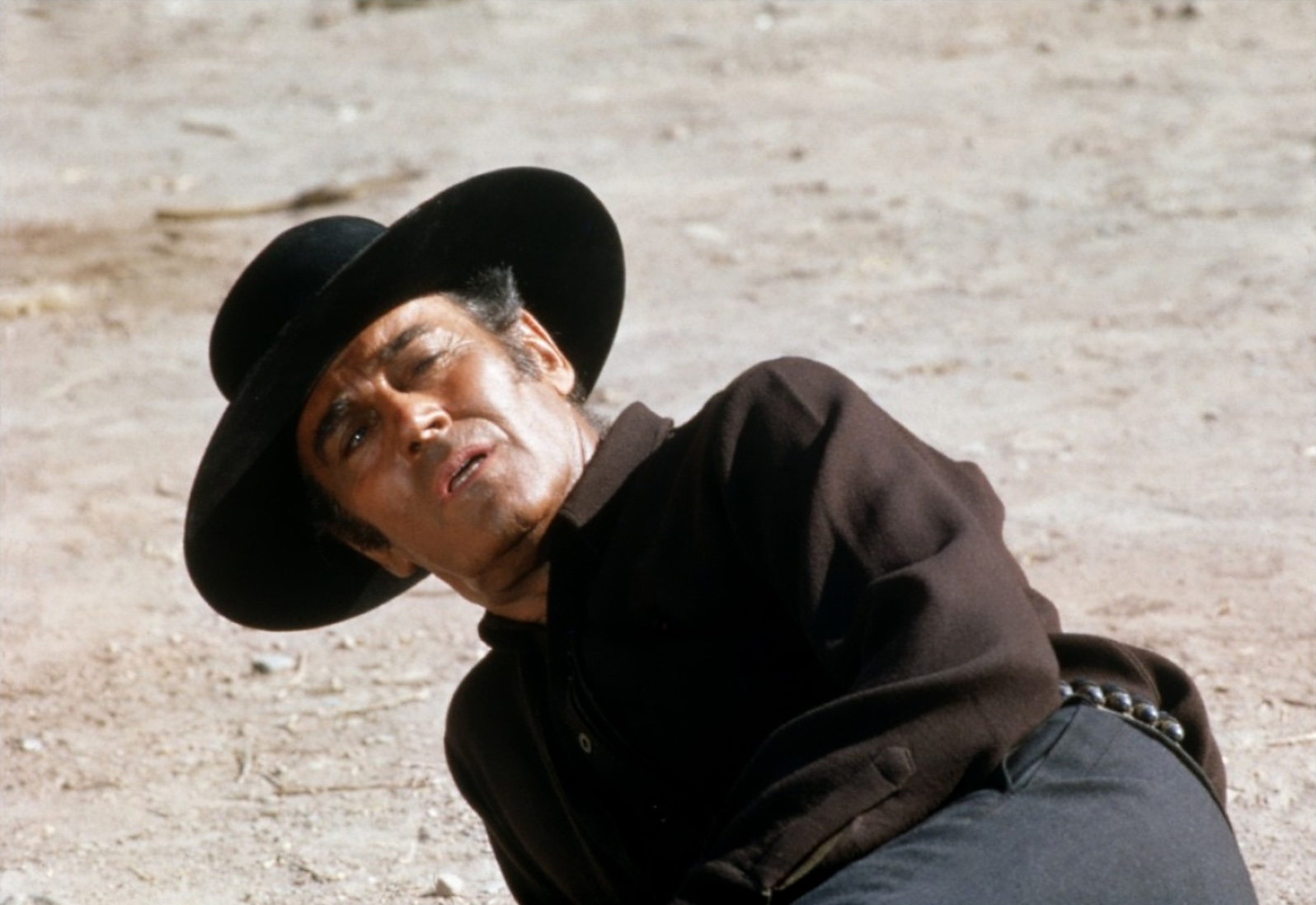
And with bounce one can shoot at high noon. I'm pretty sure this was with silvery bounce due to the highlight on Fonda's right side face. But given the era, it could be lights. However, in the July American Cinematographer, there's BTS shots of a 'high noon' shoot for the film "Savages"(2012) which have big 'reflectors' in the background. A matte 'white' bounce would lessen the 'shine' effect.


Annex%20-%20Fonda,%20Henry%20%28Once%20Upon%20a%20Time%20in%20the%20West%29_01.jpg
 
And with bounce one can shoot at high noon. I'm pretty sure this was with silvery bounce due to the highlight on Fonda's right side face. But given the era, it could be lights. However, in the July American Cinematographer, there's BTS shots of a 'high noon' shoot for the film "Savages"(2012) which have big 'reflectors' in the background. A matte 'white' bounce would lessen the 'shine' effect.

Are we talking 12' x 12' here or could less do it? Something like 6' x6'? Ofcourse it would depend on the framing, but let's say a close-up like Fondas there, that wouldn't need to much would it?
 
Hi Kryan,

If your film is a feature film and will all be shot outside then electrical lighting will be the only way to get your shots to match take after take, day after day, longer periods of time throughout a day, week after week and even MONTHS later when you might have to re-shoot things. So while you might not have a budget for lighting, if you end up shooting more days using narrower windows of time all because you didn't rent generators and lighting then really which is cheaper? You need to evaluate that against how much and if your cast/crew is being paid, days to shoot, etc...

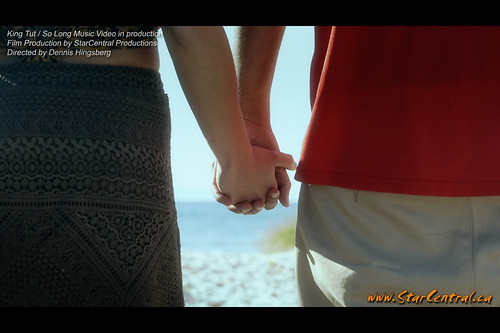
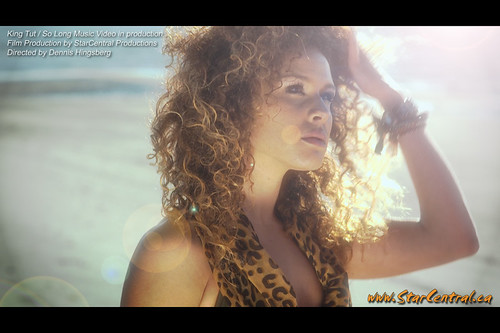
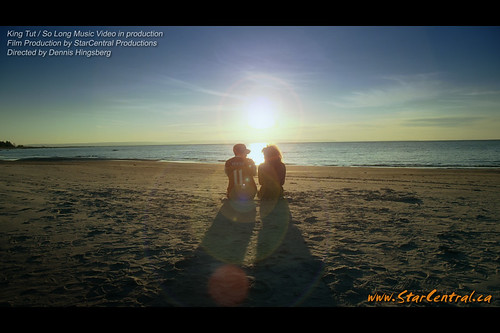
On the opposite end of things, below are some frames from a project I did in a remote area using only reflectors and overhead silk. It was shot with a camera that has similar dynamic range to DSLR's ie. 11-12 stops. I had the advantage however of using gamma modes in camera to give me more dynamic range at the high-end and preserve/protect more of the highlight information. In your case, you might have to shoot 1-2 stops under exposed and use a curve in post to bring mid-tones back up 1-2 stops. Best thing to do is go out and test it before you shoot!


Some notes about this production:
- Most of these scenes were only shot when sun was at less than 40-50 degree angle to horizon. Why? Because it is easier to block talent with a silk or large diffusion panel. At noon the sun would be directly overhead and that day I had no large stands to hold the panel over top of talent.

- Also an angled sun will give you nice contrast on your subjects if you want it and also allow you to easily reflect the sun back into your talent with the shadow it casts coming in at a decent angle ie. instead of light source underneath talent which would look like the bride of frankenstein.

- Using large 3x3 or 4x4 silver reflectors you can buy at home depot, you can seriously light up a scene. This talent was lit up by a single 3x3 reflector no joke from over 50 feet away!

- In pic #2 there is no overhead silk used because I knew it would be a quick two-shot in the final production.

- In pic #3 the camera was moved in and the silk put in place to block the sun. This framing was used for the majority of the edit which I knew in advance.

- In pic #4 I am shooting directly into the sun with no silk in place and using a reflector as fill light. They say never to shoot against the sun, but they are wrong. ALWAYS shoot against the sun and use your fill to light your talent, this also keeps your talent from squinting if you were to have shot with the sun directly in their face. (unless a silk is used that is a different story)

Here is the finished video:
http://www.youtu.be/5E58qNzYzho?hd=1

Switch to HD mode!!!
 
Last edited:
Are we talking 12' x 12' here or could less do it? Something like 6' x6'? Ofcourse it would depend on the framing, but let's say a close-up like Fondas there, that wouldn't need to much would it?

As I said, I don't know exactly what was used on "Once Upon a Time in the West"(1968), and conjecture that it is bounce. The example shot, comes from an end sequence fight scene, so I suspect the bounce was used say 20'x20', or several such bounces.

Here's the sequence in motion pictures...


There's a medium shot initially, Fonda goes down, and Bronson moves into the frame. Then there's a cut to Fonda on the ground, which is where the still comes from. (or there abouts...).

In the AC article on "Savages", the bounce that I see in the back ground could be something like 10'x20', so it's rectangular rather than square.
 
Is that a 9-light Par Fay I see reflected in his eye? Common for the era. Used all the time on original Star Trek exteriors...


Or I could be completely wrong. I thought I saw a BTS picture that had a 9-light for fill so I did a google search and found this:

http://stephenlodge.blogspot.com/2011/05/filming-original-star-trek-tv-series-at.html

Looks like some reflectors and an arc?

and this:
http://space1970.blogspot.com/2011/10/behind-scenes-pix-9.html

Definitely an arc with that exhaust vent...
 
Last edited:
Is that a 9-light Par Fay I see reflected in his eye? Common for the era. Used all the time on original Star Trek exteriors...


Or I could be completely wrong. I thought I saw a BTS picture that had a 9-light for fill so I did a google search and found this:

http://stephenlodge.blogspot.com/2011/05/filming-original-star-trek-tv-series-at.html

Looks like some reflectors and an arc?

and this:
http://space1970.blogspot.com/2011/10/behind-scenes-pix-9.html

Definitely an arc with that exhaust vent...

So, here's some BTS shots that I found:

Light hanging on the camera dolly.

ouatitw_04.jpg


Can't identify this one...

ouatitw_05.jpg


And an arc presumably...

ouatitw_06.jpg
 
Back
Top