"Dad culture"

Pontiac Aztek was the ugliest car ever. Even Brezhnev wouldn't buy it. Or ask Nixon to give him some.

Leonid was not a good driver.

https://thewanderingscot.com/wp-content/uploads/2010/04/Brezhnev.Rolls_.jpg
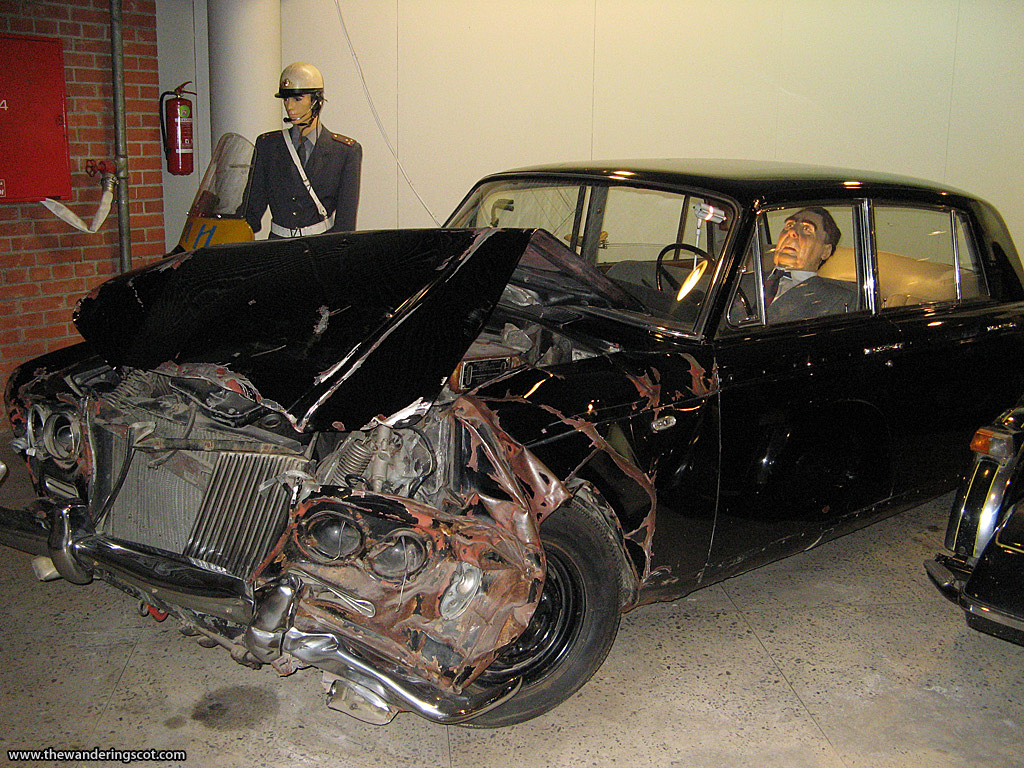
Brezhnev.Rolls_.jpg
 
My list of ugly cars:

Pontiac Aztec
AMC Pacer
AMC Gremlin
PT Cruiser
AMC Matador
Chevy Citation
Ford Falcon
Nissan Cube
Ford Taurus
BMW Z3 Coupe
Fiat Multipla
Nissan Juke
Plymouth Valiant
Toyota Previa
Geo Prism
Honda Element
Chevrolet SSR
Suzuki X90
AMC Marlin
Oldsmobile Aurora
Yugo GV
Hyundai Tiburon

That's a good list Tom, and I agree with almost all of it. But you left off the ugliest vehicle of all time, yes, even worse than the Aztek: The Chevy Avalanche with all of it's glued on plastic bumpers and crap that weathered in about 12 months after purchase. This truck is the Bud Light of trucks. https://www.silveradoevforum.com/attachments/1666724016664-png.887/

Also, honorable mention goes to every Lexus ever made, particularly the newest models with their big ugly grill.
 
Speaking of cars :

https://news.yahoo.com/semi-solid-state-ev-battery-150000293.html


New ‘semi-solid state’ EV battery would allow cars to go much, much farther on a single charge — and it could even power planes
China-based company Contemporary Amperex Technology Co. Limited (CATL) has announced that it is almost ready to start production on a new type of electric vehicle (EV) battery that could turn the industry on its head.

CATL’s “semi-solid state battery” will apparently have an energy density of up to 500 watt-hours per kilogram. That’s twice the energy density of the leading batteries currently on the market, which means that, if this battery comes to fruition, it will lead to EVs that can travel a much greater distance without needing a charge.
 
Another pipe-dream until it's real. People in the business have asked CATL specific technical questions about the battery and CATL won't answer them.

"Power airplanes". This technology only doubles battery capacity. It is a flight of fancy (excuse the pun) to think that doubling battery capacity will give us battery power planes.

"Much, much farther" - Or they could have just said "Twice as far" since it claims to have double the current capacity.

Regarding planes and batteries - Jet fuel has an energy density of about 12,000 watt-hours per kilogram. High density lithium batteries have about 450 watt-hours per kilogram
 
Last edited:
Lithium-Ion is ~ 250 KWH/kg. There have been a lot of announcements, including from Argonne, to have a 500 KWH/kg battery ... once production plans are completed. Argonne is looking for a satellite, space type of a program but said they will contact a commercial partner too.

Meanwhile.

Stellantis Invests in Lyten’s Breakthrough Lithium-Sulfur EV Battery Technology

https://www.stellantis.com/en/news/...kthrough-lithium-sulfur-ev-battery-technology

Mind you, the lithium-ion batteries of the early Tesla cars were at best 50 KWH/KG. The current generations are 5 times greater per weight. At some point, new designs will emerge.

CATL is the largest battery producer in the world. A public failure would be an admission of a market failure.
 
This EV battery can travel over 750 miles on a single charge: ‘Fundamentally reinvent the battery’


In a December 2021 road test, ONE’s first Gemini prototype was able to power a Tesla Model S for an incredible 752 miles across Michigan on a single charge, according to the company’s website.A third party validated the impressive results using a vehicle dynamometer.


Now, as more advanced batteries like Gemini hit the market and charging stations become more common, the range of EVs has increased dramatically, making it easier than ever to choose to invest in an EV. The more that people switch to EVs, the quieter our roads and cleaner our air will be.

https://www.yahoo.com/news/ev-battery-travel-over-750-094500201.html
 
When they get a reasonably priced electric car to go a real 750 miles on a charge, it's over. There will be no excuses or desire for gas/diesel. The two-stroke world (landscapers/tree trimmers) is very much liking getting rid of their engines and replacing them with batteries as the technology is proving itself in bigger and bigger tools. Forget environmental stuff. Battery operated equipment (less the battery itself) is so much easier to deal with and performs so much better. My electric chain saw is far easier to use and maintain than the gas one. The same goes for the weed wacker. Leaf blowers just aren't there yet. I haven't found one yet that I like.
 
When they get a reasonably priced electric car to go a real 750 miles on a charge, it's over. There will be no excuses or desire for gas/diesel.

No, range is only one consideration. Recharge time is another. My Chevrolet Duramax diesel pickup could go 700 highway miles on one 36 gallon tank without softpedaling it. 5 minutes later, it could go another 700. I don't need 700 miles or a need for diesel pulling power so now I drive a Honda Ridgeline.

EV range as well as falling short of EPA estimates, need urban settings for regenerative braking. EV owners I know don't like to admit to the problems we see them having. In Utah on the interstate it could be 135 miles between gas stations. You think there is a charging station closer than that? Without a waiting line? If you have the time to burn for recharging you'll spend it recharging instead of exploring, rafting, hiking. Never mind comfort. Your AC and heat will be parasites of the recharge cycle. A full recharge isn't advisable for battery care, but that's what the range estimate is based on.

You may be right about there being a tipping point for EV. It will be at that point, the problem of electrical distribution and infrastructure becomes a limit on your mobility, competition for lithium not limited to EV but also for homes, kitchens, commercial buildings will outpace the capacity of the electrical supply chain. We can't be far from that point already, witness largescale blackouts in California, Texas.

This could all change with clean atomic power, but there is little hope for new powerplants at the present in USA.
 
There are several variables.

First of all, most drivers don't need to have range above 300-350 miles. The "range anxiety" is an anti-technological Luddism . An average driver travels ~ 40 miles per day and very rarely travels longer distances over a single day. Additionally, s/he can recharge at home.

Second, modern electric cars have a superior acceleration. One doesn't need it either but a Hyundai or a Tesla have 0-60's in sub $70,000 cars that can travel at under 4 seconds, which in older years would have been in an exclusive company (Thomas Magnum's 308 GTS was 7.4) but people now buy powerful autos because they are affordable.

The third is the ever improving performance of the batteries and its ever decreasing costs.. BYD is allegedly making a very inexpensive sulfur only battery - sulfur is about 60-70% cheaper than lithium and is not a strategic material but any multiple formula batteries will also undercut the demand for the "lithium only" designs and thus for lithium itself.

If one adds these variables, one should begin seeing $50,000 cars with a 500 mile range and $70,000 cars with a 2.5s 0-60 and a 400 mile range within a few years Furthermore, an average "off peak" cost of home charging is ~ 7c-10c per KW/H in the US. And those with own single family residence ought to be able to install roof top solar panels and lower those costs down to ~ 2-3 cents per KW. (cheaper in the Southwest USA - Texas, Nevada, Arizona, California), making a 100 mile trip about $3-$5 (a typical ICE engine is ~ 25 MPG, which results in ~ $12-$15 per 100 miles).

Side note (since it sounds a bit biased and financially involved)

“In 2050, solar PV will be in unassailable position as the cheapest source of new electricity globally,” said DNV.

Along this path, solar capacity increases 22-fold in DNV’s energy transition vision. The firm said it views variable renewables as the cheapest and quickest route to both decarbonization and energy security.

https://www.pv-magazine.com/2023/06...tion-as-cheapest-electricity-source-says-dnv/
 
Yes, that's why I said a "real" 750 miles and that's on a cold day in the east. My assumption is if you get 750 miles on a charge, charging is no longer an issue for 99% of the population, and that assumes you can recharge in 8 hours.

Yep, the battery is the Achilles heel. Even if it got the 750 miles, I'm a guy that owns a car for 20+ years. So I have to wonder what it's going to cost me for one or two more batteries. I hope that this gets sorted out so that big battery bill becomes more reasonable.

It is so unfortunate that nuclear power gets the stink-eye now. But hey, two uninhabitable places on the planet so far and almost a third;; not a good track record.

The power grid does seem to be a serious issue. I naively thought it would come along as demands rose. But I did a little reading and......Ouch, the US has major political, economic, and bureaucratic obstacles to scaling the grid.
 
There are several variables.

First of all, most drivers don't need to have range above 300-350 miles. The "range anxiety" is an anti-technological Luddism . An average driver travels ~ 40 miles per day and very rarely travels longer distances over a single day. Additionally, s/he can recharge at home.

Second, modern electric cars have a superior acceleration. One doesn't need it either but a Hyundai or a Tesla have 0-60's in sub $70,000 cars that can travel at under 4 seconds, which in older years would have been in an exclusive company (Thomas Magnum's 308 GTS was 7.4) but people now buy powerful autos because they are affordable.

The third is the ever improving performance of the batteries and its ever decreasing costs.. BYD is allegedly making a very inexpensive sulfur only battery - sulfur is about 60-70% cheaper than lithium and is not a strategic material but any multiple formula batteries will also undercut the demand for the "lithium only" designs and thus for lithium itself.

If one adds these variables, one should begin seeing $50,000 cars with a 500 mile range and $70,000 cars with a 2.5s 0-60 and a 400 mile range within a few years Furthermore, an average "off peak" cost of home charging is ~ 7c-10c per KW/H in the US. And those with own single family residence ought to be able to install roof top solar panels and lower those costs down to ~ 2-3 cents per KW. (cheaper in the Southwest USA - Texas, Nevada, Arizona, California), making a 100 mile trip about $3-$5 (a typical ICE engine is ~ 25 MPG, which results in ~ $12-$15 per 100 miles).

That's great but no one needs supercar acceleration. I can afford 8 seconds to 60 mph, can you afford 12 hours to full charge? Range anxiety is not even something I have to think about so anti-technological luddism is a metaphor for another metaphor, that "smart shoppers" should spend money now to save money later, on EVs, on solar panels, batteries, chargers and paraphernalia. If successful on a large scale, lowering demand for fossil fuels will bring down those costs but the thriftiest thing is to ride your bike and use public transportation. When the EV infrastructure is ready for prime time, I'll know it. Right now it is not.
 
Yes, that's why I said a "real" 750 miles and that's on a cold day in the east. My assumption is if you get 750 miles on a charge, charging is no longer an issue for 99% of the population, and that assumes you can recharge in 8 hours.

Yep, the battery is the Achilles heel. Even if it got the 750 miles, I'm a guy that owns a car for 20+ years. So I have to wonder what it's going to cost me for one or two more batteries. I hope that this gets sorted out so that big battery bill becomes more reasonable.

It is so unfortunate that nuclear power gets the stink-eye now. But hey, two uninhabitable places on the planet so far and almost a third;; not a good track record.

The power grid does seem to be a serious issue. I naively thought it would come along as demands rose. But I did a little reading and......Ouch, the US has major political, economic, and bureaucratic obstacles to scaling the grid.

I agree with all of this, but the 750 mile recharge cycle at home in 8 hours requires a $4-5K charging system, not just your 120volt 15 amp circuit. I don't think it's possible even now with the charging system, for 750 miles in 8 hours. What if it took 3-4 days to reach full charge off an ordinary outlet? You'd begin to see the limitations of home charging, never mind the demand on the electrical grid system when everybody is doing it. Solar panels don't work at night or when covered by snow. Wind farms and solar farms will face increasing opposition from the environmentalists.

Clean, safe atomic power would be great if it was, but no one wants this in their backyard if it's not. We have some challenges. Climate change is real, and threatens coastlines, but the history of planet Earth has seen many changes of far greater significance. Ancient mountains have formed and eroded. Continents have collided and split. Inland seas have covered and retreated. Glaciers have come and gone, species come and go. Some have survived it all. Man's history is about 100K years. Earth's history is 4.5B years. The composition of the atmosphere has changed many times.

But every drop of water that has ever existed is still here, in one form or another.
 
That's great but no one needs supercar acceleration.

But it's a variable and if one has a choice of a $60,000 car that does 0:60 in 3 seconds and another $60,000 car in $8 seconds, most buyers will select a faster accelerating car.

BTW, Model 3 Performance is 0-60 in 3.1 s and is only $55,000. Why pay more for less?
 
While the sales figures are impressive, the percent of total cars that are electric in Europe is currently at 1%. I was hoping it was higher so that we could see what effects electric cars are having on the grid, fuel taxes, charge stations, and anything else that may or may not have been anticipated.

France pays $2.79/gallon tax. California pays about $1.30/gallon tax. Highway robbery...... get it...highway....... never mind. California is trying to figure out how to recover the fuel tax loss. I suppose Europe is doing the same.
 
Last edited:
While the sales figures are impressive, the percent of total cars that are electric in Europe is currently at 1%. I was hoping it was higher so that we could see what effects electric cars are having on the grid, fuel taxes, charge stations, and anything else that may or may not have been anticipated....

A typical/average automobile lasts 11 years in the US. With 16-18 million cars sold annually, it means about 180,000,000-200,000,000 US cars not being new. If 6% of the US cars sold are EV's, that's ~ 1,000,000 EV's out of~ 200,000 total or one half of one percent.

It isn't much different in Europe. Norway is heavily electric - ~ 71% per year - because it's a wealthy nation that has no domestic automobile industry (it buys Tesla). Germany obviously has a huge automobile industry. Much like France and Italy, it will need time to flip its production toward the electric. The Chinese EV's have arrived into the EU too.

In terms of charging, Europe isn't as single-family-residence geared as the US. Many rent, many lived in apartments. They'll need a shift on top of that.

Additionally, Germany was heavily dependent on Russian natural gas (aka Gazprom). It was a policy of the despicably evil Angela Merkel, who didn't get perturbed even in 2014, when Putin's stooges shut down a Malaysian Boeing (Malaysia Airlines Flight 17) flying over Ukraine with 298 dead. Olaf Scholz and the current German government had to deal with all sorts of economic difficulties. They're sort of doing the best they can with the LNG plant construction, massive renewable schemes (both winds and solar) and are slowly getting to grips with their proposals.

China is moving faster - sort of. They have general economic problems too.

Plugin vehicles are all the rage in the Chinese auto market. Plugins scored over half a million sales last month, up 93% year over year (YoY). That pulled the year-to-date (YTD) tally to over 1.9 million units.

Share-wise, with April showing another great performance, plugin vehicles hit 35% market share! Full electrics (BEVs) alone accounted for 24% of the country’s auto sales. This pulled the 2023 share to 33% (23% BEVs), and considering the current growth rate, we can assume that China’s plugin vehicle market share will end around 40% by the end of 2023.

https://cleantechnica.com/2023/05/31/35-plugin-vehicle-market-share-in-china-china-ev-sales-report/
 
In terms of charging, Europe isn't as single-family-residence geared as the US. Many rent, many lived in apartments. They'll need a shift on top of that.

That is a good point. The 'last mile' build out of the grid to charge cars in parking lots, parking garages, and the street, yikes. Digging up streets is a big problem and very expensive.

This infrastructure issue was a monster for the cable and telco companies when trying to build up the high speed internet. AT&T abandoned fiber in their first attempt because it was too expensive and complicated to dig up streets and lawns. Remember Google Fiber? They thought they knew more than the telcos and could put fiber everywhere. They re-learned what was already learned by the telcos. It's really freaking hard and expensive to do. Customers were less than happy when AT&T dug up their lawns and shrubs to bury fiber. It was a disaster. Against their preference, they had to go to DSL technology, which is limited in its bandwidth capacity compared to fiber. This was because much of their infrastructure was underground, not on poles. Meanwhile, Verizon went direct to fiber because their old cities had most of the infrastructure on poles, which was much easier to install.

The question then would be, how will power companies view this issue. What's the return on investment to dig up streets and put charging stations on streets and parking lots. Cities will probably mandate it and the money has to come from somewhere, so electric bills will have to cover that infrastructure build out.
 
Last edited:
Road and Track just published a piece about a non-existing car - Hyundai Ioniq 5N will probably be announced by mid July. It's an upscale sports luxury SUV, with a 620 hp engine and a low 3 sec 0-60. It will be sold at around $65,000 or higher.. It's loose competition ia against a $76,000 - $80,000 BMW MK M3, which is about 19 MPG combined. Ioniq N is probably going to beat around 3 miles per KW. For 100 miles, i'll need ~ 30 KW or ~ $5, compared to ~ $22 for M3.

As to the global popularity of the EV's, I say they are better than mid and high end automobiles. IMO, a lot of its potential buyers are misinformed on both the quality and the costs. The low-to-medium advancements will probably reflect on newer technologies.

Now, I'll go and search for an update on Reveriesh Prigozhin ride into Moscow. I've been to Moscow three times (1975, 1976, 1978), first time with dad, then twice with mom. We took a train all three times.
 
Back
Top