Crop factor revisited...

moldcad

Veteran
I know it's a dumb question, but I really got confused... It's about the "crop factor" again, so please bear it with me :)

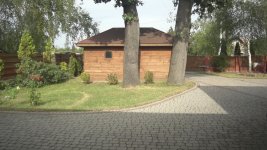
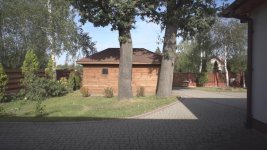
Below are 2 screengrabs straight from the FS100; one is with the pancake 16mm lens, the other - with the Tokina 17mm F3.5.

Shouldn't they both be more similar as far as the angle of view is concerned? I mean, it's just 1mm focal length difference... Does it account for the difference seen, or do the 2 lens have different crop factors?
 

Attachments

  • pancake 16mm.jpg
    pancake 16mm.jpg
    100.8 KB · Views: 0
  • tokina 17mm.jpg
    tokina 17mm.jpg
    115.6 KB · Views: 0
Lenses do not have crop factors.

For what it's worth lenses may be branded as a 17mm for example, but in reality it might be a 17.4mm. I have data from my early Zeiss lenses which show the actual focal length slightly different than than the given focal length on the lens.
 
OK, I did put "crop factor" in quotation marks, didn't I?

I understand the NEX is an APS-C lens, while the Tokina 17mm is a FF lens - but their focal lengths are supposed to be expressed in FF terms... So, again: can the 1 mm difference make such a big difference?
 
As David said, one or the other lens (or both?) is somewhat mislabelled, because yes that is more than a 1mm difference. Not uncommon; for example I have a 35-70mm legacy lens, and a 50-135mm, and their actual fields of view barely overlap - go figure.
 
it's an exponentially decreasing function the smaller the focal length the bigger the difference would appear to be.

if 24 to 35mm could be counted as one focal length step, it could be like going from 135 to 200mm.
 
When you factor in the 1.5x crop with your FF tokina 17mm lens, the field of view will look similar to a 25.5mm lens.
 
Piotr, the difference should be about 3 degrees in the field of view, and it looks like your pics are fairly close to that. However, like David said, I would take lens labeling with a pinch of salt. I tested the Canon FD 24mm f/1.4 L against the Zeiss E-mount 24mm f/1.8, and they have very different fields of view (tripod didn't move between shots).

http://www.dvxuser.com/V6/showthrea...-Zoom)&p=1986195182&highlight=#post1986195182

(See 1:36 in the part 2 video.)

There's also a difference with the two 50mm lenses, but not as bad. So the focal lengths on lenses are somewhat approximate.
 
Last edited:
Piotr, do the test again without moving the camera when switching from 16mm to 17mm. You will see a less of dramatic difference.

The main reason why the house on 17mm looks a lot bigger is it's more off-center that the 16mm shot. With a wide-angle lens, objects in the center looks a lot smaller.

My point is, yes, you're seeing the difference between 16mm and 17mm but there's also some optical illusion in play.

Also keep in mine that it's not 1mm difference between 16mm and 17mm but 1.5mm difference on a cropped sensor.
 
The pancake covers in 892 pixels what the Tokina covers in 1000. Assuming the pancake is truly 16mm, this would make the Tokina 16 x 1000/892 = 17.9mm.

With the 1.5 crop factor, the fields of view would be equivalent to 32mm and 36mm lenses used on fullframe.
 
The pancake covers in 892 pixels what the Tokina covers in 1000. Assuming the pancake is truly 16mm, this would make the Tokina 16 x 1000/892 = 17.9mm.

With the 1.5 crop factor, the fields of view would be equivalent to 32mm and 36mm lenses used on fullframe.
Fullframe equivalent of 17.9mm is 27mm not 36mm.
 
Back
Top