Crop factor & exposure issues with GH1

Jonathan12uiz

Well-known member
OK... this is going to get confusing so buckle up!

The GH1 has a 2x crop sensor, meaning based of a full frame sensor, the field of view would equal 2x the focal length of a full frame sensor. Correct?

So 25mm on the GH1 is = a 50mm full frame, 50mm = 100mm, etc. Correct?

So lets say I take a picture with the GH1

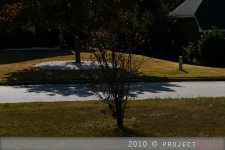
Settings are 50mm focal length, 1/160 shutter speed, 160 ISO, on a sunny day.

According to the SUNNY16 rule my picture should come out perfect.

NOPE!

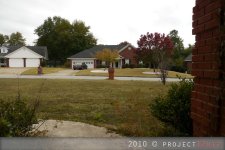
My picture is horribly underexposed. See pic below:
50mm F16 1-160.jpg

BUT!

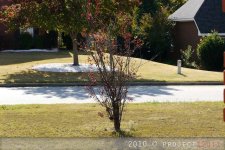
If I divide my f-stop by 2, just like how I had to multiply 50mm x2 to know that it's a 100mm full frame picture, I get an f8.0.

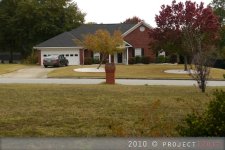
My picture is now perfectly exposed. See pic below:
50mm F8 1-160.jpg

THIS IS WHERE IT'S CONFUSING!

Our crop sensors' 2x multiplier should only affect focal length in terms of Field of view. Meaning light absortion/exposure should remain the same @ any f-stop.

So... Why the hell am I/we having this issue?
 
Because you're thinking that the focal length changes, and it doesn't. Using a smaller sensor doesn't cause the 50mm lens to "become" a 100mm lens. It only causes the sides to be cut off of the picture. You're still shooting with a 50mm lens.
 
Because you're thinking that the focal length changes, and it doesn't. Using a smaller sensor doesn't cause the 50mm lens to "become" a 100mm lens. It only causes the sides to be cut off of the picture. You're still shooting with a 50mm lens.

I'm understanding the focal length more now, but why is it that i have to 1/2 the f-stop to get the exposure right, when sunny16 says my settings should be dead on perfect exposure?
 
I'm understanding the focal length more now, but why is it that i have to 1/2 the f-stop to get the exposure right, when sunny16 says my settings should be dead on perfect exposure?

This is my only explanation. Correct me if I'm wrong.

Lets use a 5DmkII for example:

Lets say it's sunny. So sunny16 says f16 with shutterspeed the recipical of ISO.

ISO set to 160, shutter speed set to 1/160, f-stop set to 16.

Theoretically, A full frame camera should give me a great picture.

Why is this? lets look at some numbers.

FULL FRAME now...

@ 50mm an f16 aperture equals a 3.125mm opening to let in light. SO...

the Full Frame sensor gets X amount of light, BUT!

Since I have a 2x smaller sensor doesn't that mean that 2x amount of light is not recorded onto the sensor?

So to get the same amount of light to get to the sensor I would need 2x the opening of 3.125 which is 6.25mm.

Which @ 50mm = f8, because 50/8=6.25.

Am I wrong?
 
i have several thoughts

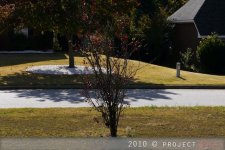
1. the first picture may be a little underexposed but not by much (the grass looks good) but the second picture looks off by about the same amount in the other direction (trees are ok but the grass is blown out)

2. sunny 16 is a rule of thumb that does not take into account several variables and my be an over simplification designed at a time when the cheapest film camera around had about 3 more stops of latitude than your GH1 (ironic that the most expensive camera had the exact same amount of latitude provided you used the same film)

3. moving from f/16 to f/8 doesn't represent twice the amount of light to the sensor it is four times the amount of light to the sensor as it represents 2 stops (each stop up or down doubles or halfs the light transmission)

4. the crop factor on a m4/3 sensor may be 2x but the sensor is near 1/4 the size of a full frame camera as it is 1/2 as wide AND 1/2 as tall

5. what effects the exposure in a digital camera is not how much light enters the lens exactly... it's how much light hits each photo-site (pixel) and that does not change as a function of the lens but rather camera to camera provided no other changes are made.

6. try the above shot at f/11

I actually did do an f11 just to see what it would look like... still looks underexposed to me.

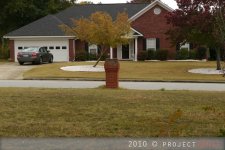
f11
50mm F11 1-160.jpg
 
proofs in the pudding my friend

looks better than ether of two from before

Things like exposure charts and rules of thumb stem from a time when light meters where not that good and lots of inexpensive cameras didn't even have them, also prints where done by hand, one at a time and the printer would compensate for a one stop difference.

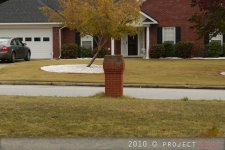
True, but why is it that my test today turned out way better? It was overcast today and I did 5 shots

sunny16 says heavy overcast is f5.6:

14mm f5.6 1/160 @ 160iso
14mm f5.6 1-160 @ 160iso.jpg

25mm f5.6 1/160 @ 160iso
25mm f5.6 1-160 @ 160iso.jpg

35mm f5.6 1/160 @ 160iso
35mm f5.6 1-160 @ 160iso.jpg

50mm f5.6 1/160 @ 160iso
50mm f5.6 1-160 @ 160iso.jpg

100mm f5.8 1/160 @ 160iso (was as close to 5.6 as it would let me go)
100mm f5.8 1-160 @ 160iso.jpg

So... why the hell did this test work normal, but the sunny condition test failed?
 
My trusty Sekonic doesn't care what the focal length of my lens is ... it has choices for aperture, shutter & ISO -- and it has been right every time for thirty years, whether I shoot 2 1/4", 35mm or cine.

What you are really seeing here is that the 'Sunny16' was a handy approximation that worked best in the flexible world of film, where a stop in the wrong direction was unlikely to kill a shot. Digital sensors work with narrower capabilities, and getting it right is a little more crucial.
 
Because the contrast is much lower. The "Sunny16" rule assumes everything is in the sunlight. Much of the subject is in the shade. When it's overcast everything is in the shade to some extent. You'll notice that the well lit parts in both sets of pictures came out similar. If the subject had been entirely in the sun it would have looked right.

Chris
 
Thanks for the info guys I just needed to experiment more with it. It just seemed my subjects weren't good choices and I didn't realize how much more crucial the determining of exposure would change with digital.
 
Leave the Sunny 16 Rule for film, you have a lcd display so you can review exposure - I'd rely on that instead.
 
Back
Top