Color Pseudoscience

Colors are recorded by applying a Bayer filter, but that does not mean that only pure R, G and B are passed to each resp. color sensor.
We don't have filters that are good enough to do that!
 
In the article he specifically says he chose it for Season 3 specifically for consistency.

Exactly. There was no compelling reason to go any other camera. If a camera delivers a good image with good production values why change. That is just one of the reasons the ARRI gets used again and again. Its consistent look plus its massive pool of tech and post talent that knows the ARRI workflow.

Chris Young
 
I'd like to echo what other's were saying in that the CFA - the Color Filter Array - plays a big role ( https://en.wikipedia.org/wiki/Color_filter_array .) Each sensel is basically gelled to get a color response, and that gel can definitely vary.

On top of that, just like standard gels, standard CFAs are much less sensitive than what dichroic filters would be. For example, check out the huge differences in color between Varicam 35 (a better than normal quality bayer CFA) and the Varicam HS (B4 mount prism with dichroic filters): https://www.provideocoalition.com/tlci-and-camera-color-what-a-difference-a-prism-block-makes/

More import than that is the Quantum Efficiency (QE) of the sensor ( https://en.wikipedia.org/wiki/Quantum_efficiency .) Sensors are going to capture the full spectrum of light differently and can vary wildly with how responsive to each color they are. For instance, here is the huge difference in QE between the Blackmagic Pocket 4k (left) and the original Blackmagic Pocket (right): https://i.imgur.com/NPknluK.jpg [credit: shijan on bmcuser.com .]

CFAs and processing will smooth the QE response, but, like John Brawley said, a lot of that info is pre-raw and baked in.

On top of all that, as exposure and color temperature changes, the processing has to be adjusted.

Most cameras suffer from exposure variant color- a major pain to fix in post (shadows, mid-tones, highlights all having different color processing- it's a sloppy mess). The camera which does the best in the general case is ARRI (that's why it's still #1 after all these years. People aren't paying those prices for any reason other than those cameras provide the best color and DR: less work in post for the general case (and doing the best in mixed lighting).

On top of everything else going for the Alexa (or simply because everything else is so well dialed in) this is a huge advantage. Regardless of the exposure you are at, color is going to be virtually the same - noise is going to be the only real variant.

I couldn't find the tests I was looking for, but this gives a good example: https://cinematography.net/alexa-over/alexa-skin-over.html .
 
  • Like
Reactions: jcs
I couldn't find the tests I was looking for, but this gives a good example: https://cinematography.net/alexa-over/alexa-skin-over.html .

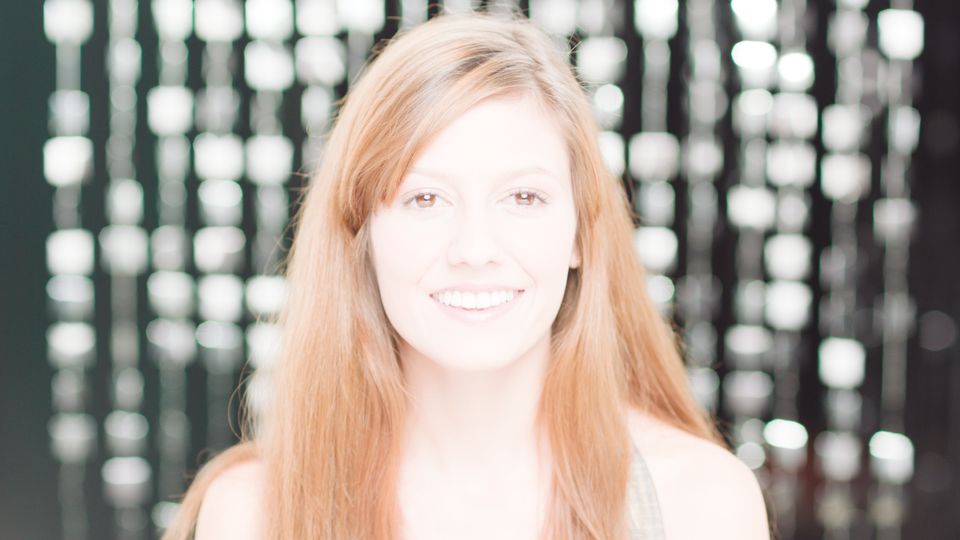
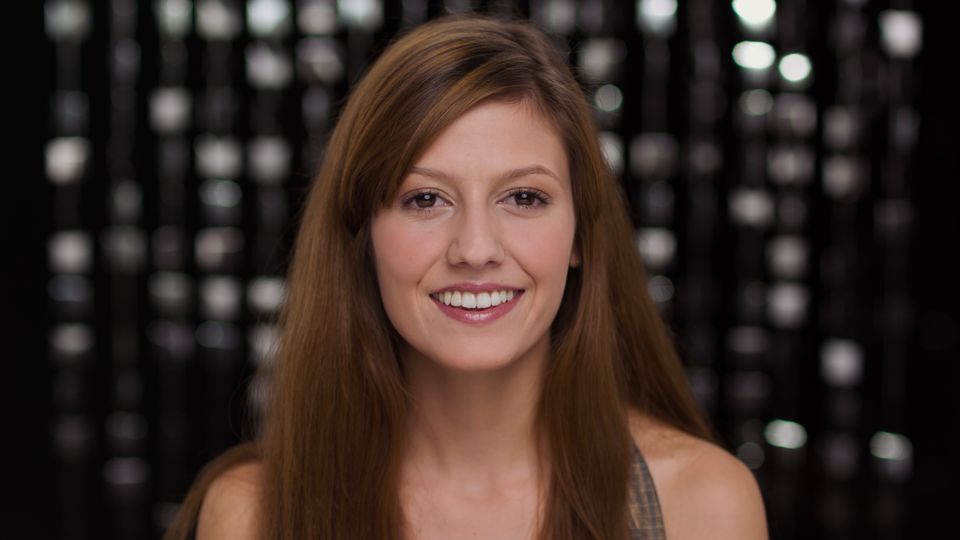
Alexa over exposed:
over-400090095.jpg

Recovered in post:
grade-400090095.jpg


Everyone should take a look at that link- there's video examples online showing similar results. Try that with any other camera, including the F55 which was stated as 'good enough' earlier in this thread. If you nail exposure and don't have complex/mixed light (and/or mixed reflected colored light), many cameras do just fine. ARRI handles the challenging cases, especially over/under exposed + mixed color light much better than anyone else. If I shot motion pictures full time, I'd rather work with superior tools and spend less time in post (or as Dan said with real world examples: zero post at all in many cases).
Perhaps my perception is a bit different- I'm an editor and a colorist in addition to shooting (with much experience working with color & images writing real-time video software). At this point I want the best color/skintones straight from camera with as little extra work in post as possible.

While color science is very complicated (and not pseudoscience like many topics pushed by mainstream media), the best camera is the simplest: ARRI doesn't have endless menus to tweak color & gamma where the user tries to find the magic combination to work for their shooting conditions. Basically LogC or Rec709, ProRes or ARRIRAW and you're good to go (for baked in looks they support 3D LUTs- really just one setting: LUT on or off). Simple. Fast. Easy. With industry leading color science. Hobbyist / budget production / corporate may be fine with lesser cameras. Those making films for a living appreciate the simplicity coupled with the best money can buy. Imagine if ARRI made a $6K DLSR / Komodo sized camera- would anyone buy anything else? (professional shooters)
 
Last edited:
Agreed!

Shot on F55, Golman chose it over the ARRI and the Venice for season 3. I wouldn't enjoy it more or less if it was shot on an ARRI or a piece of sting. Looks good and it's nicely shot. Production values make it what it is.

https://www.studiodaily.com/2018/06...man-asc-abc-capturing-lavish-details-royalty/

Your average viewer wouldn't know what an ARRI was. Often we are our own worst enemy. Odd to see it reconstructed but I was filming at the presser shown at 44 seconds, 21 October 1966. Was one of the first cameraman there.

https://www.youtube.com/watch?v=vLXYfgpqb8A

Chris Young

*Goldman
 
Thank you for your replies. For every opinion I can have three reactions: agree, disagree, or bafflement. For example, were I to ask you, "What is your favorite Star Wars movie":

1. The Return of the Jedi (I understand and I agree)
2. The Empire Strikes Back (I understand and I disagree)
3. I like turtles (I do not understand)

When I started this thread, I was at #3 (bafflement) and just wanted to level up to #2 (understand but maybe still disagree) if possible.

1. The darkness of the Bayer filter is interesting, something I've heard before, and something I thought about before starting this thread. But I am unsure how much of a difference it makes to my eyes. I will have to research and study it some more.

2. The slapdash postproduction habits of some of your clientele makes sense too, but it sounds more prevalent than I thought it was. I still don't know why an in-camera LUT wouldn't fix it. It's a one-time thing that you can do shortly after purchase, and then it is as if it is the camera's built-in look for all footage thereafter.

---

I never like the look of any camera by default. So I always would set up some kind of look in post or LUT. And many LUTs I have seen are satisfactory to me, over a wide swath of cameras. In fact, isn't that was ACES was all about, some kind of neutral base from which you could match any camera? Anyway, I will continue to ponder everything and respond maybe later. I do realize that (a) there's like no one else that agrees with me, apparently, and (b) I am possibly annoying. So I will try to leave you all in peace very soon.
 
Alexa over exposed:
over-400090095.jpg

Recovered in post:
grade-400090095.jpg


Everyone should take a look at that link- there's video examples online showing similar results. Try that with any other camera, including the F55 which was stated as 'good enough' earlier in this thread. If you nail exposure and don't have complex/mixed light (and/or mixed reflected colored light), many cameras do just fine. ARRI handles the challenging cases, especially over/under exposed + mixed color light much better than anyone else. If I shot motion pictures full time, I'd rather work with superior tools and spend less time in post (or as Dan said with real world examples: zero post at all in many cases).
Perhaps my perception is a bit different- I'm an editor and a colorist in addition to shooting (with much experience working with color & images writing real-time video software). At this point I want the best color/skintones straight from camera with as little extra work in post as possible.

While color science is very complicated (and not pseudoscience like many topics pushed by mainstream media), the best camera is the simplest: ARRI doesn't have endless menus to tweak color & gamma where the user tries to find the magic combination to work for their shooting conditions. Basically LogC or Rec709, ProRes or ARRIRAW and you're good to go (for baked in looks they support 3D LUTs- really just one setting: LUT on or off). Simple. Fast. Easy. With industry leading color science. Hobbyist / budget production / corporate may be fine with lesser cameras. Those making films for a living appreciate the simplicity coupled with the best money can buy. Imagine if ARRI made a $6K DLSR / Komodo sized camera- would anyone buy anything else? (professional shooters)

Over exposure recovery is nice, but i am often surprised. With video, it is pretty easy to nail exposure, so, the “bring it back” posts are always a little over blown to me. Pun intended.

The main advantage of the Alexa doing the dual gain trick and having ample dynamic range seems to fit more into:
- more natural tone curve
- healthy shadows that don’t dramtically colour shift
- highlights that retain natural details. Blown highlights breaks the fourth wall, and can look unnatural. We rarely see blown highlights with our eyes, because it friggin hurts to look at blown highlights in real life. Also, digitial blown highlights are white or yellowish patches, whereas as blown highlights to our eyes are intense colour shifting that causes physical discomfort. So, having enough dynamic range to trick the eye in challenging situations is a great advantage. Alexa is the only camera that seems to be able to approach the minimum level of dr for almost any situation. Red Gemini and Monstro are very very close. Haven’t used Venice, but i assume it is great. Film has enough analogue character, that when thing go wrong, a highlight is blown, etc, there is still something happening, grain, flare, etc. Video just blows out. So, it is more important for video to have larger latitude than it is for film. The catch being, i bet some shooting film would feel safer knowing they could “bring back” something exposed incorrectly.

However, fixing over exposure on a person in a studio is pretty much pointless. Fixing over exposure on a lamp shade in the background because it imbalances the composition.... that is more likely. Also, shooting a person indoors and not having to worry about blonde hair looking all crispy in the highlights.... that is what i’d hope a camera can handle.

The thing is, most of the time, 12stops is enough, so, it can be difficult to justify or complain. Doesn’t seem like anyone has made a sensor that can get usable 15+ stops dr without some dual gain trick, so, we kind of have to concede it must be too difficult for engineers to design a cinema sensor that can capture that might contrast. And as long as a camera has a good twist into the highlights, aka no color channel separation, not excessive saturation on brighter things, then 12stops can look wuite aesthic even with some white cutout blobs of clipping.
 
Last edited:
Over exposure recovery is nice, but i am often surprised. With video, it is pretty easy to nail exposure, so, the “bring it back” posts are always a little over blown to me. Pun intended.


The studio example is poor, because no one is gong to get it that wrong.

However.. it is wonderful to see. If one pulls secondaries in post one feels one can really go good places.

Burning skies
Steadicam shot moves from int to ext
The aforementioned table lamp on an int.
Hotel int with the seaview burned in the windows.

Its also nothing that a raw still camera cant do.. and I want to see people try with the C500 or the NikonZ/Atmos combo.

I dont know why the blogerati who have hold of these cameras are too ignorant to try.
 
Over exposure recovery is nice, but i am often surprised. With video, it is pretty easy to nail exposure, so, the “bring it back” posts are always a little over blown to me. Pun intended.


The studio example is poor, because no one is gong to get it that wrong.

However.. it is wonderful to see. If one pulls secondaries in post one feels one can really go good places.

Burning skies
Steadicam shot moves from int to ext
The aforementioned table lamp on an int.
Hotel int with the seaview burned in the windows.

Its also nothing that a raw still camera cant do.. and I want to see people try with the C500 or the NikonZ/Atmos combo.

I dont know why the blogerati who have hold of these cameras are too ignorant to try.

Video cameras also need more dynamic range than stills because of being able to move from scene to scene. Even a small tilt following the movement of a character can lead to exposure issues that stills can find a way around. And repairing something on a still frame in post tends to be easier.

J. Brown mentioned just expose correctly. But there are variables in natural scenes that just do better with a little extra latitude. We can work around it, but sometimes it is nice to have.

One if the issues, is always having so much dynamic range can feel like a waste to use a lot of it in the shadows and highlight roll off. But human vision doesn’t respond well to the midtones getting flattened out. Out eyes still seem to like some good contrast in the midtones.
 
Last edited:
The blown-highlight demos may be misleading, because the highlights were never truly blown if you can recover them like that. The "recovered" image was always there. It's more because of a poor translation from raw to .jpg or whatever.

A screen normally can show about 6 or 7 stops. So if you truly captured 14 stops, then there has to be some remapping there. There can be good mapping or bad mapping.
 
Day after day, year after year, I am flummoxed by remarks like these about cameras:
This is my take on those bullet points

It needs better color science
Some cameras could definitely be better at default settings

This one doesn't render skin tones as well as the other
Pretty subjective subject, but definitely tends to be true that people respond better to images that favour the perception of skintone over the reality of the scene the subject was photographed in.

I wish it had better highlight roll-off
Always! At TV doesn’t tend to replicate the real life look of the world, so when highlights go bad, it starts to break the illusion. Audiences tend to be looking at the midtones, so we can get away with it, but a good highlight roll off is better.

Bring back the Panny mojo!
Rather than bringing back the actual image of the old Panasonics, namely HDC27, HDX900, HPX500, SDX900, HVX200, and DVX100. What people are asking for, i believe, because i want it too, is a picture style that brings an aesthetic edge.

What mojo one prefers can change over time. Some like clean and saturated. Some like dark and muted. Some like warm and nostalgic. But there really aren’t that many variations when it come to accptably good starting point.

Some cameras still suffer from below acceptable image quality out of box. That is annoying. So, people rend not to buy those.

I don’t feelninam teaching anyone anything here, just spouting my thoughts about the statements on your list.
 
Last edited:
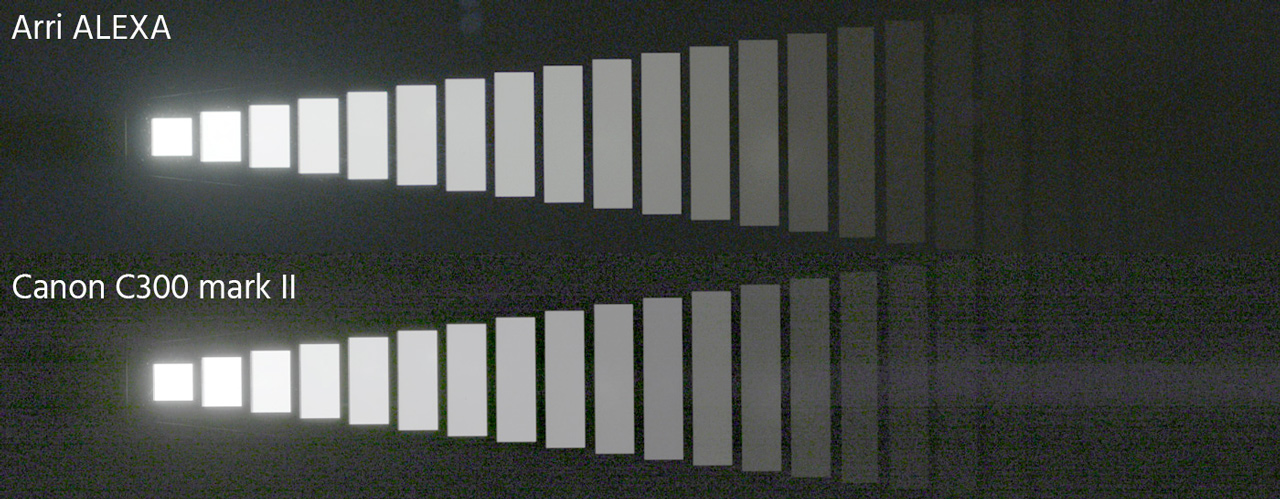
ARRI Alev III based camera systems (including the latest 65, LF, mLF) are still the only camera systems that provide true, usable, full stated DR. The sensor is 16-bit linear where the result is mapped to 12-bit log. Like Porsche, Corvette etc., ARRI understates the true potential, whereas others such as Sony, Canon, Red, Panasonic, overstate their actual potential. For example, the C300 II was rated at 15-stops DR yet when measured it was really only 12 stops!: https://www.cinema5d.com/canon-c300-mark-ii-review-dynamic-range/ . That's just gray scale DR. It gets much worse if one tries to recover color & skin tones! (I had a C300 II- fake 4K and fake 15 stops DR + the color from a tuned 1DX II is better than the C300 II! (and the 8-bit 422 4K has more real detail)). The C300 II color falls apart as exposure increases, unlike the Alexas where exposure invariant color science provides real, usable 14-stops DR. Canon even hired a BBC consultant to "prove" their DR claims: complete fabrication. Even if the bogus 15-stop claim matched an Alexa for a simple gray scale test, the C300 II can really only do a little over/under 2 stops or so and get usable recovery before color falls apart (or noise is too high). C300 II vs. 5 year old (at the time) Alev III tech:
alexa-vs-c300-ii-exaggerated.jpg


Alexa Mini vs. Red Epic-W Helium from 2017 ( https://nofilmschool.com/2017/02/shootout-arri-alexa-mini-vs-red-epic-w-helium ):
alexavred5.jpg


Red makes wild claims for DR (16.5+ haha who are they kidding), yet the ancient Alev III still has better DR up to clipping (only '14 stops'), and significantly better exposure invariant color science.

There are many online demos showing Alexas recover under/over where the color is still usable, especially skin tones, and all the competitors can't currently come close: color and especially skin tones are a mess/unusable. Even in 2019! It should be clear that ARRI is doing something fundamentally different with their color science and image processing pipeline in camera (no way to fix in post). Even if you nail exposure correctly, your highlights and shadows are already skewing color on most cameras: when you carefully study color for skin tones you'll see it (e.g. shadows going magenta/green and highlights going to the opposite: highly exposure variant color science = inaccurate, low quality color).

The points regarding taking shots from interior to exterior and trick 'oner' takes like Birdman are possible with this kind of usable DR and color. My 'baby-Alexa' EOS R, which with finely tuned color in camera using a custom picture style, allows the use of AutoISO (not available with Canon Log), so I can do continuous takes that would otherwise not be possible. The quality is still not nearly as good as an Alexa as AutoISO will briefly blow out and adjust while recording.

These posts aren't about 'selling' ARRI products (I have busted them for the LF name (it's really FF) and the 'magical 3D effect of large format' marketing (those in the still world now FF isn't anything magical re: sensor size and equivalence)). It's simply the easiest brand to show superior color science in a thread implying color science is fake / not real.

Again, if I was a working pro in cinema, there's only one camera I'd consider using right now (and probably hire someone else to operate it): an Alexa Mini LF. It's just so much better than anything else out there (perhaps Venice & Red for B cameras), why would anyone with a reasonable pro budget not use the best camera possible, especially given the expense of fixing things in post?

Float-32 audio is equally amazing: can't under/over record levels! How about a float-32 (audio) camera with Alexa level usable DR with exposure invariant color science and DPAF level AF in a Komodo sized package- wow what a camera that would be! There's still a long way to go before the computational cameras take over.
 
Last edited:
I don’t feelninam teaching anyone anything here, just spouting my thoughts about the statements on your list.

By your covfefe, I think you misunderstand me. These to me are all important: color, roll-off, mojo. I just never replied upon the camera to give them to me, and I always thought I could get what I want in post, given enough dynamic range and bit depth.
 
By your covfefe, I think you misunderstand me. These to me are all important: color, roll-off, mojo. I just never replied upon the camera to give them to me, and I always thought I could get what I want in post, given enough dynamic range and bit depth.

*relied?

Not supposed to call out typos on a forum, since we all do them.
 
Computers continue to take my dry sense of humor, strip all nuance, and make me look like a dork. Sorry. Got to use more emojis

It’s fine, i just thought it was funny you called out my fat fingered string of words i typed on the phone, and then you immediately followed up with “i never replied on a camera”. Just a dry humorous jab back. All in good fun.
 
Back
Top