Cinema EOS Announcement on 19th Jan - EOS R5C

ahalpert perhaps this will spur you to try raw on the Sony?

And yes, full size HDMI, i lapsed, recalling the ole A7s2. Thank you for catching that.

I'm accepting Ninja donations from anyone who wants me to try raw!

That shadow detail looks way better on the Gemini. That'll definitely come into play in the ISO 12800 of the sony with its reduced dynamic range and shadow detail

Re: internet compression being the great leveler of all these issues - I agree. I mean, it just depends on what you're doing and how it will be seen. Most of my stuff goes to Instagram or YouTube or whatever. Pretty rare that someone will be watching something I shoot in a high-fidelity copy on a large 4K screen. So, a lot of the things I'm concerned about are things that will translate in that viewing format. I imagine that shooting in RAW or ProRes 4444 would improve my product because of the greater color fidelity that would probably translate. But, as you mentioned, it's a clunky process and it would also add data demands and (for the former) processing time. Most of the stuff I do needs to get out the door fast, either footage uploaded or just edited, so it hasn't been worth it to me.

That's sort of how I feel about the R5C as well. I'd be likelier to use RAW on occasion if it were internal. The same with 8K. I would definitely appreciate more detailed 4K from oversampled 8K in situations where I'll crop in to reframe. But otherwise, it's simply giving me firepower I don't really need, at the expense of IBIS and DR and high ISO performance. Even if I weren't invested in Sony, I'm not sure I would choose the R5C. But like I said, it all depends on what you're doing
 
The application of data rates is interesting.

Definitely not created equally, IMO.

You'll have a camera like the FX6 - which is a gorgeous machine but probably the most frustrating camera I've ever used in terms of IQ - that's maxing out at 75 MB/s (lower @24p) and seems like it really needs 3x as much data, but then there's the Komodo, which is getting away with much more in post @ 110 MB/s [LQ].

isn't RAW more efficient in terms of data? one value per photosite vs 3, or something
 
I'm accepting Ninja donations from anyone who wants me to try raw!

That shadow detail looks way better on the Gemini. That'll definitely come into play in the ISO 12800 of the sony with its reduced dynamic range and shadow detail

Re: internet compression being the great leveler of all these issues - I agree. I mean, it just depends on what you're doing and how it will be seen. Most of my stuff goes to Instagram or YouTube or whatever. Pretty rare that someone will be watching something I shoot in a high-fidelity copy on a large 4K screen. So, a lot of the things I'm concerned about are things that will translate in that viewing format. I imagine that shooting in RAW or ProRes 4444 would improve my product because of the greater color fidelity that would probably translate. But, as you mentioned, it's a clunky process and it would also add data demands and (for the former) processing time. Most of the stuff I do needs to get out the door fast, either footage uploaded or just edited, so it hasn't been worth it to tme.

That's sort of how I feel about the R5C as well. I'd be likelier to use RAW on occasion if it were internal. The same with 8K. I would definitely appreciate more detailed 4K from oversampled 8K in situations where I'll crop in to reframe. But otherwise, it's simply giving me firepower I don't really need, at the expense of IBIS and DR and high ISO performance. Even if I weren't invested in Sony, I'm not sure I would choose the R5C. But like I said, it all depends on what you're doing

Agreed.

The Gemini is better, but it wasn’t Alexa easy. So, while some things were better right out of camera over the A7S3, I don’t think it was entirely the end all be all fix or anything.

The R5C shooting compressed will have little advantage over the A7S3 or R5, so no need to switch over, and the 8K raw will be crazy data, and will be interesting to see what image quality gains are to be had goong that way, and how long it will be the only option in that segment?


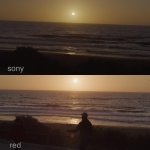
Attached image:

A7S3 in 10bit compressed S-log
vs
Res Gemini redcode raw 5:1?

Overall they were close in DR, with the Gemini either showing whisper of more retained highlights, or a bit more nuance in the shadows. While this beach shot was not scientific, it does show the quite impressive latitude on both sensors, and also the overall trend i saw from several setups from different days: the shadows or highlights gave less information depending on a half stop one way or another.

You can also see that tell tale Gemini trademark of a rose colored flared characteristic. sometimes it is nice and other times annoying. Some people say the Gemini skews magenta, but i feel Magenta has a bit more blue than the tint i saw, and so i go with the slightly more romantic rose colour descriptor, even if it is less accurate.

Once things get compressed for streaming, i don’t think there is much difference in latitude between the baby Sony and Red. So, it is a real tough call that is more about the project. i’d rather a good shooter with an A7S3, than a lousy one with a Gemini.


PS: i had the Canon R5 at the beach that day, and it fell behind the Sony and the Red a little more, from what i recall. That makes me wonder what to expect from the R5C, if C-log 2 wouldn’t offer any more latitude, then the R5 has everything the R5C will with c-log 3. But Canon colour science is nice, and the 8K raw may make nice work of that. so, here’s hoping.
 

Attachments

  • C44F9E89-C415-4695-A0E1-669EE7897713.jpeg
    C44F9E89-C415-4695-A0E1-669EE7897713.jpeg
    45.1 KB · Views: 0
Last edited:
people say you don’t need more dynamic range, but that Red and Sony sit on either side of 13stops DR, and yet, when i was at the beach, i could see a whole lot more into the shadows than the cameras could. So, let’s be generous and say the Gemini is 14stops, then i’d imagine to match my eyes in that scene it would need about 16stops usable DR. but might be nice to have more to fully capture the scene in order to trick the eye later when playback. as is now, it is obviously more crunchy than real life and has a video edge to it.
 
I think the contrast range should still come across when compressed online, no? maybe not all the shadow detail since that's where the compression does its "magic"... but definitely the highlights, and I think overall you probably benefit. I mean, all the high-end stuff I watch on streamers is still uber compressed
 
I think the contrast range should still come across when compressed online, no? maybe not all the shadow detail since that's where the compression does its "magic"... but definitely the highlights, and I think overall you probably benefit. I mean, all the high-end stuff I watch on streamers is still uber compressed
yes, but you can see how close they are. In this beach scene the Sony was every so slightly under exposed compare to the Red possibly, meaning it retained a less bright Sun, but got a smidge darker in the shadows.

Was the Red better and does it matter if you are splitting hairs? yes, but the subject matter has to really push the cameras to the extreme for that to play out.

So in the case of shiny white American Football helmets , hell yeah, it will matter. But if the shooter is lazy, and they constantly over or under expose with the Red by half a stop here or there, then you lose some of that advantage compared to someone more vigilant with a lesser camera. Everyone wants to compare things in a best case scenario, instead of preparing for the worst.
 
A7siii is no slouch in DR range due to its large photosites (similar to size of Alexa). Geminis photosites are about 2 microns smaller (still the largest of any RED sensor to date) but it has some other things going for it in the image pipeline (codec, 16-bit color, etc.) compared to the 10-bit A7siii image. IMO "useable DR" is only really tested when actively selecting highlights via color/shape mask (bringing them down) or mid-tones (lifting them up) to balance a scene such as the one presented (i.e. bright backlit sunset with dark foreground objects). Realistically without the option of external lighting you have to choose to expose for one or the other obviously (i.e. having detail in the sky but at the consequence of losing detail in your foreground subject). In a perfect scenario you typically would expose for the sun here and bring in lighting or bounce to bring up the exposure of your subject. I would be curious for you to selectively pull mid-tones and shadows up a few stops on both the Gemini and A7siii to see what level of chroma/luma noise is introduced and how both images fall apart. I would be willing to bet the A7siii IQ breaks up sooner in this type of comparison but when comparing the images right out of the gate they can appear to have similar levels of DR. This is actually true with most decent cameras out there even Alexa as you really don't start seeing the true DR potential until you really start playing heavy in post bringing things up or down. In reverse with Gemini on run-and gun situations I have found myself exposing the opposite (for talent) while selectively bringing the highlights down in post. This is where I found highlight recovery to be quite superb on Gemini for what it is and better than most (outside of Alexa). Alexa still has about 2-3 more stops of recoverable usable highlights in overexposure compared to any other camera on the market it is just a fact and I still don't know how Arri does it. Not only are the highlights more recoverable but the colors also stay much cleaner at the same time. In terms of clean shadows Gemini works great in low-light mode but at the cost of about 2 stops of headroom in the highlights. I find shadows to have noise very much the same with Gemini as compared to other cameras in standard mode when underexposing (just finer and more similar to film grain) than some others whose noise is more digital and blocky.
 
Last edited:
…. I would be willing to bet the A7siii breaks up much sooner in this type of comparison but when comparing the images right out of the gate they can appear to have similar levels of DR.

You’re right about that.

*but considering the price difference, let’s hope so. The difference on screen pays off, but i cannot stress how important the people behind the camera are to see tangible gains on some of these things. I see people exposing off their LCD by eyeball and they always under expose at night and over expose by day, even with the histogram and light meters right there!
 
Last edited:
… Geminis photosites are about 2 microns smaller (still the largest of any RED sensor to date) but it has some other things going for it in the image pipeline (codec, 16-bit color, etc.) compared to the 10-bit A7siii image.
BTW, are redcode files really 16bit?
 
I wonder how relevant a A7S like camera will be as most of us shift towards more over sampled 4k or higher resolutions in general. The A7S only really works with its advantages because of the nature of 4k video and lower MP on a sensor to manage that. 8k will put it on par with any other high MP camera and no longer have the advantages that made it unique. Even moving to 6k would have no advantages over every other FF camera on the market.

Cinema has moved beyond 4k for a long time now with 4.6k, 5k, 6k, 8k and now even 12k options.

Even in terms of print stills I watched a video recently that tested a A7S vs a 45MP stills camera for large poster size prints and in every single instance the 45MP was better even with a bit more noise.

I also recently watched a test between the R6 and A7S and each was more or less the same. The R6 is a 20 MP sensor proving that the A7S may no longer need to be just a 4k sensor camera. Sometimes those finer extra pixels actual help the perception of noise. Dynamic range isn't always a 1:1 relationship to sensor size either. Well the size of each photo site I mean. Canon has had large photo sites for years and they have some of the worse dynamic range on hybrid cameras. A Sony A7IV with 33MP sensor has better dynamic range than a 20MP R6 for example.

I really see a A7S type camera as not going much further from this point but thats just me.

Sensor SNR has gotten pretty good, even on smaller photosties, so in many cases the one with more resolution wins out.

DXO Mark actually rates the Canon R5 as having more DR than the Sony A7S3.


But i like the diversity in digital sensors. Design specs vary upon many different uses, rather than everything fitting into one scope. There is too much emphasis on resolution (for amd against) and it should come more down to what it allows one to do.

But i would hate to see us go from HD to 4K to 8K and then 12K without improving dynamic range options at lower price points. That is the absolute saddest part of the resolution wars.
 
Last edited:
Hoping to hear back from someone with an R5 that can see if Clog3 at iso400-800 has less DR than raw stills at iso50-100, or if DXO mark is relying heavily on downsample to give higher DR numbers, being generous, or if their DR numbers are anywhere near 14stops usable DR that we tend to talk about in video?
 
Having larger photosites only helps with DR at high ISOs, not at 100 or 200 or 800 or whatever the low base is. I've seen the dataplots. Maybe it was from lensrentals testing, I can't remember

The a7siii also seems to put its high base ISO higher than most cameras, which is simply a design choice. And that leaves it noisy between 3200 and 12800, whereas most cameras would have high base at 3200 so they can stay relatively clean all the way through 6400

I'm not sure I buy the argument that oversampled 4K is a necessity. Especially when you see how much is shot with Alexa LF or even Alexa classic. Clearly people above my pay grade don't prioritize resolution over DR and color....
 
Oversampling for HD is without a shadow of a doubt a necessity, but the argument becomes weaker for 4K.

ARRI was one of the first in the world to oversample its higher resolution 3.5K-ish ALEXA sensor or whatever it is for 2K which is why it looked so excellent.

Check out the original BMPCC for 1080p from a native 1080p sensor and you'll do a double-take.

totally.

HD/2K has always sat on the razor’s edge of illusion. That is why it is so brilliantly effecient. At the average viewing distance it just works, without calling attention to itself.

But for the same reason it is so perfect, I actually kind of hate it. :)
 
Oversampling for HD is without a shadow of a doubt a necessity, but the argument becomes weaker for 4K.

ARRI was one of the first in the world to oversample its higher resolution 3.5K-ish ALEXA sensor or whatever it is for 2K which is why it looked so excellent.

Check out the original BMPCC for 1080p from a native 1080p sensor and you'll do a double-take.

I totally agree. I'm just saying a lot of reviews and users seem to have shifted from 1:1 4k to oversampling being better in some way. I have always found 4k even at 1:1 from a sensor to be more than enough for any realistic viewing distance. The Pocket4k is 1:1 and its stunning. It just seems like everyone has moved beyond 4k already hence the push to 6k and 8k. Heck I even love the Canon R6 APS-C crop mode that is 1:1 3.4k upscaled to UHD. A tad softer but it still looks amazing in my opinion.

I'm speaking of how the industry seems to be going in general. It may get harder for Sony to market a A7S future model as the industry starts moving beyond 4k. I personally think thats silly but I'm already finding reviews that mention so and so camera looking more detailed than the Sony because of the over sampling. People start paying attention to that stuff and there is a clear quality advantage of the R5 and R6 4k video over the R and RP which are 1:1 crops. I think more users are going to start assuming thats the best way to go. Even if that is a biased opinion based on clever marketing from the manufacturers to sell more expensive cameras.

I will say from a stills perspective as well the A7S is a rather odd camera to invest in. I don't know many pro photographers that want to use such a low MP camera. Some already have an issue with the 20 MP on the R6. I can see the A7S getting much less popular as some film makers move away from hybrid to a true cinema camera and some move away from a 1:1 4k sensor thinking its the better way to go. Most users that want a A7S for its video have very little need for the stills part of the camera. We used hybrids for years because it was the only option. For my a hybrid means great at stills as well so the A7S is an odd duck.
 
I recall the 2009 discussions surrounding photography, and how many photographers talked of only ever needing 12megapixels.

Nikon D300 and D3 were often cited as the ideal resolution back then.

Here we are in video talking about 12MP being a good sweet spot for video too.
 
12 MPX (11-13, depending on film stock) is your basic 35mm 2-perf.

for me, 12mp is a nice effecient resolution for higher fidelity and better rendition of fine details. it has to be blown up pretty big to start seeing the steps in it, so i really enjoy it, and it is still not over kill for data maf processing. 8K is fun, but for now, it is reserved for special uses.

Technology can sometimes evolve all lopsided, and for photography and video, it is sad they went for reaolution first. but in a way, you could tell early on it was inevitable and we had to exhaust the resplutionwars to start getting more attention on the other aspects of image quality. the crazy thing is, so far there has been no end in sight for the resolution wars, it is absolute insanity!

we’vs gone from 12mp flagships to 50mp prosumer and our dynamic range numbers seem to have remained at 12stops since the F35. We’ve gone from iso800 being a touch noisy to iso20,000 being good. but we still can’t go from 12stops DR to 14 or 15! Every other aspect is doubling multiple times over, but we haven’t improve dynamic range hardly 10%

such a waste.
 
Back
Top