Chinese 2K RAW S35 Cinema Camera, 8000 dollars

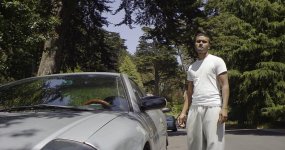
I_S0566_F0208_2048x1080_KineRAW-S35_DANCINEC_grade_1a_half_b.jpg

Here is another half size JPG taken from a 2048x1080 TIF (48bpp) made from the CinemaDNG (tm) frame recorded in the camera, if you would like to see the uncompressed original full size you can email me at: tempnulbox [at] yahoo [dot] com and ask for it with "DVXuser wants TIF frame" in the subject line.
 
This is very exciting.

Finally a camera that has a better design and all the bells and whistles you need for narrative and high end commercials for a great price.
Can't wait to get my hands on one of those and give it a test ride.

Dan, do you know if they plan to give it to some DPs, to shoot some demo footage for marketing, like I did with the Sony FS700?

Frank
 
Did he say that the sensor is 4k, but records or supersamples as 2k? My understanding of raw is that's not how it works, but that would be AWESOME if true. Dan can you confirm or deny this?
 
Did he say that the sensor is 4k, but records or supersamples as 2k? My understanding of raw is that's not how it works, but that would be AWESOME if true. Dan can you confirm or deny this?

4K sensor reduced to 2k image through pixel binning and then recorded at 2k.
 
This is very exciting.

Finally a camera that has a better design and all the bells and whistles you need for narrative and high end commercials for a great price.
Can't wait to get my hands on one of those and give it a test ride.

Dan, do you know if they plan to give it to some DPs, to shoot some demo footage for marketing, like I did with the Sony FS700?

Frank

My goodness....can it get any better??? I think the answer is yes, but I can't even share how excited I am.....EXCITING TIMES!!! $6K!!!! DANG!!!!
 
Some more graded KineRAW-S35 (tm) half size jpg

Some more graded KineRAW-S35 (tm) half size jpg

They have some people shooting in China. What happens for field testing outside China is up to them but you can let them know and send your reel maybe?

As for the 4K vs. 2K, I'm not sure what is public about such matters, but I can speak in general, Aaton (tm)'s 4K camera uses 4x SSD I think, you can check their web site, so if a camera maker had a 4K sensor and wanted to only record to one of today's SSD, fast though it may be, they could bin the 4K data down to 2K data to record it and end up with DCP resolution of 2048x1080 like the KineRAW-S35 (tm) has. You also gain in S/N ratio and maximum ISO when you bin, and if you had a custom designed OLPF like the KineRAW-S35 (tm) has, then you could get better results maybe than DSLR with regard to aliasing that have a OLPF not optimized for movie mode, perhaps.

Anyway, results speak better than specs about what a camera can do, so here are three half size jpg taken from some 2048x1080 shots I am grading in my "freeish" DI system that were de-Bayered in my free de-Bayer program DANCINEC.EXE (tm). The processing goes faster for the KineRAW-S35 (tm) footage than the KineRAW-S8p (tm) footage because the noise level is much lower from the large sensor so that is another advantage and value in the higher price.

If you want to see the original 2048x1080 48bpp TIF you can email me, I can only send one per email, but I can send more than one email if you are interested in seeing the full size image. The sharpness is adjustable in my de-Bayer processing, the full size are a but over sharp, but if you stand back like you would be in a movie theater 2.5x the image diagonal distant, they look good, if you transferred to 35mm you would loose some sharpness so it does not hurt much to be a little too sharp to start with, but you don't want a lot of halo so you need to adjust each shot depending on how good the focus was, what the lens resolution is, and the f/ stop used to optimize the results...
 

Attachments

  • I_S0575_F0139_2048x1080_KineRAW-S35_DANCINEC_grade_1a_half.jpg
    I_S0575_F0139_2048x1080_KineRAW-S35_DANCINEC_grade_1a_half.jpg
    47.2 KB · Views: 0
  • I_S0573_F0176_2048x1080_KineRAW-S35_DANCINEC_grade_1a_half.jpg
    I_S0573_F0176_2048x1080_KineRAW-S35_DANCINEC_grade_1a_half.jpg
    101.7 KB · Views: 0
  • I_S0572_F0116_2480x1080_KineRAW-S35_DANCINEC_grade_1a_half.jpg
    I_S0572_F0116_2480x1080_KineRAW-S35_DANCINEC_grade_1a_half.jpg
    112.5 KB · Views: 0
Love what im seeing there,, Any word of a shipping date and distributor and support worldwide?

vince*

You should email Kinefinity.com (sm) directly about the purchase options and shipping dates, they talk about that in the 2nd interview Dan Chung did you can look at that interview on Vimeo.
 
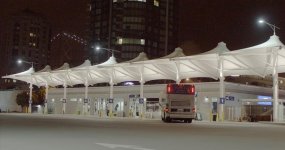
KineRAW-S35 (tm) night shot EI ISO 2560 144 degrees T/2.8 (from clip 336)

KineRAW-S35 (tm) night shot EI ISO 2560 144 degrees T/2.8 (from clip 336)

My Brother took me out a few days ago at 2am to shoot some night shots with a bit of fog and overcast.

The attached half size image was shot with an OCT-19 28mm f/1.2 T/1.5 at T/2.8 Russian lens using the OCT-19 to sub-PL adapter I made.

You can see the Bay Bridge in the background which was very dim at night in the fog (there was some light rain in the air). The bright areas are also well rendered.

You can also see inside the office where the lights are bright. The grade on this is brighter than it looked standing there.

The EI ISO rating of the "look" file used was 2560 but its an experimental color balance I was working on for night shooting with mixed color illumination and some shadow lift was made in grading as well as minor mid-tone white balance so the actual EI ISO might be higher if you were taking an incident light reading with a light meter in the open area behind the bus.

My Brother was 'stunned' by the results compared to our experience shooting 35mm color negative at night in some of the same locations, the Cineform (tm) is easy to use for shot review, you can record both mode and review the shots in 2K real time playback, then use the CinemaDNG for doing the DI with to use full de-noise on the original linear 12bit sensor data.

I am uploading the Cineform (tm) clip to Kinefinitty.com (sm) for this night shot test, along with many others. This frame is from my clip #336. The conversion to JPG and then this site re-compressing it again makes it look a lot less sharp than the 2048x1080 image is and makes the little noise look larger and lumper so take that into concideration, on transfer to 35mm move print the results should look quite good projected from the print made from the printing negative made from the uncompressed 2K TIF or DPX. I still need to look into the filter settings to see what improvements I can make (its too bad that uncompressed images cannot be shown here as the JPG makes a mess out of any image).


J1_336_S0828_EI_ISO_2560_KineRAW-S35_night_shot_test_I08_B000_half_size_X_WB_L_a.jpg
 
Last edited:
Well the exposed parts look decent. Thanks for keeping them rolling in. Are you seeing mostly luma noise, or chroma too?
 
Can't connect to the web site you mentioned Dan, but while i love the overall feel of the picture, I could see some strange line artifacts here.
Will be great to see some native raw image to be able to comment about the grain structure that has been said...

__________________________________________________________
Vincent Thomas
VFX Artist / Photograph & Creative Director
http://fr.linkedin.com/in/vincentthomas
http://www.stranger-than-paradise.book.fr/
 
Sorry about the JPG here it starts out like a 13MB TIF and ends up 64K JPG here.

I can read the black writing on the back of the bus on the 2K image.

I need to fiddle with the ratio of luma to chroma processing a bit more, I think I lightened it about 1.5 stops on the buildings in the background maybe I should filter it first then lighten it go get a better result.

There is no heavy chroma noise I can see at this EI ISO, when you go up to 81920 you see more of that kind of thing. It depends on what software you use to process the images and how much you sharpen to counter the fast lenses and OLPF blur, on my first try I have great detail, but some uniform grain, with additional adjustments the bus improved to the point were there was not much grain on it, the bridge in the background may be like -8 stops from the office lighting, I did not have a spot meter to check, if there is one good enough to see in that much darkness but that's my guess.

The building as ribbed siding, and the JPG seemed to react to the shadows the small lights on the side of the building made shadows in the siding made, they don't seem as bad in the half size BMP version of this image. JPEG blocks seem to be causing some extra aliasing maybe on the small parallel edges.
 
Last edited:
Can't connect to the web site you mentioned Dan,

Be sure to tell Kinefinity.com (sm) if you have problems downloading the Cineform (tm) sample files, those files range from about 150MB to maybe 900MB so you may take a day or more to download over a normal high speed connection as there are many router between you and their server.

If you tell them you are having problems downloading the samples, they may work on a solution for you.
 
Dan,

You can upload a full sized file to a photo server like Flickr and reference the URL from the insert picture menu to show better images.
 
Where are the samples file Dan ? Couldn't see any on Kinefinity.com

The links are on a previous page here on DVXuser you have to go back and use those links, as far as I know they do not have a download page, for what reason I don't know.

You can email them and ask for the links as well they can probably email them to you, you need to also download the right 3D-LUT to install into the Cineform (tm) program that controls LUT, its in the Cineform (tm) program folder after you install the Cineform (tm) codec.

Cineform (tm) is a quality codec used for movie DI it seems (to reduce disk space and speed workflow). Its not like H.264 that can make a total mess out of your images with block artifacts. But you need to use the link above for the Cineform (tm) codec and install it in your computer before the MOV will play, if you try to stream them you will probably not be able to, you need to download the clips to your harddrive then play them.

Since Cineform (tm) is a real time play back it does not have time for complex filters to de-noise the images or extract extra detail etc. To do additional processing in the DI you can shoot BOTH mode in the KineRAW-S35 (tm) then use the CinemaDNG (tm) frames for more complex processing, or export the Cineform (tm) as TIF or DPX frames and process those frames in additional software.

If you have any problems or questions you should write to Kinefinity.com (sm) and tell them as they cannot know about any issues with their web site if you do not tell them.
 
Dan,

You can upload a full sized file to a photo server like Flickr and reference the URL from the insert picture menu to show better images.

Thanks for the suggestion, but I don't think they would allow 48bpp TIF 2048x1080 frame images to be downloaded since browsers may not even be able to display those?

Showing compressed images of uncompressed frames made in an uncompressed camera will remain a problem since you cannot evaluate the image quality from degraded copies, as the example above demonstrates.

The best thing would be for Kinefinity.com (sm) to host the TIF frames if they want people to see them, the reason I have posted some half size JPG here is that people have asked what night shots look like, well, you get a vague idea, and I have more to do with the processing adjustments, when I get the video for Vimeo done, I will probably have some uncompressed frames used to make that video to share by email if someone is interested.

No computer monitor is going to display anything beyond 8x3 or 10x3 bit RGB values at best. But a full resolution 8 bit jpeg would be a noticeable improvement.
 
Back
Top