Cheap HD-SDI Cable Alternative?

Hello,

I am looking into filming/streaming some baseball and one of the main shots would be the center field shot. The cable run would be 350-500ft depending upon where the switcher would be set up. I have some nice L-3CFW 100' HD-SDI cameras I use for indoor streaming, but do not know if this pursuit supports the cost of a 500' "good" cable.

That said, does anybody know if there is a more affordable way to get an HD-SDI 1080p60 signal from center field? Not many wireless choices out there and it would be a pain as well. But I am aware that cheaper cable options might not get the signal that far or lose quality etc... Just posting to see if there is a cheaper way somebody has come across.

Edit: B&H has a 500' 1855A cable for $313. I just read in the questions section about this cable being limited to 215ft for HD-SDI and 149ft for 3G without amplifiers. Am I looking for the impossible here? I thought this type of cable/connection was well past HDMI and closer to 1000ft. Thanks.
 
Last edited:
Can't do a straight run from camera that long. You're looking at probably ~250'-300', max. You could get away with ~1,000' in SD.

Fiber is your best bet, for a run like that(and it's cheaper than it used to be). Next would be wireless. I can't speak to how robust they are, but some of the "Chinese" systems easily do 500' to 1000' feet, LOS, for reasonable money. It's not in stock, but B&H has a Vaxis 500' system with SDI and HDMI for $499, but take that with a grain of salt. Maybe renting is an option or looking on the used market for a system. People may have started dumping the older Teradek HD systems since they've started producing UHD/4K versions.
 
Thanks a lot. I came across a KanexPro wireless system that will send an HDMI input 330ft. That might be just enough. Price is around $350. They also have a CAT6 option for the same price that can go 500ft but you need to buy the cable as well. I think my view of SDI was stuck in the SD days!
 
Josh, my rule of thumb with wireless systems is whatever they are rated at for distance, divide that by 5, especially when reliability is a factor (as it would be for streaming). My systems are rated at 3300 feet line of sight but I'd be concerned about relying on them beyond 500 or 600 feet.

As far as cabling SDI, you would be fine with two 200 ft runs with an SDI DA or converter box in the middle (such as the Blackmagic SDI to HDMI converter, just looping the SDI straight through it and ignoring the HDMI output). These all have equalizers in them which will allow you longer cable runs. Most of these small converters are USB powerable, so a little USB powerbank could run it all day.
 
Thank you Charles. I agree, I am leery of the wireless signal. Thanks for the tip on the SDI converters. Would you go this route or the CAT6 route? I need to get to HDMI eventually.
 
HDMI over CAT6 will extend the run longer than just HDMI, but still not as much as you need it to be. I think your cheapest version is to do the two runs of SDI with the equalizer between. Fiber is a great option, but last time I priced it it still wasn't cost effective. BTW I have a couple of older SDI fiber kits that were pre 3G, if anyone would be interested...just the electronics, not the fiber itself. Would work up to but not including 1080 60p (so 1080 30/23.98 would be OK).
 
I can do 100m from camera to monitor, but my ten year old Blackmagic switchers will not lock, oddly - the cheap SDI to HDMI converter I have for the BM ATEM mini does? Two 60m cables won't work on either - so the often quoted 100m/300ft does seem to be about it!
 
Yeah, probably worth adding that BNC barrels of any kind (including right angle adaptors at the camera or receiving end) create signal loss, so best to avoid those with longer runs.
 
I just read Charles comment properly. I’ve got one of the BM SDI to hdmi devices and it never occurred to me the in and out were not a simple loop! Thanks.
 
I did not either but when I went to the BM website, they state it clearly that the device can help with long cable runs. Amazing how information not needed at the moment is often not recognized or retained!
 
That said, does anybody know if there is a more affordable way to get an HD-SDI 1080p60 signal from center field? Not many wireless choices out there and it would be a pain as well. But I am aware that cheaper cable options might not get the signal that far or lose quality etc... Just posting to see if there is a cheaper way somebody has come across.

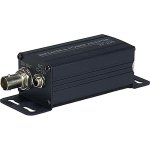
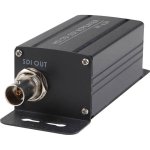
For exactly what you want to do, baseball. I've used the following and have done so for the last ten years or so. Also, used them on football. For shooting baseball and football and switching live on location they have been bulletproof. This was for TV and the requirement was for 1080i so can attest to these units running 1080i. I believe the later units will handle 1080p 50/60. You would need to confirm that. The units are the Datavideo powered and non-powered SDI reclocking repeaters. You run one powered unit near the switcher on a short SDI cable or wherever you are bringing the camera feed or feeds in. Or you can run one powered unit at the first 100-meter point. 100-meter runs are fine using good quality RG59 cable. You can get longer runs using RG6 but that is one thick heavy not very flexible cable. The cable bashers hated it. Stick to a good brand RG59 would be my advice. You then add another 100-meter cable and then insert a passive repeater at that 100-meter point. You can if required run up to eight of the passive repeaters daisy-chained every 100-meters. I've never gone that far but have daisy-chained six of the units. These units totally reclock the signal and output a full 1 volt on spec 3G SDI signal. All daisy-chained units draw power down the SDI from the first powered unit in the chain. I've often run the powered repeaters with D Tap cables off V Loc batteries as they can handle anything between 12 to 25 volts. Totally free from wet weather issues in the rain. Just playing it safe as I don't like to have mains power potential anywhere near or on wet grass. Wouldn't want to fry a cameraman!

Chris Young

https://www.bhphotovideo.com/c/prod..._HD_SD_SDI_Repeater_With_Dc.html?sts=pi&pim=Y

https://www.bhphotovideo.com/c/prod...o_VP_634_HD_SD_SDI_Repeater.html?sts=pi&pim=Y

Datavideo_vp_633.jpg
Datavideo_VP_634.jpg

Dry box
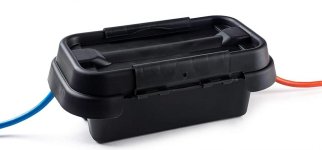
Socket box.jpg


If like us you have to shoot in all weather you need to keep the units dry. I found the perfect solution at our local DIY/hardware store. They are all-weather cable dry socket boxes. They have a soft rubber compression seal. You run your SDI cables in and out of your repeater and then drop the repeater into the dry box and snap the lid shut. The rubber seals mold around the SDI cables and seals off any moisture trying to get in. We have filmed in the pouring rain and never once had a moisture failure running this type of dry box. They cost me something like about $7 each at the time. They were designed to run power cable connections outdoors on building sites, farms, etc. See the picture below. You should be able to pick some up real easy I would imagine.
 
Last edited:
For exactly what you want to do, baseball. I've used the following and have done so for the last ten years or so. Also, used them on football. For shooting baseball and football and switching live on location they have been bulletproof. This was for TV and the requirement was for 1080i so can attest to these units running 1080i. I believe the later units will handle 1080p 50/60. You would need to confirm that. The units are the Datavideo powered and non-powered SDI reclocking repeaters. You run one powered unit near the switcher on a short SDI cable or wherever you are bringing the camera feed or feeds in. Or you can run one powered unit at the first 100-meter point. 100-meter runs are fine using good quality RG59 cable. You can get longer runs using RG6 but that is one thick heavy not very flexible cable. The cable bashers hated it. Stick to a good brand RG59 would be my advice. You then add another 100-meter cable and then insert a passive repeater at that 100-meter point. You can if required run up to eight of the passive repeaters daisy-chained every 100-meters. I've never gone that far but have daisy-chained six of the units. These units totally reclock the signal and output a full 1 volt on spec 3G SDI signal. All daisy-chained units draw power down the SDI from the first powered unit in the chain. I've often run the powered repeaters with D Tap cables off V Loc batteries as they can handle anything between 12 to 25 volts. Totally free from wet weather issues in the rain. Just playing it safe as I don't like to have mains power potential anywhere near or on wet grass. Wouldn't want to fry a cameraman!

Chris Young

https://www.bhphotovideo.com/c/prod..._HD_SD_SDI_Repeater_With_Dc.html?sts=pi&pim=Y

https://www.bhphotovideo.com/c/prod...o_VP_634_HD_SD_SDI_Repeater.html?sts=pi&pim=Y

View attachment 143183
View attachment 143184

Dry box
View attachment 143185


If like us you have to shoot in all weather you need to keep the units dry. I found the perfect solution at our local DIY/hardware store. They are all-weather cable dry socket boxes. They have a soft rubber compression seal. You run your SDI cables in and out of your repeater and then drop the repeater into the dry box and snap the lid shut. The rubber seals mold around the SDI cables and seals off any moisture trying to get in. We have filmed in the pouring rain and never once had a moisture failure running this type of dry box. They cost me something like about $7 each at the time. They were designed to run power cable connections outdoors on building sites, farms, etc. See the picture below. You should be able to pick some up real easy I would imagine.

This is 100% the proper way to do this. Absolutely bulletproof and not expensive.
 
Should have mentioned. When we have needed extremely long runs we have been using the Blackmagic Design Mini Converter Optical Fiber with LC optical fiber. For motor racing, these have proved invaluable. A couple of thousand meters? No problems. Simple and easy to use. Can't measure the signal loss on any scopes I've got. I haven't used the new models shown in the video below but have used the older 3G SDI extensively. Again powering them with a 12 volts regulated output off V Loc batteries. The new ones look like they can accept from 6-36 volts so you could power them with almost any power source. Again in wet weather run them in Dry Boxes at the camera positions. Worth the investment, if you require long-run SDI distribution. The only drawback from my POV is if you do damage a cable in the field you need to replace it as trying to repair/splice them on location can be a pain as it has to be done in cleanroom conditions and with great care. With SDI I carry a toolbox with a few SDI-rated BNC connectors and barrels and an RG59 cable stripper along with a BNC cable crimper. I can affect a repair in the field in a couple of minutes and know it's going to work.

Chris Young

 
Back
Top