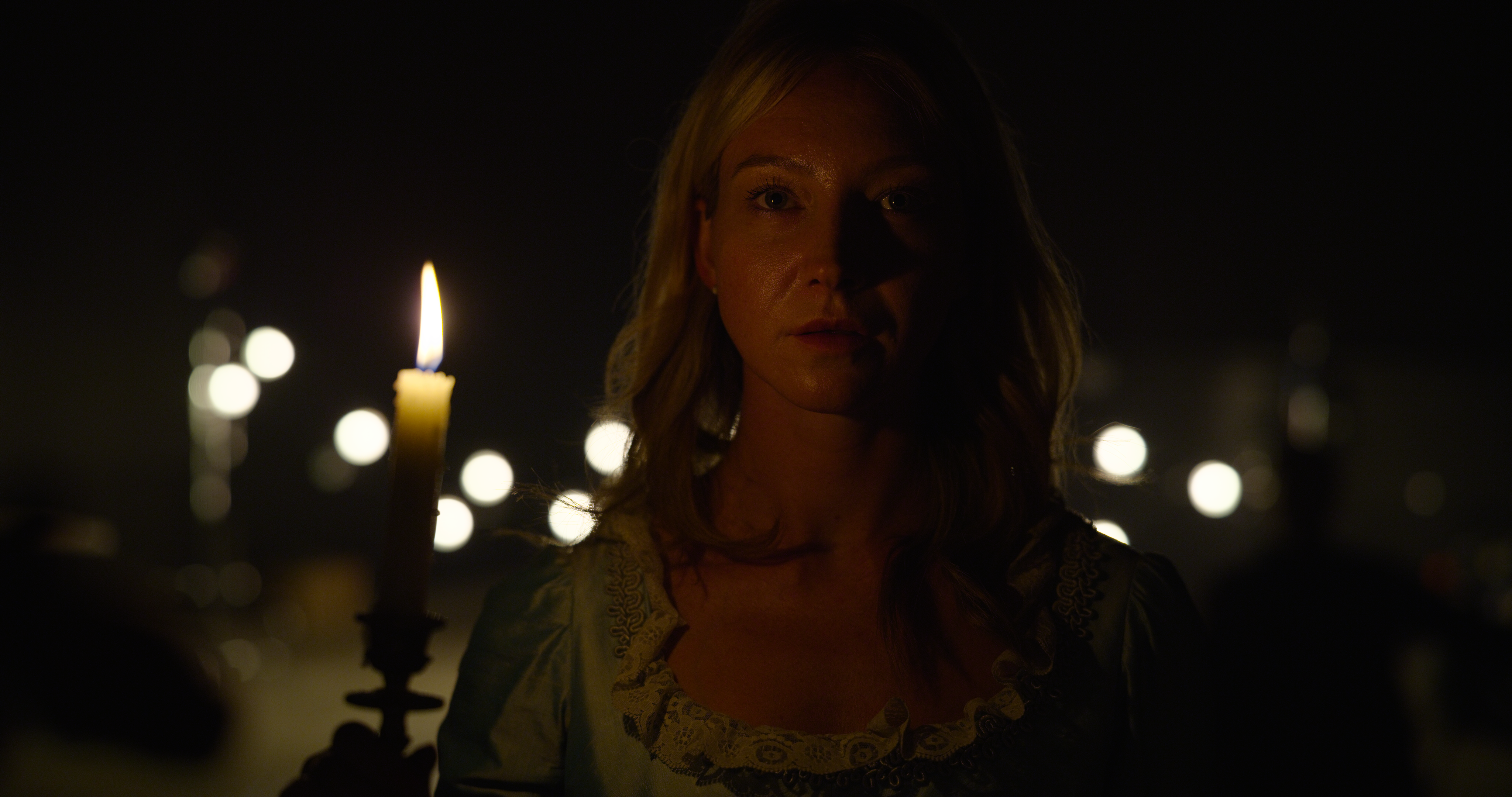
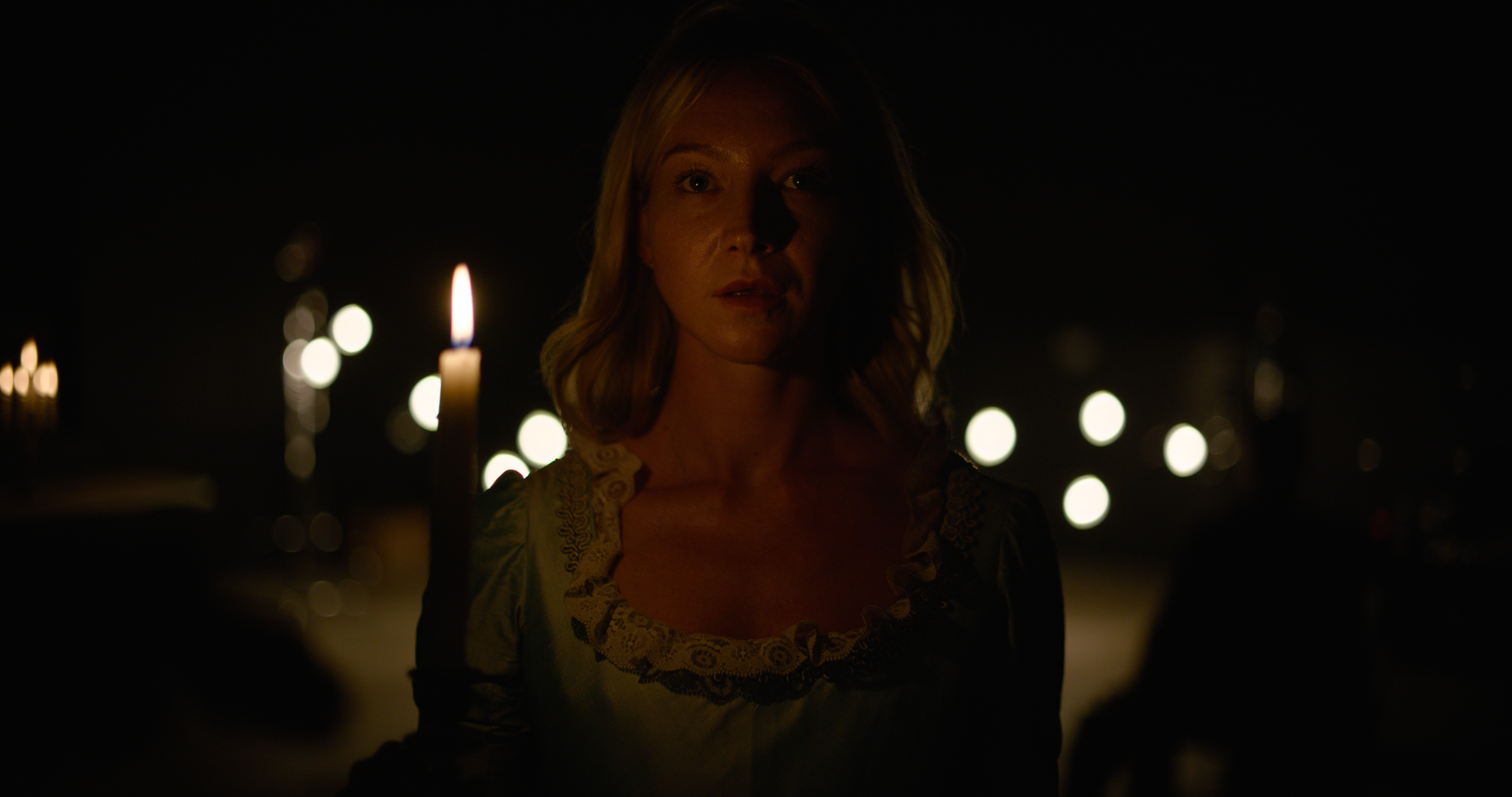
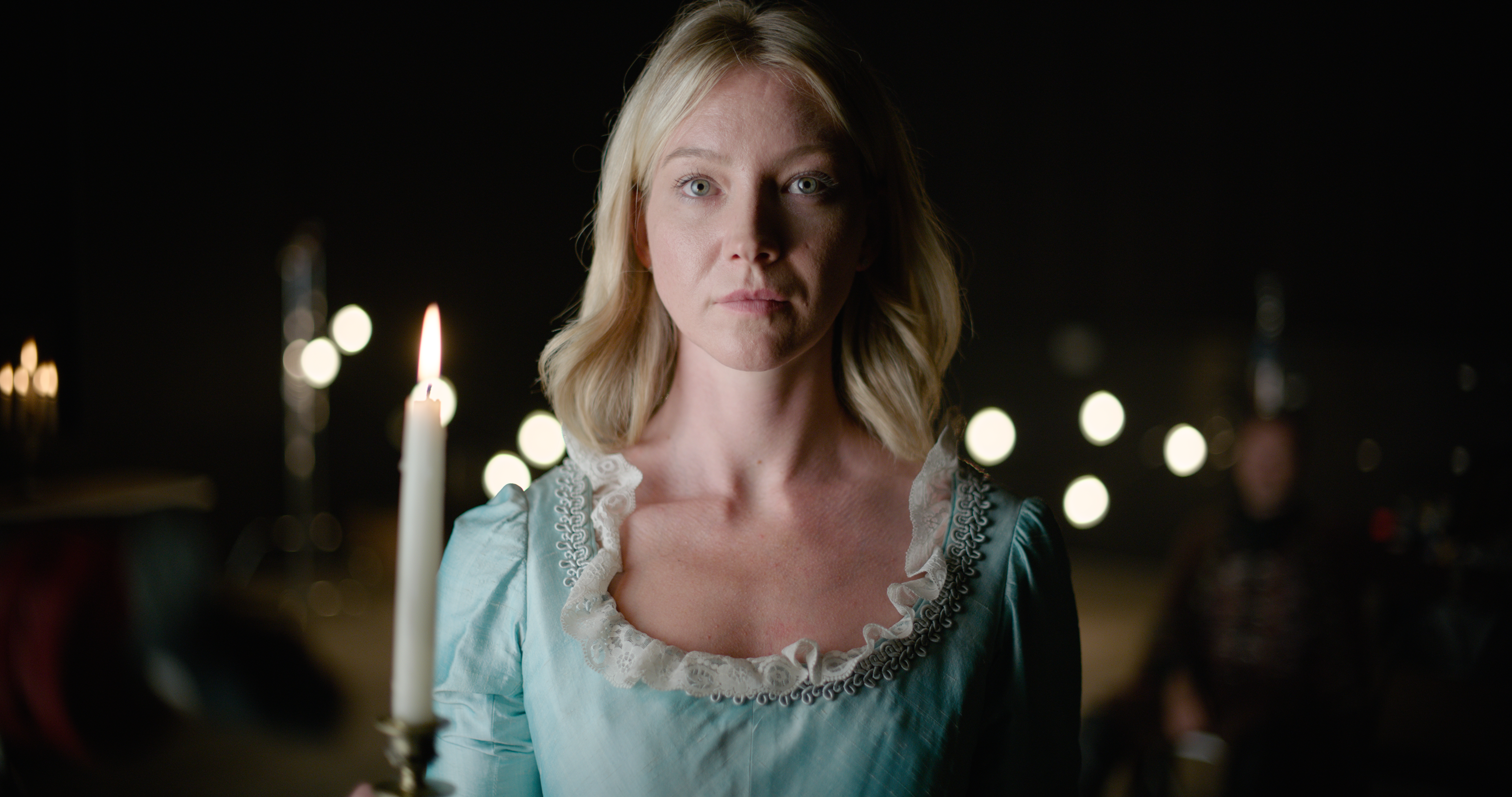
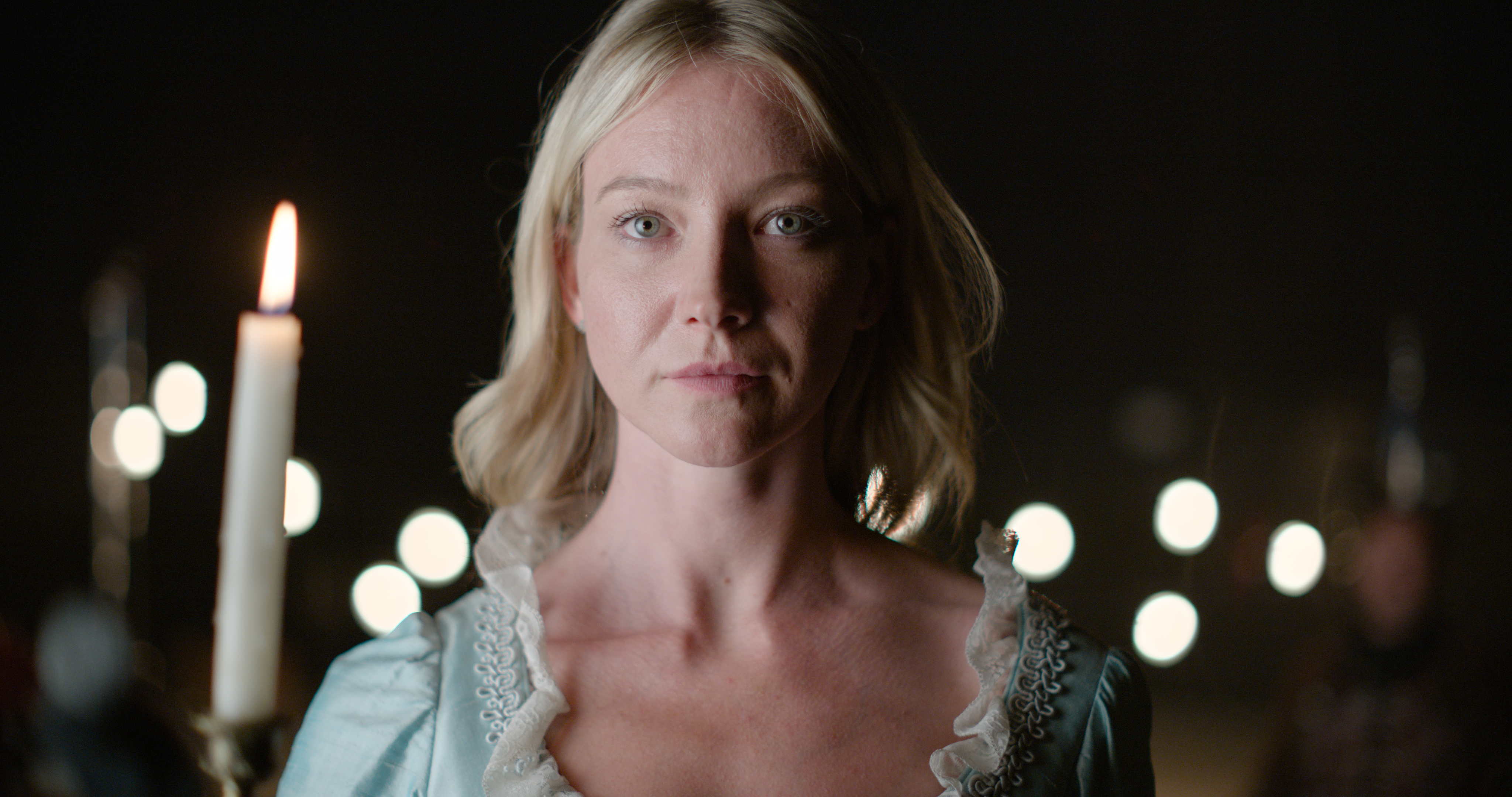
Can you pick the camera and lens ? Venice / DXL2 / Alexa 65 and lenses

Cooke S5's. At least you get speed with the weight and size.


Tested the S7's when we thought we were shooting larger format. They are big lenses. Heavy. Massive. They're intimidating to an actor !


Canon's primes are all over the place though. Some are 1.3, some are 1.5. some are 3.1. That's not cinema lenses in my view. I'd argue a qualification for cinema lenses is that the maximum aperture is the same across the majority of the focal lengths. Extra props if the focus gears and iris are all in the same place in space relative to the lens mount and the front size is more or less consistent as well.

So I'd argue they don't count really as cinema lenses. Yes they make some primes that cover larger 135ish size but they're still not really a cinema lens set.

Don't forget the venerable Zeiss compact primes (i own a full set). They too also cover these new larger formats and have the same issues. Some are 1.3, some are 2.1.

Having tested a little with Supremes I was super impressed by them. They aren't Master Primes just for a bigger image circle by any stretch.

Panavision also have some interesting faster primes, oddly in their vintage library.

JB
Ah, silly me to have not looked more closely at the Cooke S5's. Still catching up on some of the high end lenses so hadn't realized they had a faster S35 set.

Pardon my ignorance here (I'm not disagreeing as I've heard others say the same), but what is the disadvantage of having prime lenses that are invariably faster but don't all have the same maximum T-stop? To me it would seem more versatile and advantageous to have the capability of T/1.3 and T/1.5 with some CN-e primes rather than only being able to achieve a maximum of T/2 on say Cooke S4s or T/1.8 on Signature Primes. I mean, if you want consistency with the CN-e's you could just shoot everything across the lens range (aside from the 14mm) at T/1.5 or T/2.2 or whatever T-stop you choose that's not faster than the fastest lens in use; it's not like whenever you put a lens on it's stuck at wide open so you're then forced to shoot at different maximum T-stops each time you change lenses. So what's the disadvantage here of having more choice and flexibility?

As an example, the Signature Primes are T/1.8 but if they suddenly released an additional 35 and 50 Signature primes that were T/1.3 as stand alone lenses in addition to the T/1.8 ones being available, all else being equal (price, optics, etc.), why would you not go with the T/1.3 ones for the 35 and 50 over the T/1.8? You'd then have a lens set with varying maximum T-stops but more capability for those two lenses.

I'm confused by your saying you were super impressed by the Supremes but then seemed to contradict yourself by saying they aren't Master Primes which to me seems like an insult considering Master Primes are often considered a gold standard. Next date I'm on I'm going to tell the girl, "You're super hot but you're nothing compared to my ex." and see how she takes it.


Canon have always been laissez faire about this stuff. The CN-E zooms ramp down so much on their zooms as well. Even the ones that are constant iris....Aren't
I haven't noticed exposure ramping on my CN-e compact zooms (15.5-47 and 30-105). I believe I've noticed some ramping on the 18-80, and obviously the 17-120 goes from T/2.95 to T/3.5 from 90mm to 120mm.

I did notice the Angenuix EZ lens from T/2.8 to T/2 only seemed to increase in exposure by 1/3 a stop which left me suspect of it's T/2 claim which was one of its biggest selling points.
 
Last edited:
It’s not unusual to shoot a couple of different focal lengths at the same time. Doesn’t really work if the lenses are different maximum apertures.

My last show had three cameras full time.

Angenieux lenses don’t such ramp but they are not at all flat across the field. The wider zooms can be down by a couple of stops in the corners.

Supremes are not master primes. That was all. The comment (not by me) was as if Supremes are just master primes for a larger format sensor. They’re something else.

I didn’t choose the S5s or the SXT for this show.

JB
 
It’s not unusual to shoot a couple of different focal lengths at the same time. Doesn’t really work if the lenses are different maximum apertures.

My last show had three cameras full time.
I'm still confused. Why does that not work?

Let's compare. You're shooting a three camera shoot with Signature primes, shooting at T/1.8 on a 25 T/1.8, 47 T/1.8, and 95 T/1.8. In another case, you're shooting a three camera shoot with CN-e primes, shooting at T/1.8 on a 24 T/1.5, 50 T/1.3, and 85 T/1.3. Same T-stop of T/1.8 for all three shots whether you're on Signature primes or CN-e primes. What's the difference as far as T-stop? The CN-es have the capability of going wider aperture if desired, the Signatures cannot. How is having the option to go wider aperture a bad thing? If you want the different focal lengths to match, simply set them to the same aperture with the slowest lens being the limiting reagent. In the case of those three CN-e focal lengths, the widest you could go and have all three lenses match is T/1.5, while with the Signatures, it's a slower T/1.8.

Are you implying that the lenses won't match up in optical quality if they're set to different distances from wide open? As in, the 50 T/1.3 at T/1.8, approximately one stop from wide open, will have too much optical differences than the 24 T/1.5 at T/1.8 which is then approximately half a stop from wide open? The bokeh will be different?

Obviously different lenses have different levels of quality loss when shooting wide open and across other apertures. The Master primes are particularly known for having perhaps the closest fidelity in optical quality wide open compared to stopped down. I'd imagine the CN-es to not be in the same league in this regard. But really I'm just trying to understand what you're getting at with having an issues with a set of primes with mismatching T-stops when you can still just set them all to the same T-stop when filming.
 
Cooke S5's. At least you get speed with the weight and size.

Painful to do all that work then have a package forced on you without a say in it. That said, you seem have managed just fine with the SXT and S5s! :)

Did you have the SXT-W? I freakin love that camera - with all of the wireless gack built-in, it gives you the tidiest camera builds possible.

From the tests it sounds like you settled on the Alexa65, which lenses would you have chosen (if you'd been able to choose in the end)?
 
I'm still confused. Why does that not work?
.

If it works on your show mate, go for it. Everyone has their own way or thinking and working.

Let's compare. You're shooting a three camera shoot with Signature primes, shooting at T/1.8 on a 25 T/1.8, 47 T/1.8, and 95 T/1.8. In another case, you're shooting a three camera shoot with CN-e primes, shooting at T/1.8 on a 24 T/1.5, 50 T/1.3, and 85 T/1.3. Same T-stop of T/1.8 for all three shots whether you're on Signature primes or CN-e primes.

Exposures generally match on my set. Once i set the light level and the ratio I don't tend to change the exposure on the lens.

You start with with a single 50mm and you're lit and exposed to T1.3 because it looks awesome at that stop. And then the director asks you after two takes for a side profile at the same time and you also want a wide shot to show the whole room to leapfrog on the next setup.

But your exposure has been set for a T1.3 exposure base.

So you can...change the lighting...costs time, maybe does't match what you've already shot. Hard too when you've already shot two takes.

Or you could light your scenes to your slowest lens ?

I don't know about you but I don't want to light night scenes by candle light to a T3.1 or whatever lens, when I have 1.3's or whatever. Or use a zoom that has a different exposure at the wide end to the long end.

How would I ever be able to do a wide shot of a scene on a night exterior ? It forces me to always have to LIGHT to satisfy my SLOWEST lens.

You seem like an experienced guy. It's starting to feel like you're trolling. The throwaway P4k quip. Trying to make a point about mismatched primes. Do you happen to own some Canon CN'E's zooms or primes by any chance because you're talking like an owner defending a choice you've already made. That's fine if you do, I'm just talking about the way I think about and use lenses.

You're trying to convince me to use a lens set I have zero interest in using 99% of the time because if they don't have matched stopes across the board then it's a pain in the arse on set to have to deal with it. When you're shooting 6-9 or more mins of narrative screen time a day, I don't want to have to relight a shot for a single lens, and I don't want to have to light for my slowest stop. I don't want to have to even think about lighting for different lenses. Don't think it's too hard to understand, but if you have a different process that means you'd always account for those problems then you won't have an issue I'm sure.

On your show, if you love those lenses enough to put up with them not being matched then you go right ahead.

But you're not seeing a lot of CN-E on narrative drama are you ? Like anywhere. I think SIMGA or TOKINA VISTA's probably get more of a run. Not because they're "better" lenses.....but because the workflow is easier....better....

It doesn't make a lot of sense to have mismatched apertures on cinema lenses. You can make it work, you could work around it, but it's not like CN-E offer me anything I can't get elsewhere that's better...in MY view.

Here's a night interior scene that is keyed and lit mostly only with candle light. There's some skypanels outside the windows on frame right, with Cyan 15 at about 15% from 30" away.

Even half a stop on this shot makes a big difference (check the noise in the near blacks)

This is a straight out of camera frame grab, no grade.

TG1.jpg


Here's a shot from a DAY interior scene. It's lit by multiple 10Ks hitting the curtains you see on the wall to the left, but dimmed a bit. There's a bit of direct 10K bleeding though the curtains and hitting the wall behind.

L422781014.jpg

You can see the candle light from several double wicked candles is lighting HIS face on the left. That's all there is. Her face is more or less KEY'd from the 10K curtains that are 20 ' away and she's FILLED by the candle light on the side of her face close to camera.

At that light level, I'd be shooting this at 1.3. I could put a slower lens on there but then I'd be trying to drag the histogram back up. I could increase the level on the curtains maybe, but the candle light will still be the same. So I'd have to put in an artificial candle light to keep the same lighting ratios, all just to light for my slowest lens, which I may, or may not use. On a night exterior this problem would be even worse.

JB
 
Painful to do all that work then have a package forced on you without a say in it. That said, you seem have managed just fine with the SXT and S5s! :)

Did you have the SXT-W? I freakin love that camera - with all of the wireless gack built-in, it gives you the tidiest camera builds possible.

From the tests it sounds like you settled on the Alexa65, which lenses would you have chosen (if you'd been able to choose in the end)?

I liked the DNA on the A65 and I also really love the Primo 70's. It was disappointing to not be able to go with what we tested and liked. I also really liked the Venice as well and I think DXL has it's place too. At least you guys get to see some of the tests.

We had SXT. The W is a bit too locked in. Sometimes we have to use other systems (country dependent) and some of the estates we have needed more powerful wireless than what you get from the W in terms of range. Old buildings with 8 foot walls.

Many of the assistants also bring their own miox of TX and RX as well, it's a package deal. Also we had 4 bodies, to be able to use three at any one time. We can simply switch the TX on a the A body to the steadicam body and then everyone has the same receivers and pairing for all the village. Each camera TX has three RX units that are paired. We can't be re-pairing RX for the Focus puller switching bodies. We needed to be more agile. Having the TX independent means you can chance modes very quickly. So you can go to steadicam and you just take the "A" TX over to it and it becomes the A body for that shot. Or to a remote head. Or to a G2 body that's hand held and I want to work with The A focus puller. Makes everything faster.

JB
 
Looks very pretty. Barry Lyndon eat your heart out.

I thought having a consistent maximum aperture across focal lengths was a standard demand of narrative cinematography.

Looks like you're getting into territory where your lighting design demands accommodating relatively low light levels. Exactly the type of thing I want to have clean high ISOs for (although obviously they would never be as clean as the low native ISO). Doesn't look like you had to compromise your ISO by much if at all, though. Looks great.
 
I'm not trying to troll; I'm trying to understand. Your comparisons are unfair because you're comparing matched T/1.3 lenses that cost significantly more than CN-e's to CN-e's which are T/1.3 at their fastest, but then have other slower lenses as well. A more fair comparison I feel would be Cooke S4 Minis which are T/2.8 across the range. Based on your arguments of the importance of uniform T-stops seemingly regardless of how slow the lens set is, you'd prefer the T-stop of these rather slow T/2.8 primes over the CN-e primes of which six out of seven in the set are faster than the S4 Minis. And furthering that, if your style of shooting does not require an extra wide (14mm) and extra tight (135mm), your range of CN-es is now 20mm-85mm with the slowest T-stop in that range being T/1.5, which is significantly faster than the S4 Minis. Even the 135 T/2.2 is almost a stop faster than the S4 Mini. And when you consider the widest S4 Mini available is 18mm at T/2.8 which is really not that much wider than the CN-e 20mm which is T/1.5.

Just to be clear I'm speaking purely from a speed perspective. Obviously Cookes have various advantages and disadvantages in terms of look and optics compared to CN-es.

Yeah, I own four Canon CN-e zooms and six Canon CN-e primes, but I'm not trying to defend them because I consider them what they are, mid range and not high end cinema lenses. Lenses I could afford but not my first choice if money was no object. CN-e primes were used on Netflix's big budget Altered Carbon, but that's about it, and the compact zooms on Homeland, but yeah, far from popular for high end scripted work. I'm not suggesting you use them because clearly you have access to better lenses. I recently bought a five lens set of Arri Ultra Primes with their matching T/1.9 aperture. Now, if I was shooting a scene and wanted to shoot at T/1.5, I'd have access to the four CN-e focal lengths that cover that T-stop range (24, 35, 50, 85), which is a wide enough focal range to do a lot of work (consider Deakins who generally shoots in the 24mm-35mm range for Super35). Granted, the Ultras are better lenses in most ways, but if you want T/1.5, they simply can't do that. And yeah, there are Master Primes at T/1.3, but I don't own those, plus they're larger and heavier than Ultas, and don't cover full frame like CN-e's do.

I can see your point about CN-es being slow lenses if you insist on using the 14mm T/3.1 and then needing to shoot all other lenses at T/3.1, but taking that lens and perhaps the 135 out of the equation, and you've now got a T/1.5 lens set which is the faster than any of the high end full frame offerings such as the Signature Primes, Cooke S7s, Angenieux, etc. Again, clearly the optics and other factors of the high end lenses give them the advantage in most cases, but speaking purely in terms of speed, I feel the Canon's have the edge there, uniform or not, particularly if you're not needing to use the two slower focal lengths on the wide and tight end of the spectrum.

It would be one thing if you had just said, "I like fast uniformly T/1.3 lenses," and I would have agreed and thought, "Yeah, that sounds great." But your emphasis on the lenses being a matched T-stop across the range as seemingly being more important than actually being mostly fast lenses, is what confused me. But perhaps I misread what you were saying which was essentially, "I like fast uniformly T/1.3 lenses."


Another factor to consider is if one's style is to not shoot wide open. Obviously if you're lighting heavily with candlelight that will affect the T-stop you'd need to shoot at, but that's also rather project specific. Quoting Roger Deakins, "I like shooting at around 2 to 2.5 for interiors. For exteriors it will vary depending on the kind of weather. I like shooting sunlight at a deep stop, more like an 8.0 or 11.0. I have to say that I do not ever fanatically stick to one stop for a scene even less for an entire film. I will light a scene and it will be consistently around 2.5 or 2.8 as that is how I have developed my eye, I suppose, but it just happens like that rather than being 'calculated'."

Now consider if an entire movie is shot outdoors in the day time, and how that will affect the possibly shooting at a higher T-stop. And now, how important is that fast matching lens set. Not everyone needs T/1.3, and plenty of big budget movies and shows have been shot on slower lenses.
 
Last edited:
I don’t think you get it Eric.

My last show before was with Summicrons. All are T2.

So that’s what I light for.

Having a mismatch, no matter what, is a pain. You can’t shoot different focal lengths on the same scene without having to account for each lens.

This is 101.

JB
 
You can’t shoot different focal lengths on the same scene without having to account for each lens.
But you don't need to account for the lenses in that set that you're not using. Based on your logic the Signature Primes would have to all be shot at T/2.8 since the 280mm Signature prime is a T/2.8 lens, the 200mm is T/2.5, while the rest are T/1.8. The Cooke S7 90mm Macro is T/2.5 so while the rest of the Cooke S7's are T/2 you'd now need to rate the entire lens set to T/2.5.

I guess the point I'm making is that if you don't need the slower lenses in a lens set for a shoot (or are not shooting at fast apertures in general), then it's irrelevant that they're slower and you can then light for the fastest lenses in the set that you're actually planning to use. That's all.


I believe Run&Gun got the Sigma 14mm T/2 to go with his CN-e primes, said they have matched well, and that now brings up the speed of his set of primes overall. The Sigma cinema primes have been said to have breathing issues and also have no coating or optical upgrades compared to their still glass counterparts, so I feel Run&Gun's approach works well for his set rather than say getting a full set of Sigma cinema primes.
 
Yeah, I got it now. Thanks.

And great work, by the way. Believe I had seen the trailer before seeing this topic and thought it looked interesting. I liked The Favourite.
 
For the sake of putting these three in a more similar ballpark so we're not bothered by different attributes of different processing pipelines, I processed these all through Arri's LUT -- the Arri clips natively, of course, and the DXL2/Venice clips with appropriate color space transforms prior to the Arri LUT. Each pair of screenshots (one dark candlelight and one bright 3200k blast) has just exposure and white balance changes to them to match to the Arri clips as closely as I can. That is, each pair of screenshots has the same correction applied, no specific corrections were made for different portions of the same clip. No other sorts of corrections were applied, either.

DXL2 & Primo 70s


Alexa 65 & Vegas


Venice & H series


Of course, these aren't sensor-based profile corrections, they're merely color space math. So we will see some differences between the three. But I think that by processing them this way, we can look closer at what the actual underlying differences are.

Each is clickable for a 4K PNG copy.
 
For the sake of putting these three in a more similar ballpark so we're not bothered by different attributes of different processing pipelines, I processed these all through Arri's LUT -- the Arri clips natively, of course, and the DXL2/Venice clips with appropriate color space transforms prior to the Arri LUT. Each pair of screenshots (one dark candlelight and one bright 3200k blast) has just exposure and white balance changes to them to match to the Arri clips as closely as I can. That is, each pair of screenshots has the same correction applied, no specific corrections were made for different portions of the same clip. No other sorts of corrections were applied, either.00000
Of course, these aren't sensor-based profile corrections, they're merely color space math. So we will see some differences between the three. But I think that by processing them this way, we can look closer at what the actual underlying differences are.

Each is clickable for a 4K PNG copy.


These are pretty great! I still prefer the default Arri look. But the Red and Venice show a lot of potential for more technical users.

In some ways, the Monster and Venice seniors give "better" looks. If someone prefers cleaners shadows, then the Monstrous gives that at default. If one prefers the tea - dyed look then the Venice gives that at default. But only the Alexa give that top end finesse to the highlights, sooc, imho. it is just an aesthetic choice. and one I would consider seriously for candle light scenes.
 
Last edited:
Hi John, since you have experience with the ursa and I want to buy a 4K camera which is more practical than my big camera, I wanted to talk to you about it. I will not sell F35 because no camera makes an image like it. But I want a cheap 4K camera to add to my set. But it must not only be 4K. I want more practical too. So much smaller, much lighter, built in ND etc. I was considering either fs700+7Q or C500 MKI +7Q or atomos. In this price range. Don't want to spend more. But maybe ursa mini could also fit. So I'm wondering about the ursa.

You used ursa in demanding pro situations and with the alexa. How you found the quality difference between alexa and ursa to match? In low light alexa is king and ursa has vertical lines if not enough light. Also not as good as alexa in low light. I guess you probably had full control of lighting and in this case any camera looks good. But you found the quality difference hard to hide or match? The 2 stops more in DR from Alexa is not apparent? Could you point to a clip of the show online where alexa and ursa intercut? Would be interesting. Also interesting to know if the ursas last long on a set. I broke a blackmagic camera after 4 days of shooting but the alexa was full of deep scratches and still going. Main things I worry about ursa is ISO and it being robust enough. This is a camera that should do the things my F35 can't. So be smaller and lighter, have built in ND, be more practical, be better in low light and be 4K. Or am I better with FS700+7Q or C500+atomos? Thanks.
 
FWIW, the Alexa cannot compete with any modern cinema camera in low-light past 800.

The URSA has various models. The FPN or the horizontal lines (something different) applied mostly to the 4K sensor found in the BMPC, URSA and URSA Mini 4K. The one John uses is the 4.6K model, which may have it at 3200 or even 1600 (quality-control), but it's not as bad as the others.


I think it was the 4.6K G2 or maybe G1. But it was the 4.6K with the vertical lines. Saw it on cinema 5D review. They give it 12 stops of DR too. So quite bellow Alexa. But the quality control issue. How real is it? Because I would probably buy used one. So no warranty. Ursa mini pro at least as ND is must.
 
Back
Top