DOC: Butte Creek: Beyond the Frontier

Hi Everyone,

I've posted here in the past, but it has been a very, very long time. I was honestly surprised that my login still worked. But, I'm about to embark on a feature documentary project and I thought it might be nice to connect with others who have done, or are doing, similar kinds of work.

The film I'm doing will follow two elementary-age campers, and two teenage staffers, at an old-west-themed summer camp. The campers will face unknown challenges as they transition from their digital lifestyles to life as it was in the 19th century. Similarly, the young staff members who are charged with the camp's operations will face their own obstacles as they take on enormous responsibilities.

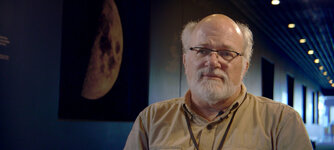
For both campers and staff, some of the challenges they are faced with will seem impossible for them. But, at least for the staff, as part of their training, they are inspired by the Apollo program; The concept of putting a man on the moon seemed impossible, but it was a challenge that we met as a nation. Staff and campers alike will be facing their own personal moon shots at camp, and at the end of the summer will leave with a new confidence in their abilities to conquer the impossible.

In telling the stories of these young people, and the interwoven story of the Apollo program in which they draw inspiration from, the film film explores the deeper concept of the American national identity. What does it mean to be an American, especially when we seem to be so divided? Is the spirit of America to be found in the pioneering lifestyle of the 1800's, in our greatest scientific and technological accomplishments, or in our young people as they begin to forge our future? Or, are our divisions simply too great?

The little funding the film has is going to things like food, lodging, licensing, insurance, etc. Therefore, the gear I'll be filming on I'm sure will be laughable to some. The primary camera we'll be shooting interviews and cinematic B-roll with is an original Canon C100, paired with a Atomos Ninja Blade recorder and will use anamorphic lenses for a 2.35 aspect ratio. Audio will be dual system, with the Zoom F4 as our primary recorder. For run-and-gun shooting, when there isn't time to set up the C100 kit, we'll have a Panasonic UX90 available. Finally, we'll also be using a DJI Pocket Osmo 3 for additional b-roll shots. Both the UX90 and Pocket Osmo will be recording in UHD/4K and scaled and cropped to fit the 2.35 aspect ratio of the anamorphically shot C100 footage.

A little bit about my background- I worked in broadcast TV news for over a decade, most of that time as a camera person, before going full-time freelance. For the first few years as a full time freelancer I did pretty much any job that would pay, which included some reality TV, a few corporate shoots, and some other random gigs. Eventually, I started my own production company that specializes in live multi-camera production and live streaming. While I've done documentary type work before (I even have a nice little pile of awards) it has been several years as almost everything I've done recently has been live production.
 
Hi Everyone,

I've posted here in the past, but it has been a very, very long time. I was honestly surprised that my login still worked. But, I'm about to embark on a feature documentary project and I thought it might be nice to connect with others who have done, or are doing, similar kinds of work.

The film I'm doing will follow two elementary-age campers, and two teenage staffers, at an old-west-themed summer camp. The campers will face unknown challenges as they transition from their digital lifestyles to life as it was in the 19th century. Similarly, the young staff members who are charged with the camp's operations will face their own obstacles as they take on enormous responsibilities.

For both campers and staff, some of the challenges they are faced with will seem impossible for them. But, at least for the staff, as part of their training, they are inspired by the Apollo program; The concept of putting a man on the moon seemed impossible, but it was a challenge that we met as a nation. Staff and campers alike will be facing their own personal moon shots at camp, and at the end of the summer will leave with a new confidence in their abilities to conquer the impossible.

In telling the stories of these young people, and the interwoven story of the Apollo program in which they draw inspiration from, the film film explores the deeper concept of the American national identity. What does it mean to be an American, especially when we seem to be so divided? Is the spirit of America to be found in the pioneering lifestyle of the 1800's, in our greatest scientific and technological accomplishments, or in our young people as they begin to forge our future? Or, are our divisions simply too great?

The little funding the film has is going to things like food, lodging, licensing, insurance, etc. Therefore, the gear I'll be filming on I'm sure will be laughable to some. The primary camera we'll be shooting interviews and cinematic B-roll with is an original Canon C100, paired with a Atomos Ninja Blade recorder and will use anamorphic lenses for a 2.35 aspect ratio. Audio will be dual system, with the Zoom F4 as our primary recorder. For run-and-gun shooting, when there isn't time to set up the C100 kit, we'll have a Panasonic UX90 available. Finally, we'll also be using a DJI Pocket Osmo 3 for additional b-roll shots. Both the UX90 and Pocket Osmo will be recording in UHD/4K and scaled and cropped to fit the 2.35 aspect ratio of the anamorphically shot C100 footage.

A little bit about my background- I worked in broadcast TV news for over a decade, most of that time as a camera person, before going full-time freelance. For the first few years as a full time freelancer I did pretty much any job that would pay, which included some reality TV, a few corporate shoots, and some other random gigs. Eventually, I started my own production company that specializes in live multi-camera production and live streaming. While I've done documentary type work before (I even have a nice little pile of awards) it has been several years as almost everything I've done recently has been live production.
Adam, if you had posted earlier I would have been happy to chip in (GoFundme or similar). The questions you are bringing up are being asked outside the U.S. as well.

I only had the C100 MKII back in the day, so I am not sure what the ergonomics of the MKI are like. The use of an anamorphic lens in a documentary sounds like a brave choice to me, but hopefully your subjects aren't running around too much.
 
The little funding the film has is going to things like food, lodging, licensing, insurance, etc. Therefore, the gear I'll be filming on I'm sure will be laughable to some.

Sounds like you have your priorities straight! I think that this sounds like a strong and potentially very interesting concept for a documentary; one of the best I've heard in recent times.

Does your C100 have the original DPAF upgrade? Though it is limited to the center of the screen, I used it for years on the Mk1. It was a real shot-getter for documentary work for the five years that I owned that camera (actually, two of them). I currently have the C70 and I actually miss that one center-focus mode. The C70 has the same thing available, but I'm convinced that it's not as confident.

Of course, none of this will work with your anamorphic lenses. But it's something to think about, since your other cameras will be spherical.

Another thing to consider is that the original C100 is old enough at this point that the internal batteries are starting to fail, which means that you have to dial in all of your settings (or load them from an SD card) every time you boot the camera. It's worth mentioning because I wouldn't want this to happen during your shoot. So far, I don't think anyone has figured out how to replace the batteries themselves, so you'd have to send the camera in to Canon.
 
Welcome Adam. Or should it be welcome back? 4 posts in 17 years. That may be a record.
Woohoo! I've always wanted to set a record for something.

Still, this isn't quite as bad as my novel. I started toying with the idea in 2000 but didn't finish it until 2023, so thats 23 years- Shameless self promoting link to my novel on Amazon

Adam, if you had posted earlier I would have been happy to chip in (GoFundme or similar).
I do have an active IndieGoGo campaign right now right now. Even just a $5 donation will get coffee for the crew and give us more energy to extend our shooting days. $80 is another day we can spend filming on location. IndieGoGo campaign

I only had the C100 MKII back in the day, so I am not sure what the ergonomics of the MKI are like.
Personally, I think the ergonomics of the original C100 are a bit better than the MKII, but with the Atomos Ninja and bulky anamorphic lens on it, the ergonomics aren't much of a consideration.

The use of an anamorphic lens in a documentary sounds like a brave choice to me, but hopefully your subjects aren't running around too much.
Unfortunately, my subjects will be running around a lot. I have two energetic children who will be running around at camp, and two teenagers who will be racing around on horseback. This is why I also plan on using the Panasonic UX90 camcorder and the Pocket Osmo 3. The C100 with the anamorphic primes will mostly be used for sit down interviews with careful lighting and beauty shots of the camp property. But when it comes to documenting the activities our subjects are engaging in at the camp and needing to keep up with them and follow them, I don't think that will work well with trying to shoot on the anamorphic lenses.

I think that this sounds like a strong and potentially very interesting concept for a documentary; one of the best I've heard in recent times.
Thank you! I wanted to do a project that was inspiring. I'm a huge fan of documentaries, but so many of them highlight some kind of injustice or document some tragic story, and while I realize these are important subjects, I wanted to do something uplifting and inspiring. My goal is for viewers of my film to walk away feeling hopeful and motivated. On top of that, I wanted to do something that felt epic and absolutely gorgeous.

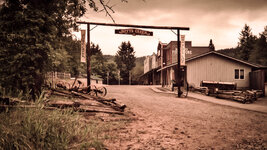
The Butte Creek Scout Camp, where most of the film is taking place, isn't just a summer camp. It is the largest horse ranch west of the Mississippi river, home to a heard of 85 horses and covers an area of land larger than both Disneyland and Disney's California Adventure combined. Nestled in the foothills of the Cascade Mountains in rural Oregon, the ranch is stunningly beautiful. It has open meadows, dense forests, lush creeks, and a small lake. It is its own community, mirroring an early pioneer community of the 19th century. It has numerous homesteads, and a central township that features a general store, places to eat, and other critical services.

Stepping onto Main Street seemed to transport Elizabeth back in time. The road, a mix of dirt and gravel, stretched ahead, flanked by buildings reminiscent of a time when cowboys and outlaws roamed the Wild West. Yet, these structures gleamed with newness, their radiant hues dancing in the golden embrace of the morning sun. Meticulously crafted signs graced each building — the grandest declared its identity as a saloon and hotel, while others proudly announced an apothecary, a sheriff's office, a general store, and others that she couldn’t quite make out from where she was standing.

At the street's entrance, a magnificent wooden arch welcomed visitors to 'Butte Creek'. And as Elizabeth's eyes trailed down the length of Main Street, they met a serene backdrop of dense forests cascading over rolling hills, all leading to majestic, snow-draped peaks merging with the heavens.

The sheer wonder of it all seized her. This wasn't just a summer camp; it was a moment suspended in time, an exquisite tapestry of fantasy and reality. Overwhelmed, Elizabeth found herself rooted to the spot, her gaze unblinking, mouth slightly ajar, as she drank in the enchantment around her.

Does your C100 have the original DPAF upgrade? Though it is limited to the center of the screen, I used it for years on the Mk1. It was a real shot-getter for documentary work for the five years that I owned that camera (actually, two of them).
It does. But as you noted, this doesn't work with my anamorphic lenses. I don't mind though. With my background in TV news, I was accustomed to shooting on ENG shoulder cameras with fully manual ENG lenses. I know that modern autofocus can be incredible, but I just can't bring myself to trust it. I don't plan on doing that much run-and-gun stuff with the C100, though. Most of the fast paced shooting where I'll be following the subjects will be with the UX90 and Pocket Osmo.

Another thing to consider is that the original C100 is old enough at this point that the internal batteries are starting to fail, which means that you have to dial in all of your settings (or load them from an SD card) every time you boot the camera. It's worth mentioning because I wouldn't want this to happen during your shoot.
Thank you for the heads up! I have not yet experienced this personally, but I will make sure to save my settings to an SD card so that I can be prepared. My C100 was one of the last sold by B&H. It was less than a week after I bought mine that the camera was then out of stock and never came back.
 
The Butte Creek Scout Camp, where most of the film is taking place, isn't just a summer camp.

That's only an hour away from me. I got married in Silver Falls, just south of there. Beautiful area. I'd be happy to do a day of pro-bono work if you have some flexibility on the date. My portfolio site is in my signature.
 
That's only an hour away from me. I got married in Silver Falls, just south of there. Beautiful area. I'd be happy to do a day of pro-bono work if you have some flexibility on the date. My portfolio site is in my signature.
Hello neighbor! I grew up just outside of Salem.

Please feel free to shoot me an email via the contact form on the film's website and I'll share the production calendar with you.

Butte Creek Classic.jpg
 
Finally, after more than a year of planning, scheduling, and negotiating, we finally rolled cameras on the first interview for this documentary.

Here is a quick behind-the-scenes snapshot-
bts1.jpg

And here is a frame from the interview-
1_1copy.jpg
 
Adam, if I could make one suggestion, the placement of the microphone on just about every person looks really sloppy and detracts from the production. Even local news photogs take more care than that to place their mics. These days I think almost any visible microphone on a documentary would be frowned upon, let alone running cables over shoulders and bunching up the subject's clothing like I see throughout the trailer.

Even the guy doing the sitdown interview in the hallway has his mic in a very non-standard position inside the collar. If you had just placed the microphone down around the level of the flaps on his pockets the mic wouldn't even be seen in the tight shot. And the sound would be just the same.
 
The colors of the C100 MKI are surprisingly good. I can see the camera struggle a bit with tungsten light indoors, but otherwise great.
 
Adam, if I could make one suggestion, the placement of the microphone on just about every person looks really sloppy and detracts from the production. Even local news photogs take more care than that to place their mics. These days I think almost any visible microphone on a documentary would be frowned upon, let alone running cables over shoulders and bunching up the subject's clothing like I see throughout the trailer.

Even the guy doing the sitdown interview in the hallway has his mic in a very non-standard position inside the collar. If you had just placed the microphone down around the level of the flaps on his pockets the mic wouldn't even be seen in the tight shot. And the sound would be just the same.

100% agree. Well, 98%… I’ve seen local news do some pretty sloppy stuff with mic placement.

One other thing that can help is looping the cable back around through the clip, which keeps it neat and tidy. There are several of these interviews where a giant loop of the cable is just flopping out of the shirt.

It may also be time to invest in a more discreet lav. The one you have, is pretty hard to ignore. From a sound mixer’s perspective, exposed lavs are typically going to sound better than buried lavs for the obvious fact that there’s no fabric covering the capsule. While it’s pretty standard these days to hide the mic, it’s still not a bad idea to expose it if it makes sense for the production. But there are small lavs that can be exposed without being distractions. An economical solution, that still sounds good, would be the Countryman B3.

Thanks, Adam, for sharing this production diary! I look forward to seeing it progress.
 
Adam, if I could make one suggestion, the placement of the microphone on just about every person looks really sloppy and detracts from the production. Even local news photogs take more care than that to place their mics. These days I think almost any visible microphone on a documentary would be frowned upon, let alone running cables over shoulders and bunching up the subject's clothing like I see throughout the trailer.

Even the guy doing the sitdown interview in the hallway has his mic in a very non-standard position inside the collar. If you had just placed the microphone down around the level of the flaps on his pockets the mic wouldn't even be seen in the tight shot. And the sound would be just the same.
100% agree. Well, 98%… I’ve seen local news do some pretty sloppy stuff with mic placement.

One other thing that can help is looping the cable back around through the clip, which keeps it neat and tidy. There are several of these interviews where a giant loop of the cable is just flopping out of the shirt.

It may also be time to invest in a more discreet lav. The one you have, is pretty hard to ignore. From a sound mixer’s perspective, exposed lavs are typically going to sound better than buried lavs for the obvious fact that there’s no fabric covering the capsule. While it’s pretty standard these days to hide the mic, it’s still not a bad idea to expose it if it makes sense for the production. But there are small lavs that can be exposed without being distractions. An economical solution, that still sounds good, would be the Countryman B3.

Thanks, Adam, for sharing this production diary! I look forward to seeing it progress.
Thanks for the feedback. This trailer was thrown together at about the halfway point in the filming, but I had only logged the first few days of interviews, so almost all the trailer content is from the first 8 days of a 55 day shoot. At this point, I was using some very dedicated, but inexperienced volunteers to help with the production including running sound. I will admit that in the 106 degree heat, dealing with animorphic lenses and adapters, plus the Atomos Ninja, and all the gear setup and takedown I was stretched a bit thin with all the hats I was wearing and allowed for some sloppy mic placement.

As the summer progressed, I was able to settle into a bit more of a routine and pay a bit more attention to things. The interview you see at about 53 to 57 seconds into the trailer is one of the interviews we shot towards the later end of the period represented in the trailer, and you can see that, already at that point, the mic placement is much improved.

I'd also like to note that I was able to shoot a tremendous amount of b-roll for this project. My hope is to keep these kind of talking head interview shots to a minimum in the finished product as there is so much great action footage to work with.

08_1.27.1.jpg
 
I will admit that in the 106 degree heat, dealing with animorphic lenses and adapters, plus the Atomos Ninja, and all the gear setup and takedown I was stretched a bit thin with all the hats I was wearing and allowed for some sloppy mic placement.
Adam, your tale is a good reminder that it is far more important to focus on the basics of good production, and not let yourself get too side tracked with bells and whistles that can't possibly make up for mistakes or failures in other areas.

Believe me, your audience won't know or care that you used anamorphic lenses.
Dual system sound with an external recorder is outdated and a total waste of time in 2024, unless you are working in Hollywood.
An Atomos recorder is an unnecessary burden that just complicates your job and offers no benefit on-screen at all.

You haven't mentioned them, but other unnecessary gear that makes things harder includes follow-focus rigs, matte boxes, on-camera monitors, stabilizers, gimbals, sliders, and dollies. All useful stuff for certain times and situations, but on a low-budget fast-moving production they are not worth it if they come at the expense of the basics that really do show on-screen. Even worse is when all that unnecessary stuff results in missed b-roll or other shots.

If you streamlined and simplified your overall camera setup I think you'd find your stress level would go down and the overall production quality would rise.
Just my 2 cents. :)
 
Last edited:
Adam, your tale is a good reminder that it is far more important to focus on the basics of good production, and not let yourself get too side tracked with bells and whistles that can't possibly make up for mistakes or failures in other areas.

Believe me, your audience won't know or care that you used anamorphic lenses.
Dual system sound with an external recorder is outdated and a total waste of time in 2024, unless you are working in Hollywood.
An Atomos recorder is an unnecessary burden that just complicates your job and offers no benefit on-screen at all.

You haven't mentioned them, but other unnecessary gear that makes things harder includes follow-focus rigs, matte boxes, on-camera monitors, stabilizers, gimbals, sliders, and dollies. All useful stuff for certain times and situations, but on a low-budget fast-moving production they are not worth it if they come at the expense of the basics that really do show on-screen. Even worse is when all that unnecessary stuff results in missed b-roll or other shots.

If you streamlined and simplified your overall camera setup I think you'd find your stress level would go down and the overall production quality would rise.
Just my 2 cents. :)
We shot with a number of cameras, not just the C100. The reason we went anamorphic is that for segments shot at the ranch we wanted to match the look of the TODD-AO process as closely as possible, which was used in so many classic Western films. But we only used the anamorphic adapters on the C100 for sit-down interviews and other particular shots, the rest was shot regularly and cropped to the correct aspect ratio.

Dual system audio was an absolute necessity for us, as we quickly discovered the reality of keeping up with life at the ranch became much more difficult when the audio and camera person were tethered together. Often, we also had to be able to record more than two channels of audio simultaneously, which wasn't possible in any of the cameras we were using unless we wanted to do a mix-down.

The Atomos Ninja Blade was used only in sit-down interviews, so we could get 10-bit footage out of the C100. Yes, I know technically the C100 isn't supposed to have 10-bit output but read this. I was able to confirm with my own testing that the recorded output was indeed giving me something greater than 8 bits.

We didn't use a matte box as we had no reason to do so. The only on-camera monitor we ever used was the Atomos Ninja, and that was just for the sit-down interviews. A follow-focus was used occasionally, on specific shots, where we needed to be able to set hard focus stops, but outside of that there was no follow focus usage. The only stabilization tools were a tripod and a monopod. There were no sliders and no dollies. We did use an Osmo Pocket 3 camera for some shots, but that is a lot different than trying to rig up a camera on a separate gimbal.

Most of the b-roll for this project was shot on the Panasonic UX90. The setup you see in the behind-the-scenes image I posted was from a pre-summer background interview and doesn't reflect how we were filming for most of the summer. There was never a time we had to miss any shorts or sacrifice anything because we were dealing with gear.

Looking back now at what we have acquired, I am glad that we took the cinematographic approach that we did. We have created a unique look for this film that is stylistically shot in a way that I think really makes it stand out.
 
One note on the recording: Unless Canon specifically updated the HDMI output to 10-bit then it's just 8-bit wrapped in 10-bit and a common occurrence in the industry over the last 15 years with hardware that isn't able to authenticate its input. [Meaning the recorder says 10-bit, the file says 10-bit, the specs in post say 10-bit, but it's not really 10-bit unless the camera is engineered or unlocked with firmware to release that information, color.]

Not sure if the article was ever updated but the comments from it are from 11 years ago at a time when everything like that was so new and people really didn't know what the hell was going on (including myself).
 
One note on the recording: Unless Canon specifically updated the HDMI output to 10-bit then it's just 8-bit wrapped in 10-bit and a common occurrence in the industry over the last 15 years with hardware that isn't able to authenticate its input. [Meaning the recorder says 10-bit, the file says 10-bit, the specs in post say 10-bit, but it's not really 10-bit unless the camera is engineered or unlocked with firmware to release that information, color.]

Not sure if the article was ever updated but the comments from it are from 11 years ago at a time when everything like that was so new and people really didn't know what the hell was going on (including myself).
The HDMI output on the C100 is flagged as 8-bit. So, many recorders will read this as 8-bit and record it as 8-bit, or 8-bit in a 10-bit wrapper if it is a 10-bit codec. However, if you ignore the data flag on the HDMI out, there are actually more brightness steps than is possible with just 8-bit footage. This can be seen, as in the article I linked to, by shooting a lighting gradient and looking at the scopes of the resulting image. When you stretch the image and add contrast, you see a much more smoother slope. Doing the same thing with 8-bit video in a 10-bit wrapper will result in visible stair stepping on the waveform and banding in the image. Only a couple recorders seem to record the full bit depth coming out of the C100's HDMI port and ignore the data flag- These are the Ninja Blade and the Ninja 2 recorders.
 
Any difference you may be seeing could be from 4:2:2. I don't remember what the first C100 had but IIRC the II had an uncompressed 8-bit 4:2:2 output, which was way more common in pretty much every prosumer camera (4:2:2 output with 8-bits).

10-bit internal or external was almost unheard of in 2012/2013 besides Blackmagic getting it going (at least for that kind of money, and not RED).

Even if it wasn't 4:2:2 I think you could squeeze a bit more IQ from the HDMI recording than vs. the internal.

At the end of the day, the project's completion and your happiness is all that matters, but it's highly unlikely the footage was 10-bit.

It doesn't matter what the recorders say or flag or whatever, it's what goes through the pipeline from the source, the system - and if it was 10-bit I think Canon would say it's 10-bit (recorders don't get to capture 10-bit just because they can, it's up to the camera).
 
At the end of the day, the project's completion and your happiness is all that matters, but it's highly unlikely the footage was 10-bit.

Agree with the first part, 100%. The rest? I think this has taken a production diary for a documentary well off-track. We can pixel-peep all day, but I’d much rather keep following Adam’s production process, and see how the completed project turns out.
 
Back
Top