
Navigation
Install the app
How to install the app on iOS
Follow along with the video below to see how to install our site as a web app on your home screen.
Note: This feature may not be available in some browsers.
More options
You are using an out of date browser. It may not display this or other websites correctly.
You should upgrade or use an alternative browser.
You should upgrade or use an alternative browser.
Bitter satire from an old sound mixer. You should probably just skip it.
- Thread starter dave edgar
- Start date

Richard J. Johnson
Joystick Member
wait a gotdam minute. Are you telling me that a RED one won't make me a better filmmaker?:badputer:
unclebob6958
Well-known member
No one notices audio unless it's not there or it sounds like crap.
The problem, as I see it, is that audio is given short shrift even in film schools. Audio, when done properly, is just as technical and creative as set design, lighting, cinematography, editing and all the other film crafts. Most filmmakers are almost exclusively visually oriented, they can't "see" it, so it becomes unimportant - until post production when it is much too late for cheap, easy fixes.
How many hours (days, weeks, months, years?) did you spend learning all of the techniques associated with visual aspects of filmmaking? If "Sound is half of the experience" did you spend an equal amount of time learning about audio? If "Sound is half of the experience" did you spend an equal proportion of your budget on audio? If "Sound is half of the experience" did you spend an equal proportion of your set time on audio?
It is not “snobbery” to tell someone that hiring a professional is the best way to go; it is a statement of fact. If you have to do it yourself at the least learn to do it right.
As an example… There is a great deal of technique in being a boom-op. It’s not just holding a mic somewhere in the vicinity of the talent. A talented boom-op – in consultation with the production sound mixer - has selected the proper mic(s) for the specific situation. S/he then gets the mic as close as possible to each actor as they speak their lines, all the while holding and re-aiming the mic/boom pole silently, moving around the set silently, keeping the mic and boom out of the shot and being aware of boom/mic shadows. Many folks even mix while they are doing all of that work.
If you don’t want to hire professional, that’s fine; but don’t expect the same results. And don’t reject as “snobbery” the advice of a professional just because it disagrees with your preconceptions. They are offering their advice on this and many other forums free of charge. You are free to use their advice or not.

Noiz2
Sound Ninja
I am very much aware of how bad audio is. For most of the offerings, here and in other venues, I usually watch them with the sound off. If in a short film, the 'visuals' are not enough to carry the story... Ok that may be my particular value system... (And my short film efforts of last fall had crappy audio, just so it wouldn't stand out of course... but it did take 1st place in the Bugtussle County Fair... needless to say I totally forgot to monitor the audio at any time, and take full repsonsiblity for the crappiness...)
If the purpose of this section is to disseminate more information about how to get 'good' audio in the first place, then I think the 'satire' does not really fit, nor does the 'hire the professional'.
In the latter case, that is always an obvious option for people who have enough money to just go out and offer the current rate... One doesn't learn much from that option, other than how to fillout a purchase order and check.
Also on that note, had I such a funded project, I definitely would think first about people who 'helped me or others out', before people whose typical response was 'hire a pro'... if getting gigs is someone's primary point of participation, I'm positive there are better venues for such, and perhaps less frustrating...
Again, what bother me was that I have seen this attitude more in this audio forum that elsewhere. If somebody thinks they're going to get better sound than Feeltheforceskywalker, or whatever... a 'let it slide' attitude in my opinion goes further...
No wonder your so bitter. You shot a film and had so little respect for or understanding of, sound that you didn't do proper production. Then had so little understanding of the process that you didn't manage to get it salvaged in post. So your feeling bad because someone made a joke about peoples silly expectations and lo and behold it turns out it's you!
Well give it up. I'm a professional and I work on projects for WAY under rate and even free, for the right project. If you didn't have better sound it is because YOU didn't CARE enough to make it happen. I'm not sure if the first prize in the county fair was meant as a joke or not, sort of sounded like one, but with out knowing what the competition was it's kind of meaningless.
Now this forum deals with basically two kinds of folks. Professionals (and people who want to be professionals), and hobbyists (and general amateurs). There is nothing wrong with being an amateur, I'm an amateur at many things, and hobbies are great things. But they are not professions. What the OP was making fun of are hobbyists who pretend to be professionals. A real honest hobbits doesn't think not tell everyone that they are going to the Indi 500 in a month and just need a car. But I see CL listings EVERY day from "professional" filmmakers who need it all for free right now so they can make the Sunderance deadline in a month (fill in appropriately timed top tier festival). They are delusional. Delusions, not dreams.
You have a fun little film that you want to get into some small festival I'm far more likely to take you seriously that if you blow smoke about all the top festivals you are GOING to get in. I like dreamers, I can't stand time wasting delusional less than amateur hobbyist.
I've built equipment from scratch when I didn't have enough of my own (scratch that is...). Great equipment is generally pricey but good equipment is pretty affordable and the "good" bar gets raised every year. If you haven't looked inside the box in 30 years your in for a rude surprise, you probably wont recognize much. And I'm takling analog gear, digital is even worse. So while you may be right about the part price (actually having built a fair amount of stuff I think your actually pretty far off but...) you couldn't build it for that. In many cases you couldn't build it at all. The parts in a Mazarati don't come close to the price tag either. And heck the human body is worth what? around $2 for the "parts". You ain't buying the parts, you buying the box.

ullanta
Veteran
The simple fact with any audio system with a good means of monitoring a return... is what you hear is what you get. Nobody would argue with that
...umm... well, don't forget the guy with all the spectral analysis graphs...
Last edited:
I see these kinds of arguments all the time on this board and it's irritating. I get where the bitterness comes from- I really do. I'm sure I was like that at one point, but I came to realize a lot of things about filmmaking.
But some people are simply asking questions on here to learn though- and when they say "cheapest mic" it's because they're flat broke but still want to make a movie. They don't know and honestly don't care if their sound isn't top notch- realistically, you can't read how to be a good sound guy in a book. But they still want to make films.
There are no rules to doing anything as far as filmmaking is concerned, and that goes for sound and image too. This doesn't mean doing things badly, you just need perspective. I'm shooting on a low-quality camera with not-amazing sound capabilities? OK, fine, I know it's not going to look like a "Hollywood Movie" and I don't really want it to. But now I'm just a hobbyist because I'm not submitting it to Sundance? What the hell?
Now, I agree with the original poster's POV (I think). A Letus adapter won't make you a good filmmaker, and too many filmmakers have lost sight of the "art" of filmmaking, and just instantly want some polished "Hollywood" film without any sort of hardship or learning involved. I agree with learning and taking time to do things and getting better film by film. But at the same time, we must not forget how much brainwashing Hollywood has instilled in us in making us think what a movie is "supposed to" look like. Hollywood, for the most part, is a cancer for the filmmaker. The ultimate goal shouldn't be to get into some festival or appease some producer.
I know this is an audio forum, but here are two thoughts on this subject from two great film directors. I'm not trying to prove any point with either of them, just their points of view- the artist's point of view:
"As a young filmmaker I just read in an encyclopedia the fifteen or so pages on filmmaking. Everything I needed to get myself started came from this book. It has always seemed to me that almost everything you are forced to learn at school you forget in a couple of years. But the things you set out to learn yourself in order to quench a thirst, these are things you never forget.
It was a vital early lesson for me, realising that the knowledge gleaned from a book will suffice for the first week on the set, which is all the time needed to learn everything you need to know as a filmmaker. To this very day the technical knowledge I have is relatively rudimentary. But if there are things that seem too complicated, experiment; if you still can't master them, hire a technician." -Werner Herzog
"[FONT=Arial, Helvetica, sans-serif]What is important to the education of a filmmaker is not a matter learning a set of skills and techniques, but having a vital, passionate need to express something unique and personal. Above all, the student has to understand why he wants to become a filmmaker rather than work in some other art form and he has to ponder what he wants to say in film's unique form of expression.[/FONT]
[FONT=Arial, Helvetica, sans-serif]In recent years I have met more and more young people who go to film school to prepare themselves to do "what they have to do" (as they say in Russia) or "to make a living" (as they say in Europe and America). This is tragic. Learning to use the equipment and edit a movie is child's play; anyone can learn that without half-trying. But learning how to think independently, learning how to be an individual, is entirely different from learning "how to do" something. Learning how to say something unique and different is a skill that no one can force you to master. And to go down that path is to shoulder a burden that is not merely difficult, but at times impossible to bear. But there is no other way to become an artist. You have to go for broke. You must risk everything in your quest to express a personal truth. It must be all or nothing." -Andrei Tarkovsky[/FONT]
Last edited:
j1clark@ucsd.edu
Veteran
No wonder your so bitter. You shot a film and had so little respect for or understanding of, sound that you didn't do proper production. Then had so little understanding of the process that you didn't manage to get it salvaged in post. So your feeling bad because someone made a joke about peoples silly expectations and lo and behold it turns out it's you!.
Since I didn't ask any questions in regard to 'salvage' to this group, how can I be bitter about a nonexistant response from this group.
I did 'salvage' to some degree, and did do an 'adr' session for some that was not salvageable. I did win in the small contest I submitted the work to, so again, I have nothing to be 'bitter' about.
Since I view any filmmaking project I do in the forseeable future as a learning project, again how can I be 'bitter' about learning, and the attendant making of mistakes.
On other topics, I've pointed out that 'film industry' is not the sole place where people attempt to get major work done for free, or pump someone for info, only to put the job to 'their buddies' who apparently couldn't figure it out themselves... The jobs I do for pay, aren't usually advertised on Craigs List sure, but that doesn't stop the potential customer from wanting to get as much for free, and then try to make one feel guilty for charging at all.
As a side note, I am thinking about some of the problems I've heard about here,
especially the echo/reverb issue.
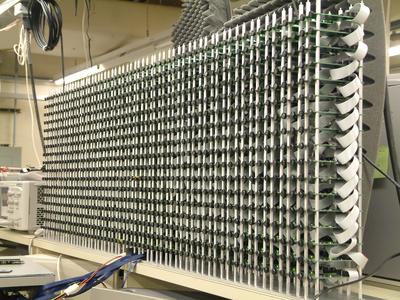
My question is: Would this be too big to manage on a boom on a typical film set?
Steve House
Veteran
I see these kinds of arguments all the time on this board and it's irritating. I get where the bitterness comes from- I really do. I'm sure I was like that at one point, but I came to realize a lot of things about filmmaking.
But some people are simply asking questions on here to learn though- and when they say "cheapest mic" it's because they're flat broke but still want to make a movie. They don't know and honestly don't care if their sound isn't top notch- realistically, you can't read how to be a good sound guy in a book. But they still want to make films.
...
Not knowing how to get top sound is understandable - we all have to start somewhere with our education. But not caring is inexcusable. If you're just fiddling around for you own amusment, sure. But if you are engaged in a creative pursuit that you plan to set before the public, the minimum standard of performance is for it to be as best that it can possibly be, within the limitations imposed by the extent of the assets at one's disposal. And if those limitations mean it's going to be too far under the state of the art, the better course of action IMHO is to focus on learning what will give acceptable results and obtaining the requisite assets rather than just making-do. Sure, make your movie. But you don't have to do it THIS month. Defer shooting till next month and meanwhile use some of your budget for a proper mic and boom and practice using them. It usually takes years to become an overnight success.
Last edited:

Ted Spencer
Veteran
With the OP's quote regarding the downgraded value of proper training being where this all started, it seems to me that much of the problem we see amounts to the "dark side" of a technological revolution. What's available now for cheap is utterly astonishing if one looks back a couple of decades or so, and it's true in so many areas - pro audio, filmmaking, still photography, publishing - these and many more previously professionals-only tool sets have been literally put on a massive scale into the hands of the completely incompetent.
I'm a veteran audio pro myself (music recording mainly), but the truth is that the high end tools I used in the 70s, aside from transducers (mics and speakers - and even these have radically democratized), that cost hundreds of thousands of dollars to own back in the day, are now digitally recreated, with remarkably complete functionality and quality, in a $300 Pro Tools MBox system (just add a computer, which everybody already has). Any fool can own one now. And so many do.
So film festivals are overrun by ten orders of magnitude with crap made by self-(un)trained wannabes, absolutely sh*tty pop CDs are produced by the boatload by the musically clueless, and so on in all the other fields affected. It's the very ease of this technological revolution that is its own worst enemy. Imagine if a $100 airplane was brought to market. Awesome! The wreckage there would be exactly equivalent except that the victims would be lives and property rather than art and professionalism. The upside of course, would be a rapidly declining moron population, but I digress...
So it's our lot - like it or not - to live in an age where any idiot can proclaim themselves an artist and flood the channels with unconscionable rubbish with impunity. Viva la revolucion!
Which is not to deny that a tiny fraction of these people will be empowered to create great things by the same forces, and if our artistic legacy is increased only by .1% by this means then arguably we win. But it is a sad state of affairs when so many of the other 99.9% not only create trash, but talk it too, loudly, in defense of their own Lilliputian abilities. The signal to noise ratio increases in direct proportion to the growth in the associated "talent" pool. It's altogether arguable too that an equal number of worthy artists get lost amidst the yammering masses to the precious few who benefitted from the democratization of creative tools. Hard to gauge, that.
What's not hard to gauge though, is the irreplaceable value of competence, which was the OP's point, plain and simple. Always was, always will be.
Last edited:
Barry_Green
Moderator
The original post was a highly accurate summation of the attitude of the independent filmmaker. I really don't know why this branch of art thinks it's so very different from every other branch. I never hear musicians saying "I'm going to go record an album, which guitar should I buy? I've never played before, but I listen to a lot of music and I just know I can do better than those Backstreet Boys."
Simple fact is that the sound debate has been caught up in the bigger question of: why do folks think that school and practice and training and hard work are unnecessary? Especially when you can get up to a simple level of competence so very quickly! Our Sound DVD was produced with the idea that obviously many folks have no clue about how to properly record sound, and with just a very little effort they can greatly improve the quality of their recordings. We did a Sound disc before tackling Lighting, because observing the films and fests, in our estimation the sound was the area far more people were struggling (if not completely failing) at!
It's very simple to go from awful to decent. There really is no excuse to have crappy sound.

Jim Brennan
VHS Member Old Skool
The original post was a highly accurate summation of the attitude of the independent filmmaker. I really don't know why this branch of art thinks it's so very different from every other branch. I never hear musicians saying "I'm going to go record an album, which guitar should I buy? I've never played before, but I listen to a lot of music and I just know I can do better than those Backstreet Boys."
Simple fact is that the sound debate has been caught up in the bigger question of: why do folks think that school and practice and training and hard work are unnecessary? Especially when you can get up to a simple level of competence so very quickly! Our Sound DVD was produced with the idea that obviously many folks have no clue about how to properly record sound, and with just a very little effort they can greatly improve the quality of their recordings. We did a Sound disc before tackling Lighting, because observing the films and fests, in our estimation the sound was the area far more people were struggling (if not completely failing) at!
It's very simple to go from awful to decent. There really is no excuse to have crappy sound.
Yep.
Noiz2
Sound Ninja
But some people are simply asking questions on here to learn though- and when they say "cheapest mic" it's because they're flat broke but still want to make a movie. They don't know and honestly don't care if their sound isn't top notch- realistically, you can't read how to be a good sound guy in a book. But they still want to make films.
Well there are a few points in the above and I can sort of agree with part of it. If you don't have any $ but you want the best you can do for what you can spend fine, I have no problem. But most of these posts start off with "After spending $$$ on camera and this and that I don't have any $ left to spend on sound, but I think it's really important". If you didn't budget any $ for sound then it's NOT very important to you. If you look at posts by forks who tried, made mistakes, etc you get a lot of positive responses. If you look at the posts where someone goes on about how any monkey could do sound and it's all over priced but "somehow" their sound needs to be fixed and they want advice from folks they just said they don't need ... well they get less helpful responses. I have head a couple of times in this thread how "hire a professional" is somehow insulting and unhelpful. Actually in most cases it would have saved them money and grief and gotten them better sound. Why spend a bunch of money on equipment that is not about what you want to do when for the same or less you can get better equipment AND someone who knows what they are doing?
And of course just because "you want to" do something doesn't mean you can. There are a ton of things I want to do that I can't. So wanting to make a movie does not automatically give you the right to make a movie and mandate that everybody should now drop whatever they are doing because now YOU want to make a movie.
And thee also needs to be a distinction between having a camera and shooting footage , and making a movie. Anybody can do the former and few can accomplish the later (unless you consider any string of images that someone calls a "movie" a legitimate film).
There are no rules to doing anything as far as filmmaking is concerned, and that goes for sound and image too. This doesn't mean doing things badly, you just need perspective.
Completely agree.
I'm shooting on a low-quality camera with not-amazing sound capabilities? OK, fine, I know it's not going to look like a "Hollywood Movie" and I don't really want it to. But now I'm just a hobbyist because I'm not submitting it to Sundance? What the hell?
Well other than the Sundance part, yes, maybe. Sundance does not make you a professional. But there are professionals and amateurs and hobbyists. All hobbyists are amateurs by definition. Some amateurs are future professionals, some aren't. I drive a car every day, I'm not a professional. I shoot short films now and again, I'm not a professional (though I'm not sure if I'm a hobbyist or a future professional. So more to your point your either a professional or not. I guess one might add a fine art category but filmmaking isn't generally considered a fine art so? But that would still be a professional category. Is it what you do for a living or is it what you do in your spare time?
And just so you don't feel bad if that makes you an amateur, there are crappy professionals a truly gifted amateurs. It's sort of like the IRS definition of a business. How much do you have at stake? Your livelihood or just your ego.
But at the same time, we must not forget how much brainwashing Hollywood has instilled in us in making us think what a movie is "supposed to" look like. Hollywood, for the most part, is a cancer for the filmmaker.
Well that isn't very true. Hollywood doesn't tell you how a movie should look any more than Hershey tells you how chocolate should taste. Non "Hollywood" films succeed all the time. But filmmaking is story telling and humans have perfected that over thousands of years to a fine art. Hollywood is a pretty hones story making machine, though I think the marketing boys lead them pretty wide of the mark sometimes. Hollywood does what sells, or they think will sell. More often then not they are right. Do they make the "best" films? No, but they make the best selling films. So if what you want to do is A) make a living from your films or B) become a renowned filmmaker, you need to pay attention to how Hollywood does it. If you embrace the good and loose the bad you will be a great and affluent filmmaker. If you ignore it all or deliberately go the opposite direction, you might become a cult hit (but then Hollywood would start emulating and you would have to change again...) but most likely you will become an unknown blip in the history of the film. If your having fun and you don't have to live off it great. But don't fool yourself, there are essentially no influential or profitable filmmakers who are not making films that are basically along the Hollywood esthetic. Hollywood has tried just about everything over the years so it's pretty hard to make a film that is totally alien to Hollywood.
The ultimate goal shouldn't be to get into some festival or appease some producer.
Well if your a professional the ultimate goal is to do something your proud of AND makes money. Shorts are sort of in a special category because professionals do them for training, experimentation and promotion. In the long run though they are still connected to making a living.
I know this is an audio forum, but here are two thoughts on this subject from two great film directors. I'm not trying to prove any point with either of them, just their points of view- the artist's point of view:
"Artist" is a tricky word. It is used both to describe a professional that is a great craftsman and visionary and as an excuse for why nobody want's to see your movie. As in "I don't do it for the audience, I'm an "artist"". Some people think that if they call themselves "artists" then they are above criticism. Some might also take offense at you apparent distinction here between artists and sound folks.

MattinSTL
Sound Modulator
People rarely ask for the cheapest mic and get a response to hire a soundguy (exceptions, yes, but generally when somebody indicates they don't have 2 cents to rub together, we give them cheap options)... nobody ever asks for the BEST mic and does NOT get some valuable mic advice (even if they ALSO get advised to CONSIDER a soundguy (since they usually ask for the BEST mic because they have either 1) a really important project or 2) indicated higher budget...
Finally... nobody ever comes here for information, and leaves with LESS info then they asked for... and if they aren't close-minded (hearing ONLY what they WANT to hear and becoming irritated by anything additional), they usually get their original question answered, and a whole lot more HELPFUL information on top of that.
All for how much? Oh yeah... FREE.
Well that isn't very true. Hollywood doesn't tell you how a movie should look any more than Hershey tells you how chocolate should taste. Non "Hollywood" films succeed all the time. But filmmaking is story telling and humans have perfected that over thousands of years to a fine art. Hollywood is a pretty hones story making machine, though I think the marketing boys lead them pretty wide of the mark sometimes. Hollywood does what sells, or they think will sell. More often then not they are right. Do they make the "best" films? No, but they make the best selling films. So if what you want to do is A) make a living from your films or B) become a renowned filmmaker, you need to pay attention to how Hollywood does it. If you embrace the good and loose the bad you will be a great and affluent filmmaker. If you ignore it all or deliberately go the opposite direction, you might become a cult hit (but then Hollywood would start emulating and you would have to change again...) but most likely you will become an unknown blip in the history of the film. If your having fun and you don't have to live off it great. But don't fool yourself, there are essentially no influential or profitable filmmakers who are not making films that are basically along the Hollywood esthetic. Hollywood has tried just about everything over the years so it's pretty hard to make a film that is totally alien to Hollywood.
You're right, Hollywood doesn't tell us how movies should look, Film Schools do based off of Hollywood models. Since when should young filmmakers pay attention to Hollywood? That John Cassavetes, that Yasujiro Ozu. They must have been studying how Hollywood did it.
Certain directors that worked in Hollywood maybe, but not the garbage machine itself. Filmmaking isn't supposed to be a business, some people just made it that way. It's not bad to make money off films, but when you start cutting your film to appease people or to "sell" better you've become a whore. I thought the whole idea was to be original and not care about "hitting it big"? If you have to eat, you have to make money, true- but why would you sacrifice your films to do it? If need be, I'd rather work a crappy job just to afford to make movies with people I love to work with. I'd love to submit to festivals and get it widely seen, but NOT at the expense of compromising the work. I'm not saying you said this exactly, but if someone gets into this seeking worldwide success, they might as well not even bother. It's like guys who try and learn guitar to pick up chicks.
Again, this is directed towards directors, not the people working on films. I think if you're the director/producer/writer you have a moral responsibility for the film that no one else on the film HAS to have. I'd never slight people try to make a living and I think sound and picture people have a sort of luxury of being able to do what they love (with the right director) and not worry about artistic compromise, since they're in control of their craft. But I think directors have a responsibility to protect their film, and sacrifice their own success to keep it's integrity.
The reality is that even truly amazing films will become a tiny blip in the film world, everyone knows this. Even really great films that get a ton of "buzz" or praise at festivals often go nowhere, leaving people in debt, depressed, or commiting suicide. The only way to get recognition, especially in America, is to make crowd-pleasing garbage-ridden films. Unfortunately, there are either young directors with no abilities or skills that instantly want a polished film that looks like a "real" movie or kids with an overwhelming technical knowledge that make flat, hollow, lifeless films.
If it came down to it, if I could watch a technically well-made film that was well crafted but hollow and lifeless, or a student short with servicable audio and picture that was roughly made but actually SAID SOMETHING, I'd pick that.
Filmmaking isn't storytelling, this is a big misunderstanding and it's limiting. Filmmaking can HAVE storytelling, but it isn't simply storytelling. For some reason filmmakers seem to latch onto this idea of story and it sort of bums me out- cinema is supposed to be so much more than just story, it's supposed to be an experience, like music is, for instance. And this is where sound editing especially can make a difference. Some small sound off-screen can make a HUGE difference in experience and not be about the story.
I think those quotes I sent are still incredibly true, and even more so today. I'm not against learning, I'm trying to learn more and more about the technical side of things. I realize how much cheaper things are now. But even someone who knows very little about a piano make unique music. Hell, I have an album at home that was recorded by a girl entirely on her Macbook pro built in Microphone. You can hear the clicking on the mouse and everything. Released on a real label. Her guitar playing is very basic. The recording is hissy and muffled. But she's saying something personal and unique.
Agnes Varda made her debut film spur of the moment. She had never even touched a camera or watched that many films before Iyes, she had a semi-professional crew- but then, look at the new "mumblecore" bunch). My whole reason to start posting in this thread was to examine this distinction between professional and amateur. In regards to the technical aspect, there is a clear distinction. But filmmaking, CINEMA, is an artform. My worry is that sometimes people feel like instead of learning how to get good sound and picture, they're supposed to LEARN how to do it ONE SPECIFIC way, you know? Like, oh, see how they do it in Hollywood? Three point lighting! You MUST mic your scene this way, or use this type of sound effect! and none of it has to be perfect. When I watch a film, I want to hear it. And see it. But if it's grainy, or there is hissing or maybe just a little bit of buzzing in the background? I'll forgive it if the person is really trying to say something.
-----------------
So I don't know if I'm arguing with you besides the bit about Hollywood and storytelling. I'm not trying to slight audio people, but some are artists and some are just hired technicians, just like anything else. But a DIRECTOR on a film has the responsiblity of the entire film. If the sound is bad, it's his fault. If the acting is bad, it's his fault. If the picture is bad, it's his fault. This is what I believe anyway. That's why I don't think we should lose sight of the creative aspects.
This is definately a tl;dr post, so it's fine if you don't read it all, but anyway, there it is.

Most of what we do has two components - sound and image.
Id say the majority of people that come to DVXuser are people that want to create the image. The image is subjective and even something poorly shot can tell a story or, although sad but true, can be claimed as artistic choice. When I am working day to day I am not paid to experiment and need to deliver results. And even so I can still push an artistic approach to the job at hand.
Now cross to the sound recordist. A person who is paid to record the highest quality audio possible, within the realms of the shooting environment.
The difference is - a shot that is **** can pass, a recording of dialogue that is **** cant. Simply because images are interpretation and sound isnt. If your sound is ****, theres no way that can be passed of as a choice, whereas in images this is done all the time.
Thus, if my toilet is broken and I attempt to do it myself with an average outcome, Im still leaking water - saying - Oh it was an artistic choice wont stop that water from coming. So what do I do? Hire a plumber.

Gohanto
Veteran
It's not bad to make money off films, but when you start cutting your film to appease people or to "sell" better you've become a whore. I thought the whole idea was to be original and not care about "hitting it big"? If you have to eat, you have to make money, true- but why would you sacrifice your films to do it? If need be, I'd rather work a crappy job just to afford to make movies with people I love to work with. I'd love to submit to festivals and get it widely seen, but NOT at the expense of compromising the work.
I've heard that sentiment expressed before, always non-specific and as a general "idea" rather than any specific problems with films. ET, Titanic, Jaws, Star Wars, Godfather, Forrest Gump, Dark Knight, ect... are all films that've done well critically and commercially. Sure, I cut my films to make them more enjoyable and more understandable to audiences on occasions. There's extremely few director's that don't (and generally the only reason they don't is to prevent internet leaks).
I take equal enjoyment of putting myself into my films as I do seeing an audience enjoy the movie. One without the other is how you get whores imho. And someone only making films for them self and doesn't consider the audience is far more likely to make terrible films than someone who only considers the audience.
And while it's certainly true that films should be an experience for the audience, that contradicts your view that poor sound and lighting can be overlooked as those elements can quickly knock a viewer out of the experience and remind them they're watching a product. Even if it doesn't interfere with the storytelling itself. A solid film on the technical side helps viewers focus on the story, the message, the experience, whatever the director's intent is completely and without distraction (and that's not even to mention all the ways that lighting and sound can ENHANCE the experience).
Last edited:
unclebob6958
Well-known member
Hmmmm... How to respond...
I always catch hell for this but...
An artists job is to evoke an emotional response from her/his audience. In order to do that the artist must understand his/her target audience. The artist must also master the tools available to him/her to create her/his art. Having mastered the available tools the artist is able to make artistic choices.
Since the inception of sound recording the standard was to capture clean, undistorted sounds. According to legend Ike Turner accidently punched a hole in the speaker of his guitar amp while bringing it into a recording session, no other amp was available, the session continued and the now ubiquitous distorted guitar sound was born. In the '80's people with very limited budgets bought the technological cast-offs of the music world and created the Rap and Techno styles of music. Similar things happened in the photographic and film arts.
For centuries people have broken with the acknowledged "customs" and created new ways of approaching their art. However, most of them had mastered the traditional approaches of their art and broke the rules by conscious choice, even if that breaking of the rules was initially an accident.
What irks me is the supposed artist who claims that "you don't understand." It's the artists job to make me understand; if I don't understand it's the fault of the artist. I'm also annoyed by artists who make errors of a technical sort who then claim "I wanted it that way"; it was not an artistic choice, it was nothing but a lack of discipline and a gross disregard of - even an insult to - their audience, and ultimately an admission that they do not take their craft seriously.
So don't sneer at me or my fellow "technicians" who graciously give of their time and experience to explain the techniques and tools required to do the job. The choice is always yours to accept or reject our advice. Because in the end it is your artistic cause that will be affected.
Last edited:

Doc Bernard
Indie Arms Member
Oh Good Lord! This was about the funniest thread I have ever read! Kudos to Mattin, Unclebob, and the uniquely funny Dave for being patient even up to this point.
The sentiment shown by j1clark is why I don't really tell people anymore that I am a sound engineer with a degree in it. Hell, I am good at it, but dealing with those kinds of attitudes everyday just burnt me out. Sold most of my audio gear (kept the key stuff for myself and for my video company) and closed the studio down. I just help friends out now, but I will never hire on to a project as a sound guy again, if I can help it. Last project: I was Audio Department Head of a PBS TV series "I need you to make this the best sounding project we can." "No problem, what is the budget for the sound department, so we can get some good ears in here" "Uh, there is no budget" "Hmmm." But Camera Department got 6 brand spankin' new EX-3's and a 20' crane with a hothead on it.
We parted ways very soon after I found that out.
The adage "Sound makes up half the film" is bandied like a mantra by producers and directors, but once production starts seem to get selective amnesia, "Oh we'll get it in post." Sorry, I got to relax. I am getting worked up. As a sound guy, I was an artist too, not just some technician or PA. Give my (oops, I don't do sound anymore) department the same respect you give any other department. When the budget process is going, allot some funds to the sound department to make sure we have the gear to do the job, or be able to hire a decent mixer.
Last edited:
Noiz2
Sound Ninja
It's hard to know where to start but...
Um yes they did. You need to go back farther Eisenstein didn't follow Hollywood, though he did study it to an extent. But he was working under a communist system so the audience he needed to please was a bit different.
I love it when people pull up folks like Cassavetes as examples of non Hollywood filmmakers. Do a little research next time. It's easy you look on IMDB (the place where all the whores hang out).
I can't say what I really want because they would boot me off the list but lets just say you are speaking from a place of great ignorance.
What in gods name are you talking about? WHO decided what filmmaking is supposed to be? Obviously none of the inventors, founders or anybody working in film since the get go. If it's not about making money then it's only for rich people I supose? Because it's a damn expensive art form.
Well unless you are a troll and trying to piss people off, you are an idiot. The "arts" have been about money for as long as they have existed. Artists are constantly doing art they can sell because well they need to eat also. So if your rich then you can do whatever you want, there is a word for it (dilettante) but the "people" need to eat so I guess we all whores. I'm assuming you have no need to work, ie whore your self, in any way.
No it's like working in a profession. You are fairly delusional if you make a movie because you think it will "make it big". Even the big budget guys don't often fool themselves with that one. That is more of the nonprofessionals, professionals know what a long shot that is. But the entire argument is false. The idea that if you make money you by definition have compromised your art is pure BS. Especially in public art like film, theatre and music. If nobody sees/ hears it you have accomplished nothing.
BS, it's art and commerce there is nor "moral responsibility". And again you have a deep ignorance of filmmaking. A "director" (oh one on a pedestal) is not a sole creator. Film is a team sport. It's kind of like making love, if you do it alone your just masturbating.
You just did.
a
On what planet? So if as a director you exert no control over your sound track your not compromising your vision? But as a sound person if you listen to the director your a whore?
It's not "their" film. Well I guess it could be but that would mean you made it on your own with nobody else involved. Most films have actors (who I guess are all whores if they take any direction from the director), DP's set designers, costume designers, sound designers, editors etc. It takes a lot of whores to make a film. I think that may be my next sig line...
? I guess that depends on how you define blip. Any filmmaker can name of dozens of filmmakers that are important to them and the industry, and the art. I don't consider them tiny blips. The same way I don't consider Feynman a tiny blip in the world of physics.
Well that's promising, if more really bad filmmakers would just off themselves... I'm not sure about your point. If they did go somewhere those filmmakers would be whores so why would they want to soil them selves when it so much more important to look good in your eyes?
What festivals? What buzz? Films that get distributed have a chance of "going somewhere". Distributed films that audiences like do go somewhere. I will clue you in that referring to the folks who you need to get distribution as whores lengthens your odds of getting distributed. But yes some good films with distribution don't make cost. Sometimes it's the right film at the wrong time, sometimes it's just bad luck. Sometimes it's just not as good a film as the distributor thought.
BS. AND you have already pointed out that if your doing it for the recognition your a whore so why would you want that recognition? These are the kind of statements made by folks who thought they could make a piece of garbage and make a lot of money only to find out it's really hard to make a pice of garbage that people will pay to see.
There are also plenty of folks making lifeless films that look nothing like a Hollywood film. Trash is trash. Not making any money is no test of non trashness.
If those were my only two choices I would probably be in the next seat. Fortunately there are plenty of well made good films to see. You are probably not going to hear about those films on prime time TV ads though.
Well see your just plain wrong. Every film tells a story, even Andy Worhol sleeping tells a story, a rather boring one but...
That so few films tell a good story bums me out. I can't even think of a film that has no story? Not sure what that would be? maybe 60 min of black with no sound? I know, you don't read so it will be hard to grasp this but a story IS an experience. What are you looking for a video game? OOPs those have stories too. It's a weird argument after you have argued that sound and image are not that important. What kind of "experience" is the audience supposed to get with bad sound, bad picture and no story? And I'm not sure who appointed you the god of arts to define what film and music (you left out theatre - an ancient precursor to films) are "supposed to be".
If the sound is significant it IS part of the story, especially if it's off screen. Give me an example where that isn't the case and I'll buy you beer for a year.
That is not a reason to make hissy muffled recordings. It wasn't a selling point. It's too bad it got released though, she might not be happy that you now thing of her as a whore.
You men as in a story? What are they saying if not a story?
But I agree a bit. Film is an art but like all art it needs an audience that will pay the way. Even the great-masters had to have benefactors. I didn't say you need to emulate everything Hollywood does but that you should look at how it does things because they have honed the craft. You can choose to do things differently but you should make that choice out of knowledge not ignorance. I spent many years in theatre and have worked a fair amount with "new music" and both have a "purist" faction that will pontificate about the "art" not needing a big audience, or sometimes any. These folks are always the ones who don't need to make money. You have students living off their parents, "trust fund babies" also living off their parents after a fashion and scattered academics. This is all crap. As you have pointed out art is there to move you, you being the audience. If it doesn't it fails. If there is no audience it can't succeed since there is nobody to move. Theatre NEEDS an audience, music NEEDS an audience and film NEEDS an audience. A director who isn't creating with the audience in mind is failing in his art. That said, a bigger audience doesn't mean better art and with the right kind of advertising you can sell almost anything but no audience also doesn't make great art and in fact is a failure. Verda was working in Begum in the early fifties. She had tremendous limitations on what she could do, Europe was still in a shambles and there was no money to be had. She worked against those restrictions, but you don't seem to think that is a compromise??? She created her vision and story with her audience in mind and within the restrictions of the times. Yet you have a problem if a director today thinks of the audience and works with in restrictions?
-----------------
That is actually VERY rarely the case in any film other than total nonbudget films. And even then it's not really the case most of the time.
No it's not his/her fault, unless he/she said "screw it I don't care", which brings us back to the OP point... And yes it is very important to keep sight of the creative aspects. The craft is what lets the creative aspects happen. If you can't stretch a canvas you can't paint on it.
You're right, Hollywood doesn't tell us how movies should look, Film Schools do based off of Hollywood models. Since when should young filmmakers pay attention to Hollywood? That John Cassavetes, that Yasujiro Ozu. They must have been studying how Hollywood did it.
Um yes they did. You need to go back farther Eisenstein didn't follow Hollywood, though he did study it to an extent. But he was working under a communist system so the audience he needed to please was a bit different.
I love it when people pull up folks like Cassavetes as examples of non Hollywood filmmakers. Do a little research next time. It's easy you look on IMDB (the place where all the whores hang out).
Certain directors that worked in Hollywood maybe, but not the garbage machine itself.
I can't say what I really want because they would boot me off the list but lets just say you are speaking from a place of great ignorance.
Filmmaking isn't supposed to be a business, some people just made it that way.
What in gods name are you talking about? WHO decided what filmmaking is supposed to be? Obviously none of the inventors, founders or anybody working in film since the get go. If it's not about making money then it's only for rich people I supose? Because it's a damn expensive art form.
It's not bad to make money off films, but when you start cutting your film to appease people or to "sell" better you've become a whore.
Well unless you are a troll and trying to piss people off, you are an idiot. The "arts" have been about money for as long as they have existed. Artists are constantly doing art they can sell because well they need to eat also. So if your rich then you can do whatever you want, there is a word for it (dilettante) but the "people" need to eat so I guess we all whores. I'm assuming you have no need to work, ie whore your self, in any way.
I thought the whole idea was to be original and not care about "hitting it big"? If you have to eat, you have to make money, true- but why would you sacrifice your films to do it? If need be, I'd rather work a crappy job just to afford to make movies with people I love to work with. I'd love to submit to festivals and get it widely seen, but NOT at the expense of compromising the work. I'm not saying you said this exactly, but if someone gets into this seeking worldwide success, they might as well not even bother. It's like guys who try and learn guitar to pick up chicks.
No it's like working in a profession. You are fairly delusional if you make a movie because you think it will "make it big". Even the big budget guys don't often fool themselves with that one. That is more of the nonprofessionals, professionals know what a long shot that is. But the entire argument is false. The idea that if you make money you by definition have compromised your art is pure BS. Especially in public art like film, theatre and music. If nobody sees/ hears it you have accomplished nothing.
Again, this is directed towards directors, not the people working on films. I think if you're the director/producer/writer you have a moral responsibility for the film that no one else on the film HAS to have.
BS, it's art and commerce there is nor "moral responsibility". And again you have a deep ignorance of filmmaking. A "director" (oh one on a pedestal) is not a sole creator. Film is a team sport. It's kind of like making love, if you do it alone your just masturbating.
I'd never slight people try to make a living
You just did.
a
nd I think sound and picture people have a sort of luxury of being able to do what they love (with the right director) and not worry about artistic compromise, since they're in control of their craft.
On what planet? So if as a director you exert no control over your sound track your not compromising your vision? But as a sound person if you listen to the director your a whore?
But I think directors have a responsibility to protect their film, and sacrifice their own success to keep it's integrity.
It's not "their" film. Well I guess it could be but that would mean you made it on your own with nobody else involved. Most films have actors (who I guess are all whores if they take any direction from the director), DP's set designers, costume designers, sound designers, editors etc. It takes a lot of whores to make a film. I think that may be my next sig line...
The reality is that even truly amazing films will become a tiny blip in the film world, everyone knows this.
? I guess that depends on how you define blip. Any filmmaker can name of dozens of filmmakers that are important to them and the industry, and the art. I don't consider them tiny blips. The same way I don't consider Feynman a tiny blip in the world of physics.
Even really great films that get a ton of "buzz" or praise at festivals often go nowhere, leaving people in debt, depressed, or commiting suicide.
Well that's promising, if more really bad filmmakers would just off themselves... I'm not sure about your point. If they did go somewhere those filmmakers would be whores so why would they want to soil them selves when it so much more important to look good in your eyes?
What festivals? What buzz? Films that get distributed have a chance of "going somewhere". Distributed films that audiences like do go somewhere. I will clue you in that referring to the folks who you need to get distribution as whores lengthens your odds of getting distributed. But yes some good films with distribution don't make cost. Sometimes it's the right film at the wrong time, sometimes it's just bad luck. Sometimes it's just not as good a film as the distributor thought.
The only way to get recognition, especially in America, is to make crowd-pleasing garbage-ridden films.
BS. AND you have already pointed out that if your doing it for the recognition your a whore so why would you want that recognition? These are the kind of statements made by folks who thought they could make a piece of garbage and make a lot of money only to find out it's really hard to make a pice of garbage that people will pay to see.
Unfortunately, there are either young directors with no abilities or skills that instantly want a polished film that looks like a "real" movie or kids with an overwhelming technical knowledge that make flat, hollow, lifeless films.
There are also plenty of folks making lifeless films that look nothing like a Hollywood film. Trash is trash. Not making any money is no test of non trashness.
If it came down to it, if I could watch a technically well-made film that was well crafted but hollow and lifeless, or a student short with servicable audio and picture that was roughly made but actually SAID SOMETHING, I'd pick that.
If those were my only two choices I would probably be in the next seat. Fortunately there are plenty of well made good films to see. You are probably not going to hear about those films on prime time TV ads though.
Filmmaking isn't storytelling, this is a big misunderstanding and it's limiting.
Well see your just plain wrong. Every film tells a story, even Andy Worhol sleeping tells a story, a rather boring one but...
Filmmaking can HAVE storytelling, but it isn't simply storytelling. For some reason filmmakers seem to latch onto this idea of story and it sort of bums me out- cinema is supposed to be so much more than just story, it's supposed to be an experience, like music is, for instance.
That so few films tell a good story bums me out. I can't even think of a film that has no story? Not sure what that would be? maybe 60 min of black with no sound? I know, you don't read so it will be hard to grasp this but a story IS an experience. What are you looking for a video game? OOPs those have stories too. It's a weird argument after you have argued that sound and image are not that important. What kind of "experience" is the audience supposed to get with bad sound, bad picture and no story? And I'm not sure who appointed you the god of arts to define what film and music (you left out theatre - an ancient precursor to films) are "supposed to be".
And this is where sound editing especially can make a difference. Some small sound off-screen can make a HUGE difference in experience and not be about the story.
If the sound is significant it IS part of the story, especially if it's off screen. Give me an example where that isn't the case and I'll buy you beer for a year.
I think those quotes I sent are still incredibly true, and even more so today. I'm not against learning, I'm trying to learn more and more about the technical side of things. I realize how much cheaper things are now. But even someone who knows very little about a piano make unique music. Hell, I have an album at home that was recorded by a girl entirely on her Macbook pro built in Microphone. You can hear the clicking on the mouse and everything. Released on a real label. Her guitar playing is very basic. The recording is hissy and muffled. But she's saying something personal and unique.
That is not a reason to make hissy muffled recordings. It wasn't a selling point. It's too bad it got released though, she might not be happy that you now thing of her as a whore.
Agnes Varda made her debut film spur of the moment. She had never even touched a camera or watched that many films before Iyes, she had a semi-professional crew- but then, look at the new "mumblecore" bunch). My whole reason to start posting in this thread was to examine this distinction between professional and amateur. In regards to the technical aspect, there is a clear distinction. But filmmaking, CINEMA, is an artform. My worry is that sometimes people feel like instead of learning how to get good sound and picture, they're supposed to LEARN how to do it ONE SPECIFIC way, you know? Like, oh, see how they do it in Hollywood? Three point lighting! You MUST mic your scene this way, or use this type of sound effect! and none of it has to be perfect. When I watch a film, I want to hear it. And see it. But if it's grainy, or there is hissing or maybe just a little bit of buzzing in the background? I'll forgive it if the person is really trying to say something.
You men as in a story? What are they saying if not a story?
But I agree a bit. Film is an art but like all art it needs an audience that will pay the way. Even the great-masters had to have benefactors. I didn't say you need to emulate everything Hollywood does but that you should look at how it does things because they have honed the craft. You can choose to do things differently but you should make that choice out of knowledge not ignorance. I spent many years in theatre and have worked a fair amount with "new music" and both have a "purist" faction that will pontificate about the "art" not needing a big audience, or sometimes any. These folks are always the ones who don't need to make money. You have students living off their parents, "trust fund babies" also living off their parents after a fashion and scattered academics. This is all crap. As you have pointed out art is there to move you, you being the audience. If it doesn't it fails. If there is no audience it can't succeed since there is nobody to move. Theatre NEEDS an audience, music NEEDS an audience and film NEEDS an audience. A director who isn't creating with the audience in mind is failing in his art. That said, a bigger audience doesn't mean better art and with the right kind of advertising you can sell almost anything but no audience also doesn't make great art and in fact is a failure. Verda was working in Begum in the early fifties. She had tremendous limitations on what she could do, Europe was still in a shambles and there was no money to be had. She worked against those restrictions, but you don't seem to think that is a compromise??? She created her vision and story with her audience in mind and within the restrictions of the times. Yet you have a problem if a director today thinks of the audience and works with in restrictions?
-----------------
So I don't know if I'm arguing with you besides the bit about Hollywood and storytelling. I'm not trying to slight audio people, but some are artists and some are just hired technicians, just like anything else. But a DIRECTOR on a film has the responsiblity of the entire film.
That is actually VERY rarely the case in any film other than total nonbudget films. And even then it's not really the case most of the time.
If the sound is bad, it's his fault. If the acting is bad, it's his fault. If the picture is bad, it's his fault. This is what I believe anyway. That's why I don't think we should lose sight of the creative aspects.
No it's not his/her fault, unless he/she said "screw it I don't care", which brings us back to the OP point... And yes it is very important to keep sight of the creative aspects. The craft is what lets the creative aspects happen. If you can't stretch a canvas you can't paint on it.
Last edited:
What irks me is the supposed artist who claims that "you don't understand." It's the artists job to make me understand; if I don't understand it's the fault of the artist.
No, it isn't. Whether or not a film is genuine or a bunch of hogwash, it's the audience's problem to figure it out, to get involved. You really expect every film to be SO ACCESSABLE that EVERYONE is going to connect with it?
I want to challenge an audience, not jerk them off. They don't like it? Fine, don't watch. My films won't be for everyone, just like not everyone likes me. The problem with audience's nowadays is they refuse to put ANY sort of effort into a film. If they don't understand or connect with something on a first view, they storm out and trash it. Why on Earth would you want to appease someone like that?
That's the problem with the above post too that mentions cutting a film for an audience to understand it better. You want to have an audience for a film- you hope that people will connect with it- but when you start thinking of key demographics, target audiences, or "helping the audience" understand your "theme", you've already lied to yourself. You've given up, and all those people that worked on your film, you've just given them the finger. If pure entertainment is your thing, fine, whatever, that's not my area so it doesn't concern me. But if you think a film like E.T. or The Dark Knight is a work of art, dear god, please spare the world and never make a film.
Let me ask you something, do you change the way you are so people will like you better? Do you dress a certain way to appease people? Do you change your personality, watch what you say around certain people, put on a front? So why do this in your films? Why not make the exact film you want to make, make WHO YOU ARE? So what if some audience doesn't like it? Someone else will, if you're honest and put your heart and soul into it. I simply can't understand it. No one breaks any sort of mold or advances an art by giving people what they want. It just doesn't happen. Do they make a ton of money? Yeah, I imagine they do. Can they make it look technically proficient and slick? You betcha. Will it have any soul or give us anything new? Nope. So why bother? Batman jumping off a roof and smashing the Joker might have amazing sound and visuals...but it's the same generic stuff that's ruining cinema.
I would rather watch someone's home movies of Christmas morning on hi-8 than ever watch anything George Lucas has ever made. You'll actually find something real in the home videos. Obviously lots of people disagree, and that's their loss. Vincent Van Gogh never tried to appease anyone. He struggled with his art all his life, and died relatively unknown and poor. No, that doesn't sound fun, but making art is tough.
Your films may SOUND amazing, but you've left out the other side of the equation, arguably the more important side. I've seen films with less than amazing technical sides- maybe the audio has a few pops, or is rough, or the visuals aren't AMAZING. I can forgive them. I can forgive people looking in the camera. Because I can still see and hear these films, and they have a lot of heart and some amazing insight into life. Are these people masters of their craft? Maybe not. Are they professional? Definately not (and for the record, professionals certainly do make great artists- I'm not saying the don't). But they've given me something Michael Bay never has. And if you think that's silly or a "hobby", then I can't convince you otherwise. Have fun appeasing audiences I guess.
EDIT: Quick response to Noiz2: Once again, making money off a film or getting people to see it isn't what I'm talking about. Sitting around saying "Oh no, I don't have the RED, I can't make a film" or "Hmmm...audience's might find this scene boring, we should cut it!" when you find it vital to what you're trying to say is compromising yourself. The weather or time constraints are natural compromises- you have no choice but to be creative. But trying to say what you want to say, and then having some random person telling you "No, we need to make this more marketable so we can sell it to more theaters, so cut 10 minutes off the end of the film"....I couldn't live with that.
Yes, filmmaking is expensive, but nowadays it can be obviously much cheaper. It's not for everyone though. Painting probably doesn't fetch much either these days, but people still do it. Some people actually work jobs and save up money JUST to make films. Again, look at rhe mumblecore folks. Not my favorite movies ever, and not a worldwide success. But they made films for a couple of thousand dollars and they didn't have to recut anything. Imagine that.
Oh, and John Cassavettes was notoriously disgusted with the Hollywood system, what are you talking about? He liked Frank Capra, but that's a director, not the "machine" I mentioned. He almost knocked out Stanley Kramer. He was once quoted as saying that he could never make a commercial film after A Child is Waiting because he couldn't stand the politics. He acted in bad Hollywood films not to get rich- he put all that big money back into his films and was often still in debt. He struggled to find money for his films all the time. He was probably crazy. But he was also filled with a lot of passion and passed on numerous chances to make tons of money on his plays and films. He refused to "sell out"- not because he hated eating, but because he didn't care about hitting the big time and felt like he needed to keep the integrity of his films, especially for all those involved. Only recently has he gotten the praise deserved in this country, well after his death.
And you're right, I know nothing about cinema, in the realm of things. I'm always learning something new everyday. And what I've learned in the past is that I don't want to become some rich guy who compromised the reason he wanted to create in the first place. Sorry if that sounds naive. You don't have to watch my films online or in the unlikely case they'll ever be shown in a theater. I have a certain set of beliefs, you have yours. I'm not deciding what art is, I'm telling you what art means to me and what it used to mean to a lot of people. Pop culture is pop culture for a reason. When you start comparing Spielberg to Beethoven, I just feel like you've lost perspective.
Last edited: