F5: Best shoulder rig for F5/55

Because my camera gets rented out to be used with large cinema zooms with real marks that are used with a manual follow focus. This requires a proper rod setup.
I love your mounts Jacek ( I have owned 2 of them ) but some people just don't want to use stills zooms no matter how hard you try to promote it. It's nice to be able to have a lightweight configuration but most of the time these cameras have monitors, matte boxes, follow focus', cinetape etc attached to them. For that we need a rod and usually a top plate system.

I had a rental company for about 10 years - I get it. I shed some blood, sweat, and tears during that time. We have focused our designs on the top of the camera so that you can make better choices for what you do with the bottom. Everyone has different needs, hopes, and desires. MANY shoots never leave a hard support like tripod or dolly. MANY shoots never see a tripod. The best shoulder solution (in my slightly humble opinion) is one that is very flexible. One that allows a fast and easy transition from a properly supported 24-290 to a well balanced handheld config with a small prime. I learned a long time ago, that making those decisions based on what is right instead of what is cheapest pays off. It can sting a little if you are paying more than you hoped for, but divided by the life of the camera - the best accessories are usually the cheapest option. Lower frustration, quicker setups, one extra shot per day. I know this thread is about the "best" shoulder solution so I should not get too far off topic.

Here is a pic of our F55 kit which can go from Doc mode to big Hollywood feature configuration very quickly with camera controlled power distro, audio, etc without getting in the way of how you mount it - shoulder or tripod. To best contribute to making the "best" shoulder system - we let everyone else duke it out while we complete the system with all the other pieces you need to have a slick shoulder setup. It allows the EVF to be positioned anywhere on the camera with very little effort so you can go from handheld to studio quick and easy - no tools.
This pic has a Micron on the bottom that makes quick work of going from 19mm heavy to 15mm LWS. Flexibility.
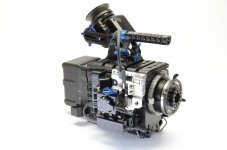
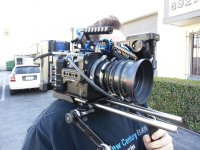

CJA_9687.jpg2013-02-27 17.08.36.jpg
 
I get the base plate, rods and mattebox(the latter not so much) But cages, 1/2" aluminum plate armor, that's nonsense IMO. Film cameras never had these things, eng cameras never had these things. And they did just fine in rentals . If you are worried about rentals make sure the gear is insured- that's how it's been for ages.
It looks like the consumer mentality with the marketing driven desire to have the shiniest gadget is taking over. Sorry to be blunt guys- but prove me wrong....
Maybe that's the new style, maybe I'm old school-that's a possibility.....:thumbsup:
I just thought of an example:
how about the Alexa I haven't seen any cages or armors for them.. (maybe there are) do they fail in rentals?
Sony has made ENG cameras for ever( I have the DXC3000) Is Sony any worse than the Alexa?

It's more about operational flexibility than "armor", at least for me. The Alexa has not seen many third-party add-ons because it was so well thought out from the beginning - and it is a heavy metal tank that is VERY unlikely to fall apart short of being dropped off a chopper mount. As for the F55/F5 owners - wait until we hear from the first person to have the EVF cable snag on a door knob and it cracks the PCB on the inside of the camera. The camera will be out for a while and it will cost serious $$ for the repair on top of lost revenue.

All the film cameras I worked with were brick shithouses that dealt with ridiculous abuse but were inflexible. No one pulled focus with an on board monitor from a video tap. The viewing system was rigid optics so the operator must contort their body to see the frame. ENG cameras are not fragile but configuration inflexible as well - designed to shoot news all day. The external hardware I design is focused primarily on adding function and flexibility which the digital camera platforms allow. Others have gone down the road of just trying to make the camera look like a tactical weapon - which is more fashion driven than function. We cater to those looking for good images not literally bullet proofing the camera which I agree is largely un-necessary.
 
I had a rental company for about 10 years - I get it. I shed some blood, sweat, and tears during that time. We have focused our designs on the top of the camera so that you can make better choices for what you do with the bottom. Everyone has different needs, hopes, and desires. MANY shoots never leave a hard support like tripod or dolly. MANY shoots never see a tripod. The best shoulder solution (in my slightly humble opinion) is one that is very flexible. One that allows a fast and easy transition from a properly supported 24-290 to a well balanced handheld config with a small prime. I learned a long time ago, that making those decisions based on what is right instead of what is cheapest pays off. It can sting a little if you are paying more than you hoped for, but divided by the life of the camera - the best accessories are usually the cheapest option. Lower frustration, quicker setups, one extra shot per day. I know this thread is about the "best" shoulder solution so I should not get too far off topic.

Here is a pic of our F55 kit which can go from Doc mode to big Hollywood feature configuration very quickly with camera controlled power distro, audio, etc without getting in the way of how you mount it - shoulder or tripod. To best contribute to making the "best" shoulder system - we let everyone else duke it out while we complete the system with all the other pieces you need to have a slick shoulder setup. It allows the EVF to be positioned anywhere on the camera with very little effort so you can go from handheld to studio quick and easy - no tools.
This pic has a Micron on the bottom that makes quick work of going from 19mm heavy to 15mm LWS. Flexibility.

My philosophy these days with gear is "buy once, cry once". I, like many others have tried to save money on gear in the past and ended up being frustrated with the equipment which has cost me time on set. Once you buy well made and well designed equipment, you understand why it costs more than the others.
Carlos, you bring up a point that is often overlooked, that of time saved on set. Saving 5 mins here and there during the course of a shooting day can easily get you an "extra" half hour by the end of the day. That extra few hundred dollars that you spent on a piece of equipment that works well now looks like a very good deal.
 
Back
Top