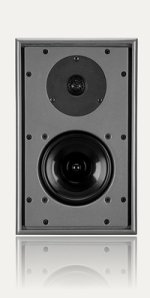
Benefits of monitors for post?

OT,

Looked at your site. I was working on a pilot for a TV show on areal acrobatics (I think that was the name they liked - I know they didn't like being called stunt pilots). Got lots of very cool sounds as we traveled to a number of air shows following a group of them. A bunch of recordings that you just can't get if you don't have way beyond normal access. We were set up at one point at the end of a private runway and had them taking off right over out heads. As in they were clearing us by 10-20 feet! Also got up close and personal with a MIG, that is one scary sounding beast.

It sadly ended when they lost three pilots in two weeks. It was a lot of fun working with the pilots.
 
Noiz2, aerobatics is a hazardous career. I think a dozen pilots I've worked with over the last 25 years have died. As you can see, I'm primarily known for my "air-to-air's", but I shoot ground and interiors to boot, both editorial and commercial. It's a great gig, but I still say a little Hail Mary every time we launch a "photo-mission" for the aerial work. I'm not actively marketing video for my freelance work, I just shoot it for the organization I work for, AOPA, which they post on their site. I have too much to learn before I start knocking on doors for commercial clients. (Why I'm stepping up my audio.)

I have not been to the EQ Wizard web-site, I just saw a You Tube seminar on room acoustics, and the fellow was using it for his demo. He sang praises, I guess I'll find out. My wife's hearing isn't stellar, and the studio is on the end of the house, so we're good to go on the inverse curve.

And yes, the aircraft low fly-bys are great, noisy fun.

Mike
 
If I upgrade my bookshelf speakers to studio monitors, what type of sound card or external DAC would you come out of for for an affordable yet decent quality solution? For instance my computers onboard sound card is going to be noisy correct? Currently I power bookshelf speakers with a Topping TP-30 which also has a DAC built in it so I can bypass any computer sound card:

http://www.amazon.com/Topping-TP30-Digital-Amplifier-USB-DAC/dp/B005D7SKWK/ref=sr_1_1?ie=UTF8&qid=1389704285&sr=8-1&keywords=topping+tp-30

Can/should I still use the TP-30 even though the output is speaker wire as apposed to a 1/4"inch?

Am I going to get more bang for my buck if I buy passive studio monitors and power them with teh TP-30? The TP-30 is only 15wpc but they are more than suffecient for my bookshelf speakers...will that be the case for passive studio monitors?
 
Last edited:
15wpc is very low. It will "work" but to get anykind of volume out of it your pushing it to the edge. Many years ago my father upgraded our stereo (I'm talking circa 1970's) from something in the range of 15-20 wpc to a new receiver with 65 wpc. Everything sounded clearer and more defined. The only thing that had changed was having an amp that wasn't breaking a sweat to drive the speakers. So for really small multimedia speakers that is probably fine but if you are moving up to decent cheap nearfields I would up the power considerably.

The K-ROK speakers I mentioned earlier that always sounded muddy to me were also under powered in most cases. I never really did any tests to see if properly powered they would sound any better. Not my rooms so it's kind of hard to swap out the amp ;~)

I have passive speakers and an amp, but if I was buying today I would buy powered. You probably end up paying less and the amps are taylor made to power the speakers. Also most, even mid range, powered monitors are bi-amped, and that is a lot more money to do with passive speakers.
 
Except that the OP is not looking for studio monitors. He's looking for decent sound post editorial near field monitors and that is a different thing all together.

Which is exactly why I recommended the Equator D5 as the best around at that price bracket.

But - you still need to know what is happening - too much stuff is mixed and post-produced on inadequate monitors and, by the time it gets to your TV at home, sounds horrible.

You still need decent monitors for post. NBC in London recently put in a pair of the baby ME-Geithain RL906 monitors and they are about £2,500 a pair. The bigger RL944K nearfield monitors are around £8k a pair - and we are still talking nearfields with a listening distance of less than 2.6m.
 
Thanks for the insight, is there anything wrong with using the TP-30 with active studio monitors? Is it a bad idea to connect to amps to each other? I want to leverage the DAC from the TP-30 and use it as a volume control, while still having teh proper amount of power from the amped speakers.
 
Thanks for the insight, is there anything wrong with using the TP-30 with active studio monitors? Is it a bad idea to connect to amps to each other? I want to leverage the DAC from the TP-30 and use it as a volume control, while still having teh proper amount of power from the amped speakers.

DO NOT send an amplified signal to another amplifier.

Really, your best bet is going to be a simple USB interface plus a pair of decent, powered monitors. You can get an interface relatively cheaply that will work just fine for you, like THIS ONE from Focusrite.
 
OK, thank you. I figured it might be a problem. I really love the topping amp...wish I could find passive studio monitors that didn't draw too much power. Looks like I might have to suck it up.
 
Which is exactly why I recommended the Equator D5 as the best around at that price bracket.

But - you still need to know what is happening - too much stuff is mixed and post-produced on inadequate monitors and, by the time it gets to your TV at home, sounds horrible.

You still need decent monitors for post. NBC in London recently put in a pair of the baby ME-Geithain RL906 monitors and they are about £2,500 a pair. The bigger RL944K nearfield monitors are around £8k a pair - and we are still talking nearfields with a listening distance of less than 2.6m.

Good first point, those are good choices just about in the OP's price range.

And I realize a network or major studio is going to spend $$$ (or £££) on high end speakers for mixing but I think the OP is aiming at something closer to the setup you picture on the home page of your company.
Looks like 6" or so two way JBL's. Placed in a non ideal location with lots of hard surfaces for the sound to bounce off of.
I'm sure that isn't you mix room but it is pretty close to what the OP's setup is like.

Those speakers should be higher and angled but it's pretty typical of video edit rooms. Actually it's a bunch better than many. I've gone into ones where one of the speakers is behind a video monitor and the other is pointed in some odd direction. But that is a good setup for basic editorial, and that is what the OP is looking for.
 
I come from a stills background, and in the last couple of years have been responsible for concurrently shooting video destined for web. I've decided I haven't paid enough attention to audio. I'm still a bit of a novice with audio post and am currently editing with Adobe CC and have spent a fair amount of time reviewing Audition.

I'm shooting a C-100 with Senn G3/AT875R mics and part of my upgrade will include a better lav mic and one MKH50/CS-3/CMC641 (Most of my interviews are inside.)

I'm currently using Altec Lansing computer speakers on my Mac, I'm wondering the benefits of something along the lines of the Focusrite 2i2 with a pair of yet-to-be-determined 5-7" monitors. I do have headphones for editing, but with my hearing aids, I hate using them. (Plus with headphones, I can't hear my wife sneaking up on me and scaring the ba-jeezuz out of me.)

My question is, even with a modest level of gear, was there a noticeable difference in your results, or editing experience, when you upgraded to using monitors? This is dialog with a music track, no SFX, no need for studio recording, just basic post work.

Many thanks,

Mike

#1 Your wife sounds mischievous.

#2 The advantage of monitors is the ability to build a space. That's what post is for in my opinion. Headphones don't allow you to see a 3D picture of the audio. Monitors, when probably set up and calibrated have a natural cross talk. Your left ear can still hear the right speaker,and vice versa. Monitors allow you to adjust minute changes in the stereo field. Monitors are still better for setting levels. Headphones don't reproduce a lot of dynamic range and they have too much spatial separation. You could mix levels on headphones and be totally out of whack. Why? Because you can hear the the most subtle sounds and they still seem, I don't want to say loud, but highly audible. Properly calibrated monitors let you know if something is loud, or quiet, and you mix accordingly.

Summing it up: the two biggest problems I have with headphones: inaccurate or exaggerated spatial information, and dynamics that lie to you. It's ok to check on headphones now and again.

Problems you might run into using PC speakers, or consumer speakers; exaggerated response curves. You'll run into that with any monitor too. No speaker is perfect, but monitors are designed to be "flat". Find the "flat" that works best for you. It's incredibly important to know the speaker.
 
Back
Top