Bayer is pronounced like buyer

Status
Not open for further replies.
There is a long history of people in positions of dominance choosing to pronounce things the way that they want, even when it's easy to pronounce things the right way. .

This is rubbish. In fact most changes have been done by the masses in the streets. (or these days on social media) The main reason why (going back several 100 years) changes were by the people in power was because they were the only people who could afford scribes to write things down where as the average peasant did not have his words recorded. One suspects that where their words were recorded the scribe transposed the into "proper" English, Then again they probably did that for the rich and powerful to make them sound "smarter". After all most of them would not be able to read what was written. When the masses were taught to read and write it was by teachers who hammered grammar and syntax. School teachers were hardly the rich and powerful.

Actually BBC English (RP) was the bastion of the middle classes not the rich and powerful who were happy to ignore it.

The OED was done by academics not people in positions of power and they codified what was in general use by the majority.
Also Samuel Johnson "Born in Lichfield, Staffordshire, Johnson attended Pembroke College, Oxford, for just over a year, but a lack of funds forced him to leave. " was hardly rich and powerful.
Webster does not seem that rich and powerful either. Though Webster dictionary is generally not considered very good by academics as it was not well researched and had political overtones apparently.


Re ISO This pronunciation as 'eye-so': https://en.m.wiktionary.org/wiki/ISO#Pronunciation is the only way I have heard it pronounced in 30 years of doing standards work.
 
JAMedia - I thought that accent and vocabulary are a major marker of class and place of origin in GB.

And what about "Oxford English," "the King's English," and the historical lingua francas (Latin, French) and the posh habit of mixing extra Latin and French words into English?
 
JAMedia - I thought that accent and vocabulary are a major marker of class and place of origin in GB.

And what about "Oxford English," "the King's English," and the historical lingua francas (Latin, French) and the posh habit of mixing extra Latin and French words into English?

Accent is a marker of place. though in the last 100 years accents have become a lot less of a marker of class or social standing. In fact these days regional accents are celebrated. Even on the BBC. Though they tend not tu use very broad accents for reasons of clarity. Then again I have seen men of Indian decent speaking in broad Yorkshire acsents and Chinese speaking in scouse (Liverpool)

Vocabulary is a matter of education and again in the last 100 years this has also ceased to be a maker of class to a larger extent. As to mixing languages people of all classes and level mix French, Latin, Arabic and various languages from the Indian and African continents (along with local dialect) about the only difference is the more educated are more likely to know the derivation or history of the words.

You will see i.e. and e.g (from Latin) all over English texts. Girls are referred to as bint's from the Arabic and tea is char (from Asia) we have many French and Latin phrases in every day use. I use them myself despite never having learnt French or Latin. (I did Spanish, German, Turkish, Kurdish and Farsi.) which reminds me there are quite a few German words common used too.

Class disappeared to a larger extent in the UK after WW2 and certainly in the 60's. It was mainly the middle class (differentiating themselves from the working class below and aspiring to the upper class above) who were more class conscious than the rest.
 
One more...

ARRI

"AIR E" or "ARE E"? I've said AIR E since the early '80's, picked up from the rental house I suppose, and cringe when I hear ARE E. YouTube hipsters and young trendsters always say ARE E. And people new to the name also seem to default to ARE E. I really want to correct them, but can I?

People who work at ARRI can't get it straight. I think it's like this...

https://www.youtube.com/watch?v=Fdp2TT_BYjQ&list=PLqORVKxCwMdNqNHYDddSTEVi2ZI5zb0be

But then you hear this...

https://www.youtube.com/watch?v=wx3S9-oVaqs

But sanity is restored here...

https://www.youtube.com/watch?v=gUZLP-1YPEM

And back and forth and back and forth.

If it's ARE E, I'll never use their crap again. :)

Jim Arthurs
 
Class disappeared to a larger extent in the UK after WW2 and certainly in the 60's. It was mainly the middle class (differentiating themselves from the working class below and aspiring to the upper class above) who were more class conscious than the rest.

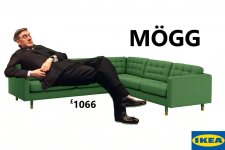
Jacob Rees-Mogg will disagree...
 
PS Run&Gun - apparently ISO differs from ASA because ASA is an acronym. The International organization of Standardization decided to adopt ISO because their acronym would be different in different languages.

The wiki page lists the official pronunciation as 'eye-so': https://en.m.wiktionary.org/wiki/ISO#Pronunciation

Will you be correcting your pronunciation now? Personally, I couldn't care less.

But one thing that really bothers me is when people say, "I could care less." Because that's obviously the opposite meaning of what they intend to convey

We are 100% on the same page with this one.

If you want to keep going down the rabbit hole, I’ll add to the discussion:
https://fstoppers.com/originals/myths-iso-423056

I've corresponded with two experts in the field of ISO's history,... Yates explained to me that in all her research into the founding of ISO, she can't recollect ever coming across any discussions about how to pronounce the abbreviation. Interestingly, Murphy explained that he expects that the pronunciation is related to how vowels are pronounced in different languages...

It’s a quick, interesting read. Today, the company line is to pronounce it “eye-soh”, but that may not have been the original intention, if there even was one.
 
Accent is a marker of place. though in the last 100 years accents have become a lot less of a marker of class or social standing. In fact these days regional accents are celebrated. Even on the BBC. Though they tend not tu use very broad accents for reasons of clarity. Then again I have seen men of Indian decent speaking in broad Yorkshire acsents and Chinese speaking in scouse (Liverpool)

Vocabulary is a matter of education and again in the last 100 years this has also ceased to be a maker of class to a larger extent. As to mixing languages people of all classes and level mix French, Latin, Arabic and various languages from the Indian and African continents (along with local dialect) about the only difference is the more educated are more likely to know the derivation or history of the words.

You will see i.e. and e.g (from Latin) all over English texts. Girls are referred to as bint's from the Arabic and tea is char (from Asia) we have many French and Latin phrases in every day use. I use them myself despite never having learnt French or Latin. (I did Spanish, German, Turkish, Kurdish and Farsi.) which reminds me there are quite a few German words common used too.

Class disappeared to a larger extent in the UK after WW2 and certainly in the 60's. It was mainly the middle class (differentiating themselves from the working class below and aspiring to the upper class above) who were more class conscious than the rest.

One only has to look at today. At least here in the US, primary education is not only free, but compulsory(at least to a certain age). But look at a lot of the multi-multi-millionaire athletes and celebrities that can barely string enough words together in the right order to make a sentence that is half-way decipherable as “English”.
 
Today, the company line is to pronounce it “eye-soh”, but that may not have been the original intention, if there even was one.

It's pretty embarrassing when an organization of standardization can't even standardize their own pronunciation. (And how do you like all the ZEEs in that sentence, my British friends?)
 
It's pretty embarrassing when an organization of standardization can't even standardize their own pronunciation. (And how do you like all the ZEEs in that sentence, my British friends?)

Should we go ahead and file that one under irony?
 
Quote Originally Posted by JAMedia
Class disappeared to a larger extent in the UK after WW2 and certainly in the 60's. It was mainly the middle class (differentiating themselves from the working class below and aspiring to the upper class above) who were more class conscious than the rest.

Jacob Rees-Mogg will disagree...

I think that rather proves my point on lack of class.
 
"AIR E" or "ARE E"? I've said AIR E since the early '80's, picked up from the rental house I suppose, and cringe when I hear ARE E. YouTube hipsters and young trendsters always say ARE E. And people new to the name also seem to default to ARE E. I really want to correct them, but can I?

Air E, would be the American English way of saying it, so it's kinda stuck, especially since a large portion of their product is sold in the U.S.

ARRI is a German company, so they would pronounce is Are E. The company's name is the combination of Arnold and Richter (pronounced Reeshter).

I myself flip back and forth because I never really liked Air E. It just sounds wrong to me. I don't know anyone that pronounces their name as Airnold.
 
What about Angénieux? So many different ways of saying it.

Do you prefer ANN jeh new? AWN jeh new? AWW(nasal) zjuh new? Do you go full accent and do aww(nasal) ZJEY neu, with the accent on the second syllable?
 
I have been saying Bayer filter wrong. It's pronounced like buyer, because that's how Bryce Bayer's name was pronounced.

Technically, it's not quite pronounced Buyer either, because it is a German last name: https://en.wikipedia.org/wiki/Bayer_(surname)

So, in German, while the first syllable would be pronounce Buy or Bai, the last syllable would be pronounced with a German unstressed er, which goes to an AY-ah sound. It's close to "air" mixed with "uh". So the closest I would be able to say it without an accent would be Buyuh or Baia (rhymes with Gaia).

I think I'm just going to call it an Aspirin Pattern Sensor going forward.
 
Last edited:
Air E, would be the American English way of saying it, so it's kinda stuck, especially since a large portion of their product is sold in the U.S.

ARRI is a German company, so they would pronounce is Are E. The company's name is the combination of Arnold and Richter (pronounced Reeshter).
I myself flip back and forth because I never really liked Air E. It just sounds wrong to me. I don't know anyone that pronounces their name as Airnold.

Having lived and worked in Germany I would agree with that. I worked with a company that was spelt with an "HI" in it. and being British I pronounced it as "Hi".
The German's pronounced it "HE"
 
What about Angénieux? So many different ways of saying it.

Do you prefer ANN jeh new? AWN jeh new? AWW(nasal) zjuh new? Do you go full accent and do aww(nasal) ZJEY neu, with the accent on the second syllable?

Want to get me started on French pronounciations ? ;)

You pronounce Angénieux : anh - jeh - nieu

It's more easy for Frenchies to pronounce Japanese because both languages are without "tone", so we are used to say "boké".
 
What if someone mentioned that new film by Martin Scorsees at the Cans Film Festival?

This is lots of fun exploring linguistic variation, but a lot of the examples are international. When Japan imported baseball, they called it besuboru, because of their language's stricter rules (all syllables must end in a vowel) and phoneme set (15 instead of 42). I have no problem with that.

Bryce Bayer died recently and is from the United States. His friends had no problem pronouncing his name while he was alive. And how would you say this sentence, "Bryce Bayer invented the Bayer Filter." How would you say it at his funeral? Would you say it one way in front of his widow and another on the set with your crew, simply because you don't want to get into it? I'm not even sure it would be a big deal.

"What do you think of RGB striping versus the Bayer Filter?"
"The what?"
"Bayer Filter."
"I thought was pronounced Bayer."
"The guy who invented it pronounced his name Bayer."
"Oh."

(Something is lost of this conversation in print. Which reminds me that this issue will almost never come up, because 99% of your usage will be in print.)

Scientists have lots of stuff named after people, like the Riemann Hypothesis. I want to pronounce it Ryeman, but mathematicians dutifully pronounce it Reeman.

The example of Carnegie Hall is the closest relevant example, so thanks, Mitch. Still, that's a difference in which syllable is stressed: Cárnegie vs. Carnégie, which I think is milder than switching out vowels. Coincidentally I just heard a recording of Steve Jobs talking about Carnegie Mellon, and he pronounced it Carnégie, so some people are giving it the old college try. I read that Carnegie Mellon in fact is quite opinionated about it. Also my Scottish high school history teacher of course pronounced it Carnégie. (I like the musicality of Cárnegie better, though, so I won't be issuing any citations.)

Some of you have bristled at the idea of being corrected for your language, that it is a tool used by the Man to keep the outsiders on the outside, or something like that. Not at all. Take a look at this bit of English:

My fate cries out
And makes each petty artery in this body
As hardy as the Nemean lion's nerve.
Still am I called.—Unhand me, gentlemen.
(draws his sword)
By heaven, I’ll make a ghost of him that lets me.

--- Hamlet, I, iv

What's the last line about him killing anyone who "lets" him? It turns out that "lets" means "hinders", the opposite of what it means now. Something to do with two words that sound the same but from different roots. Overall though, it's fairly understandable, more so than many Shakespearean passages. If the actors keep that up at the speed of speech, I think it's safe to say that most of us get lost unless we've studied the play. Someone may say, "Yeah, but that's from 400 years ago." I say, "Yeah, but it was only 400 years ago."

Or how about this:

Whan that Aprille with his shoures soote,
The droghte of March hath perced to the roote,
And bathed every veyne in swich licóur
Of which vertú engendred is the flour;
Whan Zephirus eek with his swete breeth
Inspired hath in every holt and heeth
The tendre croppes, and the yonge sonne
Hath in the Ram his halfe cours y-ronne,
And smale foweles maken melodye,
That slepen al the nyght with open ye,
So priketh hem Natúre in hir corages,
Thanne longen folk to goon on pilgrimages

--- The Canterbury Tales

Someone may say, "Yeah, but that's from 600 years ago." I say, "Yeah, but it was only 600 years ago." And this is still what linguists call Middle English. Shakespeare is actually part of Modern English, Chaucer is Middle English, and if you go back to Old English, it looks like this:

Hwæt. We Gardena in geardagum,
þeodcyninga, þrym gefrunon,
hu ða æþelingas ellen fremedon.
Oft Scyld Scefing sceaþena þreatum,
monegum mægþum, meodosetla ofteah,
egsode eorlas. Syððan ærest wearð
feasceaft funden, he þæs frofre gebad,
weox under wolcnum, weorðmyndum þah,
oðþæt him æghwylc þara ymbsittendra
ofer hronrade hyran scolde,
gomban gyldan.

--- Beowulf

Someone may say, "Yeah, but that was a thousand years ago." I say, "Yeah --- okay, yeah, that was a thousand years ago." Still!

I think the reason most people correct other people's use of language isn't to be some gatekeeper to an exclusive club or put others down, but because we all have an instinct to preserve our language and keep it from drift. Because that's what it is: drift. There is no improvement in Modern English over Old English. I'm not sure it's worse either, although some will say it's too bad we lost our verb markers and noun genders, it made sentences less likely to be misheard. Oh yeah, and the double negative, it was once grammatical in English, as it is in Spanish and other languages, because it's not a multiplier (-1 x -1) but an adder (-1 + -1), a bit check, because the difference between "I can get satisfaction" and "I can't get satisfaction" is 180 degrees. Better throw an extra negatory in there just in case.

And I don't think English spelling and pronunciation is as freewheeling as some of you claim. Go ahead and spell things however you please in your next email to a client. Spelling used to be more flexible. The problem is that it crystallized at some point, but pronunciation kept changing. For example, the silent e. It used to be quite vocal. For example, wife used to be pronounced weefay, just how a Spaniard would want to pronounce it. All our vowels used to be pronounced how they do in Europe. The problem is that English had the Great Vowel Shift (1400-1700). It was so slow, you wouldn't notice it happening, but by the end, all our vowels had moved. It was sort of a domino effect. One vowel started to be pronounced differently (maybe like how surfers say "dihood") and then other vowels moved to fill their place, and before you knew it all the vowels were sitting in different chairs.

Speaking of surfers, everyone brings up "I could care less." But its prototypical recitation is in the tone of sarcasm, at least that's what Steven Pinker says, a linguist at MIT. Much of what I have said I cribbed from his book, The Language Instinct, which I would put in my top 5.

So what was my point? Oh yeah, my point is that Bayer is spelled Bayer because that was actually the right spelling back then (whenever his ancestors chose a spelling for their last name). The a was pronounced ah, and the y was pronounced ee, and when you say those two sounds quickly together it makes what we call "the long i", which isn't phonetically a single vowel but a diphthong, even though we now spell it with a single letter, like in bite --- well two, if you count that silent e.

We all have to draw the line somewhere. I think in this instance I will try to say Bayer how Bayer said Bayer.
 
Last edited:
Status
Not open for further replies.
Back
Top