Basic lighting with KNO FLO and reflector questions

Mark-P

Well-known member
I'm trying to use a KNO FLO Diva with a flozier to light a subject, and I'm using a C Stand with a clamp to hold a white reflector on the other side to bounce the light back onto the subject. The location is inside a room without natural lighting. I'm really, really new to lighting, so I'm hoping to get just a bit of into to help with my setup to get me going. I'm using a 5DM3 for photos/videos.

1. Will it be better to use foam core, a white translucent circular reflector, or a solid white circular reflector to bounce the light back onto the subject for this type of setup?
2. Is it better to position the reflector and the C Stand arm pointing up towards the light from the DIVA or downward, or does it not make a difference as long as the subject is being lit?
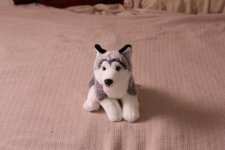
3. I took a quick test shot, no white balancing done, just strictly to get an idea of the lighting. This photo was taken with the DIVA and a circular white reflector on the other side.
Can anyone give me an idea of whether they think the light is bright enough, evenly lit, if I will need a stronger light like a 4-Bank KNO FLO, if the light seems soft, etc.

Thanks!!!!
 

Attachments

  • light1.jpg
    light1.jpg
    58.7 KB · Views: 0
You'll have to experiment with reflectors to see what the differences are. Foamcore is a bit more specular than beadboard, and white fabric would be very soft. Silver/gold reflectors are the most specular, and allow you to bounce from a further distance. There is no 'right or wrong' to lighting, there is only cause and effect. You can probably find some good tutorials online for both photo and video. Look for lighting diagrams and read the forums on cinematography. Lighting is subjective, but you should able to find tutorials that will put you in the ballpark (depending on what you want to achieve). As for levels, keep in mind that there is an inverse square law with lights, moving a light twice as close increases it's illumination by a factor of 4. Hope this helps.
 
What is the downside if you need brighter lights, and you move the light twice as close or even a bit closer to increase its illumination? Does this make the light harsher, even with the flozier attached?


You'll have to experiment with reflectors to see what the differences are. Foamcore is a bit more specular than beadboard, and white fabric would be very soft. Silver/gold reflectors are the most specular, and allow you to bounce from a further distance. There is no 'right or wrong' to lighting, there is only cause and effect. You can probably find some good tutorials online for both photo and video. Look for lighting diagrams and read the forums on cinematography. Lighting is subjective, but you should able to find tutorials that will put you in the ballpark (depending on what you want to achieve). As for levels, keep in mind that there is an inverse square law with lights, moving a light twice as close increases it's illumination by a factor of 4. Hope this helps.
 
I thought the 4Banks were much brighter than the Divas and designed to be much brighter to light things like backgrounds. What is the main difference between the Divas and 4Banks, just that the surface of the lights are larger so the light is spread over a larger area?

FYI a Diva 400 is about a bright as a 4' 4Bank.
 
The inverse square rule says that any time you double the distance from a source to a subject, you retain 1/4 the light. So if you move the lights twice as close they'll be four times as bright.


Any time you move a source closer to the subject, it becomes softer. Any time you move it away, it becomes harder.

Hope that helps.
 
My personal preference is to not bounce kinos, and instead use diffusions and use them as direct lights. Ill put some light grid on a Diva with the doors wide and it functions as a decent soft light without sacrificing light. If I decide to bounce, Ill use something with more punch into a much larger bounce, such as a 4x4 or a white wall.

My basics of lighting: Intensity, Shape/size, and Color. Intensity and colour are pretty oblivious, but think of shape when you are trying to make soft or hard sources. Kinos are naturally soft because they generate light continuously through their large bulb. Divas wrap nice and soft at close distance, but a 4 ft kino wraps more because its physically longer. Tungsten lights are point sources, so very hard as all light comes from a small piece of tungsten. But shoot that into a 4 x4 bounce, and now you have a large soft source.

But keep doing this, experiment more, and develop your own style and approach. There are a million different combos to light a subject, and with practice you will figure out which lamps and modifiers you prefer to work with.
 
Thanks for all of the replies.

1.) I'm shooting a subject on a bed which is much lower than the height of the Diva on the C Stand. Generally, is it better to just aim the light downward or find a way to lower the height of the light?

2.) I'm playing with the flozier and different amounts of dimming and distance of the light from the subject. I am not using a light meter. Am I working completely blind without a meter? Do you always use a light meter? I'm simply lighting the subject and playing with different settings on the camera and getting decent results, though I know it can be better.

Thanks.
 
1) If you want the light lower, find a way to get it lower. It's really up to you. You can use a shorter stand, you can put it on an arm, you can bust out some clamps

2) I always use a light meter. Can good images be made without one? Sure, there are many tools to help you get the look you want. But I find a light meter is very valuable among them. Maybe to help figure out if you need one, you can explain your thinking on either why you might need one, how you might benefit from one, or why you aren't using one.
 
First off, too-bright or too dark - beyond technical limitations... is up to you and your vision of what the shot conveys.

Reflectors - the best way to learn is to move them all around while you watch the subject. You should really be able to see how shadows change, etc. or if you even need a reflector. Looks like you shot the husky in a bedroom - if so, the walls and ceiling are reflector as well. Big, soft subtle ones, but they're doing something.

Ever see a fashion shoot on a beach? The way reflectors are often held seems counter-intuitive - up over head and angled so the bottom of the reflector is closer to the subject than the top. that's often the way that looks most natural, but I can guarantee you, someone stood there, twisted the reflector angle, rotation, plane and height every which way while watching the subject. The "correct" angle is found there - it's unknown until you see what works.

Look at the subject as you light. "Three point lighting" is often effective, but can also be the silliest knee-jerk beginner oddity - setting up all these lights before you even look at the subject in the space.
 
Lightmeters can be handy in many scenarios, & I have several types, but it's been years since I've regularly carried them.

The most important tool is your eyes & they need to be trained to see photographically.
 
Back
Top