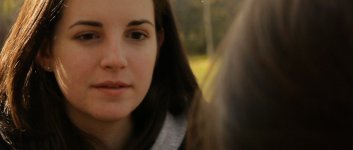
Anamorphic Testing

ryancglover

Well-known member
hey everyone.

was thinking about using this adapter for an up-coming short.. so here's some tests i shot over the weekend to look at focal lengths/framing, sharpness, bokeh and flares.. i tried to include the good and the bad in this montage.

shot handheld with Panasonic LA-7200 1.33x anamorphic adapter @ 1080P with 720P for slow motion.
Canon FD glass: 24mm f/2.8, 28mm f/2, 50mm f/1.4 and 85mm f/1.8.
ND 3, 6 & 9.

pulldown removed with JES and cut in FCP.
some mild CC and a touch of film grain for fun.

let me know if you have any questions. thanks for watching.

HD-> http://www.vimeo.com/7526675

 
I'm a sucker for anamorphic. You have pretty good framing too. Can I ask what adapter you're using? I use FD too, and I'd love one of these.
 
Neat, very neat. Downloaded the Quicktime at Vimeo and checked. Looks like the adapter works well with the FD lenses. Doesn't get hopelessly soft at the edge when in focus as the screenshot here shows. No disastrous chromatic aberration either. Both of which is something I've seen on other anamorphic tests. How does focus pulls work? What your clip does show though is that jello effects due to vertical jitter gets 'enhanced' so one has to be careful in avoiding that as much as possible.
 

Attachments

  • Pana7200frame01.jpg
    Pana7200frame01.jpg
    116.3 KB · Views: 0
thanks martti. Focus pulls seem to work as usual, although close focus and infinity seems tricky.. (focusing with the adapter in general is tricky, especially handheld in bright sun) i could get the edges sharp if i stopped down enough, but then you loose your shallow DOF, so then i'd switch to a longer lens, but then you'd get crazy jello haha.. (the still that you posted was the 85mm at around f8 i think). so.. the adapter can be a frustrating pain..

using a wider lens the center is pretty sharp at more open f-stops, but you have to watch your edges.. you can see how strange the edges are in the first shot of the video.
 
Looks great! Have you tested it with the 14-140 kit lens? if so does it show any vignetting at 14?
 
thanks martti. Focus pulls seem to work as usual, although close focus and infinity seems tricky.. (focusing with the adapter in general is tricky, especially handheld in bright sun) i could get the edges sharp if i stopped down enough, but then you loose your shallow DOF, so then i'd switch to a longer lens, but then you'd get crazy jello haha.. (the still that you posted was the 85mm at around f8 i think). so.. the adapter can be a frustrating pain..

using a wider lens the center is pretty sharp at more open f-stops, but you have to watch your edges.. you can see how strange the edges are in the first shot of the video.

I think given the difficulties of working with the two focusing planes when using Anamorphics, this handheld footage looks remarkably good. I like the way the first shot looks a lot, and I think the softer edges, depending on the kind of project you are doing, can be used to ones benefit, helping us focus primarily on the subject and aiding "immersion," I was immediately sucked in.

I'm trying to decide now whether I want to go the route of anamorphics or not on a feature that I'm going to be producing early next year. I think your footage looks fantastic. My project is a comedy, which typically is not the sort of project that is 2.36:1, however, I love that aspect ratio and come from a photography background, and I just love the kind of framing you can do with the wide aspect ratios...so I am considering it, despite the many challenges anamorphics present.

Could you give us a rundown of the lenses used in each shot and the apertures you were using? I'm going to mostly be shooting interiors on my upcoming project and my primary concern about using anamorphics is that I may need to stop down further than 2.8, which I'd rather not do, as I don't know that I'll be able to light for f4-f5.6 consistently, and I want to keep the iso down low just in case we ever do a film-out.

I will be shooting with a tripod almost exclusively, I don't think there will be any handheld.

I'm using Canon FD glass too - including what has become one of my favorite lenses, a 24mm f1.4 L which I think is going to get most of the shooting duty for this project along with a Contax Zeiss 50mm f1.4, Canon 28mm f/2, Canon FD a 35mm 2.8 Tilt/Shift and one of these new Samyang 85mm f1.4s (great!)

I'm curious about close-focus - could you give an example with one of your wide lenses in regards to how close-focus was affected with the anamorphic adapter (i.e. if you could do it at 1 foot with the 28mm without the anamorphic, could you still do this *with* the anamorphic or did you have to step back, and/or stop-down).

Lots of questions, I know - I think I'm going to just have to pick one of these up and try it, but I'm certainly curious and I think your footage looks not only spectactular, but a number of the shots look really cinematic, I was immediately sucked in more than I typically am with such footage...maybe it's because you've got cute girls in this project ;)
 
In my own testing with the Panasonic anamorphic adapter on my (now retired) Nikon D90, you could get down all the way to f/2.0. Soft? Yeah. Usable? Definitely! However, the sweet spot is, as always, around f/4.0-f/5.6. If I had to compromise for low light, I'd opt for f/2.8 at the least just for a good balance of light and sharpness. Do remember that you can add sharpness in post, even if it's just a little, and actually, with the anamorphic squeeze and all, I've found that it's possible to add a little more sharpness than normal.

Unfortunately, the biggest drawbacks when using this adapter is that wide angle lenses kill the anamorphic look of the lens, except for the flares which are always nice (try putting this on a Tokina 11-16 lens at 16mm, it's really neat!), and low light lenses in the f/1.2-f/1.4 range are useless because everything becomes a blurry anamorphic mess at those apertures.

Also, if you're looking for more anamorphic artifacts besides flares, you're simply going to have to use longer lenses. On my D90, I didn't start to see big bokeh changes until I reached the 85mm range. However, going to 250mm-300mm range, the lens couldn't take it and everything started to get too blurry (there's a term for this, I just can't think of it right now). This was testing with a Tamron 28-300mm f/3.5 zoom lens though, a 300mm prime for instance, could provide entirely different results.

In any case, if you're wanting to get into anamorphics, the Panasonic adapter is the best way to go at the moment. I'd love to try a Kowa 2x but they're being bought up on eBay like nobody's business at the moment.

P.S. Close focus is indeed an issue. You're going to need to bring in some diopters to do certain close up work.
 
Not so wide as i expected it to be,1.33 is definitely too small for this anamorphic feel on gh1.
OR.. its because of fd glass and wrong crop factor with them.
Would like to see proper 28mm non crop lens for gh1 and anamorphic.
 
hey Apocalypse, Jack’s experiences are pretty detailed and identical to mine. I too didn’t see any big changes in the shape/feel of the Bokeh until around 85mm (which is obviously a pretty tight FOV on our GH1s) And the flares get more pronounced with longer lenses too, but the longer the lens, the further you need to stop down to get acceptable sharpness. And as jack said 2.8 is as open as I’d shoot a 24mm lens, and I personally find the edges a bit too weird (if there’s something important near them) until around f/4, from what I can remember. Minimum focus is around 36” maybe? Maybe less if you stop down far enough?

I have yet to try it on the kit lens, because the only step up ring I have found so far that has deep enough threads to grab onto the LA7200 is an old 52-72 ring. So I have no wide angle experiences with it yet.

Here’s the attempt at an info rundown of some of the shots in the video.

- sitting on ledge – 24mm @ f/2.8
- backlit flare - 24mm @ f/8ish?
- portrait CU – 50mm @ f/4&½

- low angle 2 shot - 24mm @ f/2.8&½
- OTS CU’s – 50mm @ f/5.6
- OTS Medium - 28mm @ f/5.6?

- far too jerky tracking shot from behind 24mm @ f/4

-picnic table scene – all shots on 85mm @ f/5.6, f/8 and f/11

-excessive flare montage – all shots on 50mm progressively being stoped from f/1.4 to f/11ish

-sunset montage – all shots on 50mm @ f/1.4 or f/2 – real soft.. the last one may have been f/4 because it looks more acceptable..

-night footage – most shots on 50mm @ between f/1.4 and f/4. last shot is the 28mm @ f/4

I’d say the best idea is to grab one for yourself and try it out.. I have to say though, I don’t know if I’d put up with all the quirks while shooting a feature of mostly interiors if I had a limited lighting budget. I’d probably mark the lcd for 2:35:1 and crop in post. But, yah, you should do your own testing for sure.. its fun.
 
Not so wide as i expected it to be,1.33 is definitely too small for this anamorphic feel on gh1.

Exsqueeze me? It gives a 2.35:1 image which happens to be the classic 'Cinemascope' aspect ratio, just a tad less wide than the modern 2.39:1 from Panavision.
 
OR.. its because of fd glass and wrong crop factor with them.
Would like to see proper 28mm non crop lens for gh1 and anamorphic.


ditto what martti said.

the gh1 will crop all glass the same, so 28mm on the m4/3 kit lens with the anamorphic adapter will look the same as the FD 28mm with the anamorphic adapter.. do you mean use a 14mm lens so that the FOV matches a 28mm on a full frame camera?
 
Last edited:
I don’t know if I’d put up with all the quirks while shooting a feature of mostly interiors if I had a limited lighting budget. I’d probably mark the lcd for 2:35:1 and crop in post.

Hey Ryan, Thank you very much for the detailed answer. I think I am going to give it a whirl...

I am thinking that I might not go anamorphic for the entire project. I think I may go anamorphic when I can, and then crop other scenes to 2.36:1 and intercut the footage.

The way I figure it, in most cases this film will be shown digitally projected and it will likely be playing off blu-ray (festivals, small indie theater houses, etc.) and I think if I output a squeezed image to blu-ray, I may have trouble finding projection houses that will be able to unsqueeze the image with a lens, since it's 1.33x instead of 1.5x or 2x, which seems more common (am I right about this?)

So I may end up outputting the entire film as a letterboxed version for blu-ray anyways. The *look* that comes with anamorphics is something that I really like, so I think I will still benefit from the shots I do shoot with anamorphics. I may shoot anamorphic versions of everything, and the shots that don't work well anamorphically, I'll just shoot both with and without the adapter and have two versions available.

My other concern has to do with a potential 35mm film-out at the end of this project if all goes well *fingers crossed.* I'm thinking that more than likely, we'd unsqueeze the image and output it as cropped 35/S35, because of the sort of odd nature surrounding shooting 16x9 with a 1.33x squeeze.

My guess is that I'd have trouble putting a squeezed 16x9 image out to 35mm film and finding film houses that would be able to unsqueeze it properly, as 1.5x and 2x anamorphic projection lenses seem to be the norm, not 1.33x that they would need.

As I see it, we'd still get the resolution benefit of shooting with anamorphics on those scenes which utilize them, and if we limit the number of non-anamorphic scenes, I think the footage may intercut acceptably well.

Does any of the above make sense? The easy way would just be to crop, for sure, but I really do like the look that shooting anamorphically offers. Not only that, but am I also correct that you get a slightly wider field of view when shooting anamorphically than without? This would certainly be a benefit when you'd like a bit wider angle.
 
i havn't given too much thought to projection yet.. i'm thinking that digital projection would most likely take place using a 1.78:1 image letterboxed to 2.35:1. no? just like blu-rays and dvds.

and as for film-out, i've never done one, so i dont know much about them, perhaps you could take a 1920x800 export or (whatever the math is) and squeeze that by 2 onto film? i assume you'll take a hit on vertical resolution though.

and yep, the anamorphics will widen your FOV horizontally.. which also means more cash for set-dec and having to keep your lights and stands further from your scene.. everything is a trade off it seems haha..
 
i havn't given too much thought to projection yet.. i'm thinking that digital projection would most likely take place using a 1.78:1 image letterboxed to 2.35:1. no? just like blu-rays and dvds.

and as for film-out, i've never done one, so i dont know much about them, perhaps you could take a 1920x800 export or (whatever the math is) and squeeze that by 2 onto film? i assume you'll take a hit on vertical resolution though.

and yep, the anamorphics will widen your FOV horizontally.. which also means more cash for set-dec and having to keep your lights and stands further from your scene.. everything is a trade off it seems haha..

Indeed! But I don't mind getting a bit wider FOV since the widest lenses I've got are a 20-35 f3.5-4.5 Eos lens, and a 24mm F1.4 L FD mount lens, so neither are super wide (even with an anamorphic adapter) because of the FOV crop of the GH1 sensor. I don't have the kit lens as I bought the camera body only.
 
Be sure to test this footage shot with the anamorphic adapter on a big screen if you feel like that is where this project will really end up.
More likely than not your feature shot on a GH1 will not get picked up for theatrical release. That's just how it is. Even the feature David Mullen shot on 35mm featuring bruce wilis got straight to dvd. I really would not worry about filmout details.

Mostly this will be viewed on a cropped version of a SD dvd.

ryancglover, stopping down your lens will not help min. focus. The min focus on a lens is the min. focus. If you want to change that you need to add a filter.

Shooting anamorphic at 1.4 is just silly. Wayyyyy too little is in focus. As stated to get the best performance you need to stop down to 4-8.
 
More likely than not your feature shot on a GH1 will not get picked up for theatrical release.

No question that this is likely the case, but I would rather have a project that could be ready for this in case it were to happen - or if I decide to do a film-out myself for certain festivals and or to show it at independent theaters. I simply don't know yet but just the same, I am trying to plan. I'm not shooting with the GH1 because I *have* to - I'm' shooting with it because I want to, and the possibility of anamorphics is exciting. It may or may not be right for this project - I'm still undecided on that, but I want to have a plan that covers my bases.

I could rent a RED for this feature if I were so inclined, but there are a number of advantages with the GH1 for the film I'm doing (especially low light exteriors) and I just plain like the look of the GH1 with my Canon, Nikon & Zeiss glass. I am very comfortable with this camera and lenses, it's sort of the video camera I've been waiting for...for the last 10 years. I am absolutely thrilled by it.

I was (and am) primarily a stills photographer and still do it professionally (primarly college sports, as well as product phography) etc., so the SLR (even though the GH1 is mirrorless) form factor is something I like and am extremely comfortable with and innately understand. I've shot with lots of good video cameras when I have DP'd shorts, but I've never particularly liked the video camera form factor. The way I *think* about shooting and make adjustments is with a still photographers mindset (In the last 10 years, I've literally shot about half a million photographs both digitally and on film - so I am simply most comfortable using a tool that feels like an SLR) - hence there is a lot more behind my reasoning than the fact that it is an inexpensive camera with HD capability - it's the right tool for this project, and the right tool for me as a director of photography. I actually *like* that it doesn't really do sound very well at all! It gives me a scratch track to sync the second system and that's all I want from it.

I am 100% certain that if I were to shoot this on 16mm/35mm/RED, whatever, that the movie wouldn't be any better than I can make it with the GH1...and that is what counts. If the RED Scarlett were available, that might be my choice...but it's not, and there are issues with the 5D and 7D as well that have caused me to choose the GH1. Don't get me wrong, I'd love to shoot real 35mm film, but it wouldn't make a bit of difference in telling the story, which is the absolute strength of this production...and as your point illustrates: shooting on 35mm and having a big name actor involved is no magic bullet for theatrical release, it certainly improves your chances, but a bad movie is still a bad movie no matter what you shoot it on, and vice versa.

I'm intending to make an honest-to-god good film that happens to be shot with a GH1. Not a GH1 film that happens to be good.
 
I can see jello much easier this way. Looks like with anamorphic lenses you would most definitely have to lock it down. Nice info here.
 
Back
Top