Advice o Scrim Jim and how many watts Fresnel?

KV Films

Active member
Hi, I need some Advice, I'm buying a 42 x 72 Scrim Jim, pretty sure also a 3/4 silk (at least someone else recommend a different one like a Full one or 1 1/4 stop) I have 2x 800W red Heads I have the possibilities to rent a 1200W HMI (but this increase expenses) all this is to light a few night scenes with 3 to 4 people. all really close to each other. do you guys think the 2x Redheads and the 3/4 stop silk will be a good combo?
thanks

Depends, of course, on the motivation for your light in your night scenes. If you're trying to get a moonlight effect, then the HMI will be closer (bluer). If you are trying for that streetlight effect, then there are gels you can use with either tungsten or HMI to replicate the light from sodium and other light sources -- and you won't need diffusion since streetlights are hard light point sources that throw sharp shadows. So is the moon for that matter, unless you are trying for moonlight bouncing off the side of a house for example.

Give us more information about what you are trying to accomplish and we can perhaps give you more specific answers.
 
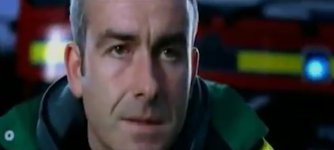
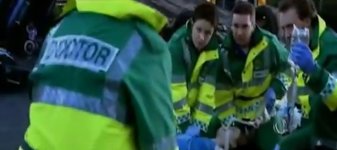
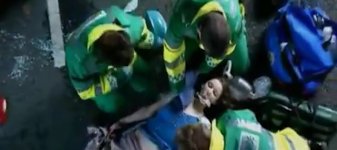
Hi Thanks for you reply, I don't think I trying to get a realistic look, more like a Soft Box look a little bit like these

2012-04-12 05.34.16 pm.jpg2012-04-12 05.34.02 pm.jpg2012-04-12 05.36.32 pm.jpg


Depends, of course, on the motivation for your light in your night scenes. If you're trying to get a moonlight effect, then the HMI will be closer (bluer). If you are trying for that streetlight effect, then there are gels you can use with either tungsten or HMI to replicate the light from sodium and other light sources -- and you won't need diffusion since streetlights are hard light point sources that throw sharp shadows. So is the moon for that matter, unless you are trying for moonlight bouncing off the side of a house for example.

Give us more information about what you are trying to accomplish and we can perhaps give you more specific answers.
 
Hi Thanks for you reply, I don't think I trying to get a realistic look, more like a Soft Box look a little bit like these.

If that's what you are going for, then all you have to do is the math. One stop of diffusion costs you half your power. So two 800w instruments becomes one. Then if you want that bluish light that people associate with night, you'll have to use at least a full CTB gel on both lights, maybe more. A Roscoe #3202 gel has 36% transmission, so your 800W becomes 288W. If you can get by with roughly 250W of diffused daylight lighting (using both 800W lights, full CTB gels, and a 1 stop diffusion), then that'll work for you.

Else, you can rent the HMI which will give you lots more light through your diffusion. If you want bluer still you can use much less gel, say a 1/4 CTB.
 
If that's what you are going for, then all you have to do is the math. One stop of diffusion costs you half your power. So two 800w instruments becomes one.

As much as I wish this were all true, reality is bitin ya in the butt here on a few different points. Adding an 800w lamp to another one does not double the output. I remember having two 2k zips next to each other and taking meter readings before and after...There was about 1/3rd of a stop difference with two lamps compared to one.

As far as diffusion goes, I really don't quite understand this fully, but I know for a fact that the light loss is not only determined by the density of the diffusion, but also where the frame is placed in relation to the talent. As you walk the frame in more you'll find that you'll lose more and more light.

I wish it were just "oh, 216 cuts 2 stops of light and 250 cuts a stop", but for some reason it just doesn't work that way. My guess was that a certain diffusion has 50% transmission, but you have to figure that 50% from where you set the frame. Using the inverse square law you figure out the output where the frame was placed, then take 50% of that. This may be wildly inaccurate, but it's the best excuse I could come up with from what I saw. Anyone else have any idea?

Honestly, I would buy a couple 4x4 frames instead of the scrim jim, then just skin them with different diffusions. Start with 251, 250, and 216. I don't think you'll really need the HMI, but you could use some more tungsten lights, do you have anything besides the two redheads?
 
As far as diffusion goes, I really don't quite understand this fully, but I know for a fact that the light loss is not only determined by the density of the diffusion, but also where the frame is placed in relation to the talent. As you walk the frame in more you'll find that you'll lose more and more light.

You can't figure it that way. If diffusion is one stop, then it cuts light in half at the same distance as if it weren't there. You can't measure it with no diffusion at 10 feet and then measure it with diffusion at 6 feet and expect the difference to be a stop. If you're taking into account a distance difference that way, then you're just doing the math wrong.
 
I don't know if I quite follow you. Think you can give another go at explaining what you're trying to say?

Here's a run down of what I'm saying. I'll just estimate stops to make it a little clearer.

With the light 20' away and diffusion frame 15' away I get a t4
With the light still 20' away and the diffusion frame 4' away, I get a t2.8

Used the same density diffusion, didn't change anything but where the frame was placed. I'm also not doing any math here at all, only relating personal experiences.
 
The question for me, is why you want to use soft light at night? Shadows, deep ones, are normal at night for outside. No clouds in the sky to soften things up, so no matter what light sources things at night are lit by, they're all hard. I've always thought that the early cinema and TV stuff that uses filter to make day shooting look like night always worked badly because of the lack of shadows. The HMI will have punch, and the redheads will cover the holes - I'd scrap the silk idea altogether.
 
You're diffusing the light at two different locations, which works out to the same thing. A one-stop diffusion is going to cut the light in half, whatever the level of light that happens to be hitting it. If the diffusion is further away from the light, then the light hitting it is going to be less.

If you want to be able to measure a full stop of difference from the light, then you need to be measuring it with everything else being equal. When you set up diffusion, the diffusion BECOMES the light source, so the inverse square rule applies from the location of the diffusion, not the location of the light.

Gotcha, I never quite understood where they were measuring from when Lee or Roscoe says there's a two stop loss in this kind of diffusion, but it happening where the light first hit the frame makes a lot of sense.

I think that does confirm my original post though. Placing your frame of diffusion at two different locations comes out to be different light levels by the time it reaches the subject.

Try working out the math and placing the frame at two different points in a photometrics chart, restarting the inverse square when you hit the frame.You'll come out with two different numbers at the end.
 
But both of these numbers will still be half of the light output you would have got compared to measuring the lights naked from both of these distances respectively.
 
Gotcha, I never quite understood where they were measuring from when Lee or Roscoe says there's a two stop loss in this kind of diffusion, but it happening where the light first hit the frame makes a lot of sense.

I think that does confirm my original post though. Placing your frame of diffusion at two different locations comes out to be different light levels by the time it reaches the subject.

Try working out the math and placing the frame at two different points in a photometrics chart, restarting the inverse square when you hit the frame.You'll come out with two different numbers at the end.

The Inverse Square Law relates to 'point source' lights. For the panel that becomes the defuse illumination on the side opposite the light, for some distance from the panel the Invere Square Law does not apply.

I've seen various estimates based on the diagonal of the diffusion surface, the 'square law' begins to hold, and as the diffusing surface becomes more 'point like', ILS holds. One of these days, perhaps I do a junior science fair project on the subject...

Think about it light is hitting the subject from light is 'emitted' from all over the panel. Say at 2 feet for a 5'x5' panel. Place the subject at 4 feet and if one had had a point source, ILS would have predicted 1/4 power... this is not the case... because light emitted from the 'corners' of the 5'x5' will not have traveled 'double the distance...

In the case of a Fresnel lens, the point of the fresnel lens is to bring the light more into 'parallel' and so, there is less 'divergence' than would be the case if the light were a point source, and so ILS does not hold
until the distance to the subject, is 'large'.
 
Back
Top