5Dm3 vs D800: dealing with the limitations

Greetings, everyone, first time poster here :D

I'm trying to decide between the two cameras. I have some experience in the photography world, but very little in the video world. From what I've seen in discussions, reviews and videos these are each camera's main weaknesses:

5Dm3:
1. Less resolution: can be sharpened in post.
2. Less dynamic range: details can also be pulled up in post.

D800:
3. More moire/aliasing: I'm not sure if this can be effectively removed in post, need someone to chime in.
4. More noise in low light: can be eliminated by good lighting or with softwares like Neat video.

What I'm concerned with is the ease (time and cost) and effectiveness (sharpening causes artifacts, noise reduction robs details, etc...) of existing methods to mitigate these limitations. Based on your experience, which set of limitations would you rather work with?
 
I have the 5d Mark III and my business partner has the D800. We shoot together (both stills and video) and for video we blend and edit the footage from both cameras.
Unlike what is mentionned in the various reviews and reports I will give you my personal experience:
1) The 36mpix Nikon has definitely better resolution and dynamic range. Comparing stills from Canon L lenses on the mark III and Nikon lenses on the D800, the Canon pictures appear a bit more muddy, the Nikon are impressively crisp even at 1:1 magnification. I think it has to do with the filter in front of the sensor (the Canon filter appears to "mute" a bit of resolution, probably to exhibit less moire in video?). Same observation holds for video. The Nikon has better resolution and footage appears more crisp. Naturally both cameras deliver professional quality results, but if you compare them side by side the Nikon has the top hand.
2) The D800 has better Auto White Balance than the Mark III. Canons always tend to overdo with a magenta tint.
3) At the same nominal ISO setting for both cameras and same f-stops and shutter speed, the D800 is one full stop brighter than the mark III (both for stills and video). ISO 3200 on the Nikon is as bright as ISO 6400 on the Canon. This difference may be the origin of what is usually stated in the various reviews regarding more noise on the Nikon at the same ISO setting. Most probably for an ISO setting of 3200 the Nikon exhibits the same noise that the Canon exhibits at ISO 6400, but this is normal as the nominal ISOs correspond to different gain for the two cameras!
4) The Nikon handles very nicely the noise in high ISOs, and to my eyes the Nikon noise is more organic than the Canon noise!
5) So far we haven't been shooting brick walls (:p), but in real world conditions I haven't noticed much more Moire/aliasing from the D800 than from the Canon. Both cameras appear to be very satisfactory at this level (again I haven't done an extensive specific test, but have never had an issue with moire so far).
6) The D800 has the advantage to shoot crop sensor with the push of a button (both stills and video). So with one lens you get two focal lengths. This is very handy. To do this on the Canon I have to either swap lens, or to use a second Canon body with crop sensor... Another advantage is that you can use Nikon crop sensor lenses on the D800 (if you already have them) as if it was a crop sensor camera.
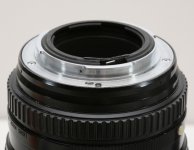
7) The 5d mark III has the advantage that you can use many old manual lenses that you cannot on the Nikon (M42, Leica R, Olympus OM, Pentax K etc). On the D800 speaking vintage glass you can only use old Nikon lenses, but then again this is an excellent choice!
8) The Nikon Auto Focus for stills in very low light is more reliable than the Canon.
9) The D800 body is less expensive than the Mark III.

All in all, if you are not limited by existing lens setup, I would definitely advice that you look more closely into the D800. To me it appears to be a more complete solution and best value for money.
Again I have a Canon, and often when talking about cameras with my partner I tend to say that his D800 sharpness is "bothering" :p and that Canon image is more organic. But of course these are just all arguments to defend my choice of camera.
If I was to buy a new full fram camera now with no limitations due to the existing lens setup, I would also look closely into the Sony A99.
Hope this helps.
 
Excellent review! Still debating myself between these two. Wondering if anyone uses a FF camera with a Panny GH series as either a A or B camera and how it works out.
 
The 5d mark III has the advantage that you can use many old manual lenses that you cannot on the Nikon (M42, Leica R, Olympus OM, Pentax K etc

You need to remove the aperture control lever and the lever protection shield tab from the Pentax K-mount lenses to use on the FF 5D cameras. The only full frame camera that works with all Pentax K mount lenses without this mod is the new VG900.
212932.jpg
 
You need to remove the aperture control lever and the lever protection shield tab from the Pentax K-mount lenses to use on the FF 5D cameras.

Exact. But it is something reversible and very easy to do with two small screwdrivers. I did it myself, and I am not considered to be very good at diy :p
 
Great post

I aggree with nearly everything you said.

The exception would be white balance: in my limited time teseting the D800, I found WB one of the biggest issues of the camera: custom white balance (the one where you shoot at a white card and define that as white) went wrong a couple of times, and the screen has a slight color tint that makes it somewhat difficult to dial in a K number by hand.
It's not perfect on the Canons either, but at least it doesn't go very wrong from time to time. My NEX-5N would be the winner here.

At the same price, I think I'd go for the 5D3. If the D800 is $200 cheaper, I'll probably go for that one instead.
Also, that's because I don't shoot many stills. If I was shooting both stills and video, I'd go for the D800 even if the prices were the same.
 
Last edited:
I've noticed a miniscule amount of moire when shooting extremely fine detail on the mk3....but I don't think any camera would fair much better.

Sharpness is a non issue for me. Images are sharp enough (i have +1 sharpness dialled into my pp) and with further post sharpening, it can almost rival my previous (really quite sharp) 1/3'' video camera.

Low light on the mark3 is not as good as the hype makes it out to be. 6400 is good, but there is noise, 12800 is really quite noisy. I mean, yeh, if you absolutely need light, you can use it, but I wouldn't recommend it. Get some lights. It's still very, very good, though...just that I have no idea how those 'tests' videos are able to get virtually no noise at 12800.

Rolling shutter is awful....but that's to be expected. IS helps a lot.

Dynamic range is quite good, actually. With cinestyle/flaat, you can yank out a nice big chunk of DR and I usually shoot slightly under exposed and pull the shadows in post. This gives me sufficient DR in most cases.

here's an idea of what you'll get out of the mark3 with only natural lighting. (don't base sharpness on it, though. It's been converted to 720 by vimeo)
https://vimeo.com/57495472

As you can see, DR is mostly sufficient. Low light was slightly less impressive than reviews made it out to be. A few scenes near the end were shot at ISOs between 6400 and 12800 and you can definitely see some noise. It's still mostly usable, though. The interior shot at 3.04 minutes was very noisy due to user error, though. I shot it underexposed by accident and had to pull it in post. (don't do this ever)
 
Last edited:
The exception would be white balance: in my limited time teseting the D800, I found WB one of the biggest issues of the camera: custom white balance (the one where you shoot at a white card and define that as white) went wrong a couple of times, and the screen has a slight color tint that makes it somewhat difficult to dial in a K number by hand.

Are you referring to the green cast of the Nikon screen?
The screen has indeed a green cast that can be corrected with a slight magenta film (before Nikon does it by firmware).

As for the resolution:
I now happen to shoot almost 50% stills-50% video for paid gigs and when comparing Nikon to the Canon, only stills shot with the EF 70-200mm f4 L IS lens and sharpened in post can be compared to the Nikon raw file unsharpened.....
I then call this organic :p ....
 
I'd call the tint "yellow" rather than "green", but yes, that. And also the fact that the method where you shoot a white card and use that to define white let us down, in the D800, in 2 out of our 4 tries (it set WB to clearly wrong values; I might have been able to avoid this if I was expecting such behavior, but I wasn't, so it slipped through: I was expecting it would just work and didn't notice).

(I've only had the D800 in my hands for two days, so take everything I say about it with a compact-car-sized grain of salt)
 
I have been a Canon shooter for a while. I was looking at switching to the D800 instead of the MKIII but the reverse focus direction sealed the deal for me. I need to keep the SDOF camera in line with my other video work. I do not want to mess with years of muscle memory. So I stayed with Canon. Too bad that Nikon designs lenses counter to the video world.
 
You can use vintage Leitz glass for the Leica-R mount (which focus in the usual direction) on Nikon bodies. Amazing image quality, much cheaper than, say, modern L or zeiss glass. The adapters from Leica-R to Nikon-F are semi-permanent (it's a mount replacement, actually).
 
Back
Top