$150 for a 575 HMI par?

I'd be interested in what you're using to check for dangerous U.V. Sounds like it would be a practical investment for DIY projects with short arc bulbs.

Thanks.

I just got one of these:

http://www.ebay.com/itm/231484807045

It seems to work quite well. I was surprised when one of my lights had really high UV output (UV Index 19+ in the hot spot) and the other had almost none (Couldn't get it to read past ~4 anywhere in the beam at close range) according to the meter. I thought maybe some lenses were coated but the lenses didn't make any difference so I took out the bulbs and found one was a UV-blocking bulb, which seems to confirm the general accuracy of my tester. It did seem like UV levels even on the unit with high UV output that bounced sources from it barely gave off any UV which is at least a little comforting but obviously it could be disasterous to use one of these to light a person directly without a UV filter (I pretty much would never point a light this bright and harsh straight at talent anyway though). I would be worried about people looking at the light though since it seems like the meter is incident light only so it might not be so effective at measuring the danger to someone's retinas who might just be looking at a specular or lens-spill from it.. Needless to say UV filter gel will be my next purchase. I might look at buying another UV-blocking bulb though since I don't always trust gels as they may fade pretty quickly at close range. Unfortunately it looks like the UV-block bulb life is only 750hrs and they are harder to come by.

Btw what do you think is the catch on this bulb? http://www.ebay.com/itm/141887985164 Maybe it says new but is actually used?
 
Last edited:
As lamps are consumable items, and you have no way of knowing what is in one - normal or UV controlled, the filter is essential. They are rarely gel (because it melts), but dichroic glass.

I still cannot get my head around the idea that you would put a light source into a fixture that costs more than the fixture, and can die on you at any time! You can replace a cracked lens, or fix a bent bracket, or replace wiring - but a one piece led source that costs that much is just madness. It will take years to recoup on electricity savings, has no worth once it's in as a resale item. It also rarely outperforms the old source - so why are we going mad about them?

Yeah I'm considering picking up a dichroic filter, but they seem to be $100 or so for this size...

Not sure I understand what you are referring to in the second line. Are you talking about the bulb for these HMIs? or an LED? I guess I don't really understand what you are saying or who you are saying it to, sorry, would you mind clarifying?
 
Last edited:
That's a meter for checking solar UV radiation against sunburn risk. To put it mildly, it may not be suitable for assessing the UV hazard presented by lighting.

All this talk of gels for safety is madness. They're intended to stop window light fading artwork and merchandise, not to prevent a light damaging your eyes. They may not attenuate the dangerous wavelengths sufficiently, and you won't be able to tell when the gels have been damaged and that may happen very, very fast, especially with these PARs which tend to go through filters like a laser beam. As Mitch quite correctly says, you will not know when the damage has occurred. The process of being injured is not painful. The first you, or anyone else, will know about it is when you wake up the following morning with ulcerated corneas.

The dichroic filters may work, but you would need more than a sunburn meter to be sure of it.

P
 
Last edited:
I completely understand the tendency to be overly cautious since what you don't know can hurt you, but there will always be risks. Even in high priced film lights there is a possibility of misuse or filtration breaking or being insufficient so to some degree I think it is reasonable to expect some safety given an awareness and understanding of these issues. Frankly that's also why I'm considering just using UV-block bulbs so none of this is much of a concern. Most film HMIs don't use UV block bulbs, the UV blocking occurs somewhere else and needs maintenance and needs an operate to be aware of it. To say that using a gel that is designed to block <410nm light and using a UV tester designed to measure dangerous UV spectrum is not enough may be true in some cases but it seems a bit alarmist to make it sound like we are crazy to expect any level of safety with gels dichroics and regular testing...
 
I maintain my objection to the gels and the tester. Neither is even vaguely designed to do what they're being proposed for here.

The gels may not attenuate the right wavelengths, may not do so sufficiently, and are likely to fade in minutes (colours certainly do on PARs). The tester is designed to assess risk to the skin, not the eyes, and it's designed to measure sunlight, not artificial light.

Neither of these things is anything like suitable for the task to which it is being put and the false sense of security thus created is dangerous.

There are UV exposure meters on ebay which I would suspect are more suitable, but they are a lot more expensive than these sun exposure things. I suspect, but do not know, that the dichroic filters would be more suitable than the gels. These too are much, much more expensive.

Neither will be necessary when the proper lenses are used. I do not know where to get the proper lenses, which ones are proper, and how to tell those that are from those that aren't.

There have been real-world problems. People have been injured. This is not some theoretical risk.
 
In the real world, I know an actress who had to go to the hospital for severe burns on her legs from someone using a non-UV protected HMI on her for an edge light all day. This was just a couple of months ago.

The big Hollywood production Twister had to shut down production for several days after actors Helen Hunt and Bill Paxton suffered "eye burn" from HMIs mounted on the front of the process truck driving rig, the lights blasting them in the face all day.

On both of these productions it appears that either someone did not use proper UV safe devices or actively chose to defeat them. I suspect that on one of them an electric defeated the shut-off switch when the safety glass was swung out of the way.
 
Nobody is going to go out on a limb and tell you that anything in particular is going to solve the problem. If you want that absolute answer, you take it to an optical testing laboratory and pay the fee, part of which is for their screwup insurance.

That said, I would encourage the use of the UV-stop bulbs. It can't hurt. But it probably isn't a complete solution.

P
 
Not really asking for anyone to go out on a limb Phil. I don't own one of these, considered it so I'm gathering info to determine if it's worth it. I'm thinking not so much. But the whole drama of taking it to a lab...c'mon every thread geesh...it can't hurt but you can't be sure was sufficient.
 
This is an internet forum and ostensibly we are all professionals. We're just sharing information here in the spirit of learning and improving. I'm not asking anyone to certify or insure or sign a binding contract committing to the certainty of one outcome or another. There are risks in any endeavor and filmmaking is probably a profession where there are more risks than some since we are often asked to do a lot with a little and in a short time. This is why we prepare and operate to the best of our knowledge and abilities. It's not helpful to tell people there is no one that will guarantee their success or that their equipment will always be free of trouble or risk. We know that. If you have a better solution I am happy to know it. But taking our inexpensive equipment to an expensive specialty facility to be tested and fixed isn't going to work all the time. Most questions can be answered with "take it to a real professional and have them do it for you".

As mentioned, issues happen even with "real" HMIs that cost 50x what these cost. We just have to be educated on the risks and aware of the best prevention measures and take them all into account. Frankly being aware of the UV issue with HMIs is probably more than a lot of crews do to minimize such risks.
 
Finely got around to changing the twist lock out to an Edison & fired up the unit. It could be a little quieter and I may go through it when I get more time.
 
I wonder if replacing the fan would help, the fans clearly have seen some wear. Btw I just bought a couple new uv-block bulbs for $80 each. And I got some uv gel but hopefully I wont need it with the bulbs...
 
Well I sold my old TMB HMIs and I'm taking my new Chroma-Q's with brand new UV-Control bulbs on a job tomorrow. They appear to be identical to the old UV-C bulb that came with one of my Chroma-Q's, but I noticed the bulbs buzz more than the old bulb. Do HMI bulbs need a burn-in period to reduce bulb buzzing? I'm going to run them for a bit to see if the buzzing calms down a bit. Hopefully it won't be a problem on set.

I tested the bulbs and the new ones are spot on WB=6000K TINT=+4 in camera raw which seems great. The older bulb with 550hrs or it read 6100K -1 so still pretty minimal shift for a bulb approaching the end of its 750hr life.

And according to my sketchy UV meter the highest UV reading I could get with many tests all around the beam was 109 mW/m2 a few inches from the Medium lens which is a "Moderate" or UV Index of 4. At most working distances it's a UV Index of 0 which is reassuring.

Additionally, according to my Kill-A-Watt, it draws ~640W and 900VA at 7.5A. I wonder if it will be alright to put two on a 15A circuit given those readings. In low power mode it reads 5.5A and 450W and 660VA.
 
Lamp noise is caused by a combination of the physical layout of the lamp and the way it's driven.

Osram's designs are naturally intended to be reasonably quiet.

The problem is most likely the ballast - my cheap Chinese ballast, which has broadly the same capability (hot start, flicker free) as the ones in your Chroma-Q lights, has broadly the same issue. In a general sense, I get the impression that these entertainment ballasts work in what an Arri ballast would call "flicker free" mode, which is intended to produce continuous light, not low acoustic noise. Other modes on Arri ballasts are designed to reduce lamp noise but aren't flicker free, which is OK since if you care about sync sound you're generally not shooting off speed.

These entertainment ballasts don't offer the option, so you may be stuck with it unless you can find another lamp that doesn't cause the problem. Burning in for a bit has been known to quieten things down in the past, presumably just by heat-treating the metal in the lamp, but I wouldn't rely on it.
 
Last edited:
Well I guess it was a burn-in period since I used both my Chroma-Q's with new UV-C bulbs on a shoot a few weeks ago as my main workhorse lights and they performed great. By the end of the shoot the bulb noise was about where the old bulb was which is to say very quiet. So I guess new bulbs must need a burn-in period of 1-8hrs... Not sure when the noise started going away but it didn't show up in the final cut and it definitely bothered me at the start of the day but I quickly forgot about it so I guess it must have been on the earlier side, maybe 3-4hrs total burn in needed?
 
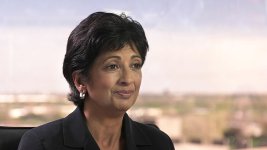
Another shoot with the exhibition-style par - just barely fought the texas sun through a window. Really need a 1.2 one of these days… and yes, that's her skin tone, got a great match.

575.jpg
 
Looks like the key is a bit green and backlight a bit magenta, no? Is one through a window (windows are often add green tint) or did you just mean the sun is out the window?

BTW this is the first job I used the Chroma-Q's on: https://www.youtube.com/watch?v=LQsQbuNWmnE (I didn't shoot the beginning obviously, just the parody extended scene, though it's not a great one to judge color)
I thought we'd be fighting window light more but it was pretty gross out and it ended up being more about matching our the location to the original even though it was nothing like it and was very small with none of the windows... Probably could've just used tungsten in the end and taken off the 4 stops of ND :P I assume the somewhat uneven color grade is because of the fast turnaround since they shoot a video every week.
 
She actually has that indian yellow-greenish sort of skin tone, far as skin it's a very good match - if you eyedropper the dark grays on her jacket, they're very clean.

But yes, I threw in am Aputure 672 LED at the last minute and I'm finding it can look very pink. I cut some light +greens to keep in its case, I've got a ziplock of scraps that are handy with that thing.

Seems like a lot of newbies rave about the 672, but it ain't much of a key - but super handy light to pop some details or add a little fill, considering how little room it takes in the kit.
 
Resurrection. https://www.usedlighting.com/29014/elation-opti-par-575-g-plus on sale for $75. I see a couple of issues with this unit though. 1. That ballast definitely would need to be extended just to be able to mount the light. 2. Power Supply: 230V/50Hz May not be problems at all depending on you guys with electrical prowess think. On the site there is a pro version with a "split ballast" using a powercon connector http://www.elationlighting.eu/en/opti-par-575-pro-g-plus.html. That price is super cheap
 
Back
Top